
In the realm of strategic finance and corporate expansion, the concept of “Total War” is often cited as the ultimate expression of resource mobilization. While the term originated in the crucible of the American Civil War, its principles offer a profound case study for modern business leaders, investors, and economists. To understand total war in the context of the Civil War is to understand the shift from localized tactical engagements to a holistic, economic-driven strategy designed to bankrupt an opponent’s ability to function. It was the first time in modern history that a nation’s entire financial, industrial, and human capital was leveraged toward a singular objective: the absolute exhaustion of the enemy’s resources.
The Economic Calculus: Total War as a Financial Strategy
At its core, total war is not merely a military doctrine; it is a financial one. During the American Civil War, the transition to total war represented a pivot from “limited” warfare—where armies fought armies on defined battlefields—to “unlimited” warfare, where the target became the economic engine of the adversary. From a business finance perspective, this is the equivalent of a hostile takeover that aims not just to acquire a competitor, but to dismantle their supply chain, invalidate their currency, and seize their market share until they can no longer remain a going concern.
Mobilizing the War Chest: The Union’s Industrial Superiority
The Union’s victory was arguably secured in the banks and factories of the North long before the final surrender at Appomattox. At the start of the conflict, the North held a massive advantage in nearly every financial metric. It possessed over 70% of the nation’s railroad mileage, 80% of its manufacturing capacity, and a vastly superior banking infrastructure.
Total war required the Union to move beyond traditional tax revenue to fund an unprecedented burn rate of capital. This led to the creation of the Internal Revenue Service and the first national income tax, but more importantly, it birthed the “Greenback.” By passing the Legal Tender Act of 1862, the federal government issued paper currency not backed by gold, effectively leveraging the future productivity of the nation to pay for current expenditures. For modern investors, this remains a landmark lesson in sovereign debt and the power of centralized financial control during a crisis.
Inflation and Insolvency: The Confederate Financial Collapse
Conversely, the Confederacy’s failure to implement a cohesive financial total war strategy led to one of the most dramatic economic collapses in history. Lacking a centralized banking system and relying heavily on the export of a single commodity—cotton—the South found itself unable to sustain the high costs of prolonged conflict.
As the Union implemented the “Anaconda Plan”—an economic blockade designed to choke off Southern trade—the Confederacy resorted to printing massive amounts of unbacked currency. This resulted in hyperinflation that reached over 9,000% by the end of the war. This serves as a cautionary tale for any business or economy that fails to diversify its revenue streams or maintain a robust “war chest” of liquid assets. In total war, the entity with the most resilient balance sheet often wins, regardless of tactical brilliance on the field.
Strategic Asset Liquidation: Destroying the Infrastructure of the South
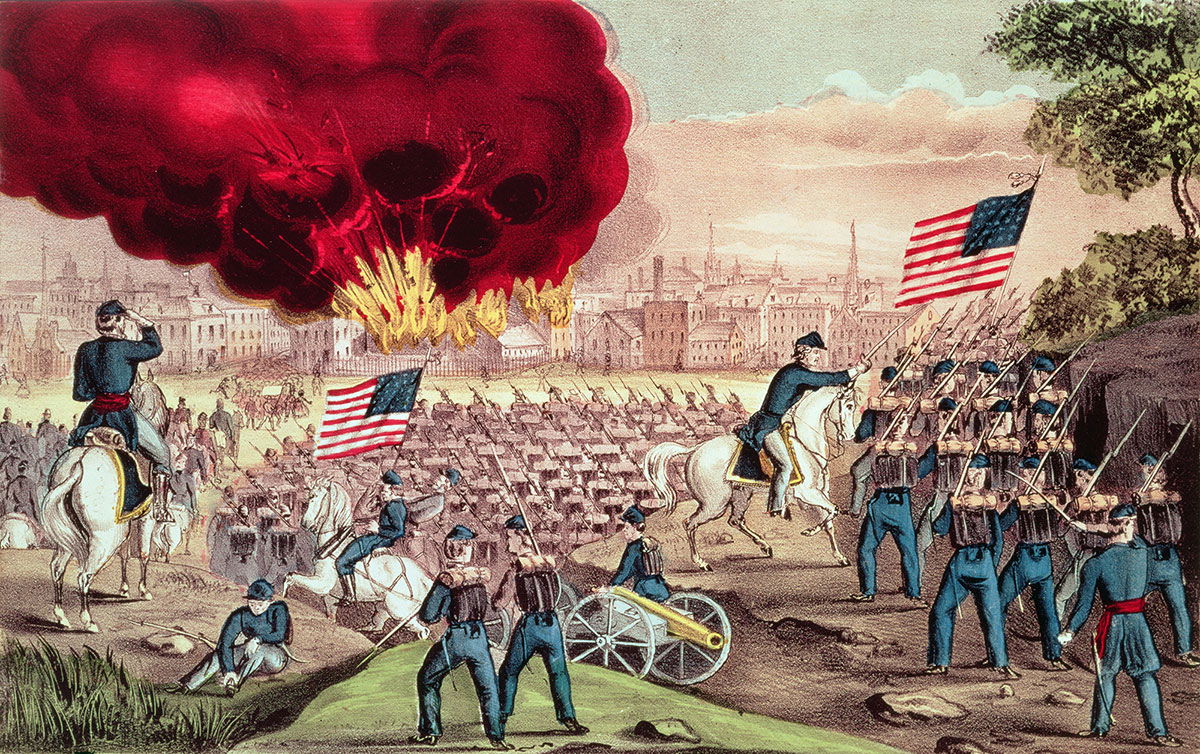
The most visible manifestation of total war in the Civil War was the systematic destruction of private and public property. Led by Generals William Tecumseh Sherman and Philip Sheridan, this strategy was designed to break the “economic will” of the South. In modern business terms, this is akin to a “scorched earth” policy, where an incumbent makes its assets so unattractive or non-functional that a competitor cannot derive value from them.
Sherman’s March and the Eradication of Production Capacity
General Sherman’s “March to the Sea” is the definitive example of total war in action. By cutting his army off from traditional supply lines and living off the land, Sherman bypassed the need for expensive logistics while simultaneously destroying the South’s infrastructure. His forces targeted railroads, cotton gins, warehouses, and farms—the primary capital assets of the Southern economy.
By destroying these assets, the Union wasn’t just winning battles; they were engaging in “strategic asset liquidation.” They were removing the South’s ability to generate future income. When a railroad is torn up and its ties burned, the cost of reconstruction is often higher than the original investment, leading to long-term economic stagnation. This highlights a key principle of total war: it is often more cost-effective to destroy an opponent’s means of production than to engage their primary workforce in direct competition.
The Blockade: Strategic Choking of International Trade
Total war extended to the high seas through the Union blockade. From a financial perspective, this was an attempt to create an “economic vacuum.” By preventing the South from exporting cotton to European markets, the Union effectively devalued the South’s most valuable asset.
In the world of modern business finance, this is comparable to “de-platforming” a competitor or cutting off their access to essential credit markets. When a business cannot reach its customers or procure raw materials, its internal burn rate eventually leads to insolvency. The Union blockade was a long-term investment in economic attrition that paid massive dividends in the final years of the war.
Modern Parallels: Total War in the Global Marketplace
While the Civil War ended over 150 years ago, the principles of total war are alive and well in today’s hyper-competitive global markets. High-growth tech giants and massive conglomerates often employ strategies that mirror the “all-in” approach of the 1860s.
Market Saturation and Competitor Attrition
In modern business, “Total War” is often seen in the form of predatory pricing or aggressive market saturation. When a well-capitalized firm enters a new market and intentionally operates at a loss to drive out smaller competitors, they are practicing a form of economic total war. They are leveraging their superior “war chest” (cash reserves) to outlast the competition’s ability to remain solvent.
Companies like Amazon or Uber have famously utilized this strategy, prioritizing market share over immediate profitability. By absorbing losses that would bankrupt a smaller player, these firms effectively “clear the field,” much like the Union’s industrial might eventually overwhelmed the Confederate economy.
Capitalizing on Resource Disparity
Just as the Union leveraged its manufacturing base, modern corporations leverage their proprietary technology and data. Data has become the “iron and coal” of the 21st century. Companies that control the most data can optimize their supply chains, target consumers with surgical precision, and predict market shifts before they happen. This creates a resource disparity that makes it nearly impossible for new entrants to compete, effectively winning the “war” for the consumer before it even begins.
Financial Lessons for Modern Investors and Businesses
The history of total war provides invaluable insights into risk management and long-term financial planning. Whether you are managing a personal portfolio or a multi-million dollar corporate budget, the following lessons are universal.
The Importance of Liquidity in Long-Term Conflict
One of the greatest lessons of the Civil War is that liquidity is king. The Union’s ability to issue debt and maintain a functioning currency allowed it to sustain the war effort despite massive expenditures. In contrast, the South’s wealth was tied up in illiquid assets—land and labor—which could not be easily converted into the tools of war.
For investors, this underscores the necessity of maintaining a liquid portion of a portfolio. In times of economic “warfare”—such as a market crash or a sudden industry disruption—those with cash on hand are the ones who can survive the attrition and eventually acquire distressed assets at a discount.
Diversification and Supply Chain Resilience
The South’s reliance on “King Cotton” proved to be its undoing. When the blockade cut off exports, the entire economy collapsed. Modern businesses face similar risks if they rely too heavily on a single supplier, a single product line, or a single market.
Total war in the Civil War demonstrated that a diversified economy is a resilient one. The North had textile mills, iron foundries, grain farms, and a robust merchant marine. This diversification allowed it to absorb shocks in one sector without the entire system failing. For today’s business finance professionals, building “redundancy” into supply chains and diversifying revenue streams is not just a defensive move—it is a strategic necessity for surviving a competitive “total war” scenario.

The Value of Infrastructure and Logistics
Finally, the Civil War proved that victory often goes to the side with the best logistics. The Union’s ability to move troops and supplies via an integrated railroad network was a technological and financial marvel.
In the modern era, logistics remains a primary battlefield. Companies that master the “last mile” of delivery or own the underlying infrastructure of their industry (like cloud computing platforms) hold a strategic advantage that is difficult to overcome. Investing in infrastructure is a long-term play that provides the foundation for winning any protracted economic engagement.
The concept of total war in the Civil War was a harrowing evolution of human conflict, but it also served as the ultimate stress test for financial systems and economic theories. By viewing these historical events through the lens of money and resource management, we gain a clearer understanding of how power is built, maintained, and ultimately lost in both war and business.
aViewFromTheCave is a participant in the Amazon Services LLC Associates Program, an affiliate advertising program designed to provide a means for sites to earn advertising fees by advertising and linking to Amazon.com. Amazon, the Amazon logo, AmazonSupply, and the AmazonSupply logo are trademarks of Amazon.com, Inc. or its affiliates. As an Amazon Associate we earn affiliate commissions from qualifying purchases.