
In the global marketplace of craft brewing, the question of “what is the strongest beers” is rarely a simple inquiry into alcohol by volume (ABV). Instead, it represents a high-stakes arena of brand positioning, narrative construction, and aggressive market differentiation. For a brewery, producing a beer that pushes the boundaries of fermentation is less about beverage consumption and more about a strategic play for brand equity. When a label claims the title of “the world’s strongest,” it is leveraging a powerful psychological hook to capture consumer attention in an increasingly crowded and fragmented industry.

The pursuit of extreme ABV is a masterclass in brand strategy. It transforms a liquid commodity into a conversational centerpiece, a collectible asset, and a symbol of technical prowess. To understand the strongest beers is to understand the evolution of the modern craft brand—a journey from simple local production to a global battle for “The Most” of everything.
The Arms Race: Engineering Brand Identity Through ABV
The history of high-gravity brewing is defined by a period often referred to by industry analysts as the “ABV Arms Race.” In the late 2000s and early 2010s, a handful of European breweries engaged in a public, high-octane competition to see who could push the limits of yeast and freeze-distillation (Eisbock) techniques. This wasn’t just a brewing challenge; it was a PR strategy designed to put relatively small brands on the global map.
The BrewDog vs. Schorschbräu Rivalry
Perhaps the most famous case study in this niche is the rivalry between Scotland’s BrewDog and Germany’s Schorschbräu. BrewDog, a brand built on the pillars of “punk” rebellion and disruptive marketing, used the quest for the strongest beer to cement its identity as a boundary-breaker. When they released “Tactical Nuclear Penguin” (32% ABV) and later “Sink the Bismarck!” (41% ABV), they weren’t just selling beer; they were selling a story of Scottish defiance against German traditionalism.
Schorschbräu responded with increasingly potent iterations of their Schorschbock, reaching 43%, 57%, and beyond. For the German brand, the strategy was rooted in the heritage of technical precision—showing that traditional German brewing could outpace the modern “punks.” For BrewDog, the pinnacle was “The End of History” (55% ABV), famously packaged inside taxidermied squirrels. This move pushed the brand from “craft brewery” to “art provocateur,” ensuring that even people who never drank beer were talking about the BrewDog brand.
The Shift from Beverage to “Event”
This race proved that a product’s strength could serve as a primary marketing vehicle. By creating a beer that was functionally undrinkable in a traditional sense (designed to be sipped like a fine cognac), these brands shifted the consumer’s relationship with the product. The beer became an “event.” This transition is a core tactic in luxury brand strategy: moving the value proposition away from the utility of the product and toward the experience and exclusivity of ownership.
Positioning and Premiumization: Why Strength Sells
The branding of the strongest beers relies heavily on the concept of premiumization. In a market where a standard six-pack is a commodity, a bottle of high-ABV beer acts as a “halo product.” A halo product is a high-end, often experimental offering that may not be a primary driver of volume sales but serves to elevate the status of the entire brand portfolio.
Scarcity as a Brand Lever
Most of the world’s strongest beers—such as Samuel Adams Utopias—are released in highly limited quantities. Utopias, which hovers around 28% ABV and is illegal in several U.S. states, is a masterclass in scarcity marketing. By producing a limited number of bottles every two years, Samuel Adams creates a “white whale” effect. Collectors and enthusiasts hunt for these bottles, and the resulting secondary market buzz provides the brand with millions of dollars in earned media. This scarcity reinforces the brand’s position as a leader in innovation and quality, even if the average consumer only ever buys their standard Boston Lager.
The Narrative of Craftsmanship
The branding of high-strength beers often leans into the “alchemist” narrative. The marketing copy for these products rarely focuses on refreshment. Instead, it highlights complex aging processes, the use of rare barrels (such as Port, Sauternes, or proprietary bourbon casks), and the technical difficulty of keeping yeast alive in high-alcohol environments. This positions the brand as an expert craftsman. For a consumer, buying a high-strength beer is a way to participate in that expertise. It is an intellectual purchase as much as a physical one.
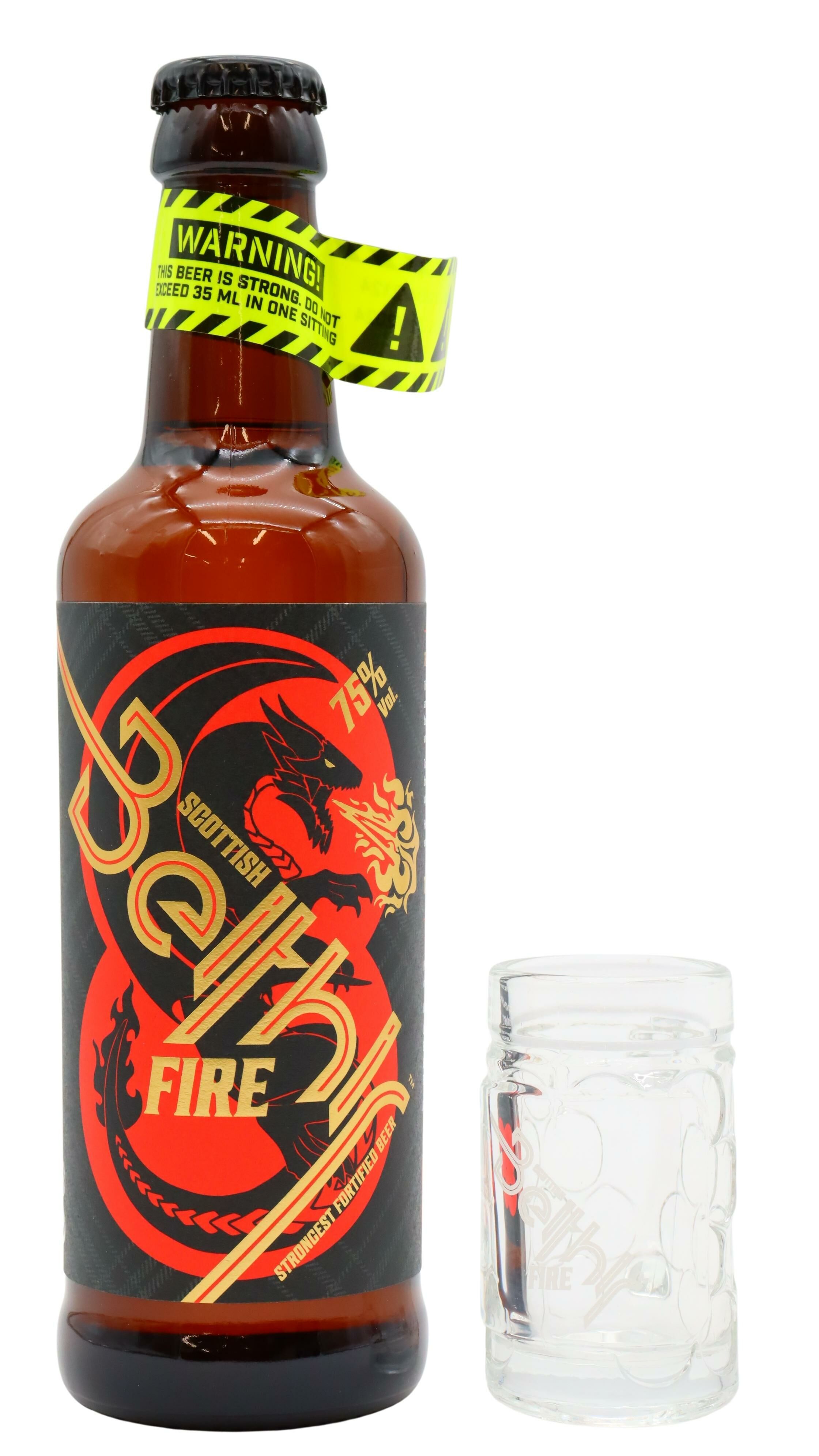
Design and Visual Language of High-Gravity Brands
A brand’s visual identity must align with its product’s extremity. The strongest beers in the world are rarely packaged in standard 12-ounce cans with bright, pop-art labels. Instead, the design language borrows heavily from the worlds of luxury spirits, historical manuscripts, and high-end apothecary.
Breaking Traditional Design Norms
When examining the visual cues of high-ABV brands, several trends emerge:
- Heavy Glass and Unique Silhouettes: Bottles like those used for Utopias are custom-shaped to look like copper brewing kettles. This immediately signals to the consumer that the content is not “just beer.”
- Tactile Elements: The use of wax seals, hand-numbered labels, and wooden crates communicates a sense of “hand-crafted” luxury. These elements slow down the unboxing process, encouraging the consumer to treat the product with reverence.
- Typography and Color Palettes: These brands often utilize deep earth tones, metallics (gold and copper foil), and serif fonts that evoke a sense of history and permanence.
The Psychology of “The Strongest”
In branding, the word “strongest” triggers a specific set of associations: power, resilience, and intensity. For a certain segment of the market, these are aspirational traits. The packaging reinforces this by creating a “trophy” aesthetic. The bottle is designed to be displayed on a shelf long after the liquid is gone, serving as a permanent advertisement for the brand’s capabilities within the consumer’s home.
Navigating Regulatory and Ethical Brand Challenges
Operating in the “strongest” category is not without significant brand risk. The most potent beers often run afoul of liquor laws, labeling requirements, and ethical concerns regarding responsible consumption. How a brand manages these challenges is a critical part of its corporate identity.
The Ethical Balance
A brand that celebrates extreme alcohol content can easily be perceived as irresponsible. To counter this, savvy brands pivot their marketing toward “slow drinking” and “connoisseurship.” They emphasize that these beers are meant to be shared and savored in small quantities, much like a rare Scotch. This “educational” approach to branding serves two purposes: it mitigates criticism from health advocates and it further elevates the product into the luxury category.
Legal Hurdles as Marketing Opportunities
In many cases, being banned is the best thing that can happen to a brand’s visibility. When “The End of History” or “Utopias” is banned in a specific jurisdiction, the brand often issues a press release highlighting the “dangerous” or “uncompromising” nature of their product. This “outlaw” branding is particularly effective in the craft beer world, where consumers often align themselves with brands that challenge the status quo. By framing legal hurdles as a badge of honor, these breweries turn a logistical nightmare into a brand-building victory.
The Future of High-Strength Branding: Quality Over Quantity
As the craft beer market matures, the “Arms Race” for the highest ABV has cooled, replaced by a more nuanced approach to brand strength. The modern consumer is increasingly health-conscious, leading to a rise in low-ABV and non-alcoholic options. However, this has not diminished the relevance of the strongest beers; it has simply changed their role in a brand’s strategy.
The Pivot to Flavor Complexity
Today, the most successful high-strength brands are those that prioritize “flavor density” over raw ABV. Brands like Side Project, Anchorage, and Perennial Artisan Ales produce beers in the 15-20% range that are celebrated not for their power, but for their incredible depth of flavor. The branding here has shifted from “The World’s Strongest” to “The World’s Most Complex.” This is a more sustainable long-term strategy, as it builds brand loyalty based on the sensory experience rather than a statistical gimmick.

Maintaining Relevance in a Health-Conscious Era
To maintain relevance, high-strength brands are repositioning their products as “occasional luxuries.” Much like a fine dessert wine, these beers are branded for specific moments—celebrations, cellar aging, or gift-giving. This ensures that the brand remains part of the consumer’s lifestyle without conflicting with modern trends toward moderation.
In conclusion, “what is the strongest beers” is a question that leads directly to the heart of brand strategy. It reveals how companies use technical extremes to build mythologies, how they use scarcity to drive value, and how they navigate the complex intersection of luxury, ethics, and regulation. Whether through the punk-rock disruptions of BrewDog or the refined craftsmanship of Samuel Adams, the quest for strength remains one of the most potent tools in the brewer’s branding toolkit. It is a testament to the power of a superlative: in a world of endless choices, being “the most” of anything is often the surest way to be remembered.
aViewFromTheCave is a participant in the Amazon Services LLC Associates Program, an affiliate advertising program designed to provide a means for sites to earn advertising fees by advertising and linking to Amazon.com. Amazon, the Amazon logo, AmazonSupply, and the AmazonSupply logo are trademarks of Amazon.com, Inc. or its affiliates. As an Amazon Associate we earn affiliate commissions from qualifying purchases.