
When evaluating the primary assets in a household, most people prioritize the mortgage, the vehicle, or the retirement portfolio. However, from a standpoint of productivity and long-term healthcare expenditure, the mattress represents one of the most critical capital investments an individual can make. While the mattress industry often markets products through the lens of “comfort” or “luxury,” a savvy consumer must view the “standard thickness” of a mattress through a financial framework. Thickness is not merely an aesthetic choice; it is a technical specification that dictates the product’s lifecycle, its cost-per-use, and the ultimate return on investment (ROI) regarding the sleeper’s physical health and professional performance.
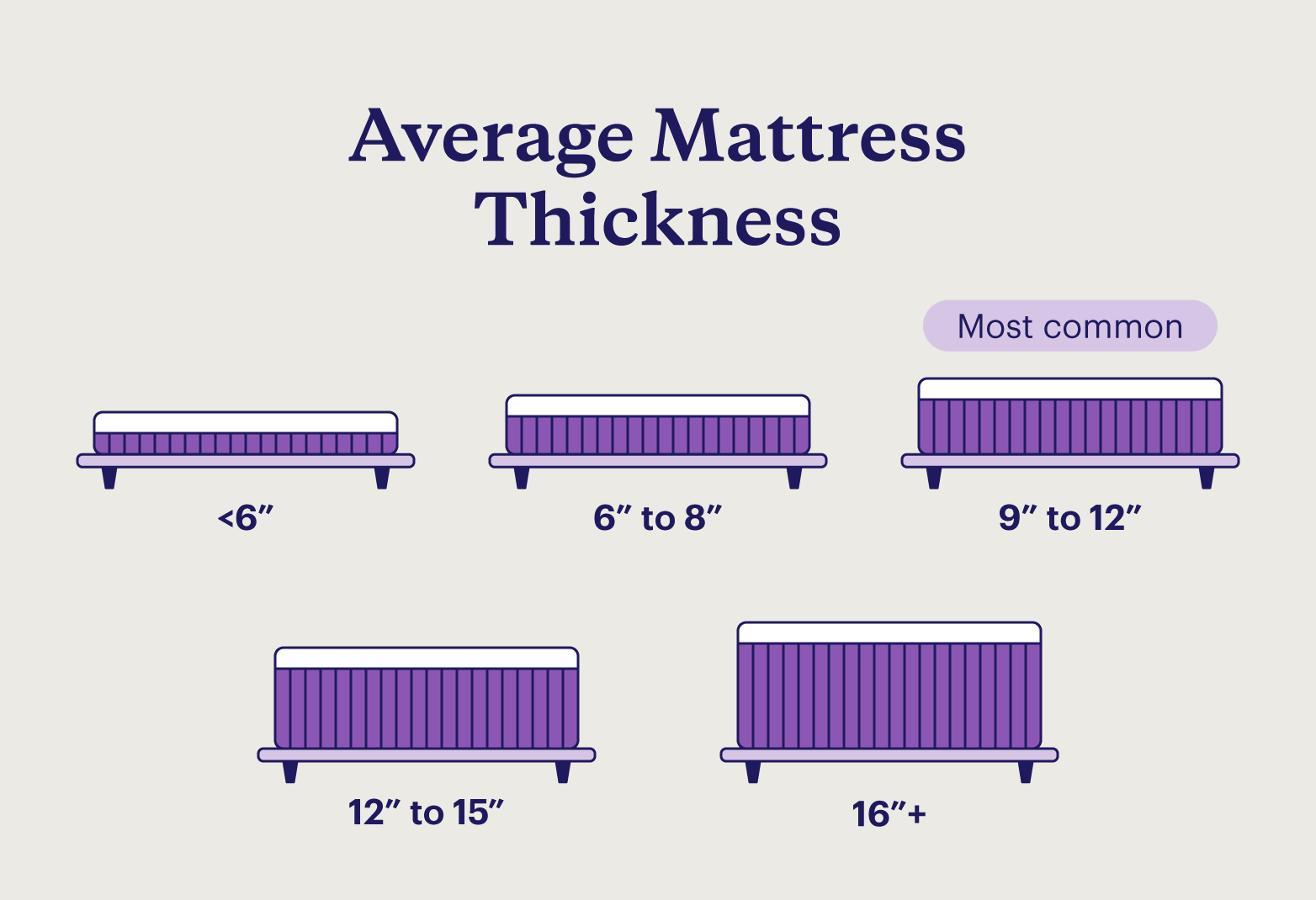
The standard thickness of a modern mattress typically ranges between 8 and 14 inches. However, understanding where a specific model falls on this spectrum is essential for making a data-driven purchasing decision. In the world of personal finance, every inch of material represents a balance between manufacturing cost, retail markup, and the projected durability of the asset.
The Financial Landscape of Sleep: Understanding the Cost-to-Comfort Ratio
The mattress market is segmented by profile height, and these segments correlate directly with price tiers. In a standard market analysis, thickness is a primary indicator of the volume of raw materials used—specifically high-density foams, latex, and tempered steel coils. To understand the “standard,” one must first look at the economics of construction.
The Material Costs of Every Inch
A mattress is essentially a layered financial product. The base layer, often 5 to 6 inches of high-density polyfoam or a pocketed coil system, constitutes the structural integrity of the investment. As you move from a standard 8-inch “entry-level” mattress to a 12 or 14-inch “premium” model, the additional height is usually comprised of comfort layers like memory foam, gel-infused latex, or transition layers.
From a manufacturing perspective, adding thickness increases the bill of materials (BOM). Shipping costs also scale with thickness, as bulkier mattresses occupy more “cube” in a shipping container or delivery truck. Therefore, when a consumer sees a jump in price for a thicker mattress, they are paying for both the increased raw material volume and the logistical overhead required to move a heavier, larger product.
Analyzing the Price Brackets by Height
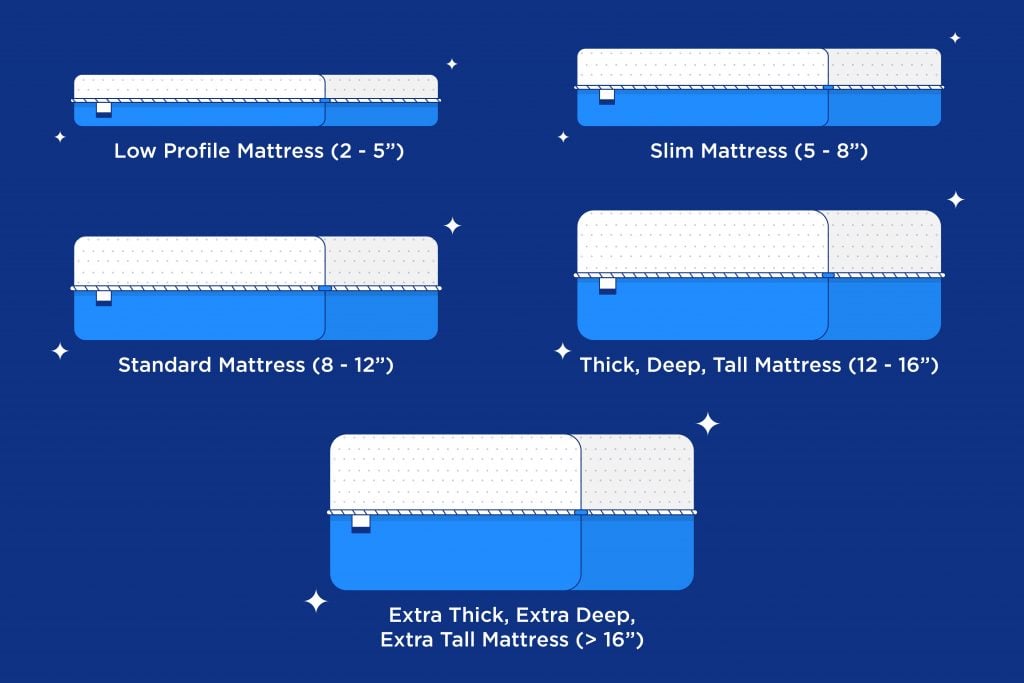
- Slim Profile (5 to 8 inches): Often found in budget-tier products, guest rooms, or specialized furniture like trundle beds. These represent the lowest capital entry point but often carry the highest “hidden cost” in the form of accelerated wear and tear.
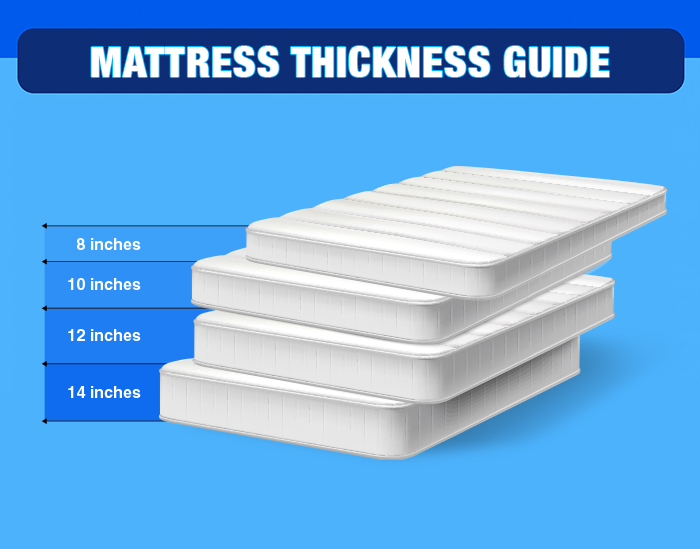
- Standard Profile (10 to 12 inches): This is the “sweet spot” for value-conscious consumers. At 10 inches, a mattress generally provides enough structural support for the average adult while maintaining a competitive price point.
- Deep/Premium Profile (13 to 15+ inches): These are luxury-tier investments. While they offer superior pressure relief and aesthetic appeal, the consumer must determine if the marginal utility of those extra 2 to 4 inches justifies a 30% to 50% increase in price.
Depreciation and Durability: Why Thickness Influences Asset Lifespan
In accounting, depreciation describes the reduction in the value of an asset over time. In the mattress world, “sagging” is the physical manifestation of depreciation. The thickness of a mattress is perhaps the greatest predictor of its functional lifespan, and by extension, its long-term cost-effectiveness.
Calculating the Cost Per Night
A professional approach to purchasing involves calculating the “cost per night.” A $1,000 mattress that lasts 10 years costs approximately $0.27 per night. A $500 mattress that loses its structural integrity after three years costs $0.45 per night.
Thinner mattresses (under 10 inches) are susceptible to “bottoming out,” where the comfort layers compress completely under the sleeper’s weight, leading to premature wear on the support core. By investing in a standard thickness of 12 inches, the consumer is essentially purchasing a “buffer” that distributes weight more effectively across the material. This extra volume slows the rate of compression, extending the replacement cycle and lowering the annualized cost of the asset.
Sagging and the Replacement Cycle
The “standard” height is often a defensive measure against the physics of foam fatigue. Most warranties only kick in when a permanent indentation reaches 1.5 inches. In a thin mattress, a 1.5-inch indentation may represent 20% of the total height, rendering the bed unusable. In a 14-inch luxury model, that same indentation represents a smaller fraction of the total profile, potentially allowing the mattress to remain functional for a longer period. For the investor, this means a thicker mattress acts as a hedge against the premature need for a capital replacement.
The Hidden ROI of Sleep Quality on Earning Potential
While we have discussed the direct costs of the mattress, the “Money” aspect of mattress thickness extends into the realm of human capital. Sleep is the primary biological mechanism for cognitive restoration, and the quality of that restoration has a direct impact on one’s earning potential and career longevity.
Cognitive Performance and Career ROI
Economic studies have consistently shown a correlation between sleep quality and productivity. A mattress that is too thin for a sleeper’s body weight leads to micro-awakenings caused by pressure points. This results in sleep fragmentation, which impairs executive function, decision-making, and emotional regulation the following day.
In a high-stakes professional environment, the “cost” of a bad night’s sleep can be measured in lost promotions, errors in financial modeling, or decreased sales performance. When viewed through this lens, the incremental cost of upgrading from an 8-inch mattress to a 12-inch “standard” mattress is not a luxury expense; it is a performance-enhancement investment. If a more supportive mattress prevents even two days of “brain fog” per month, the investment pays for itself within the first year through improved professional output.
Healthcare Savings: The Preventive Power of Proper Support
The secondary financial benefit is the mitigation of healthcare costs. Improper spinal alignment—often a result of a mattress that is too thin to provide adequate contouring—leads to chronic lower back pain and neck issues. The cost of physical therapy, chiropractic adjustments, and ergonomic office equipment can easily exceed the price of a premium mattress. By selecting a mattress with a thickness that matches one’s body mass index (BMI), the consumer is engaging in a form of preventive financial planning.
Navigating the Market: How to Audit Your Purchase for Maximum Value
To maximize the value of this investment, consumers must perform a “financial audit” of their sleep needs versus the marketing claims of mattress manufacturers. The goal is to find the point where the utility of increased thickness meets the law of diminishing returns.
The Diminishing Returns of Luxury Thickness
There is a common misconception in the high-end market that more inches always equate to better sleep. From a financial perspective, this is a fallacy. Once a mattress exceeds 14 or 15 inches, the “additional” inches are often purely aesthetic or consist of low-density “puff” layers designed to create a “pillow-top” look.
These ultra-thick mattresses often require specialized deep-pocket sheets, which are more expensive than standard bedding. This increases the “total cost of ownership” (TCO) of the bed. For most consumers, the peak value is found between 10 and 12 inches. Beyond 14 inches, the buyer is often paying for a “prestige markup” rather than a functional improvement in sleep mechanics.
Smart Budgeting for a 10-Inch vs. 14-Inch Profile
When budgeting, consider your body weight as the primary variable.
- Lighter Individuals (<130 lbs): A 10-inch mattress is often sufficient. The extra cost of a 14-inch model is unlikely to provide a measurable return in comfort because the sleeper does not have enough mass to engage the deeper layers of the mattress.
- Average Individuals (130-230 lbs): The 12-inch standard is the optimal balance of price and durability.
- Heavier Individuals (>230 lbs): It is financially prudent to invest in a 13-to-15-inch mattress with a high-density support core. The higher upfront cost is offset by the fact that a thinner mattress would likely fail and require replacement within 24 to 36 months.
In conclusion, the standard thickness of a mattress is more than a measurement; it is a critical variable in the equation of personal finance. By understanding the relationship between profile height, material durability, and the ROI of sleep, a consumer can transform a simple furniture purchase into a strategic asset allocation that supports both their physical health and their financial bottom line.
aViewFromTheCave is a participant in the Amazon Services LLC Associates Program, an affiliate advertising program designed to provide a means for sites to earn advertising fees by advertising and linking to Amazon.com. Amazon, the Amazon logo, AmazonSupply, and the AmazonSupply logo are trademarks of Amazon.com, Inc. or its affiliates. As an Amazon Associate we earn affiliate commissions from qualifying purchases.