
In the world of corporate identity and personal branding, the smallest details often carry the heaviest weight. When we discuss the architecture of professional attire, we are not merely talking about fashion; we are talking about the visual language of a brand. One of the most critical, yet frequently overlooked, elements of this architectural design is the placket. For brand strategists, corporate designers, and professionals looking to curate a specific personal image, understanding the placket is essential for mastering the nuances of visual communication.

A placket is the reinforced strip of fabric that runs vertically down the front of a shirt, where the buttonholes are placed and where the buttons are secured. While its primary function is utilitarian—facilitating the opening and closing of the garment—its design is a strategic choice that dictates the formality, aesthetic direction, and perceived value of a brand’s apparel line or a professional’s wardrobe.
The Strategic Importance of the Placket in Brand Design
In brand strategy, consistency and intentionality are the pillars of success. Every element of a corporate uniform or a luxury retail line must align with the brand’s core values. The placket serves as a central focal point of the garment, acting as a structural spine that influences the shirt’s drape and durability.
The Standard Front Placket: Communicating Reliability
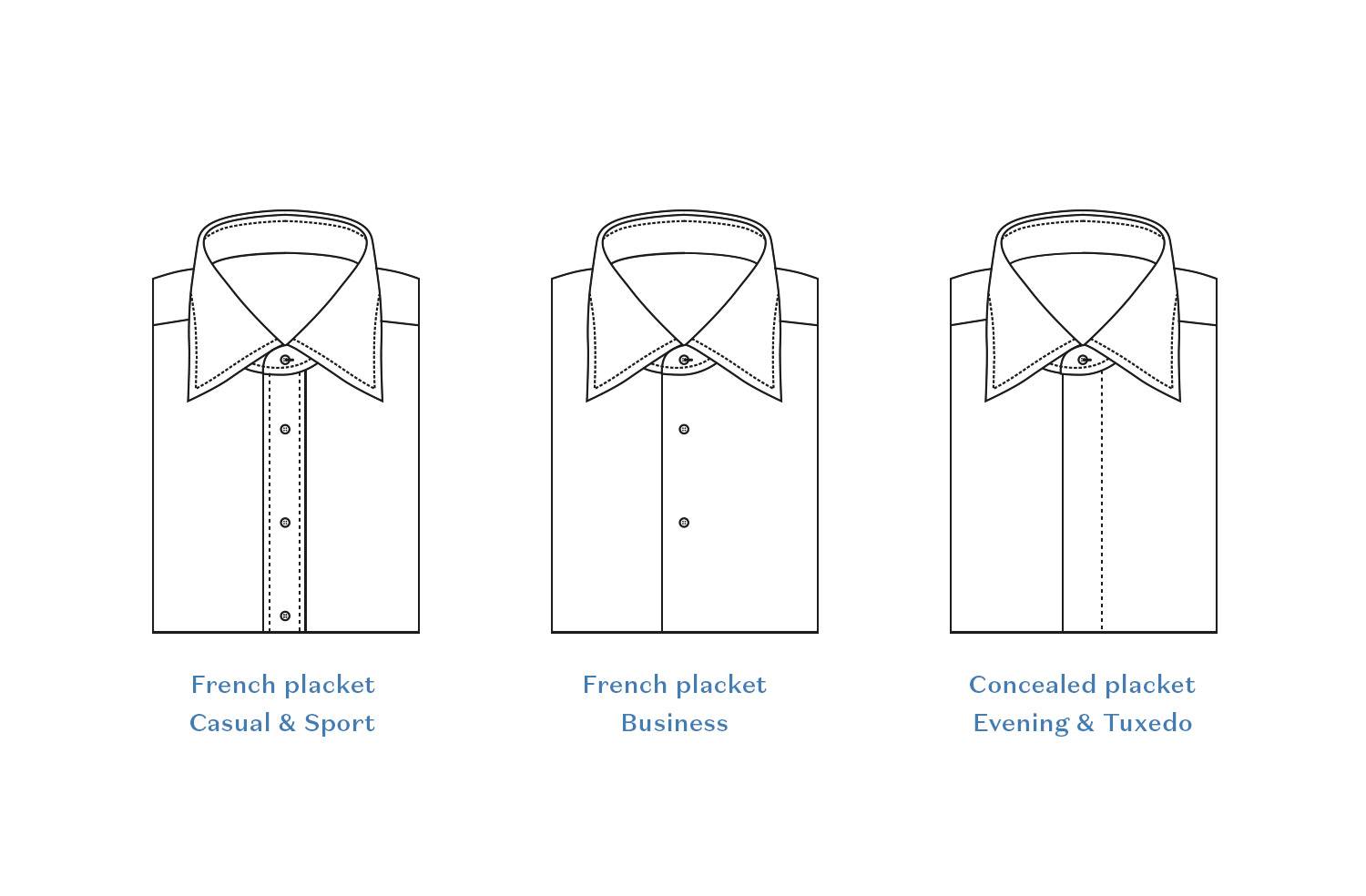
The standard front placket, often referred to as the “conventional” placket, is characterized by a separate strip of fabric sewn onto the front of the shirt. It is visible, structured, and symmetrical. From a branding perspective, this design conveys a sense of traditionalism and reliability. It is the gold standard for classic corporate environments.
When a company selects a standard placket for its workforce, it signals a commitment to established norms and professional consistency. The visible stitching on a standard placket provides a ruggedness that suggests durability—a key brand trait for industries that value hard work and long-standing heritage. It is approachable yet disciplined, making it the preferred choice for mainstream business attire.
The French Placket: Minimalist Sophistication and Modern Branding
Contrast the standard placket with the French placket (also known as the plain front). In this design, the fabric is folded toward the inside, leaving the front of the shirt smooth and seamless, with no visible stitching other than the buttonholes themselves.
The French placket is a masterclass in minimalist brand design. It is sleek, clean, and modern. High-end fashion houses and boutique consulting firms often favor this style because it eliminates visual “noise.” By removing the extra layer of visible fabric and stitching, the French placket allows the material of the shirt—whether it be high-grade Egyptian cotton or a specialized synthetic blend—to take center stage. In the context of personal branding, the French placket suggests a professional who is detail-oriented, sophisticated, and values a streamlined aesthetic.
Personal Branding: The Placket as a Tool for Executive Presence
In the landscape of personal branding, your attire is your logo. It is the visual representation of your professional ethos before you even speak. The choice of a shirt placket can subtly shift the perception of your authority, creativity, and attention to detail.
The Fly Front Placket: The Peak of Formality and Mystery
The fly front placket, or covered placket, features an extra flap of fabric that hides the buttons entirely. This is the most formal option available and is traditionally reserved for black-tie events or high-stakes corporate galas.
For an executive’s personal brand, the fly front communicates a high level of polish and exclusivity. It is an intentional departure from the everyday. By hiding the hardware (the buttons), the shirt achieves an ultra-smooth silhouette that feels both futuristic and deeply rooted in formal tradition. This choice is perfect for individuals who want their brand to be perceived as elite, meticulous, and slightly avant-garde.
The Popover Placket: Creative and Approachable Identity
The popover placket does not run the full length of the shirt; instead, it typically features three or four buttons and ends mid-chest, requiring the wearer to “pop” the shirt over their head. This style bridges the gap between a polo shirt and a traditional button-down.
In creative industries—such as tech startups, design agencies, or marketing firms—the popover placket is a powerful branding tool. It signals a “relaxed professional” identity. It says that the wearer understands the rules of professional dress but is confident enough to subvert them for the sake of comfort and style. It is the ideal choice for a brand that wants to appear innovative, agile, and human-centric.

Engineering a Cohesive Corporate Identity Through Construction
When a corporation develops a line of branded apparel, whether for retail or as a corporate uniform, the construction of the placket becomes a matter of quality control and brand longevity. A poorly constructed placket can undermine even the most prestigious logo.
Structural Integrity and Brand Perception
The placket is under constant tension. Every time a button is fastened or unfastened, the fabric is stressed. High-quality branding demands high-quality engineering. A “puckered” placket—where the fabric ripples after washing—is a sign of low-quality manufacturing. This can negatively impact a brand’s image, making it appear cheap or careless.
To avoid this, top-tier brands use “interfacing” inside the placket. Interfacing is a hidden layer of material that adds stiffness and prevents the fabric from collapsing or wrinkling. For a corporate brand, investing in heavy-duty interfacing within the placket ensures that employees look crisp and professional throughout an eight-hour shift. This attention to detail reinforces the brand’s promise of excellence and reliability.
Uniformity and Visual Alignment
For large organizations, the placket is a tool for visual alignment. When thousands of employees wear the same shirt, the uniformity of the placket creates a rhythmic, organized appearance. This visual “grid” helps project an image of a well-oiled machine. Brands like airlines, luxury hotels, and high-end automotive dealerships use specific placket designs to ensure that their staff members appear as a unified front, reinforcing the corporate identity at every touchpoint of the customer journey.
Quality as a Brand Signal: How Placket Finishing Reflects Value
In the “Money” and “Brand” sectors, we often discuss the Return on Investment (ROI) of quality. When evaluating a garment’s value, the placket’s finishing is one of the most reliable indicators of its price point and the brand’s integrity.
Stitching Density and Brand Luxury
In the luxury market, the number of stitches per inch (SPI) on a placket is a key differentiator. A high SPI (typically 18 to 22) results in a cleaner, more durable seam that looks almost like a solid line from a distance. Low-end brands often use a lower SPI to save on production time and thread costs.
For a brand positioned in the premium or luxury space, a high-stitch-count placket is a silent signal of quality. It tells the discerning consumer that the brand does not cut corners. This creates a psychological sense of trust; if the brand is this careful with a hidden seam on a placket, they are likely just as careful with the quality of their materials and their customer service.
The Role of Button Placement and Spacing
The spacing of buttons on a placket is another design element that impacts the “Brand Experience.” Standardized spacing is common, but custom brands often adjust button placement to prevent “gaping”—the unsightly opening of fabric between buttons that can occur when the wearer moves or sits.
A brand that offers “anti-gape” placket designs is solving a specific pain point for its customers. This problem-solving approach transforms a simple shirt into a functional tool for professional confidence. In marketing, this is known as a “unique value proposition.” By focusing on the structural perfection of the placket, a brand can differentiate itself in a crowded market, moving beyond aesthetic appeal into the realm of functional luxury.
The Future of the Placket: Innovation in Design and Branding
As we move toward a more digital and tech-integrated world, even the humble placket is seeing innovation. We are beginning to see “smart plackets” that incorporate magnetic closures instead of traditional buttons, catering to a brand identity centered on accessibility and modern efficiency.
Furthermore, the rise of sustainable branding is changing how plackets are constructed. Eco-conscious brands are moving away from synthetic interfacing and plastic buttons, opting instead for biodegradable stabilizers and buttons made from Tagua nuts or recycled ocean plastics. In this context, the placket becomes a storytelling device, allowing a brand to communicate its commitment to environmental stewardship through the very materials that hold the garment together.
Understanding what a placket is—and the strategic choices behind its design—is more than a lesson in garment construction. It is an essential component of professional branding. Whether you are building a corporate identity for a global firm or refining your own personal brand, the placket serves as a reminder that in design, as in business, excellence is found in the details. By choosing the right placket, you are not just choosing a shirt; you are choosing the message you send to the world.
aViewFromTheCave is a participant in the Amazon Services LLC Associates Program, an affiliate advertising program designed to provide a means for sites to earn advertising fees by advertising and linking to Amazon.com. Amazon, the Amazon logo, AmazonSupply, and the AmazonSupply logo are trademarks of Amazon.com, Inc. or its affiliates. As an Amazon Associate we earn affiliate commissions from qualifying purchases.