
In the realm of technology, engineering, and systems design, the terms “negative” and “positive” feedback do not carry the emotional weight they do in human psychology. Instead, they represent the fundamental mechanics of how a system responds to changes in its environment or internal state. Whether we are discussing the stability of a cloud server, the training of a sophisticated large language model, or the circuitry of a high-end audio interface, understanding the distinction between these two loops is essential for building resilient and scalable technology.
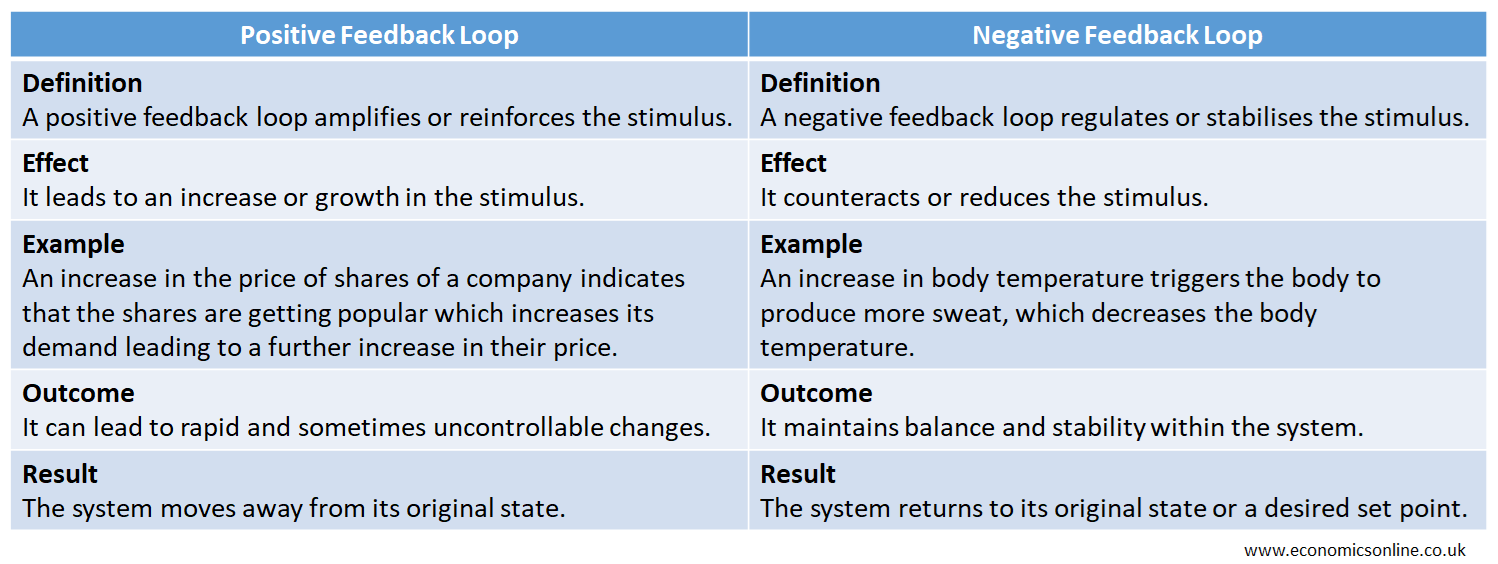
The main difference between negative and positive feedback lies in their relationship to the system’s equilibrium. Negative feedback is a regulatory mechanism designed to maintain stability by counteracting deviations from a desired state. Conversely, positive feedback is an accelerative mechanism that amplifies changes, pushing a system further away from its initial state toward exponential growth or total transformation.
Understanding the Core Architecture of Feedback Loops
To grasp the technical nuances of these two concepts, one must first view technology through the lens of systems theory. Every automated system—from a simple thermostat to a complex neural network—operates on a cycle of input, process, output, and feedback. The feedback loop is the return of a portion of the output back to the input to influence the next cycle.
In software engineering and hardware design, feedback is the primary tool used to manage “gain” and “error.” Gain refers to how much the system amplifies an input, while error is the difference between the actual output and the intended target. The way a system handles this error determines whether it remains under control or spirals into unpredictable behavior.
The distinction between the two is often mathematical. Negative feedback subtracts the error from the input, creating a “self-correcting” cycle. Positive feedback adds to the input based on the output, creating a “self-reinforcing” cycle. While one provides the brakes, the other provides the gas pedal.
Negative Feedback: The Pillar of Stability and Control
In the world of technology, negative feedback is the unsung hero of reliability. It is the mechanism that ensures systems stay within their operational boundaries. Without negative feedback, most of our modern conveniences—including the internet, power grids, and automated manufacturing—would succumb to chaotic fluctuations.
The Self-Correcting Mechanism
The primary function of negative feedback is to reduce the output when it exceeds a set point and increase it when it falls below that point. This creates a state of homeostasis. A classic example in hardware is the Proportional-Integral-Derivative (PID) controller. This algorithm is used in everything from drone flight stabilization to industrial temperature control. If a drone tilts too far to the left due to a gust of wind, the negative feedback loop detects the deviation and increases the RPM of the left motors while decreasing the right, bringing the drone back to a level state.
Applications in Software Engineering and DevOps
In modern cloud computing, negative feedback is fundamental to “Auto-scaling” and “Self-healing” infrastructures. Consider a high-traffic e-commerce platform. When CPU usage exceeds 80%, a negative feedback mechanism triggers the deployment of additional server instances to distribute the load. As the load drops, the system scales back down. By reacting against the increase in pressure, the system maintains a consistent performance level, preventing a total crash.
In DevOps, negative feedback is integrated into Continuous Integration and Continuous Deployment (CI/CD) pipelines. Automated testing acts as a negative feedback loop; if a developer pushes code that introduces a bug, the test suite fails the build. This “feedback” forces the system (the development process) to stop and correct the error before the code can move forward to production.
Data Integrity and Error Correction
Negative feedback is also critical in telecommunications. Signal processing relies heavily on error correction codes. When data is transmitted over a noisy channel, the receiving system uses negative feedback to identify discrepancies between the sent and received packets. By requesting retransmission or applying mathematical corrections, the system effectively “cancels out” the noise, ensuring the integrity of the digital signal.
Positive Feedback: Driving Expansion and System Momentum
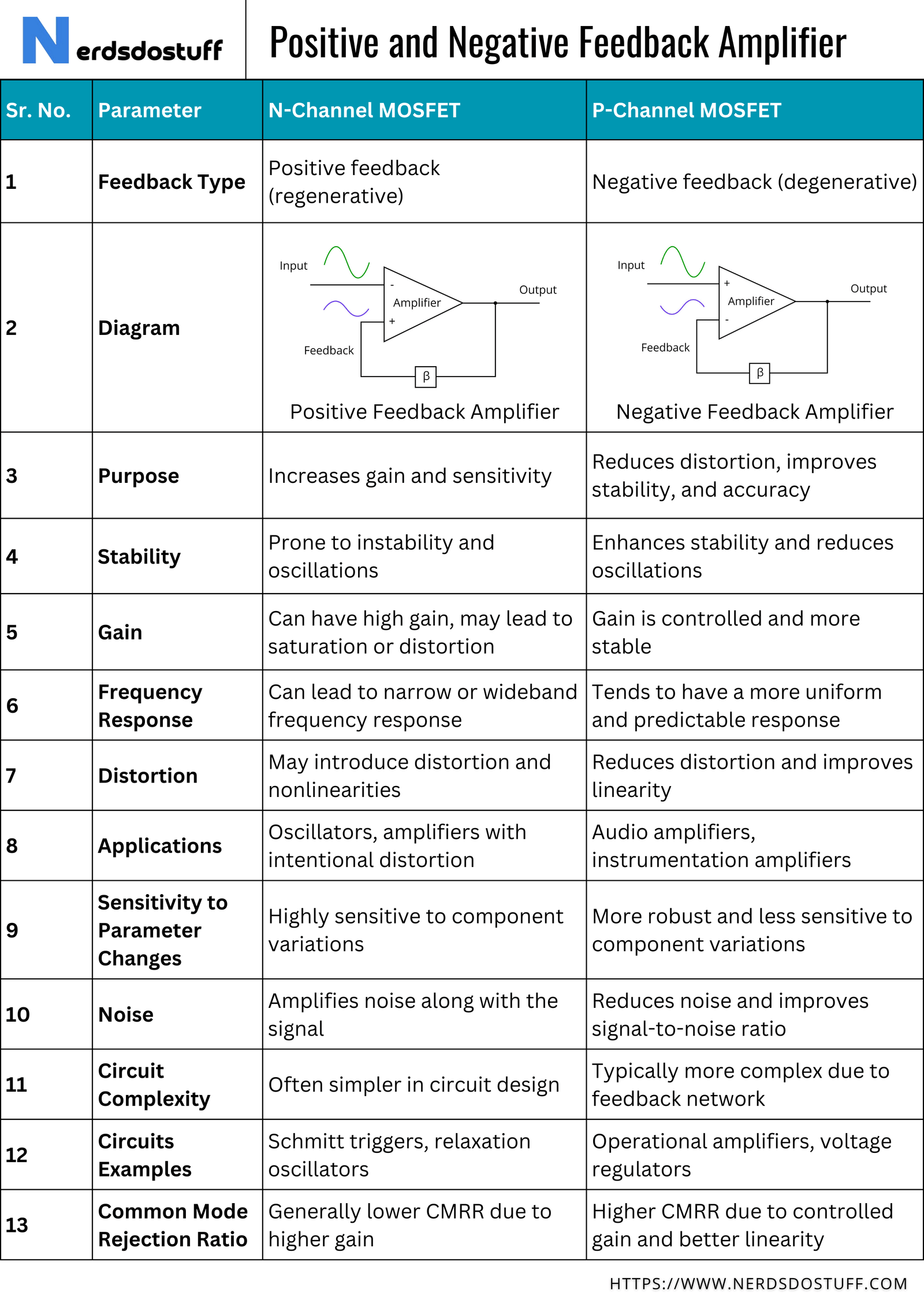
While negative feedback seeks the status quo, positive feedback seeks the extreme. In technology, positive feedback loops are used to drive rapid adoption, amplify signals, and facilitate learning. However, because they amplify change, they are inherently unstable and require careful management to prevent system failure.
Exponential Gains and System Momentum
Positive feedback occurs when the output of a system further stimulates the input, leading to an ever-increasing output. In electronics, this is the principle behind oscillators, which are used to generate clock signals for microprocessors. By feeding a small amount of an amplifier’s output back to its input in phase, the signal builds upon itself until it reaches a sustained vibration.
The Viral Loop in Platform Growth
In the digital economy, positive feedback loops are often referred to as “viral loops” or “network effects.” Social media platforms and marketplaces like eBay or Uber rely on this mechanic. The more users a platform has, the more valuable it becomes to new users. This increased value attracts even more users, which in turn increases the value further. This is a classic positive feedback loop where growth feeds growth. From a strategic perspective, the goal of many tech startups is to reach a “tipping point” where this positive feedback becomes self-sustaining, leading to market dominance.
Algorithmic Recommendation Engines
Recommendation algorithms, such as those used by YouTube, Netflix, or TikTok, are powered by positive feedback. When a user engages with a specific type of content, the algorithm interprets this as a “success” and feeds the user more of that content. This increases engagement, which provides more data to the algorithm, which then refines the recommendation further. While highly effective for user retention, this loop can create “filter bubbles” where the system’s output (the content shown) is continuously amplified in a single direction, illustrating how positive feedback can lead to unintended extremes.
Feedback Mechanisms in Modern AI and Algorithm Design
The most sophisticated application of both feedback types is currently found in the field of Artificial Intelligence. Machine learning models are essentially massive feedback systems that “learn” by minimizing the difference between their predictions and reality.
Reinforcement Learning from Human Feedback (RLHF)
In the development of large language models (LLMs), Reinforcement Learning from Human Feedback (RLHF) is a critical stage. Here, both negative and positive feedback are used in tandem. When a model generates an accurate, helpful, and safe response, it receives a positive reward signal (positive feedback), which encourages the neural network to replicate those patterns in the future. Conversely, when the model generates “hallucinations” or harmful content, it receives a penalty signal (negative feedback), which forces the model to adjust its internal weights to avoid those outputs.
Iterative Development and Model Refinement
The training of a neural network involves a process called backpropagation. This is a mathematical form of negative feedback. The system calculates the “loss”—the error between the model’s output and the actual data—and feeds that error back through the layers of the network to adjust the parameters. The goal is to drive the error down to zero. Without this negative feedback loop, an AI would be unable to improve or generalize from its data.
Strategic Implementation: Choosing the Right Loop for Your Tech Stack
For architects and developers, the challenge lies in knowing when to implement which loop. A system with too much negative feedback becomes sluggish and unresponsive, as it is constantly fighting against any change. A system with too much positive feedback becomes volatile and prone to “runaway” effects, such as the infamous “flash crashes” in algorithmic high-frequency trading.
Balancing Stability vs. Innovation
In software architecture, negative feedback should be the default for all mission-critical components. Load balancers, circuit breakers, and data validation layers are all negative feedback systems designed to keep the platform “boring” and predictable.
However, when designing user interfaces or growth features, positive feedback is essential. Gamification elements—such as progress bars, badges, or “streaks”—act as positive feedback loops that encourage continued user interaction. The key is to wrap these positive loops within a broader framework of negative feedback “guardrails.” For example, an algorithmic trading bot may use positive feedback to capitalize on a market trend, but it must be governed by a negative feedback “kill switch” that halts trading if losses exceed a certain threshold.

Conclusion of Logic
Ultimately, the main difference between negative and positive feedback is one of direction and intent. Negative feedback is the force of correction, maintaining the “standard” and ensuring that technology remains reliable and safe. Positive feedback is the force of amplification, enabling rapid growth, learning, and the creation of momentum. In the high-stakes environment of modern technology, the most successful systems are those that leverage the stability of negative feedback to provide a foundation for the transformative power of positive feedback. Understanding how to balance these two forces is what separates a fragile prototype from a world-class technological ecosystem.
aViewFromTheCave is a participant in the Amazon Services LLC Associates Program, an affiliate advertising program designed to provide a means for sites to earn advertising fees by advertising and linking to Amazon.com. Amazon, the Amazon logo, AmazonSupply, and the AmazonSupply logo are trademarks of Amazon.com, Inc. or its affiliates. As an Amazon Associate we earn affiliate commissions from qualifying purchases.