
In the contemporary landscape of computational chemistry and material science, the quest for precision in molecular geometry has transitioned from a theoretical pursuit to a high-stakes technological race. Determining the ideal angle between bromine-oxygen bonds is no longer merely a task for a student with a VSEPR chart; it is a complex optimization problem solved by supercomputers, sophisticated software suites, and increasingly, generative artificial intelligence. As we push the boundaries of semiconductor manufacturing, battery technology, and pharmaceutical synthesis, the “ideal” bond angle represents a critical data point in the digital twin of a molecule.
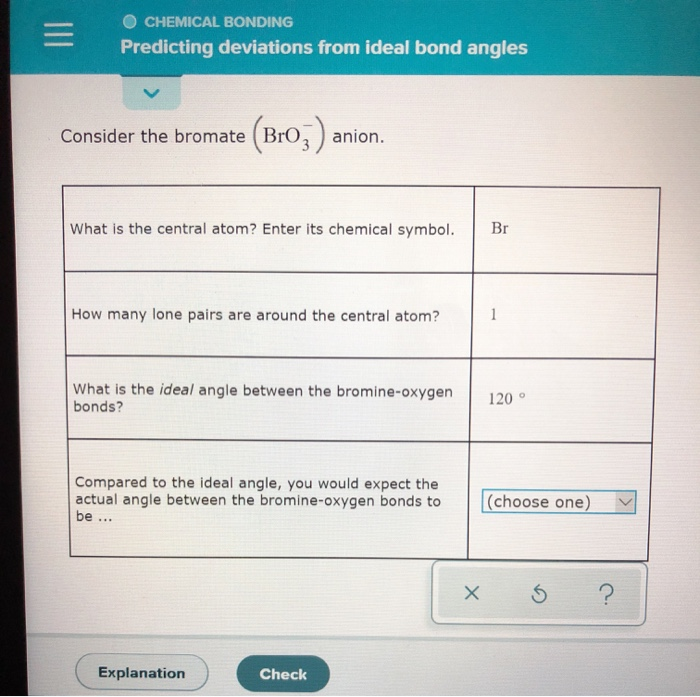
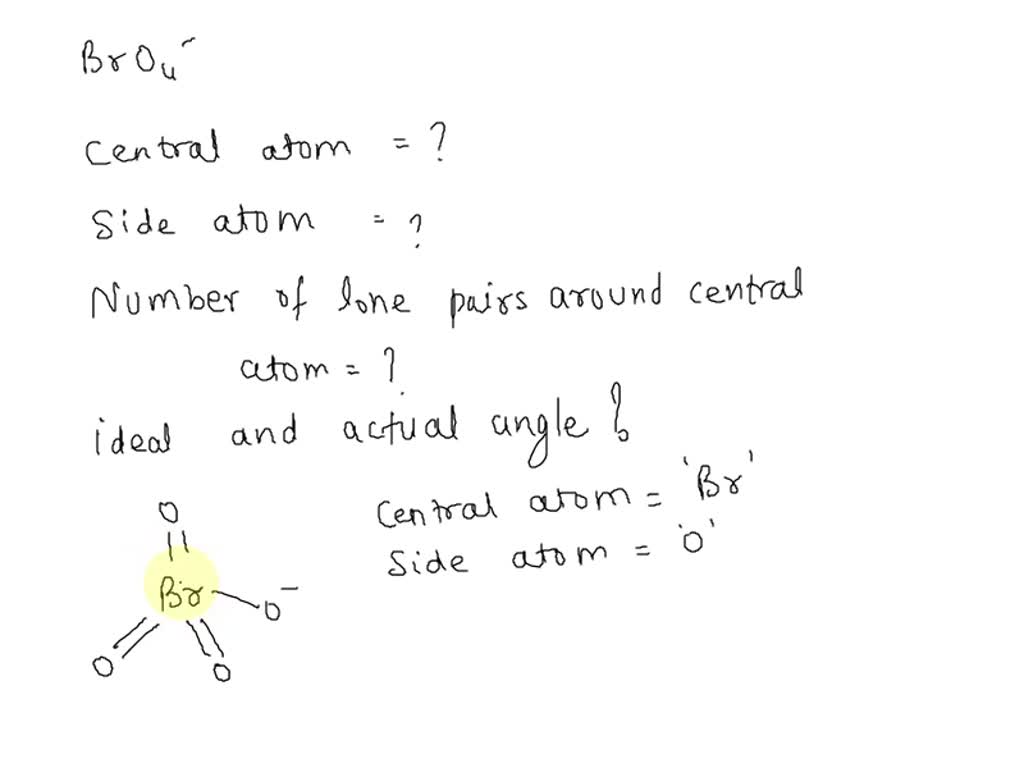
Understanding this angle requires navigating the intersection of quantum mechanics and high-performance computing (HPC). Whether we are examining the bromate ion ($BrO3^-$), bromine dioxide ($BrO2$), or complex hypervalent bromine species, the geometric configuration is the primary determinant of the molecule’s reactivity and electronic properties. This article explores the technological frameworks, software ecosystems, and AI tools used to define and utilize these molecular specifications in modern industry.
The Computational Revolution in Molecular Geometry
The determination of bond angles—specifically the delicate balance between bromine and oxygen—relies on the precision of Density Functional Theory (DFT) software. In the past, researchers relied on approximate models, but the modern tech stack allows for an unprecedented level of accuracy.
Density Functional Theory (DFT) and Software Suites
To find the ideal angle, engineers utilize professional-grade software such as Gaussian 16, ORCA, and VASP (Vienna Ab initio Simulation Package). These tools allow users to simulate the electronic cloud around the bromine nucleus. Bromine, being a relatively heavy halogen, introduces “relativistic effects” that simple software cannot handle.
Advanced computational suites apply scalar relativistic corrections to ensure that the predicted 104-to-106-degree angles in bromate structures match real-world observations. The technology behind these simulations involves solving the Kohn-Sham equations, a process that requires massive parallel processing capabilities. For a tech firm specializing in materials design, the choice of “functional” (the mathematical shortcut used to estimate electron interaction) is as critical as the choice of a programming language is for a software developer.
Visualization Engines and UI/UX in Molecular Design
Once the raw data is processed, the output is rarely a single number. Modern visualization tools like PyMOL, Avogadro, and VMD (Visual Molecular Dynamics) turn coordinate data into interactive 3D models. These platforms have evolved to support Virtual Reality (VR) and Augmented Reality (AR) interfaces, allowing researchers to “step inside” a bromine-oxygen cluster. The UI/UX of these tools is designed to highlight strain and electron density gradients, making the “ideal” angle a visual reality rather than just a mathematical abstraction.
AI and Machine Learning: Predicting Bond Angles without Quantum Equations
One of the most significant shifts in technology over the last five years is the move away from “first-principles” calculations toward machine learning (ML) models. Calculating the bromine-oxygen bond angle using traditional quantum mechanics can take days of server time. AI is changing that.
Neural Network Potentials (NNPs)
Tech startups are now training Neural Network Potentials (NNPs) on massive datasets of halogen-oxygen interactions. Once trained, these models can predict the ideal bond angle of a new, complex bromine-based flame retardant or electrolyte in milliseconds. By using Graph Neural Networks (GNNs), where atoms are nodes and bonds are edges, the AI can infer the geometric constraints of bromine’s outer valence shells. This “shortcut” is enabling a rapid prototyping cycle in the tech industry that was previously impossible.
Generative Design for Molecular Structures
Beyond prediction, generative AI tools are being used to “design” molecules around a specific bromine-oxygen angle. If a specific technical application—such as a liquid flow battery—requires a molecule with a highly strained bond angle to increase energy density, generative models can suggest millions of potential candidates. This is essentially the “GitHub Copilot” for molecular engineering, where the AI suggests structural snippets that maintain the desired bromine-oxygen geometry while optimizing for stability and solubility.
Infrastructure and Cloud Computing: The Power Behind the Bonds
The hardware required to calculate the ideal bromine-oxygen bond angle has shifted from local university workstations to specialized cloud-based High-Performance Computing (HPC) clusters.
GPU Acceleration and Parallel Processing
Traditionally, molecular simulations were CPU-intensive. However, the rise of NVIDIA’s CUDA core technology has revolutionized this niche. Modern versions of software like TeraChem are written specifically to run on GPUs, providing a 10x to 100x speedup in calculating the electronic geometry of heavy atoms like bromine. This allows tech teams to run “high-throughput screening,” testing thousands of different bromine-oxygen configurations simultaneously to find the one that offers the best thermal stability for hardware components.
Cloud-Native Molecular Modeling
Platforms like Rescale and AWS ParallelCluster have democratized access to these calculations. A startup no longer needs a $2 million on-premise cluster to find the ideal angle for a new chemical sensor. They can spin up 500 instances of an H100 GPU cluster, run their simulations in an hour, and shut them down. This shift to the cloud is accelerating the development of specialized chemicals used in the “Tech” sector itself, such as the photoresist chemicals used in EUV (Extreme Ultraviolet) lithography.
The Practical Tech Applications of Bromine-Oxygen Bond Angles
Why does the tech industry care so much about the specific angle between a bromine and an oxygen atom? The answer lies in the physical properties of the materials used to build our digital world.
Semiconductors and Etching Technology
In the fabrication of microchips, bromine-based gases are often used for plasma etching. The reactivity of these gases is a direct function of their molecular geometry. An “ideal” angle ensures that the molecule decomposes at the right temperature and energy level to etch silicon wafers with nanometer precision. If the bond angle deviates due to molecular impurities, the etching process fails, leading to lower yields in chip production.
Energy Storage and Flow Batteries
Bromine-oxygen ions are central to the development of zinc-bromine flow batteries, a key technology for large-scale renewable energy storage. The efficiency of the ion exchange within these batteries depends on how easily the bromine-oxygen bonds can form and break. Software that can model the “ideal” angle in an aqueous solution allows engineers to tune the electrolyte’s pH and concentration, optimizing the battery’s lifespan and discharge rate.
Digital Security and IP in Computational Chemistry
As the determination of these ideal angles moves into the cloud and utilizes AI, a new challenge arises: protecting the digital intellectual property (IP) of these molecular “blueprints.”
Encrypting Molecular Intellectual Property
For a chemical tech company, the exact coordinates and optimized bond angles of a new catalyst are its “source code.” Modern platforms are implementing end-to-end encryption for molecular coordinate files. When a simulation is sent to a cloud provider, the data is often obfuscated or processed in “trusted execution environments” (TEEs) to ensure that the specific geometry—the “ideal angle” that gives the company a competitive edge—is not intercepted by industrial competitors.
Blockchain for Peer-Reviewed Research
There is an emerging trend of using blockchain technology to timestamp and verify the results of computational simulations. By recording the discovery of a specific bromine-oxygen bond configuration on a decentralized ledger, researchers can prove “priority of discovery” without revealing the full molecular structure until a patent is filed. This intersection of fintech and “chemtech” highlights how deeply the search for a simple geometric angle is embedded in the modern technological ecosystem.

Future Trends: Quantum Computing and the Perfection of the Predictor
The final frontier in identifying the ideal bromine-oxygen bond angle lies in quantum computing. While current “classical” computers must use approximations (like DFT) to solve the math, quantum computers can theoretically simulate the bromine atom’s electrons directly.
As quantum hardware matures, companies like IBM and Google are partnering with chemical conglomerates to develop algorithms that will eliminate the “margin of error” in bond angle prediction. In the next decade, we will likely see the “ideal angle” calculated with a precision that accounts for every quantum fluctuation, leading to a new generation of “chemically perfect” materials for use in everything from quantum sensors to ultra-efficient solar panels.
In summary, the question of the ideal angle between bromine-oxygen bonds is a gateway into the most advanced sectors of modern technology. From the GPU-driven simulations and AI-powered predictions to the cloud infrastructure and digital security protocols that protect the data, this molecular detail is a cornerstone of the ongoing digital transformation of material science. Identifying the angle is no longer a task for the pencil and paper—it is the work of the global tech stack.
aViewFromTheCave is a participant in the Amazon Services LLC Associates Program, an affiliate advertising program designed to provide a means for sites to earn advertising fees by advertising and linking to Amazon.com. Amazon, the Amazon logo, AmazonSupply, and the AmazonSupply logo are trademarks of Amazon.com, Inc. or its affiliates. As an Amazon Associate we earn affiliate commissions from qualifying purchases.