
In the era of the Internet of Medical Things (IoMT) and high-performance wearable technology, the boundary between biological phenomena and digital monitoring has blurred. While the terms “hypothermia” and “hyperthermia” are rooted in basic physiology, their management, detection, and prevention have become a frontier for advanced sensor technology and data analytics. At its simplest, the difference between these two conditions is a matter of thermal directionality: one represents a systemic failure to retain heat, while the other represents an inability to dissipate it. However, from a technological standpoint, they represent two distinct sets of data challenges and hardware requirements for real-time monitoring and intervention.
Understanding the difference between hypothermia and hyperthermia is no longer just the domain of clinicians; it is critical for developers of ruggedized tech, smart PPE (Personal Protective Equipment), and biometric algorithms. As we push the limits of human performance in extreme environments—from high-altitude mountaineering to deep-sea diving and industrial furnace maintenance—technology serves as the primary layer of defense against these two opposite but equally lethal thermal states.
The Physiological Delta: Understanding Core Sensors and Data Points
To understand the technological approach to these conditions, one must first understand the biological “system architecture” of the human body. The body functions within a narrow thermal window, typically centered around a set point of 98.6°F (37°C). When the body’s internal thermoregulation mechanisms are overwhelmed by environmental factors or internal dysfunction, we see the emergence of hypothermia or hyperthermia.
Hypothermia: The Systemic Shutdown
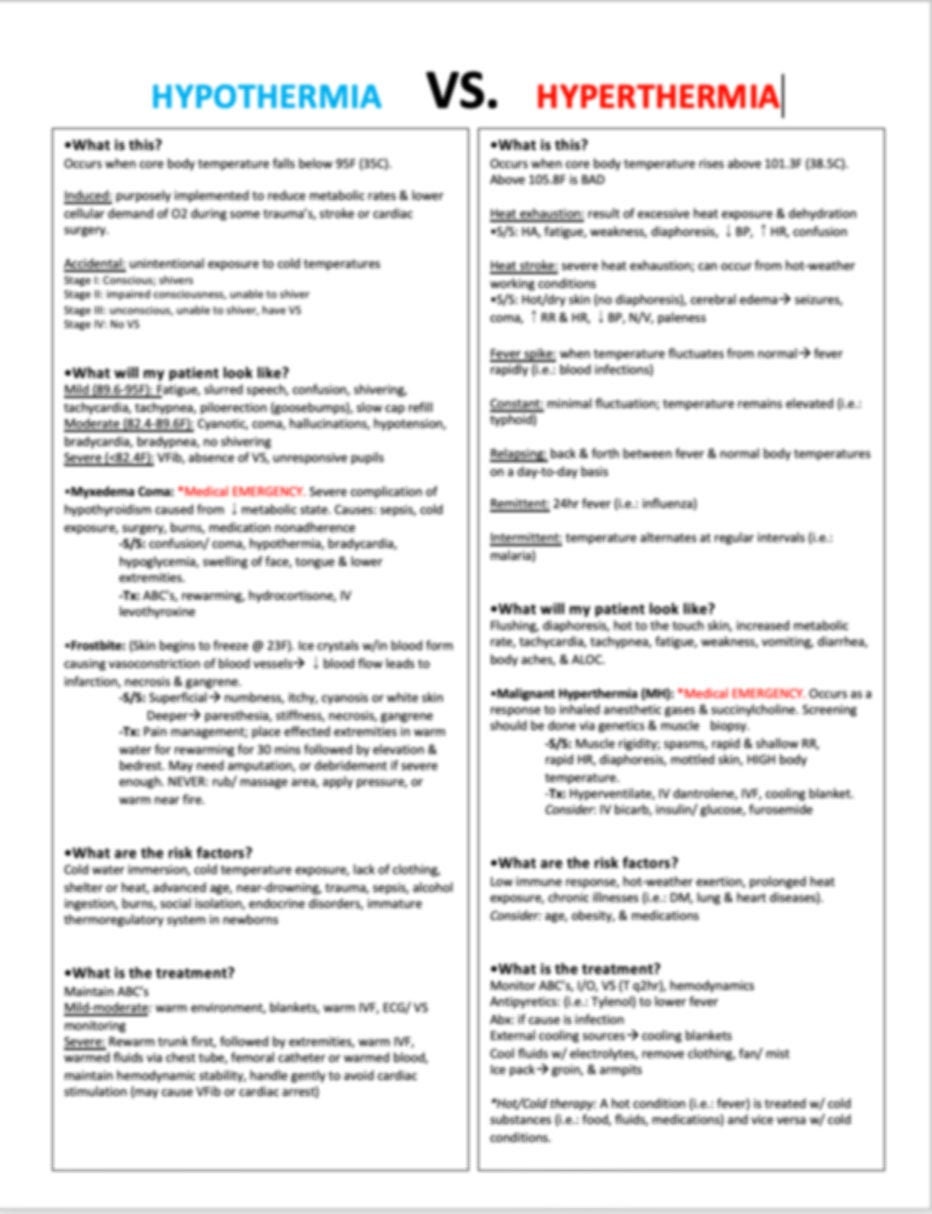
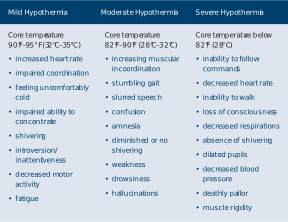
Hypothermia occurs when the core temperature drops below 95°F (35°C). In tech terms, this is akin to a “brownout” or a low-power mode where the system prioritizes critical kernels over peripheral applications. As the body loses more heat than it can generate, the metabolic rate slows.
Technologically, detecting hypothermia is a challenge because the body’s natural defense is vasoconstriction—pulling blood away from the extremities to the core. This makes traditional wrist-worn sensors less accurate, as skin temperature at the extremities drops significantly faster than the core temperature. Modern wearables are now incorporating complex algorithms to “calculate” core temperature based on heat flux sensors and heart rate variability (HRV), rather than relying on simple surface-level thermistors.
Hyperthermia: The Overclocking Crisis
Hyperthermia is the inverse, occurring when the body’s temperature rises above the normal range (typically above 100.4°F or 38°C) due to failed thermoregulation, often caused by heatstroke or drug reactions. Unlike a fever, which is a controlled adjustment of the body’s “thermostat” by the immune system, hyperthermia is an uncontrolled escalation.
In a computing context, hyperthermia is equivalent to thermal throttling failing on a high-performance CPU. When the cooling systems (sweating and vasodilation) cannot keep up with the heat load, the proteins in the body begin to denature. From a data perspective, hyperthermia is characterized by a rapid spike in heart rate and a decrease in blood pressure, patterns that high-frequency biosensors are designed to flag before the user even perceives the danger.
The Evolution of Wearable Bio-Sensors in Thermal Monitoring
The tech industry has responded to the dangers of hypothermia and hyperthermia by developing sophisticated sensing hardware that goes far beyond the digital thermometers of the past. The goal is no longer just reactive measurement but proactive, predictive analytics.
Clinical-Grade Thermistors and Heat Flux Sensors
Traditional wearable devices often struggled to differentiate between “ambient temperature” (the weather) and “skin temperature.” New breakthroughs in heat flux sensing technology allow devices to measure the rate of heat transfer from the body to the environment. By measuring the delta between internal and external temperatures, these sensors can provide a more accurate estimate of core thermal status.
For athletes and outdoor professionals, these sensors are integrated into smart garments. These garments use conductive threads and micro-sensors to map the “thermal topography” of the body, identifying the early signs of hypothermia (shivering-induced micro-vibrations) or hyperthermia (excessive moisture and localized heat spikes) before they become critical.
The Role of Photoplethysmography (PPG)
PPG sensors, the green lights found on the back of most smartwatches, are typically used for heart rate monitoring. However, advanced software layers now use PPG data to detect changes in blood flow volume and oxygenation levels. In cases of hyperthermia, blood vessels dilate (vasodilation) to move heat to the surface, a change that reflects in the PPG waveform. Conversely, in hypothermia, the tightening of vessels (vasoconstriction) creates a distinct signal pattern. By training AI models on these specific waveforms, tech companies are creating “thermal alerts” that warn users when their cardiovascular system is struggling to manage their internal temperature.
Industrial IoT and Smart PPE: Preventing Thermal Crisis in High-Risk Zones
While consumer tech focuses on fitness, the most impactful applications of thermal differentiation are found in the Industrial Internet of Things (IIoT). In sectors like mining, firefighting, and oil and gas, the difference between hypothermia and hyperthermia is a daily operational risk that requires high-level digital oversight.
Smart Helmets and Cooling Vests
In hyperthermic environments, such as deep mines or steel mills, workers are equipped with IoT-enabled cooling vests. These devices utilize a feedback loop: sensors monitor the worker’s skin temperature and heart rate, and if the “Hyperthermia Threshold” is approached, the vest activates active cooling elements (such as liquid-circulating pipes or thermoelectric coolers). This is a classic example of an automated hardware response to a biological data input.
Arctic Tech and Hypothermia Prevention
In offshore drilling or high-altitude telecommunications maintenance, hypothermia is the primary threat. “Smart suits” in these environments use sensors to detect the onset of the “umbriary phase” of hypothermia—where cognitive function begins to decline. Because a victim of hypothermia often becomes confused or lethargic (a state known as “cold-induced cognitive impairment”), they may not realize they are in danger. IoT systems solve this by transmitting real-time thermal data to a centralized dashboard. If a worker’s core temperature drops below a specific set point, the system triggers an automated SOS, pinpointing their GPS coordinates for immediate extraction.
AI-Driven Diagnostics and the Future of Thermal Management
The future of managing the difference between hypothermia and hyperthermia lies in the transition from “monitoring” to “predictive modeling.” Artificial Intelligence is currently being trained on massive datasets of human physiological responses to extreme environments to create digital twins of the human body.
Predictive Thermal Modeling
Using AI, software can now predict how long an individual can stay in a specific environment before reaching a state of hyperthermia or hypothermia. By factoring in humidity (the “heat index”), wind chill, the individual’s Body Mass Index (BMI), hydration levels, and current exertion rate, predictive engines can provide a “Time to Limit” (TTL) metric. This is vital for search and rescue operations, where commanders need to know the exact window of viability for a missing person based on the local weather data and the person’s last known biometric state.
Automated Triage and Remote Care
In emergency medicine, the tech used to treat these conditions is also diverging. For hyperthermia, technology like “endovascular cooling catheters” uses closed-loop control systems to rapidly lower blood temperature. For hypothermia, portable extracorporeal membrane oxygenation (ECMO) machines—which are essentially high-tech heat exchangers for blood—are being miniaturized for field use.
The software controlling these devices must be incredibly precise; cooling or warming a patient too quickly can lead to “afterdrop” or cardiac arrest. This necessitates the use of real-time edge computing within the medical devices to adjust the rate of thermal exchange based on the patient’s immediate physiological feedback.

Conclusion: The Digital Guardrail of Human Physiology
The difference between hypothermia and hyperthermia is fundamentally a difference in thermal energy balance. In the past, humans relied on physical sensation and intuition to manage this balance. Today, we rely on a sophisticated stack of hardware and software.
From the micro-thermistors in a smartwatch to the AI algorithms predicting heatstroke in a marathon runner, technology has become our external thermoregulation system. As we continue to integrate sensors into our clothing, our workplaces, and our healthcare systems, the risks associated with these thermal extremes are being mitigated by data. We are no longer just victims of our environment; we are monitored systems, capable of identifying and correcting thermal deviations before they lead to systemic failure. In the battle against the cold and the heat, the most powerful tool we have is the ability to turn biological temperature into actionable digital intelligence.
aViewFromTheCave is a participant in the Amazon Services LLC Associates Program, an affiliate advertising program designed to provide a means for sites to earn advertising fees by advertising and linking to Amazon.com. Amazon, the Amazon logo, AmazonSupply, and the AmazonSupply logo are trademarks of Amazon.com, Inc. or its affiliates. As an Amazon Associate we earn affiliate commissions from qualifying purchases.