
At its most fundamental level, the chemical formula of quartz is $SiO_2$—silicon dioxide. While this simple pairing of one silicon atom and two oxygen atoms might seem humble, it represents the bedrock upon which the entire modern technological landscape is built. From the smartphone in your pocket to the massive data centers powering the global cloud, the unique properties of this specific molecular arrangement are what make digital life possible.
In the world of technology, quartz is far more than a common mineral found in the Earth’s crust; it is a critical industrial material. Its chemical stability, thermal resistance, and unique electrical properties have turned it into the “DNA” of hardware. Understanding the chemical formula of quartz is the first step in understanding how we transition from raw natural resources to high-frequency processors and ultra-fast fiber-optic networks.
Understanding Silicon Dioxide ($SiO_2$): The Building Block of the Digital Age
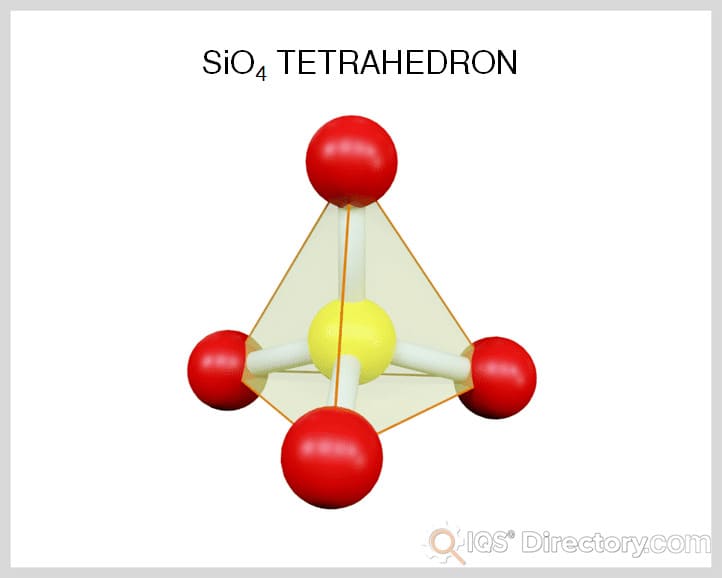
The molecular structure of $SiO_2$ is defined by a tetrahedral arrangement. Each silicon atom is bonded to four oxygen atoms, and each oxygen atom is shared between two silicon atoms, creating a three-dimensional framework that is incredibly strong and stable. In the tech sector, this stability is the primary reason why quartz is the material of choice for demanding hardware environments.
The Atomic Structure and Piezoelectricity
One of the most significant technological breakthroughs involving quartz stems from its lack of a center of symmetry in its crystalline form. When mechanical stress is applied to a quartz crystal, it generates an electric charge. Conversely, when an electric field is applied, the crystal physically deforms. This phenomenon, known as the piezoelectric effect, is governed entirely by the specific arrangement of the $SiO_2$ molecules.
In tech hardware, this allows quartz to act as a bridge between the physical and digital worlds. It enables the creation of sensors that can detect minute changes in pressure or movement and, perhaps most importantly, allows for the creation of precise frequency resonators. Without the $SiO_2$ formula’s ability to vibrate at incredibly stable frequencies, the synchronized timing required for modern computing would be impossible to achieve.
Why Purity Matters in Semiconductor Manufacturing
While $SiO_2$ is abundant in nature as common sand, the technology industry requires a level of purity that is almost unfathomable in a natural setting. We refer to this as “High-Purity Quartz” (HPQ). In the context of tech trends, the drive toward smaller and more powerful chips (following Moore’s Law) necessitates materials that are 99.999% pure.
Any impurity in the chemical lattice—such as trace amounts of aluminum, iron, or lithium—can disrupt the electrical properties of the material. In semiconductor fabrication, even a few rogue atoms can cause a short circuit in a transistor that is only a few nanometers wide. Consequently, the tech industry has developed massive chemical refining infrastructures dedicated to ensuring that the silicon dioxide used in laboratories is as close to the theoretical $SiO_2$ formula as possible.
From Sand to Silicon: How Quartz Powers the Hardware Revolution
The journey from a quartz rock to a microprocessor is one of the most complex engineering feats in human history. The chemical formula $SiO_2$ serves as the starting point for creating “Electronic Grade Silicon,” the pure elemental silicon required for transistors.
The Refining Process: Creating Polysilicon
To create a computer chip, the oxygen must be stripped away from the $SiO2$ molecule. This is typically done in an electric arc furnace at temperatures exceeding 2,000 degrees Celsius. Carbon sources (like high-purity coal or wood chips) are introduced to react with the oxygen, releasing $CO2$ and leaving behind metallurgical-grade silicon.
However, for technology applications, this isn’t enough. The silicon undergoes further chemical processing—often involving hydrochloric acid—to create trichlorsilane, which is then distilled and reduced back into hyper-pure polysilicon. This rigorous focus on the chemical purity of the starting quartz material is what allows companies like TSMC, Intel, and Nvidia to push the boundaries of AI processing and graphical computing.
Quartz Crucibles: The Unsung Heroes of Chip Making
Interestingly, $SiO_2$ is not just a precursor to the silicon wafer; it is also a vital tool used during the manufacturing process. Silicon wafers are grown using the Czochralski process, where a seed crystal is dipped into molten silicon. The container that holds this molten silicon must be able to withstand extreme heat without melting or contaminating the batch.
The solution is the quartz crucible. Because the chemical formula of quartz results in a material with an extremely high melting point and low thermal expansion, it is the only viable material for holding molten silicon at 1,425 degrees Celsius. In the tech supply chain, the availability of high-quality quartz crucibles is often a bottleneck for global chip production, highlighting how a single mineral formula can impact global hardware availability.

Quartz in Telecommunications and Precision Timing
Beyond the world of microchips, the chemical properties of $SiO_2$ are essential for how we communicate and how our devices keep time. In these niches, quartz is utilized for its transparency and its vibrational consistency.
Crystal Oscillators and the Heartbeat of Computing
Every computer, smartphone, and digital watch contains a “system clock.” This clock is responsible for coordinating the billions of operations that happen every second within a CPU. The heart of this clock is a small sliver of quartz.
When electricity is applied to this $SiO_2$ sliver, it vibrates at a constant, predictable rate—usually 32,768 times per second for standard watches, or in the megahertz range for computers. The tech industry relies on this “heartbeat” to ensure that data packets are sent and received in the correct order. Without the precise molecular resonance of quartz, digital synchronization would fail, leading to crashed software and fragmented data streams.
High-Purity Quartz in Fiber Optics
The internet as we know it travels through glass. Specifically, it travels through strands of high-purity silica glass, which is chemically identical to quartz ($SiO_2$). Fiber-optic cables use the principle of total internal reflection to transmit data as pulses of light over thousands of miles.
The reason $SiO2$ is used for this purpose is its incredible optical clarity. If you were to look through a block of high-purity quartz that was several miles thick, it would be as clear as a standard window pane. This allows light signals to travel vast distances with minimal “attenuation” (loss of signal). As we move toward 6G technology and expanded satellite internet constellations like Starlink, the demand for $SiO2$ in its most refined glass form continues to skyrocket.
The Future of $SiO_2$: Quantum Computing and Sustainable Tech
As technology trends shift toward quantum computing and more sustainable manufacturing, the role of quartz is evolving. Engineers are no longer just using quartz as they find it; they are manipulating it at the atomic level to meet the demands of next-generation hardware.
Synthetic Quartz and Lab-Grown Precision
To meet the skyrocketing demand for high-end gadgets, the tech industry has moved toward synthetic quartz production. By using hydrothermal synthesis—simulating the high-pressure, high-heat conditions of the Earth’s crust in a laboratory—manufacturers can “grow” quartz crystals that are even more perfect than those found in nature.
These synthetic $SiO_2$ crystals are free from the inclusions and fractures often found in mined quartz. This level of perfection is essential for high-end optical sensors, laser technology, and the emerging field of quantum networking, where even the smallest molecular imperfection can decohere a quantum state.
Environmental Impact and Circular Tech Economies
With the tech industry under pressure to become more sustainable, the lifecycle of quartz is being re-evaluated. While silicon dioxide is abundant, the energy required to refine it into high-purity silicon is immense. This has led to a new trend in “circular tech,” where the industry is looking for ways to recycle silicon from old solar panels and discarded electronics.
The goal is to recover the $SiO2$ or elemental silicon and re-integrate it into the supply chain. By understanding the chemical stability of the $SiO2$ bond, chemists are developing more efficient ways to strip away contaminants from used hardware, potentially reducing the carbon footprint of future gadget production.

Conclusion: The Enduring Legacy of the World’s Most Important Mineral
The chemical formula of quartz, $SiO_2$, may be a simple entry in a chemistry textbook, but in the realm of technology, it is the fundamental infrastructure for the digital world. It is the source of the silicon in our processors, the glass in our screens, the fiber in our networks, and the rhythm in our clocks.
As we look toward a future dominated by Artificial Intelligence, the Internet of Things (IoT), and expanded digital connectivity, our reliance on this single molecule only deepens. The story of quartz is the story of modern technology itself: a journey of taking one of the most common materials on Earth and, through engineering and chemical mastery, turning it into the most sophisticated tools humanity has ever known. Whether we are building the next generation of smartphones or exploring the frontiers of quantum space, silicon dioxide remains the silent, essential partner in every technological leap we take.
aViewFromTheCave is a participant in the Amazon Services LLC Associates Program, an affiliate advertising program designed to provide a means for sites to earn advertising fees by advertising and linking to Amazon.com. Amazon, the Amazon logo, AmazonSupply, and the AmazonSupply logo are trademarks of Amazon.com, Inc. or its affiliates. As an Amazon Associate we earn affiliate commissions from qualifying purchases.