
Deciding where to plant roots in North Carolina is no longer just a lifestyle choice; it is a significant financial strategy. As the state consistently ranks at the top of “Best States for Business” lists by major financial publications, the influx of capital and human talent has transformed the regional landscape. From a monetary perspective, the “best” city is defined by its ability to offer a high return on investment (ROI) in real estate, a robust job market with competitive salaries, and a tax environment that allows residents to retain a larger portion of their earnings.

North Carolina’s appeal lies in its diversified economy, which has pivoted from traditional manufacturing and textiles to high-growth sectors like biotechnology, fintech, and renewable energy. For the modern investor or professional, choosing between the high-octane growth of the Research Triangle, the banking dominance of Charlotte, or the burgeoning value markets in the Triad requires a deep dive into the fiscal metrics that drive long-term wealth.
The Economic Landscape of the Tar Heel State
To understand why North Carolina has become a magnet for private equity and corporate relocation, one must look at its macroeconomic framework. The state boasts one of the lowest corporate income tax rates in the United States, currently sitting at 2.5%, with a scheduled phase-out to 0% by 2030. For business owners and entrepreneurs, this creates a fertile ground for startup growth and corporate expansion.
Low Tax Liability and Business Friendliness
For individuals, North Carolina utilizes a flat individual income tax rate, which simplifies financial planning and offers a predictable tax liability. When compared to high-tax corridors in the Northeast or the West Coast, the savings in state income tax alone can represent a significant annual “raise” for relocated professionals. This fiscal conservatism at the state level has resulted in a consistent budget surplus, which is often reinvested into infrastructure and education—two pillars that support long-term property value appreciation.
Diversified Job Markets
Unlike states that rely heavily on a single industry, North Carolina’s economy is a three-legged stool of technology, finance, and healthcare. This diversification provides a hedge against sector-specific downturns. When the tech sector experiences volatility, the stability of the healthcare systems in Durham or the banking infrastructure in Charlotte provides a cushion for the regional economy, ensuring that local real estate markets remain resilient.
Raleigh and the Research Triangle: High ROI and Intellectual Capital
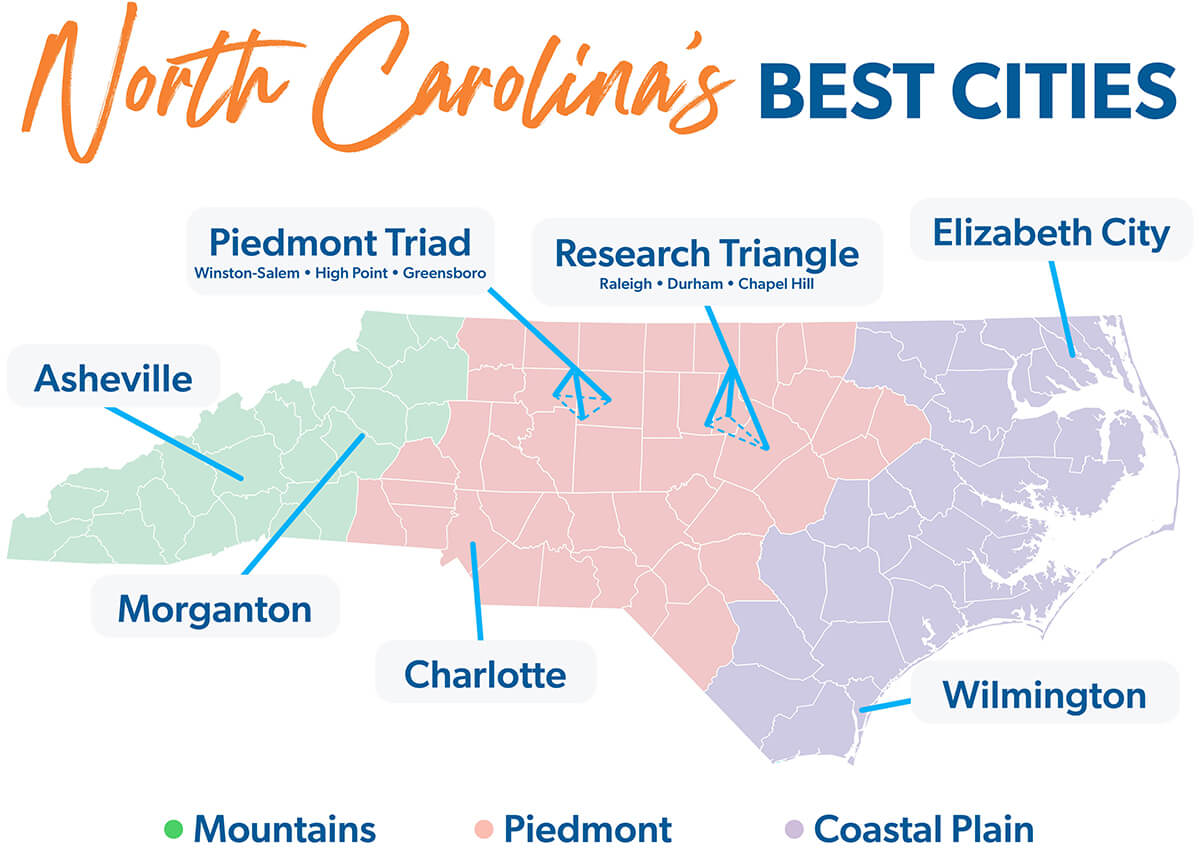
Raleigh, alongside Durham and Chapel Hill, forms the Research Triangle Park (RTP) region, arguably the most significant hub for innovation in the Southeast. From a financial standpoint, Raleigh represents a “growth stock” in the real estate world. The city has seen unprecedented capital appreciation over the last decade, driven by a massive influx of high-income earners.
Real Estate Growth Trends in Wake County
The Raleigh housing market is characterized by a low inventory and high demand, a recipe for equity growth. For the real estate investor, the buy-and-hold strategy in Wake County has historically yielded returns that outpace national averages. With Apple announcing a new campus and Google expanding its presence, the long-term outlook for property values remains bullish. The “Apple Effect” alone has historically triggered a 20-30% increase in surrounding property values in other markets, and Raleigh is poised for a similar trajectory.
The Tech-Driven Income Boost
The median household income in the Research Triangle is significantly higher than the state average, fueled by the concentration of Ph.D.s and specialized engineers. For professionals in the “Money” niche—investors and high-net-worth individuals—this means a vibrant local economy with high discretionary spending. This economic activity supports a thriving ecosystem of small businesses and side hustles, making it an ideal location for those looking to diversify their income streams through local ventures or commercial real estate.
Charlotte: The Financial Hub and Wealth Management Capital
If Raleigh is the tech capital, Charlotte is the vault. As the second-largest banking center in the United States by assets—trailing only New York City—Charlotte offers a level of financial sophistication that is unmatched in the region. It is the headquarters of Bank of America and the East Coast hub for Wells Fargo, creating a dense concentration of finance professionals, analysts, and wealth managers.

Banking and Corporate Synergy
The presence of major financial institutions creates a “cluster effect.” This synergy attracts fintech startups and professional services firms, leading to a high demand for luxury housing and Class-A office space. For those focused on career trajectory within the financial sector, Charlotte offers the highest ceiling for salary growth. The city’s infrastructure, including one of the busiest international airports in the world, facilitates global business and makes it a prime location for corporate identity and personal branding within the financial elite.
Luxury Real Estate and Portfolio Diversification
Charlotte’s real estate market offers a broader spectrum of investment opportunities compared to Raleigh. From the high-end estates of SouthPark and Myers Park to the rapid gentrification and urban renewal in neighborhoods like Southend and NoDa, there are multiple entry points for capital. For the sophisticated investor, Charlotte’s multi-family housing market remains a strong play, as the steady stream of young professionals entering the banking sector ensures a constant demand for high-quality rental units.
Cost-Effective Alternatives: Finding Value in the Triad
While Raleigh and Charlotte capture most of the headlines, the Triad—comprised of Greensboro, Winston-Salem, and High Point—represents the “value play” in North Carolina. For those looking to maximize their purchasing power and achieve a higher standard of living with lower capital outlay, these cities offer a compelling financial case.
Maximizing Purchasing Power
In Greensboro or Winston-Salem, the cost of living is significantly lower than the national average. A dollar in the Triad stretches further in terms of square footage and land. For remote workers or digital entrepreneurs who are “geo-arbitraging”—earning a high-market salary while living in a lower-cost area—the Triad provides the opportunity to accelerate retirement savings and increase investment capital. The price-to-rent ratio in these cities is often more favorable for landlords, providing higher cap rates for residential real estate investors.
The Revitalization of the Triad
Winston-Salem has successfully transitioned from a tobacco and textile town into a leader in regenerative medicine and data science through the Innovation Quarter. This transition is attracting a new demographic of high-earning professionals who are priced out of the Raleigh market. Investing in the Triad today is akin to investing in Raleigh fifteen years ago; the infrastructure is in place, the industry is shifting toward high-tech, and the entry prices for prime real estate are still accessible.
Investment Strategies for the North Carolina Market
To truly identify the “best” city, one must align the choice with a specific financial objective. Whether the goal is capital preservation, aggressive growth, or passive income, North Carolina offers a sub-market to suit every portfolio.
Rental Yields vs. Capital Appreciation
Investors seeking immediate cash flow may find better yields in the satellite cities surrounding the major hubs, such as Concord near Charlotte or Cary near Raleigh. These areas benefit from the “spillover effect,” where high prices in the urban core drive renters to more affordable suburban options. Conversely, those seeking long-term capital appreciation should focus on the “Inner Beltline” of Raleigh or the “Uptown” corridor of Charlotte, where land is scarce and demand is inelastic.
Tax Implications for New Residents
Beyond real estate, the move to North Carolina should be viewed through the lens of total tax liability. Property taxes in North Carolina are relatively moderate compared to the national average, though they vary by county. For example, Mecklenburg County (Charlotte) generally has higher rates than some of the more rural surrounding counties. When calculating the net financial gain of moving to a specific NC city, one must factor in the combination of state income tax savings, property tax obligations, and the relatively low cost of insurance and utilities.
Conclusion: The Financial Verdict
The “best” city to live in North Carolina is ultimately determined by your financial horizon. If you are looking for high-growth tech equity and a booming intellectual economy, Raleigh is the undisputed leader. If your goal is to be at the center of the financial services industry with access to high-ceiling corporate salaries and luxury assets, Charlotte is the premier choice. For those seeking to maximize their current liquidity and find undervalued real estate with high yield potential, the Triad (Greensboro/Winston-Salem) offers the best value proposition.
North Carolina is no longer a hidden gem; it is a primary destination for national and international capital. By positioning oneself in the right city, an individual can leverage the state’s aggressive economic growth, favorable tax climate, and resilient real estate market to build lasting wealth. Whether through career advancement in a top-tier hub or strategic real estate investment in a rising value market, North Carolina provides a diverse menu of opportunities for the financially conscious resident.
aViewFromTheCave is a participant in the Amazon Services LLC Associates Program, an affiliate advertising program designed to provide a means for sites to earn advertising fees by advertising and linking to Amazon.com. Amazon, the Amazon logo, AmazonSupply, and the AmazonSupply logo are trademarks of Amazon.com, Inc. or its affiliates. As an Amazon Associate we earn affiliate commissions from qualifying purchases.