
In the landscape of modern technology, we often focus on the sleek aesthetics of smartphones, the processing power of neural-engine laptops, and the immersive quality of high-definition displays. Yet, none of these innovations can function without a fundamental, often overlooked component of infrastructure: the receptacle outlet. To the casual observer, a receptacle outlet is simply the point on a wall where a plug is inserted. However, from a technical perspective, the receptacle outlet has evolved from a passive electrical terminal into a sophisticated interface that sits at the intersection of hardware, IoT connectivity, and intelligent power management.

Understanding what a receptacle outlet is—and more importantly, what it is becoming—is essential for anyone navigating the current tech ecosystem. It is no longer just a conduit for 120 or 240 volts of alternating current; it is a critical node in the smart home, a guardian of sensitive digital components, and an increasingly active participant in the global push for energy efficiency.
Defining the Receptacle Outlet: The Interface of Energy and Information
At its core, a receptacle outlet is an electrical fitting connected to a source of power, designed to receive a plug that continues the circuit to an appliance or device. In the United States and much of North America, the standard configuration is the NEMA 5-15R, the familiar three-prong outlet found in residential and commercial buildings. While the basic mechanics of copper contacts and plastic housing have remained consistent for decades, the engineering precision behind these devices has undergone a significant digital transformation.
Technical Anatomy and Standards

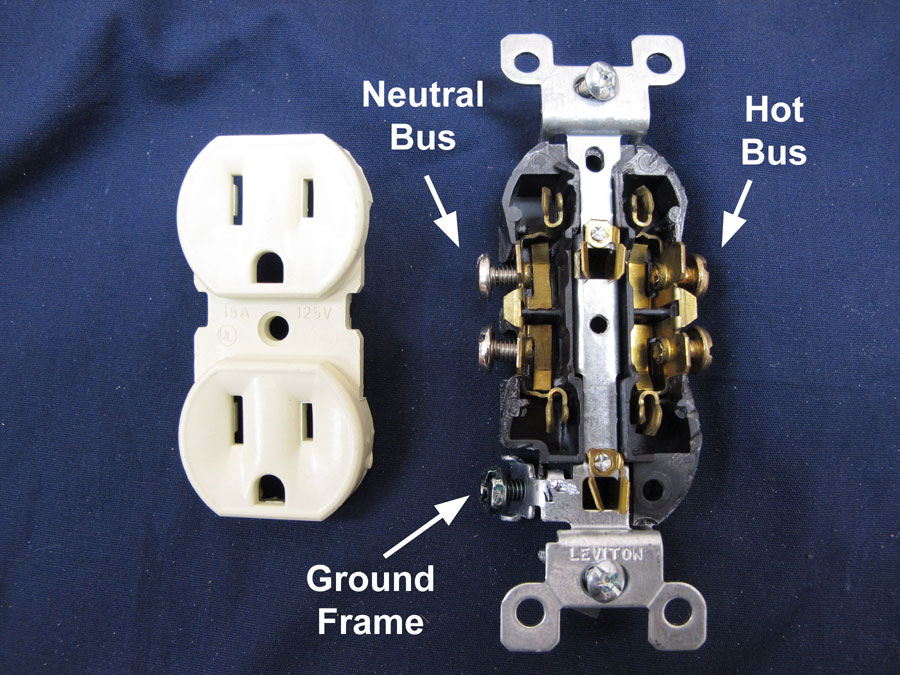
The modern receptacle outlet is defined by its ability to provide a safe, consistent flow of electricity. It consists of three primary contact points: the “hot” slot, the neutral slot, and the grounding hole. Polarization ensures that electricity flows in a specific direction, reducing the risk of shock, while the ground wire provides a safe path for excess electricity in the event of a fault.
In the tech sector, the quality of these internal contacts is paramount. High-performance outlets, often categorized as “hospital grade” or “spec grade,” use premium alloys to ensure that the tension on the plug remains constant over thousands of cycles. For a data center or a high-end gaming rig, a loose connection in a cheap receptacle can lead to arcing, heat buildup, and eventual hardware failure. Thus, the hardware specifications of the outlet are the first line of defense for any digital investment.
NEMA Standards and High-Performance Hardware
The National Electrical Manufacturers Association (NEMA) sets the standards that define the physical and electrical characteristics of receptacles. As we integrate more high-draw tech—such as electric vehicle (EV) chargers or high-end server racks—into residential environments, we are seeing a shift toward specialized receptacles. The NEMA 6-20R or 14-50R outlets, for instance, are becoming standard in tech-forward homes to support the high-wattage demands of the modern era. These are not merely “plugs”; they are high-capacity throughputs engineered to handle sustained loads that would melt a standard household outlet.
The Smart Home Revolution: Transforming Sockets into IoT Nodes
The most significant leap in receptacle technology is the transition from “dumb” hardware to “smart” nodes. A smart receptacle outlet is an IoT (Internet of Things) device that replaces the traditional outlet, integrating a wireless radio, a microprocessor, and a relay. This allows the outlet to be controlled via software, integrated into automation routines, and monitored from anywhere in the world.
Wireless Protocols: Wi-Fi, Zigbee, and Z-Wave
Smart receptacles operate on various communication protocols, each with specific technical trade-offs. Wi-Fi outlets are popular for their ease of use, as they connect directly to a home router without requiring a hub. However, for a home with dozens of connected devices, Zigbee or Z-Wave outlets are often preferred. These protocols create a “mesh network,” where each receptacle acts as a repeater, extending the range and reliability of the signal without taxing the central Wi-Fi bandwidth. This architectural choice is crucial for maintaining low latency in automated environments.
The Matter Standard: Interoperability in Power Management
One of the most exciting trends in the tech world is the arrival of “Matter.” This is a new, universal communication standard backed by industry giants like Apple, Google, and Amazon. Matter-enabled receptacle outlets ensure that regardless of the brand, the hardware can communicate seamlessly across different apps and voice assistants. For the tech enthusiast, this means an end to “app fatigue,” where every smart outlet requires its own proprietary software. The receptacle has become a standardized, interoperable component of a unified digital architecture.
Voice Control and Ecosystem Integration
Through integration with AI-driven voice assistants, the receptacle outlet has become a programmable asset. By naming a receptacle “Workstation,” a user can trigger a complex series of events with a single command. The AI can be programmed to power on the monitors, engage the studio lighting, and activate the peripheral docks simultaneously. This level of granular control over the physical power state of devices is a hallmark of modern tech integration.
Energy Intelligence: Software-Driven Power Management
Beyond mere on/off control, the modern receptacle outlet is a diagnostic tool. Advanced smart outlets now feature built-in current sensing technology that provides real-time data on energy consumption. This shift from consumption to “energy intelligence” is a major trend in sustainable tech.
Real-Time Energy Monitoring and Analytics
Through dedicated apps, users can see exactly how many kilowatt-hours (kWh) a specific device is drawing. This data is often visualized through heat maps and usage graphs, allowing users to identify “energy hogs” in their setup. For tech professionals running home labs or crypto-mining rigs, this level of telemetry is vital for calculating overhead and optimizing performance per watt.
Ghost Loads and Standby Power Mitigation
Many electronic devices suffer from “vampire power”—energy consumed while the device is supposedly turned off. Smart receptacle outlets address this by allowing for “hard” cuts to power via software. An outlet can be programmed to detect when a device has entered a low-power standby state and then physically disconnect the circuit, effectively reducing a home’s carbon footprint and energy bill through automated software logic.
Automated Scheduling and Geofencing
The integration of geofencing technology allows receptacle outlets to react to the user’s physical location. Using the GPS data from a smartphone, an outlet can “know” to power down non-essential tech when the user leaves the house and re-energize it as they approach the driveway. This fusion of location data and power hardware represents the pinnacle of current smart-grid technology at the consumer level.
Power Delivery and the Transition to USB-C Integration
As our devices move toward universal charging standards, the receptacle outlet is changing physically to accommodate DC (Direct Current) power delivery alongside traditional AC (Alternating Current) slots.
Integrated USB-C Power Delivery (PD) Ports
The latest generation of receptacle outlets features integrated USB-C ports. This is not just a convenience; it is a technical evolution. High-end outlets now support Power Delivery (PD) protocols, capable of outputting 30W, 60W, or even more directly from the wall. This eliminates the need for “wall warts” or bulky power adapters, as the receptacle itself contains the rectification and step-down circuitry necessary to charge a MacBook or an iPad Pro directly.
Gallium Nitride (GaN) Technology in In-Wall Hardware
To fit high-wattage charging components into the cramped space of a standard wall box, manufacturers are turning to Gallium Nitride (GaN) technology. GaN semiconductors are more efficient and generate less heat than traditional silicon, allowing for smaller, more powerful charging circuits to be embedded directly into the receptacle outlet. This is a prime example of how bleeding-edge material science is being applied to everyday electrical components.
The Future of DC Distribution in the Smart Home
There is a growing discussion in the tech community about the move toward native DC microgrids in homes. Since almost all of our tech—from LED lights to computers—runs on DC power, the receptacle of the future may move away from AC entirely for certain applications. We are seeing the first steps of this in specialized receptacle outlets that prioritize high-speed data and power through a single consolidated port, mirroring the philosophy of the USB4 and Thunderbolt standards.
Sophisticated Circuit Protection and Digital Security
In an age where a single power surge can destroy thousands of dollars of sensitive silicon, the protective tech inside a receptacle outlet has become incredibly advanced.
Digital GFCI and AFCI: Advanced Fault Detection
Ground Fault Circuit Interrupters (GFCI) and Arc Fault Circuit Interrupters (AFCI) are no longer just mechanical breakers. Modern versions utilize microprocessors to analyze the “signature” of the electrical current. They can distinguish between the normal spark of a vacuum cleaner motor and the dangerous arc of a frayed wire, tripping the circuit in milliseconds. This digital oversight is essential for protecting the complex power supplies found in modern servers and high-end workstations.
Network Security: Protecting the Outlet from Cyber Threats
Because smart receptacles are connected to the internet, they are technically potential entry points for cyberattacks. The “tech” in these outlets now includes security features such as AES encryption and secure boot-up processes. Ensuring that an outlet’s firmware is updated to patch vulnerabilities is a new responsibility for the modern homeowner, highlighting the fact that the receptacle is now a live device on the network, requiring the same security considerations as a router or a PC.
Longevity and Firmware Updates
Unlike traditional outlets that could stay in a wall for fifty years, the smart receptacle outlet is subject to the lifecycle of its software. Manufacturers are now designing these devices with over-the-air (OTA) update capabilities. This ensures that as new smart home protocols emerge or new security threats are identified, the physical outlet can be updated without being replaced. This bridge between permanent physical infrastructure and ephemeral software is the defining characteristic of the modern receptacle outlet.
In conclusion, when we ask “what is a receptacle outlet,” the answer depends on the era. In the past, it was a simple mechanical port. Today, it is a sophisticated, software-enabled gateway that manages energy, protects our most valuable gadgets, and integrates seamlessly into our digital lives. As we move toward a more connected and energy-conscious future, the humble outlet will continue to be at the forefront of the technological revolution.
aViewFromTheCave is a participant in the Amazon Services LLC Associates Program, an affiliate advertising program designed to provide a means for sites to earn advertising fees by advertising and linking to Amazon.com. Amazon, the Amazon logo, AmazonSupply, and the AmazonSupply logo are trademarks of Amazon.com, Inc. or its affiliates. As an Amazon Associate we earn affiliate commissions from qualifying purchases.