
In the world of personal finance and wealth management, the difference between those who struggle and those who thrive often comes down to a specific cognitive framework: proportional reasoning. While many view money through the lens of absolute values—dollars and cents—the most successful investors and business owners view it through the lens of relationships. Proportional reasoning is the ability to understand and compare ratios, percentages, and scales. It is the mathematical heartbeat of the economy, and mastering it is essential for anyone looking to optimize their financial life.
To think proportionally is to move beyond simple addition and subtraction. It is the realization that a $500 repair on a $5,000 car is a 10% capital expenditure, whereas the same repair on a $50,000 car is only 1%. In finance, everything is relative. Without this perspective, an individual cannot accurately assess risk, calculate return on investment (ROI), or understand the true cost of debt.

The Fundamental Logic of Proportional Thinking in Finance
At its core, proportional reasoning in finance is about understanding the relationship between two or more quantities. In a monetary context, this usually involves comparing an input to an output or a cost to a benefit. When we talk about “yield,” “margin,” or “interest rates,” we are speaking the language of proportions.
The Power of Percentages Over Raw Numbers
The most common application of proportional reasoning is the use of percentages. Investors often fall into the trap of focusing on nominal price changes. For instance, seeing a stock drop by $10 might feel significant, but proportional reasoning asks: $10 out of what? If the stock was $20, that is a catastrophic 50% loss. If the stock was $1,000, it is a negligible 1% fluctuation.
Professional money managers use percentages to normalize data. This allows for a “side-by-side” comparison of vastly different assets. By converting all performance metrics into proportions, an investor can determine whether a small-cap tech stock is outperforming a massive real estate trust, regardless of their share prices.
Understanding Scaling and Unit Economics
Proportional reasoning is also the bedrock of unit economics. For entrepreneurs and side-hustlers, understanding the cost per unit produced versus the revenue per unit is vital. If your business earns $2 for every $1 spent, you have a 2:1 ratio. Proportional reasoning tells you that this ratio should, in theory, scale. If you spend $10,000, you should expect $20,000. However, a proportional thinker also watches for “diseconomies of scale,” where the ratio begins to break down as the volume increases, such as when overhead costs rise faster than production efficiency.
Proportional Reasoning in Investment Strategy
In the realm of investing, proportional reasoning is what separates gambling from strategic asset allocation. It dictates how a portfolio is built, how it is rebalanced, and how risk is mitigated.
Asset Allocation and Rebalancing
A well-constructed portfolio is essentially a set of proportions. An investor might decide on a 60/40 split between equities and bonds. This is a proportional commitment. As market conditions change, these proportions shift; if stocks perform exceptionally well, the portfolio might drift to 70/30.
A disciplined investor uses proportional reasoning to “rebalance”—selling a portion of the overperforming asset to return to the original ratio. This forced logic compels the investor to sell high and buy low, removing the emotional impulse to chase “hot” stocks. Without a proportional framework, most people simply hold on until the market corrects, losing their gains in the process.
Risk-Adjusted Returns
Not all profits are created equal. Proportional reasoning allows investors to calculate risk-adjusted returns, often measured by the Sharpe Ratio. If Investment A returns 15% but has a high probability of a 50% drawdown, and Investment B returns 8% with very little volatility, Investment B might actually be the “richer” choice in a proportional sense. It offers more return per unit of risk. High-net-worth individuals prioritize these ratios because they understand that protecting capital is just as important as growing it.
The Rule of 72 and Compounding
Compounding interest is the ultimate exercise in proportional reasoning. The Rule of 72 is a mental shortcut used to determine how long it will take for an investment to double given a fixed annual rate of interest. By dividing 72 by the annual rate of return, investors get a rough estimate of the years required for doubling. This highlights the massive proportional difference between a 7% return and a 10% return; while the 3% difference seems small annually, it results in doubling your wealth years earlier.
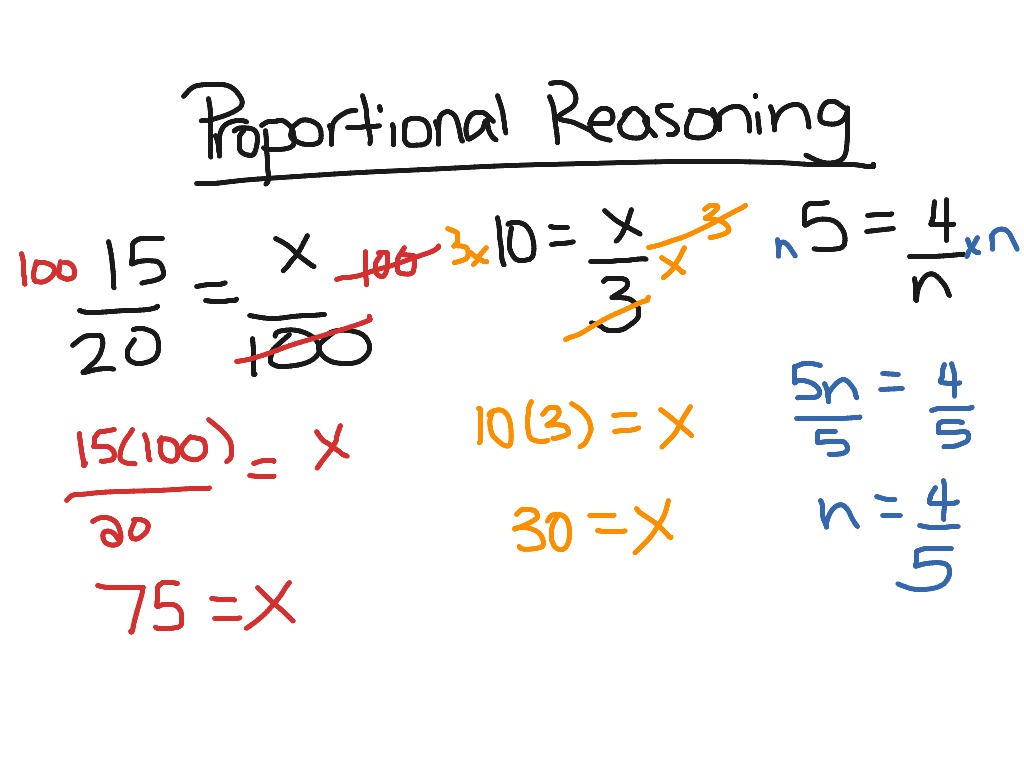
Scaling Your Business and Side Hustles with Proportional Logic
For those looking to generate online income or scale a business, proportional reasoning provides the “North Star” for decision-making. It prevents the common mistake of “working harder for less.”
Customer Acquisition Cost (CAC) vs. Lifetime Value (LTV)
In the digital economy, the ratio of CAC to LTV is the definitive metric of a business’s health. If it costs $50 in advertising to acquire a customer who spends $150 over their lifetime, the ratio is 1:3. This is a healthy proportion that suggests the business is scalable. If that ratio narrows to 1:1.1, the business is likely to fail once overhead and taxes are accounted for. Proportional reasoning forces the entrepreneur to look at the efficiency of their marketing spend rather than just the total number of sales.
The Opportunity Cost of Time
Personal finance isn’t just about money; it’s about the allocation of time. Proportional reasoning helps individuals calculate their “effective hourly rate.” If a side hustle generates $1,000 a month but requires 100 hours of labor, the rate is $10/hour. If another project generates only $500 but requires only 10 hours, the second project is five times more valuable proportionally. Wealthy individuals focus on maximizing the return on their time, constantly pruning activities that have a low proportional payout.
Consumer Finance: Applying Proportional Reasoning to Everyday Spending
Beyond the stock market and business boardrooms, proportional reasoning is a vital tool for everyday financial health. It provides a framework for budgeting and debt management that raw numbers cannot offer.
Debt-to-Income (DTI) Ratios
Lenders do not care as much about how much debt you have as they do about your Debt-to-Income ratio. A $2,000 monthly mortgage is affordable for someone earning $10,000 a month (a 20% DTI), but it is catastrophic for someone earning $4,000 (a 50% DTI). When managing your own finances, maintaining a low DTI is essential for maintaining liquidity and financial flexibility. Proportional reasoning helps you understand that as your income grows, your lifestyle should not necessarily grow at the same 1:1 ratio, allowing you to increase your savings rate.
The 50/30/20 Rule
One of the most popular budgeting frameworks is the 50/30/20 rule: 50% of income for needs, 30% for wants, and 20% for savings and debt repayment. This is pure proportional reasoning. It focuses on the balance of your financial life rather than specific dollar amounts. Whether you earn $30,000 a year or $300,000, these proportions provide a roadmap for sustainability. It ensures that no matter your income level, you are always prioritizing the future (savings) and living within your means.
Evaluating Large Purchases
Proportional reasoning helps combat the “lifestyle creep” that ruins many high-earners. It allows for better psychological framing. For example, when buying a home, many people focus on the monthly payment. A proportional thinker looks at the total interest paid over 30 years relative to the principal. They realize that a 1% difference in a mortgage rate can result in a proportional increase in total cost that equates to tens of thousands of dollars.
The Psychological Advantage of Ratio-Based Wealth Building
Mastering proportional reasoning isn’t just about the math; it’s about the mindset. It changes how you react to market volatility and how you perceive growth.
Reframing Losses and Gains
During a market downturn, a portfolio might drop by $50,000. For most, this number is painful and leads to panic selling. However, a proportional thinker sees that the market is down 10% and their portfolio is only down 8%. They recognize that they are actually outperforming the market proportionally. This perspective fosters emotional discipline, which is perhaps the most valuable asset in finance.
The Concept of Margin of Safety
Value investors like Warren Buffett rely heavily on proportional reasoning through the “margin of safety.” This is the ratio between the intrinsic value of a stock and its market price. By only buying when a significant proportional gap exists (e.g., buying something worth $1.00 for $0.70), the investor builds a cushion against errors in judgment or market fluctuations.

Conclusion: Developing Your Proportional Intuition
To build lasting wealth, one must stop looking at money as a static pile and start seeing it as a dynamic set of relationships. Whether you are analyzing a dividend yield, a credit card interest rate, or a business profit margin, you are utilizing proportional reasoning. By training yourself to always ask, “Relative to what?” and “At what rate?”, you move from being a passive participant in the economy to a strategic architect of your own financial future. In the end, wealth is not just about the numbers you have, but the proportions you keep.
aViewFromTheCave is a participant in the Amazon Services LLC Associates Program, an affiliate advertising program designed to provide a means for sites to earn advertising fees by advertising and linking to Amazon.com. Amazon, the Amazon logo, AmazonSupply, and the AmazonSupply logo are trademarks of Amazon.com, Inc. or its affiliates. As an Amazon Associate we earn affiliate commissions from qualifying purchases.