
In the rapidly evolving landscape of high-performance computing (HPC), data center infrastructure, and advanced hardware engineering, the term “pressure drop” has transitioned from a niche mechanical engineering concept to a critical KPI for technology architects. As we push the boundaries of processing power—moving from traditional silicon to AI-optimized chips that generate unprecedented levels of heat—understanding the mechanics of pressure drop is essential for anyone involved in hardware design, thermal management, or digital infrastructure.
At its core, pressure drop refers to the decrease in pressure as a fluid (either gas or liquid) moves through a system. In the context of technology, this system could be a liquid-cooling loop for a server rack, the intricate internal fins of a CPU heat sink, or the massive HVAC ducting of a hyperscale data center. While it might sound like a simple physical occurrence, pressure drop is the primary antagonist of energy efficiency and system longevity.
The Fundamentals: Defining Pressure Drop in Modern Computing
To understand pressure drop in a tech context, one must first view it as the “tax” paid for moving a cooling medium across a heat source. When air or liquid travels through a pipe, a manifold, or over a circuit board, it encounters resistance. This resistance is caused by friction between the fluid and the walls of the container, as well as turbulence created by bends, valves, or the dense components of a motherboard.
The Physics of Resistance in Hardware Cooling
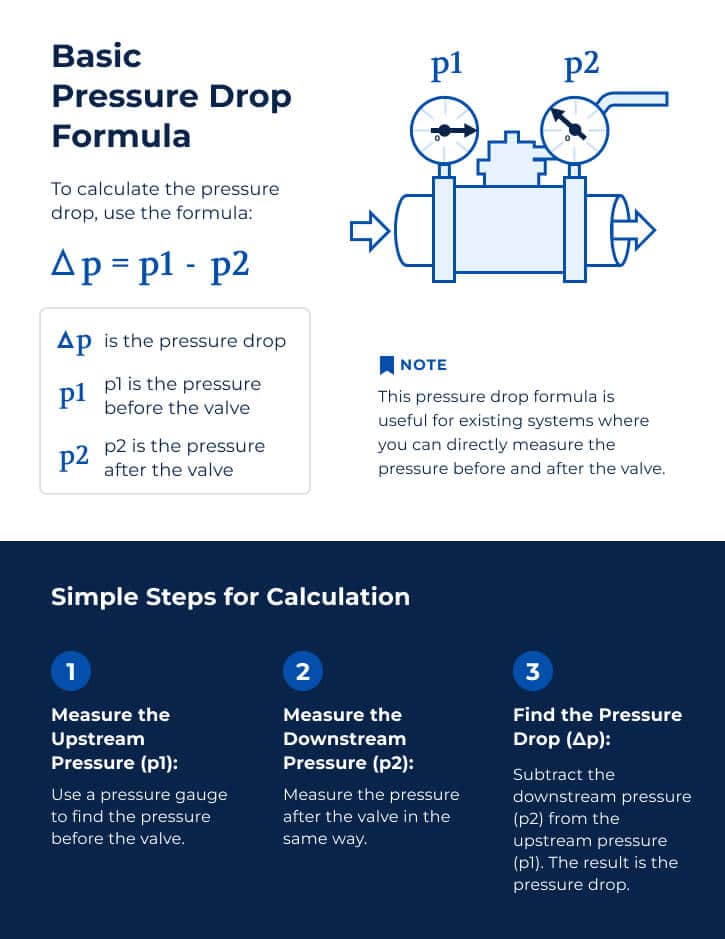
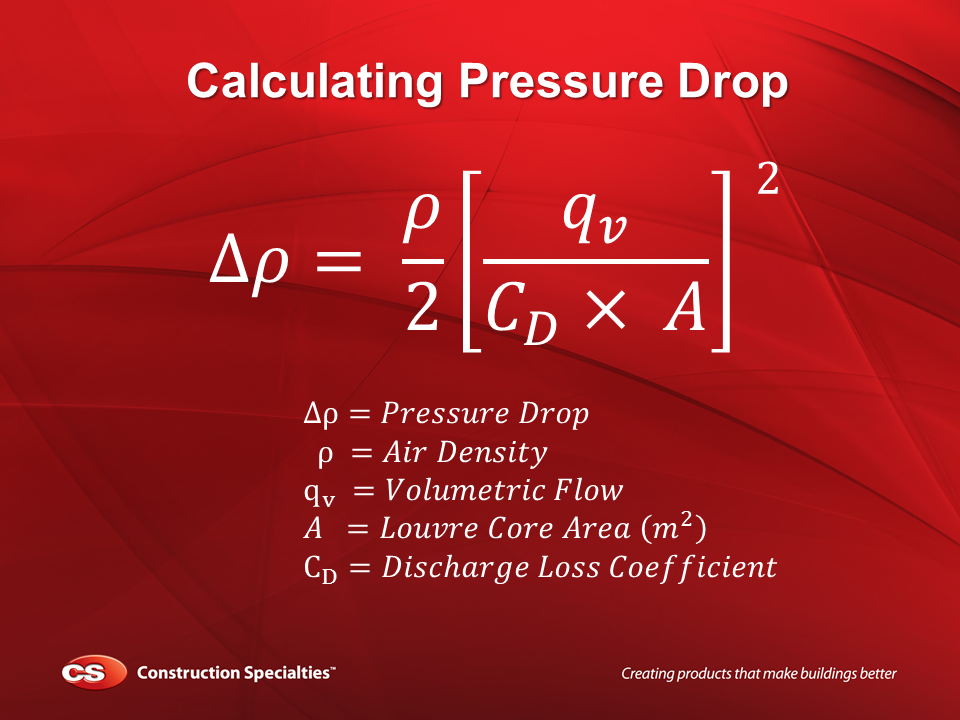
In any cooling system, a pump or fan provides the initial energy (pressure) to move the fluid. As the fluid encounters obstacles—such as the high-density fins of a liquid cold plate—some of that energy is dissipated as heat and noise, leading to a lower pressure at the exit than at the entrance. This difference ($Delta P$) is the pressure drop.
In high-end technology applications, engineers are constantly balancing a “Goldilocks” scenario. To cool a high-TDP (Thermal Design Power) processor, such as an NVIDIA H100 GPU, you need a high flow rate of coolant. However, increasing the flow rate exponentially increases the pressure drop. If the pressure drop is too high, the pumps must work harder, consuming more electricity and increasing the risk of mechanical failure or leaks.
Why It Matters for High-Performance Computing (HPC)
As we enter the era of exascale computing, thermal management has become the primary bottleneck. We can design chips that process trillions of operations per second, but if we cannot move the heat away efficiently, the chip will thermally throttle—reducing its clock speed to protect itself from melting.
Pressure drop is the metric that determines the limits of this cooling efficiency. In a dense server environment, every millimeter of space is optimized. Narrower tubes and thinner fins improve heat transfer but skyrocket the pressure drop. Solving this puzzle is what separates world-class hardware engineering from mediocre design.
Thermal Management and Data Center Architecture
The shift from air cooling to liquid cooling is perhaps the most significant trend in data center technology today. This transition is entirely driven by the need to manage pressure drop and thermal resistance more effectively than traditional fans allow.
Air Cooling vs. Liquid Cooling: The Pressure Drop Trade-off
Traditional air cooling relies on massive fans to push air through server chassis. The pressure drop in these systems is caused by the “impedance” of the server components. As components become more packed, the air has a harder time passing through, requiring louder, more power-hungry fans.
Liquid cooling, specifically Direct-to-Chip (DTC) or cold plate cooling, offers a solution. Water and specialized dielectric fluids have a much higher heat capacity than air. However, the pressure drop in liquid systems is significantly more complex to manage. A liquid cooling loop involves pumps, reservoirs, heat exchangers, and quick-disconnect fittings. Each of these components introduces a specific “head loss” (another term for pressure drop). If a technician adds too many nodes to a single cooling loop without accounting for the cumulative pressure drop, the flow rate will plummet, leading to catastrophic overheating.
Immersion Cooling and Fluid Mechanics
The cutting edge of data center tech is immersion cooling, where entire servers are submerged in a non-conductive liquid. Here, pressure drop takes on a different form. It isn’t just about moving fluid through a pipe; it’s about the natural convection and the forced flow of fluid around every capacitor and inductor on the board. Tech firms like GRC (Green Revolution Cooling) are using advanced fluid dynamics to minimize “dead zones” where fluid becomes stagnant due to localized pressure drops, ensuring that even the smallest components are cooled uniformly.

Software Solutions: Simulating Pressure Drop with CFD
In the past, engineers relied on physical prototypes and trial-and-error to measure pressure drop. Today, the tech industry utilizes sophisticated software to predict fluid behavior with pinpoint accuracy.
Digital Twins and Predictive Modeling
Computational Fluid Dynamics (CFD) software, such as Ansys Fluent or SimScale, allows engineers to create a “Digital Twin” of a cooling system. By inputting the geometry of a heat sink or a data center floor plan, the software simulates how millions of individual fluid particles will interact with the surfaces.
These simulations provide a visual heat map of pressure drop. Areas of high turbulence appear in red, signaling to the designer that a bend is too sharp or a fin is too thick. By iterating in a virtual environment, tech companies can optimize their hardware for the lowest possible pressure drop before a single physical component is manufactured. This drastically reduces R&D costs and accelerates the time-to-market for new server architectures.
Optimizing Flow with AI-Driven Design
A new trend in CAD (Computer-Aided Design) software is generative design powered by AI. Instead of a human engineer drawing a cooling channel, the AI is given a goal: “Maintain a specific flow rate with a pressure drop of less than 5 PSI.” The AI then generates organic, lattice-like structures that a human would never think to design. These AI-optimized channels often look like biological veins and are incredibly efficient at minimizing pressure drop while maximizing surface area for heat transfer.
Impact on Energy Efficiency and Green Tech
Pressure drop isn’t just a hardware problem; it’s a sustainability problem. The “M” in “Money” and the “T” in “Tech” intersect at the power bill of a data center.
Reducing PUE (Power Usage Effectiveness)
PUE is the standard metric for data center efficiency. A PUE of 1.0 means all energy goes to the IT equipment, and none is wasted on cooling or lighting. High pressure drops in cooling systems drive PUE up. If a pump has to work twice as hard to overcome the resistance of a poorly designed cooling loop, that energy is wasted.
By utilizing low-pressure-drop components—such as large-bore manifolds and high-flow quick disconnects—data centers can significantly reduce their “parasitic power” consumption. For a hyperscale facility, a 5% reduction in pressure drop can translate to millions of kilowatt-hours saved annually, directly contributing to corporate “Net Zero” goals.
The Hidden Cost of Inefficiency
Beyond electricity, high pressure drop leads to “erosion-corrosion.” When fluid is forced through a restriction at high velocity to maintain flow despite a pressure drop, it can actually wear away the metal of the pipes or heat sinks over time. This leads to particulate buildup in the system, which further increases pressure drop in a vicious cycle. In the tech world, this results in increased maintenance cycles and premature hardware failure, impacting the total cost of ownership (TCO).
Future Trends: Smart Valves and Dynamic Flow Control
The future of managing pressure drop in technology lies in “Smart Infrastructure.” We are moving away from static systems toward dynamic, software-defined cooling.
IoT Sensors and Real-Time Telemetry
Modern liquid-cooled racks are now equipped with IoT sensors that monitor pressure at every entry and exit point. This telemetry data is fed into a central management system. If the software detects a sudden spike in pressure drop, it can diagnose the issue in real-time—whether it’s a clogged filter, a failing pump, or a localized “air lock.”
Variable Speed Technology
Instead of running pumps at a constant high pressure to ensure all nodes are cooled, smart systems use Variable Frequency Drives (VFDs). These systems calculate the minimum pressure required to overcome the current pressure drop and meet the thermal demand. As the server workload decreases at night, the system lowers the pressure, saving energy and reducing wear on the mechanical components.
As chip densities continue to climb and the demand for AI processing reaches a fever pitch, the “physics of the small”—of which pressure drop is a primary component—will continue to dictate the ceiling of what is technologically possible. From the software that simulates the flow to the exotic materials used in cold plates, mastering pressure drop is the quiet revolution enabling the next generation of digital progress.
aViewFromTheCave is a participant in the Amazon Services LLC Associates Program, an affiliate advertising program designed to provide a means for sites to earn advertising fees by advertising and linking to Amazon.com. Amazon, the Amazon logo, AmazonSupply, and the AmazonSupply logo are trademarks of Amazon.com, Inc. or its affiliates. As an Amazon Associate we earn affiliate commissions from qualifying purchases.