
In the modern financial landscape, the divide between retail trading strategies and institutional execution has never been more apparent. While many novice traders rely on lagging indicators like the Relative Strength Index (RSI) or moving average crossovers, professional market participants—banks, hedge funds, and central banks—operate on a different plane. At the heart of this institutional approach lies the concept of the “Order Block.”
An order block is a specific price zone where large-scale institutional players have previously placed significant buy or sell orders. When these massive entities enter the market, they cannot fill their entire positions at once without causing extreme price volatility and unfavorable slippage. Consequently, they leave “footprints” on the chart in the form of consolidated price action followed by an aggressive expansion. Understanding how to identify and trade these zones allows retail investors to align themselves with “Smart Money,” moving away from speculative guessing and toward a rule-based, high-probability methodology.

The Anatomy of an Order Block: Beyond Traditional Support and Resistance
To the untrained eye, an order block might look like a standard support or resistance level. However, the logic behind an order block is rooted in market microstructure and liquidity. Unlike traditional support, which is often viewed as a psychological floor where buyers congregate, an order block represents a specific area of “unfilled orders” left behind by institutional algorithms.
Defining the Order Block in Smart Money Concepts (SMC)
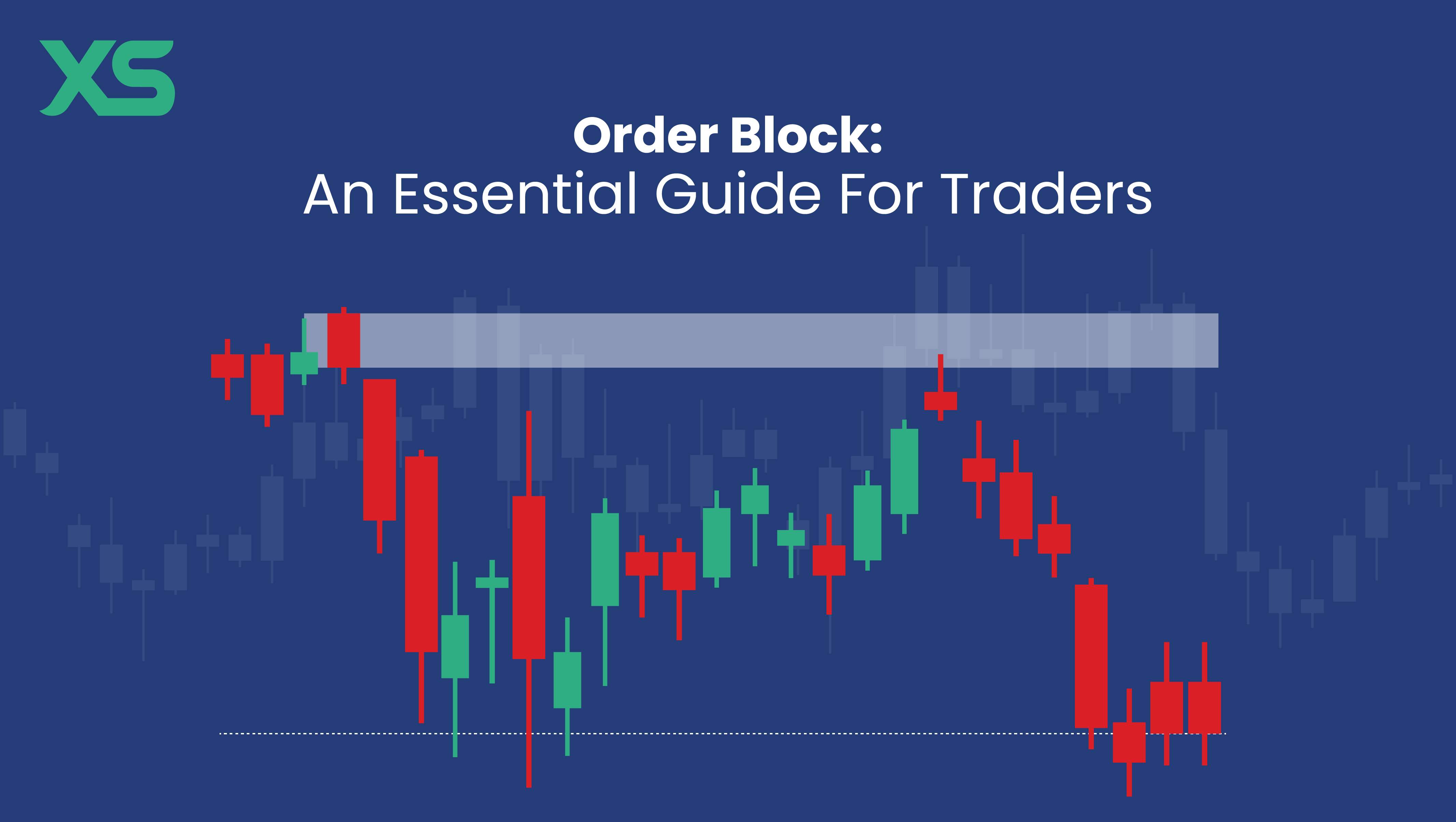
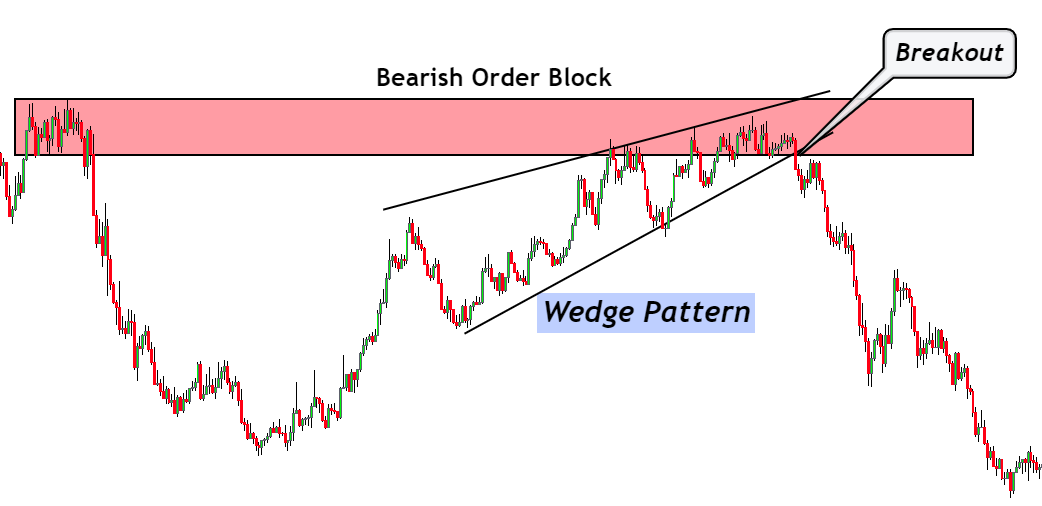
In technical terms, a bullish order block is typically defined as the last bearish (down) candle before a significant bullish price expansion that breaks a previous market structure high. Conversely, a bearish order block is the last bullish (up) candle before a sharp price decline that breaks a market structure low.
The significance of these candles lies in what they represent: the final attempt by the market to move in one direction before big players flip the script and drive price aggressively the other way. When the market returns to these zones, it is often to “mitigate” or pick up the remaining orders that weren’t filled during the initial impulsive move.
Why Institutions Leave Footprints
Institutional traders deal in billions of dollars. If a major bank wants to buy $500 million worth of EUR/USD, they cannot simply click a “buy” button at the current market price without driving the price up 50 pips instantly, worsening their average entry price. Instead, they use complex algorithms to distribute these orders.
An order block is created when an institution initiates a move to trap retail traders on the wrong side of the market (often by engineering a “stop run” or a liquidity sweep) before reversing price. This process creates a concentrated zone of supply or demand. By the time the market expands away from this zone, the institution may still have a portion of their intended position waiting to be triggered. As price eventually returns to this level, these resting orders are hit, often resulting in a sharp rejection and a continuation of the new trend.
Identifying Bullish and Bearish Order Blocks
Successful trading using order blocks requires more than just picking any candle on a chart. It demands a strict set of criteria to differentiate between a random price fluctuation and a true institutional footprint. The most critical element in identifying a valid order block is the presence of “displacement.”
Characteristics of a Bullish Order Block
A high-probability bullish order block (BuOB) is identified following these steps:
- The Candle: Locate the lowest bearish candle in a price move.
- The Expansion: Look for a powerful, impulsive move upward immediately following that candle. This move should ideally consist of large-bodied candles (long wicks are less desirable here).
- Market Structure Break (MSB): The upward move must break a previous swing high (Resistance). This confirms that the trend has shifted or been reinforced by institutional buying.
- The Gap: Often, a “Fair Value Gap” or price imbalance is left just above the order block, signaling that the move was so fast that the market was unable to facilitate trade efficiently at every price level.
Characteristics of a Bearish Order Block
Conversely, a bearish order block (BeOB) is found at the peak of a move:
- The Candle: Identify the highest bullish candle before a sharp decline.
- The Expansion: A rapid drop in price must follow, characterized by strong bearish momentum.
- Market Structure Break: This decline must break through a previous swing low (Support), indicating that the bears have taken control of the narrative.
- Inefficiency: Look for a lack of overlapping candles during the drop, suggesting that sellers were overwhelmingly dominant.
The Role of Displacement and Market Structure Breaks
Without a break in market structure, an order block is simply a candle in a range. The break is the “validation” that institutional money has entered the fray. Displacement refers to the speed and magnitude of the move away from the block. If the price drifts away slowly, it suggests retail participation. If the price “teleports” away with large candles, it suggests that an institutional algorithm has been triggered. This displacement creates the “imbalance” that the market will eventually seek to rebalance, bringing the price back into the order block for a retest.
How to Trade Order Blocks: Strategies for High-Probability Setups
Identifying an order block is only half the battle; the other half is execution. Trading these zones requires patience, as the market may take hours, days, or even weeks to return to the identified block. This return is known as “mitigation.”
The Mitigation Process
When price returns to an order block, traders look for a “tap” into the zone. The most sensitive part of an order block is the “Mean Threshold,” which is the 50% mark of the candle’s body. Institutional orders are often clustered between the open of the candle and this midpoint.
A “mitigated” order block is one that price has already returned to and rejected. Generally, the first touch of an order block is the most potent. Subsequent touches become increasingly risky, as the “unfilled orders” are being systematically filled, eventually exhausting the zone’s defensive power.
Refining the Entry: Timeframes and Confluence
To increase the reward-to-risk ratio, professional traders often use a “top-down” approach. They identify an order block on a higher timeframe (such as the 4-hour or Daily chart) and then drop down to a lower timeframe (such as the 15-minute or 5-minute chart) to look for a “confirmation” entry.
Confirmation occurs when a smaller-scale order block forms within the higher-timeframe block. This alignment of multiple timeframes—often called confluence—provides a much tighter stop-loss and a significantly higher potential for profit.
Setting Targets and Managing Risk
One of the primary benefits of trading order blocks is the clear definition of risk.
- Stop Loss: For a bullish trade, the stop loss is typically placed just below the low of the order block candle. For a bearish trade, it is placed just above the high.
- Take Profit: Traders usually target the next area of liquidity. This could be a previous swing high (for buys), a swing low (for sells), or a clean level where retail stop-losses are likely sitting. Because order blocks often initiate large moves, it is common to see reward-to-risk ratios of 1:3, 1:5, or even higher.
Common Pitfalls and Why Not Every Order Block is Tradable
While order blocks are powerful, they are not a “holy grail.” Markets are dynamic, and retail traders often fall into traps by misidentifying these zones or ignoring the broader context.
The Importance of Liquidity Sweeps
The most successful order blocks are often preceded by a “liquidity sweep.” This happens when price briefly moves above an old high or below an old low to trigger retail stop-losses before reversing. This move provides the “fuel” (liquidity) the institutions need to fill their large positions. If an order block forms without a clear liquidity sweep, it is often less reliable because the “smart money” may not have fully positioned themselves yet.
Avoiding the “Trap” of Low-Probability Zones
A common mistake is trading every “last candle before a move.” To filter out low-probability setups, traders should ask:
- Did this move break a significant market structure?
- Is there a Fair Value Gap (imbalance) left behind?
- Is the move aligned with the higher-timeframe trend?
- Is the order block located in a “premium” or “discount” zone? (Buying is preferred in a discount/low price area, while selling is preferred in a premium/high price area).
Ignoring these filters leads to “SMC trap” trading, where traders see order blocks everywhere and get stopped out frequently because they are trading in the middle of a range rather than at the extremes where institutions actually operate.
Integrating Order Blocks into a Professional Trading Plan
Transitioning from traditional technical analysis to an order-block-based strategy requires a shift in mindset. It involves viewing the market as a mechanism for seeking liquidity rather than just a series of price patterns.
Building a Rule-Based Framework
To successfully trade order blocks, a trader must develop a rigorous checklist. This removes emotional decision-making from the process. A sample checklist might include:
- Higher Timeframe Bias: Is the daily trend bullish or bearish?
- Zone Identification: Where is the nearest unmitigated 4-hour order block?
- Entry Trigger: Did the price tap the zone and show a lower-timeframe shift in market structure?
- Risk Management: Is the stop-loss logical, and is the target reaching for “fresh” liquidity?
The Psychological Edge of Trading with Institutional Flow
Trading order blocks provides a unique psychological advantage. Instead of chasing price (FOMO), the trader waits for the price to come to them. It fosters discipline because it requires the market to “prove” its intent through displacement and structure breaks before a trade is ever considered.
By understanding that the market is moved by those with the deepest pockets, and by learning to read the footprints they leave behind, traders can move away from the “noise” of the retail crowd. Order blocks are not just candles on a chart; they are the physical manifestations of institutional intent, offering a window into how the world’s largest financial players navigate the global markets. For the disciplined investor, mastering this concept is a significant step toward achieving long-term consistency in the world of finance.
aViewFromTheCave is a participant in the Amazon Services LLC Associates Program, an affiliate advertising program designed to provide a means for sites to earn advertising fees by advertising and linking to Amazon.com. Amazon, the Amazon logo, AmazonSupply, and the AmazonSupply logo are trademarks of Amazon.com, Inc. or its affiliates. As an Amazon Associate we earn affiliate commissions from qualifying purchases.