
In the landscape of global identity, few entities have managed to maintain relevance, influence, and recognition for over a millennium. When we ask “what is older: Christianity or Islam?”, we are not merely asking a chronological question about theological emergence; we are examining the world’s two most successful legacy brands. Christianity, originating in the 1st century CE, and Islam, emerging in the 7th century CE, represent the gold standard of brand sustainability, scaling, and market penetration.
For a brand strategist, the 600-year gap between these two identities offers a fascinating case study in how “first-to-market” advantage contrasts with “rapid scaling” and “refined positioning.” While Christianity holds the title of the older institution, both have utilized sophisticated methods of identity management to become the most recognizable organizations on the planet.
The Chronological Advantage: Heritage and First-to-Market Strategy
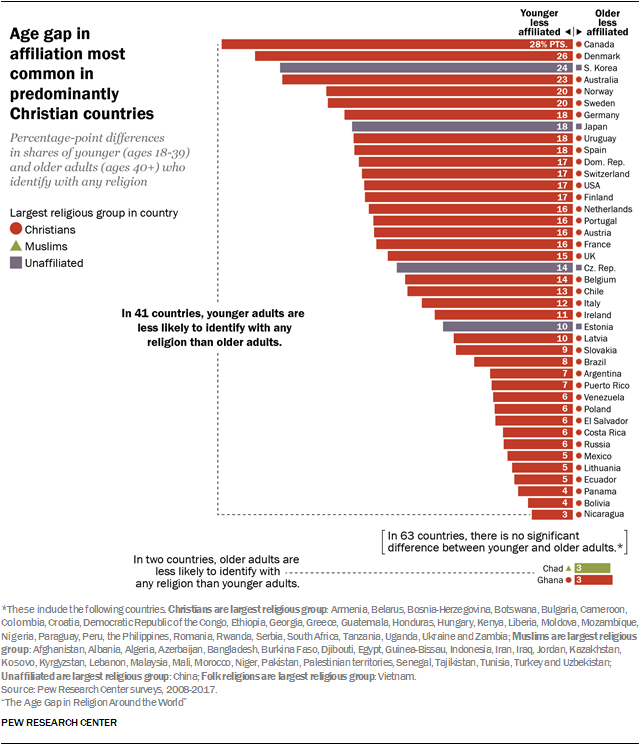
In brand strategy, the concept of heritage is often synonymous with trust. Christianity’s nearly 2,000-year history gives it a significant “heritage equity” that defines its presence in the Western world and beyond.
Christianity’s Head Start in Global Identity
Founded in the Roman province of Judea, Christianity benefited from an existing infrastructure—the Roman roads and trade routes—which served as the initial distribution channels for its message. This “first-to-market” advantage allowed Christianity to embed its symbols, holidays, and narratives into the very bedrock of Western civilization. From a branding perspective, this is known as “category dominance.” When people think of a religious institution in the West, the Christian model is often the default archetype because it had six centuries to establish its visual and moral vocabulary before the emergence of Islam.
This longevity has allowed for deep brand “nesting.” The Christian calendar, for instance, became the global standard for business and governance (BC/AD or BCE/CE). This is the ultimate achievement in brand strategy: when your internal systems become the external operating system of the world.
Islam’s Rapid Scaling and the Power of Consistent Messaging
Emerging roughly 600 years after Christianity, Islam entered the “market” of ideas not as a nascent startup, but as a highly refined and rapidly scaling disruptor. While it is the younger of the two, Islam’s growth trajectory was historically unprecedented. Within a century of its founding, it had expanded across the Middle East, North Africa, and into Europe.
From a brand perspective, Islam’s “late-mover advantage” allowed it to learn from the fragmentation that had already begun to affect the Christian brand. Islam prioritized a highly unified brand manual: the Quran, maintained in its original Arabic. This created a level of linguistic and ritualistic consistency that acted as a powerful “brand moat,” ensuring that the identity remained intact regardless of geographic expansion.
Visual Identity and Symbolism: The Most Recognized Logos in Human History
One of the core pillars of brand strategy is visual identity. Christianity and Islam have developed some of the most enduring “logos” in history—the Cross and the Crescent. These symbols transcend language barriers, performing the exact function that modern corporate logos strive for: instant recognition and emotional resonance.
Iconography as a Tool for Universal Communication
The Christian Cross is perhaps the most efficient logo ever designed. It is simple, easy to replicate, and carries an immense narrative weight. Over the centuries, the brand has diversified its visual portfolio—the fish (Ichthys), the crucifix, and various denominational symbols—but the core “logo” remains the Cross. This consistency is what allows a brand to survive for two millennia.
The Cross serves as a “trust signal.” Whether it is placed on a building, worn as jewelry, or printed on a book, it immediately communicates the brand’s values and heritage. In modern branding terms, this is “high-utility design”—a symbol that works as well on a cathedral as it does on a digital favicon.
Architectural Branding: Creating Physical Presence
Both brands understood early on that physical space is a key component of brand experience. The architecture of the Cathedral and the Mosque serves as a “flagship store” for the identity.
Christianity utilized the Gothic and Baroque styles to create a sense of awe and authority, reinforcing the brand’s power during the Middle Ages. Islam, conversely, developed a distinct aesthetic centered on geometry, calligraphy, and minarets. The dome and the minaret became architectural “brand assets” that signaled the presence of the community from miles away. This is a masterclass in “environmental branding”—using the physical landscape to remind the audience of the brand’s presence and scale.
Brand Guidelines and Governance: Maintaining Consistency Across Borders
A brand is only as strong as its ability to maintain its identity across different markets. For Christianity and Islam, the challenge has always been “brand dilution”—how to keep the core message the same while translating it into hundreds of cultures.
The Scriptural Foundation: The Ultimate Brand Manual
Every successful brand needs a “Brand Bible,” a set of rules that defines what the brand is and what it is not. The Bible and the Quran serve as these definitive manuals. They provide the “tone of voice,” the “mission statement,” and the “core values.”
For Islam, the emphasis on the Arabic language created a uniquely cohesive global brand. Whether in Indonesia, Morocco, or the United States, the core “brand experience” (the five daily prayers, the call to prayer) remains remarkably consistent. This is “global brand standardization” at its peak. Christianity, however, took the path of “localization.” By translating its “manual” into every possible language, it sacrificed some central consistency for the sake of deeper market penetration, leading to the various “sub-brands” we see today, such as Catholicism, Orthodoxy, and Protestantism.
Dealing with Brand Fragmentation: Schisms and Sub-Brands
In the corporate world, when a company grows too large, it often splits or creates subsidiaries. The Great Schism of 1054 and the Protestant Reformation are examples of “brand fracturing.” While these events created competition within the Christian category, they also allowed the brand to reach different “demographics.”
Islam has experienced similar dynamics with the Sunni and Shia branches. In branding terms, these are not different companies but different “brand iterations” of the same parent identity. They share the same core assets but offer different “user experiences” and interpretations of the brand’s history.
Loyalty and Retention: The Psychology of Modern Brand Adherence
The ultimate goal of any brand is to move from “customer” to “advocate.” Christianity and Islam have achieved a level of brand loyalty that modern corporations like Apple or Nike can only dream of. This is achieved through a combination of community building, ritual, and “intergenerational brand transfer.”
Social Proof and the Power of Community
Both Christianity and Islam are built on the “power of the collective.” The concept of the “Ummah” in Islam and the “Church” in Christianity are powerful community-building tools. When a brand becomes part of a person’s social identity, the “switching costs” become incredibly high. People do not just “use” these brands; they “belong” to them.
This sense of belonging is reinforced through “brand rituals”—weekly services, fasting periods like Lent or Ramadan, and pilgrimage. These rituals are “touchpoints” that keep the audience engaged with the brand on a regular, rhythmic basis. This is the secret to 1,400 to 2,000 years of retention: making the brand an inseparable part of the user’s daily life.
Adapting to Digital Transformation: The 21st Century Pivot
In the modern era, both brands have had to face the challenge of digital transformation. The “older” brand, Christianity, has seen a massive shift toward digital “content delivery,” with televised sermons and app-based Bible studies. Islam has similarly embraced technology, with apps for prayer times, digital Quran platforms, and social media influencers who act as “brand ambassadors” for the faith.
The fact that these ancient identities can thrive in an age of AI and instant gratification is a testament to their brand elasticity. They have successfully transitioned from parchment to print, and from print to pixels, without losing their core identity.

Conclusion: The Value of Longevity
When we compare Christianity and Islam, the question of “which is older” serves to highlight the different stages of brand evolution. Christianity’s 2,000-year history provides it with a foundational status in the global market, while Islam’s 1,400-year journey demonstrates the power of a unified, rapidly scaling identity.
Both represent the pinnacle of “Brand Strategy.” They have survived political collapses, industrial revolutions, and technological shifts because they built their identities on universal human needs: meaning, community, and hope. For any brand builder looking to create something that lasts, the histories of Christianity and Islam offer the most profound lessons in how to build a legacy that transcends time itself.
aViewFromTheCave is a participant in the Amazon Services LLC Associates Program, an affiliate advertising program designed to provide a means for sites to earn advertising fees by advertising and linking to Amazon.com. Amazon, the Amazon logo, AmazonSupply, and the AmazonSupply logo are trademarks of Amazon.com, Inc. or its affiliates. As an Amazon Associate we earn affiliate commissions from qualifying purchases.