
Understanding the landscape of Mississippi’s area codes requires more than a simple list of three-digit prefixes. In the modern era of telecommunications, an area code is a critical component of the North American Numbering Plan (NANP), a technical framework that ensures billions of calls reach their intended destinations with millisecond precision. For Mississippi, the evolution from a single statewide code to a complex grid of geographic splits and overlays reflects the state’s technological growth and the increasing demand for digital connectivity.
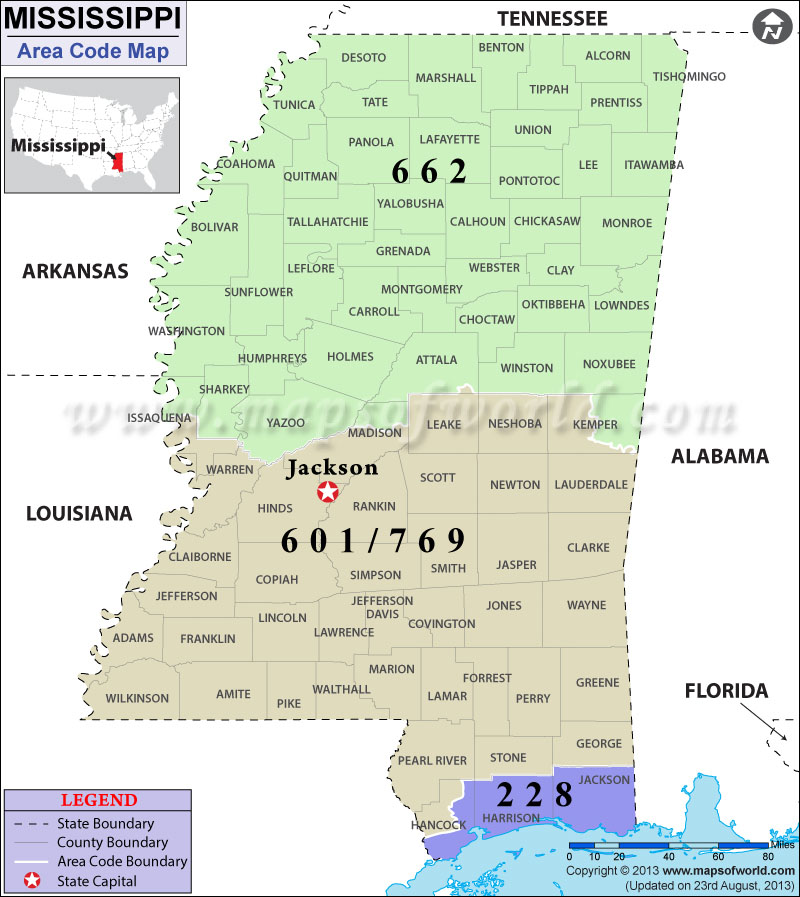
Currently, Mississippi is served by three primary area codes: 601, 662, and 769. However, the story behind these numbers involves sophisticated network switching, the rise of Voice over Internet Protocol (VoIP), and the implementation of advanced security protocols designed to protect the integrity of the state’s communication lines.
The Evolution of the North American Numbering Plan (NANP) in Mississippi
The architectural foundation of Mississippi’s phone system dates back to 1947, when AT&T and Bell Labs established the North American Numbering Plan. This was a revolutionary shift from manual switchboard operators to a mechanized system that allowed for Direct Distance Dialing (DDD).
The 601 Legacy: Mississippi’s Original Identification
For over five decades, 601 was the sole identifier for the entire state of Mississippi. In the early days of telecommunications, area codes were assigned based on a specific logic related to rotary phones. States with higher call volumes were given codes that were faster to dial—those with lower numbers in the second and third positions. Mississippi’s 601 was a middle-of-the-road assignment that served the state’s rural and urban populations through the era of analog copper lines and mechanical switches.
Expansion and the 662 Split
By the late 1990s, the explosion of fax machines, pagers, and early cellular phones created a “numbering exhaustion” crisis across the United States. Mississippi was not immune. In 1999, the state underwent a geographic split. The northern half of the state, including cities like Tupelo, Southaven, and Oxford, was assigned the 662 area code. This technical partition required a massive reconfiguration of central office (CO) switches. Telecommunications engineers had to ensure that the transition didn’t disrupt emergency services or business operations, marking one of the largest hardware and software updates in the state’s history.
The Modern Era: 769 and Area Code Overlays
The most recent technical evolution occurred in 2005 with the introduction of the 769 area code. Unlike the 662 split, 769 was implemented as an “overlay” for the 601 region. In telecommunications engineering, an overlay is a more efficient way to add capacity without requiring residents to change their existing numbers.
The implementation of the 769 overlay signaled a shift toward mandatory ten-digit dialing. From a technical perspective, this required the software governing local exchanges to recognize that a local call no longer consisted of just seven digits. This change was a prerequisite for the sophisticated routing logic used in modern digital networks.
The Technology Behind Area Code Management
While users see area codes as simple geographic markers, they are actually part of a complex hierarchical routing system. When you dial a Mississippi number, a series of high-speed data exchanges occur behind the scenes to route that call through the Public Switched Telephone Network (PSTN).
How Central Office Codes Work
An area code is just the first part of a ten-digit string. The three digits following the area code are known as the Central Office (CO) code or prefix. Each CO code corresponds to a specific switching system or “exchange” within a carrier’s network. In Mississippi, these codes are managed by the North American Numbering Plan Administrator (NANPA), which uses predictive algorithms to assign prefixes to carriers like AT&T, C-Spire, and Verizon based on projected growth.
The technical limitation of an area code is roughly 7.92 million individual phone numbers. When a region like Central Mississippi nears this limit, engineers must decide between a split (physically dividing the territory) or an overlay (adding a new code to the same territory). Modern software-driven networking favors overlays because they are less disruptive to hardware configurations.
Network Switching and Routing Protocols
In the past, routing a call meant physically connecting copper wires. Today, calls in Mississippi are routed using Signaling System No. 7 (SS7) or Session Initiation Protocol (SIP). SS7 is the legacy protocol that handles the “out-of-band” signaling, determining how a call from a 662 number in the Delta reaches a 601 number in Jackson.

As the industry moves toward “All-IP” networks, SIP trunking has become the standard. This allows for more flexible number management. For instance, a business in Gulfport can technically use an Oxford 662 area code via a cloud-based PBX system, even if they have no physical presence in North Mississippi. This decoupling of geography from technology is a hallmark of modern telecommunications.
Number Portability: The Tech that Changed Everything
Local Number Portability (LNP) is the technology that allows users to keep their Mississippi area code even if they switch carriers or move across the country. LNP relies on a centralized database known as the Number Portability Administration Center (NPAC). When you dial a Mississippi number, the network queries this database to see if the number has been ported. This prevents “orphan” numbers and ensures that the technical routing matches the current carrier, not necessarily the original carrier that “owned” the block of numbers.
Digital Transformation and the Rise of VOIP in Mississippi
The definition of a “Mississippi area code” has changed with the rise of Voice over Internet Protocol (VOIP) and cloud communication tools. No longer tied to a physical landline in a home or office, area codes are now digital assets managed via software dashboards.
Virtual Presence: Getting a 601 Number from Anywhere
For modern enterprises, an area code is a strategic tool. Using VOIP software, a company can secure a 601 or 662 area code to establish a “local” digital presence. This is achieved through virtual numbers, where the software maps a traditional Mississippi PSTN number to an IP address. This technology allows remote workers to represent their Mississippi-based headquarters regardless of their physical location, utilizing apps and desktop interfaces to manage calls.
Unified Communications for Mississippi Businesses
Large organizations within the state, such as those in the healthcare or educational sectors, utilize Unified Communications as a Service (UCaaS). These platforms integrate Mississippi area codes into a broader ecosystem of video conferencing, instant messaging, and CRM integration. From a software perspective, the area code becomes a metadata tag that helps categorize incoming leads and automate call routing based on the caller’s geographic origin.
Security and Verification in the Age of Robocalls
One of the biggest technical challenges facing Mississippi area codes today is “neighbor spoofing.” This is a tactic where bad actors use software to forge their Caller ID to match the victim’s area code (e.g., making a scam call appear to come from a 601 number).
To combat this, the FCC has mandated the implementation of STIR/SHAKEN (Secure Telephone Identity Revisited and Signature-based Handling of Asserted information using toKENs). This framework uses digital certificates to “sign” a call at its origin. When a call with a Mississippi area code reaches your phone, the carrier verifies the digital signature. If the signature is missing or invalid, the network can flag the call as “Potential Spam,” protecting the integrity of the state’s numbering plan.
Future Trends: Beyond the Traditional Area Code
As we look toward the future of technology in Mississippi, the traditional concept of an area code may continue to dissolve, being replaced by more advanced forms of digital identity.
The Role of 5G and IoT in Phone Number Allocation
The rollout of 5G across Mississippi is increasing the density of connected devices. We are entering an era where it isn’t just people who have phone numbers, but also smart meters, connected vehicles, and industrial sensors. This “Internet of Things” (IoT) expansion puts additional pressure on area code capacity. Engineers are currently exploring “non-geographic” area codes and machine-to-machine (M2M) numbering plans to ensure that the 601, 662, and 769 codes remain available for human communication.
Identity-as-a-Service (IDaaS) and the Mobile Number
In the current tech ecosystem, your Mississippi phone number is often your primary digital ID. It is used for Two-Factor Authentication (2FA) and account recovery for banking, social media, and healthcare portals. This has turned the area code into a key component of cybersecurity. Tech companies are focusing on “SIM Swap” protections and encrypted messaging protocols to ensure that the phone number remains a secure gateway to a user’s digital life.
Preparing for Number Exhaustion
State regulators and telecommunications engineers monitor “exhaustion dates” for area codes years in advance. While the 769 overlay provided significant breathing room for the 601 region, the continuous growth of digital devices means that Mississippi may eventually require a fourth area code. The process of introducing a new code involves a complex multi-year “Implementation Plan,” including network testing, public education campaigns, and significant backend software updates to ensure seamless integration into the global network.
Ultimately, a Mississippi area code is far more than just a prefix for a phone call. It is a vital node in a global digital network, a legacy of 20th-century engineering, and a cornerstone of 21st-century digital identity. As technology continues to evolve, these three-digit codes will remain the essential link connecting the people and businesses of the Magnolia State to the rest of the world.
aViewFromTheCave is a participant in the Amazon Services LLC Associates Program, an affiliate advertising program designed to provide a means for sites to earn advertising fees by advertising and linking to Amazon.com. Amazon, the Amazon logo, AmazonSupply, and the AmazonSupply logo are trademarks of Amazon.com, Inc. or its affiliates. As an Amazon Associate we earn affiliate commissions from qualifying purchases.