
In the current landscape of technology, the concept of “language structure” has evolved far beyond the traditional boundaries of grammar and syntax. In the digital age, language structure refers to the systematic arrangement of data, symbols, and logic that allows machines to interpret, process, and generate human-like communication. From the underlying code of a software application to the complex neural networks of a Large Language Model (LLM), the architecture of language is the invisible bridge between human intent and computational execution.
Understanding language structure is no longer just the domain of linguists; it is a critical competency for software engineers, AI researchers, and data scientists. As we move deeper into the era of artificial intelligence, the way we define and manipulate the structural components of language determines the efficacy of our tools, the security of our networks, and the future of human-computer interaction.
The Computational Foundation of Natural Language Processing (NLP)
At its core, Natural Language Processing (NLP) is the branch of technology dedicated to teaching machines how to understand language structure. Unlike humans, who perceive language through a combination of intuition and cultural context, machines require a rigorous, mathematical framework to decode information.
Tokenization and the Breakdown of Data
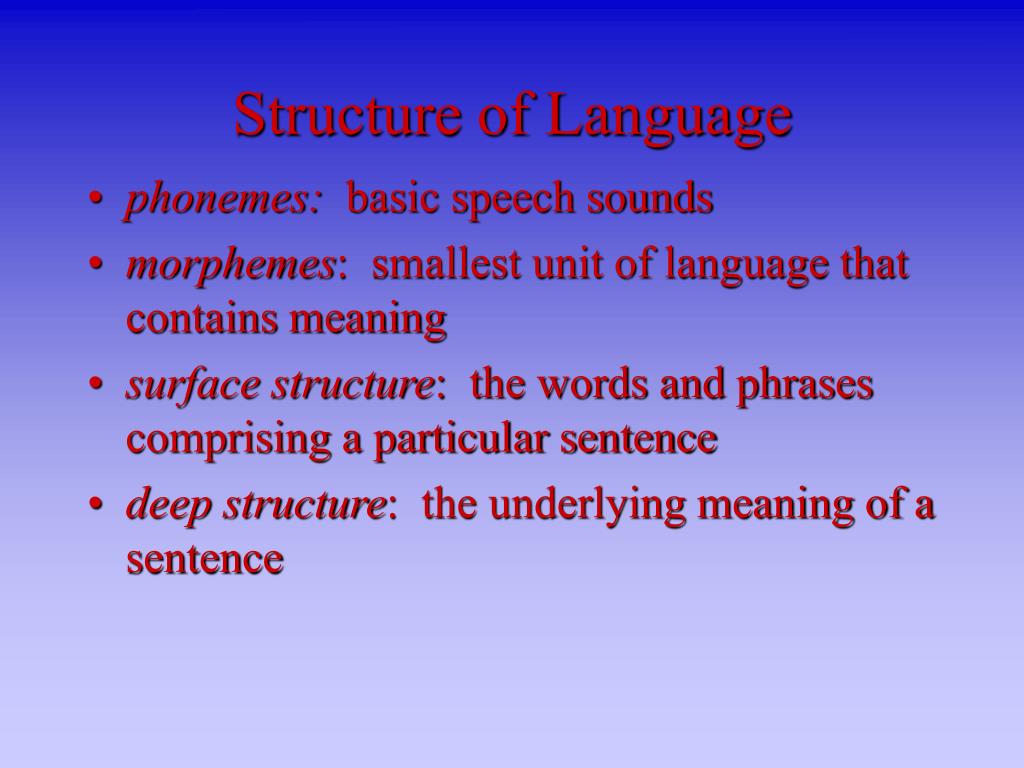
The first step in defining language structure for a machine is tokenization. This is the process of breaking down a stream of text into smaller units, or “tokens.” These tokens can be words, sub-words, or even individual characters. In modern AI models like GPT-4 or Claude, sub-word tokenization allows the system to understand the structural relationship between prefixes, suffixes, and root words. This structural granularity ensures that the machine can process unfamiliar words by analyzing their constituent parts, mirroring the way a human might decipher a complex technical term.
The Role of Syntax and Semantics in Machine Learning
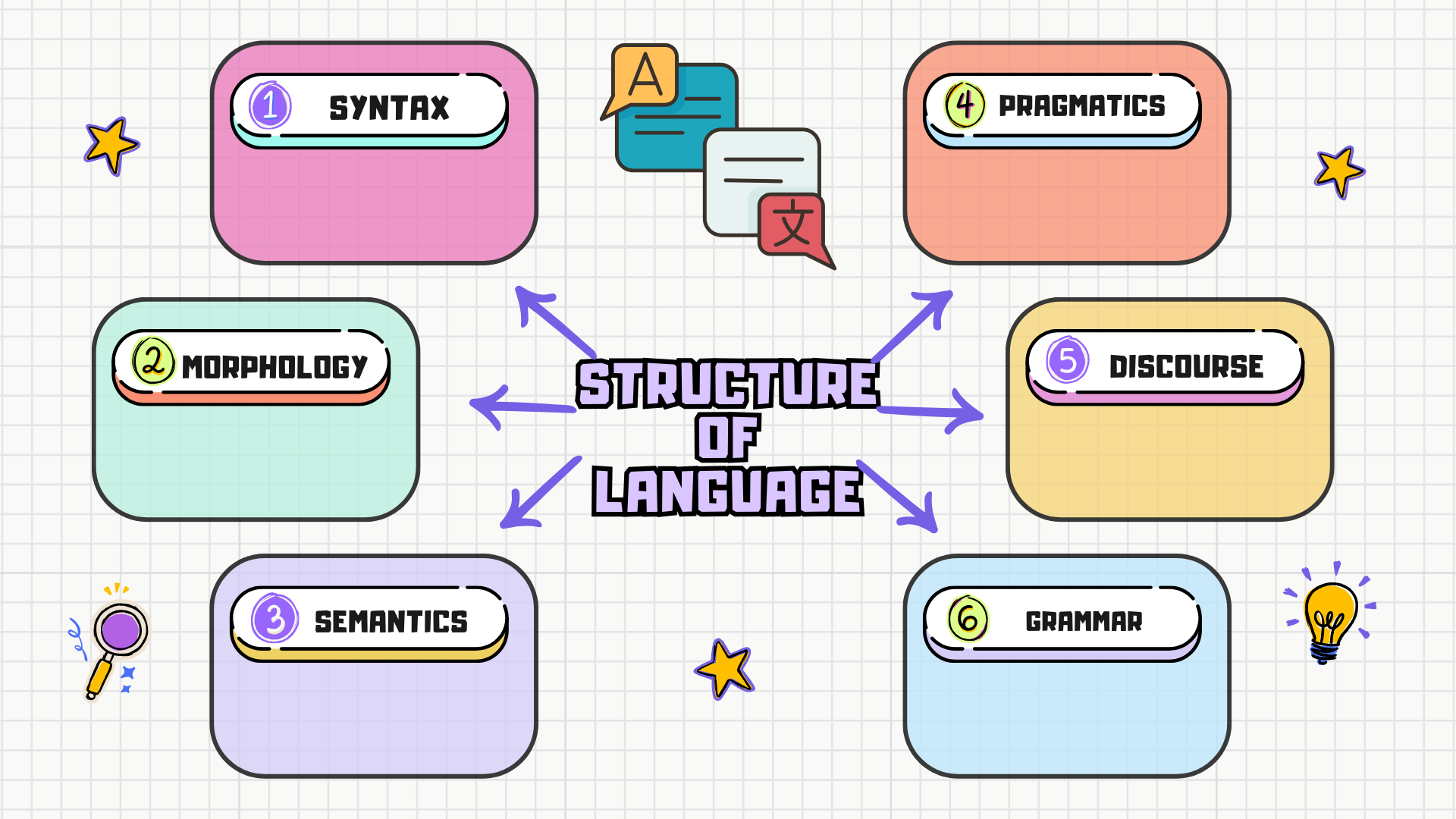
Language structure is generally divided into two pillars: syntax and semantics. Syntax refers to the rules that govern the arrangement of words to form valid sentences. In tech, this is often managed through “parsing,” where algorithms analyze a string of text to determine its grammatical structure.
Semantics, on the other hand, deals with meaning. For a machine, semantics is represented through vector embeddings. By mapping words into a high-dimensional mathematical space, developers can represent the structural relationship between concepts. For example, in a well-structured vector space, the distance between the vectors for “server” and “database” is shorter than the distance between “server” and “apple.” This mathematical representation of language structure allows search engines and recommendation systems to provide contextually relevant results.
Dependency Parsing and Constituent Trees
To understand the relationship between different parts of a sentence, developers use dependency parsing. This involves identifying the “head” words in a sentence and their “dependents.” By creating a tree-like structure of these relationships, software can identify the subject, object, and verb, even in complex, multi-clause sentences. This structural mapping is essential for sentiment analysis tools, which must identify exactly what an adjective is modifying to accurately report on user feedback.
The Logic of Programming Language Structure
While natural language is fluid and often ambiguous, programming languages are defined by rigid, formal structures. The structure of a programming language—often referred to as its syntax—is designed to eliminate ambiguity and ensure that instructions are executed with mathematical precision.
Abstract Syntax Trees (ASTs)
When a developer writes code in Python, Java, or C++, the compiler or interpreter does not read the text as a human does. Instead, it converts the source code into an Abstract Syntax Tree (AST). This is a structural representation of the code’s logic, stripped of unnecessary characters like parentheses or semicolons.
The AST allows the computer to understand the hierarchy of operations. If a developer writes a function to encrypt a database, the AST defines the order in which data is fetched, processed, and stored. For software security tools, analyzing the AST is a primary method for detecting vulnerabilities. By scanning the structure of the code, these tools can identify “code smells” or logical flaws that could be exploited by hackers.
Formal Grammars and Compilers
Programming languages are built on formal grammars, most commonly Context-Free Grammars (CFGs). These rules define every possible valid statement in the language. The rigidity of this structure is what makes software stable. If a developer misses a single character, the structure collapses, and the program fails to compile. This stands in stark contrast to the structural flexibility of natural language, where a typo or a grammatical error rarely prevents a human from understanding the message.
Schema Structure in Data Exchange
Beyond executable code, language structure is vital in data exchange formats like JSON (JavaScript Object Notation) and XML. These are structured languages used to move data between different software systems. A JSON object uses a key-value structure to ensure that when a web app requests a user’s profile, the data arrives in a format that the front-end can immediately interpret. Without this strict organizational structure, the modern interconnected web of APIs (Application Programming Interfaces) would cease to function.

The Revolution of Transformer Architecture and Contextual Structure
The most significant breakthrough in language structure technology in the last decade is the Transformer model. Introduced by Google in the “Attention is All You Need” paper, this architecture changed how machines perceive the structural relationships within a body of text.
The Power of Self-Attention Mechanisms
Prior to Transformers, AI models processed language linearly—one word at a time. This made it difficult for the machine to remember the beginning of a long paragraph by the time it reached the end. The Transformer architecture introduced “self-attention,” a mechanism that allows the model to look at every word in a sentence simultaneously and weigh its importance relative to every other word.
This creates a dynamic language structure. The word “bank” has a different structural relationship when it appears near “river” than when it appears near “money.” Self-attention allows the model to build a multi-layered map of these relationships, leading to the sophisticated, context-aware responses we see in modern generative AI.
Large Language Models (LLMs) and Structural Prediction
LLMs are essentially massive probability engines that have “learned” the statistical structure of human language. By training on petabytes of text, these models have internalized the structural patterns of everything from Shakespearean sonnets to Python scripts. When a user prompts an AI, the model isn’t “thinking”; it is calculating the most structurally sound next token based on the patterns it has observed.
This mastery of structure allows AI to perform tasks that were previously thought to require human intuition, such as summarizing technical whitepapers or debugging complex software. Because the AI understands the structural requirements of a “summary” or a “bug-fix,” it can rearrange information into those specific formats with high accuracy.
Security, Structure, and the Digital Frontier
In the realm of digital security, language structure is both a shield and a target. As our reliance on automated systems grows, the ability to analyze and protect the structure of our communications becomes paramount.
Structured Threat Intelligence
Cybersecurity teams use Structured Threat Information eXpression (STIX) to share information about cyber threats. By using a standardized language structure, security software from different vendors can communicate seamlessly. If a firewall in London detects a new malware signature, it can transmit that data in a structured format that an endpoint protection tool in New York can instantly ingest and act upon.
The Danger of Prompt Injection
The vulnerability of language structure is most evident in the rise of prompt injection attacks against LLMs. In these attacks, a user provides a specially crafted input that attempts to override the AI’s internal structural constraints. By manipulating the “logic” the AI follows, an attacker might trick the system into revealing sensitive data or ignoring its safety protocols. This highlights a unique challenge in tech: when the structure of a system is based on natural language, it inherits the inherent “fuzziness” and exploitability of human speech.
Code Structure as a Security Metric
Static Application Security Testing (SAST) tools rely entirely on analyzing the structure of source code. By looking for structural patterns known to be associated with buffer overflows or SQL injection vulnerabilities, these tools allow developers to fix security holes before the software is ever deployed. In this context, the “structure” of the language is the primary indicator of the software’s overall integrity.
The Future of Human-Computer Interaction
As we look forward, the definition of language structure in technology is expanding to include multi-modal inputs. We are moving toward a future where the structure of a voice command, the structure of an image, and the structure of a line of code are all processed within a single, unified framework.
Multimodal Models and Unified Structure
The next generation of AI tools is multimodal, meaning they can understand the structural relationships between different types of data. A multimodal model can look at a diagram of a software architecture (visual structure) and generate the corresponding boilerplate code (textual structure). This requires a sophisticated “latent space” where the structural features of an image can be translated into the structural features of a language.
Neural Interfaces and Direct Structural Communication
While still in the experimental phase, neural interfaces like Neuralink aim to bridge the gap between human neural patterns and digital language structure. If successful, this would involve translating the electrochemical structure of human thought directly into machine-executable commands. This would represent the ultimate evolution of language structure: a direct pipeline between the biological structure of the brain and the digital structure of the computer.
The study of language structure in technology is the study of how we organize the world. Whether it is through the precise syntax of a programming language or the probabilistic layers of a neural network, structure is what turns raw data into meaningful action. As our tools become more complex, our understanding of the structures that govern them must become equally sophisticated, ensuring that as machines begin to speak our language, they do so with a logic and a framework that serves human progress.
aViewFromTheCave is a participant in the Amazon Services LLC Associates Program, an affiliate advertising program designed to provide a means for sites to earn advertising fees by advertising and linking to Amazon.com. Amazon, the Amazon logo, AmazonSupply, and the AmazonSupply logo are trademarks of Amazon.com, Inc. or its affiliates. As an Amazon Associate we earn affiliate commissions from qualifying purchases.