
In the rapidly evolving landscape of e-commerce, the final stretch of a product’s journey—the “last mile”—has become the most critical frontier for technological innovation. As consumer expectations for speed and transparency reach an all-time high, traditional logistics models are being replaced by agile, software-driven platforms. At the forefront of this shift is Jitsu, a high-performance delivery carrier that leverages advanced technology to redefine how packages move from local distribution centers to doorsteps. Unlike legacy carriers that rely on rigid, decades-old infrastructure, Jitsu operates as a tech-centric solution designed to optimize the efficiency, reliability, and visibility of urban delivery.
The Digital Architecture of Jitsu: Beyond Traditional Couriers
At its core, Jitsu is not merely a trucking or courier company; it is a sophisticated technology platform that orchestrates a complex web of data points to ensure peak delivery performance. The traditional logistics model is often hindered by “black box” operations where data is siloed and updates are delayed. Jitsu dismantles these barriers by utilizing a cloud-native infrastructure that provides real-time synchronization between retailers, drivers, and end consumers.
AI-Driven Routing and Predictive Optimization
The hallmark of Jitsu’s technological edge lies in its proprietary algorithms. Last-mile delivery is notoriously the most expensive and inefficient part of the supply chain, often accounting for more than 50% of total shipping costs. Jitsu mitigates these costs through AI-driven routing. Instead of static routes that remain the same regardless of external factors, Jitsu’s software analyzes massive datasets—including historical traffic patterns, weather conditions, delivery density, and even local event schedules—to generate the most efficient pathing in real-time.
These predictive models do more than just save fuel; they increase the “delivery density,” which is the number of packages dropped off within a specific geographical radius. By maximizing this metric through machine learning, the platform ensures that drivers spend more time at doorsteps and less time idling in traffic. This algorithmic precision is what allows Jitsu to offer competitive same-day and next-day delivery windows that were previously only accessible to the world’s largest retail giants.
Cloud-Native Logistics Infrastructure
Jitsu’s reliance on cloud computing allows it to scale horizontally at a moment’s notice. During peak seasons like Black Friday or Cyber Monday, traditional logistics firms often buckle under the weight of increased volume due to physical and digital bottlenecks. Jitsu’s tech stack is designed to handle sudden surges in data processing, ensuring that tracking updates remain instantaneous and route optimization doesn’t lag when the system is under heavy load. This elasticity is a cornerstone of modern logistics-as-a-service (LaaS).
Seamless Integration: The API Economy in Shipping
One of the primary reasons Jitsu has gained traction among modern e-commerce brands is its focus on developer-friendly integration. In the modern tech ecosystem, a logistics provider is only as good as its ability to communicate with other software. Jitsu offers robust API (Application Programming Interface) sets that allow retailers to plug delivery capabilities directly into their existing tech stacks, whether they are using Shopify, Magento, or custom-built ERP (Enterprise Resource Planning) systems.
Automating the Fulfillment Workflow
Through these API integrations, the fulfillment process becomes largely autonomous. When an order is placed on a retailer’s website, the data is instantly pushed to Jitsu’s platform. Labels are generated, pick-up windows are scheduled, and the package is assigned to a delivery node without the need for manual data entry. This reduction in human touchpoints minimizes the “fat-finger” errors that lead to incorrect addresses or delayed shipments.
Enhanced Data Transparency for Retailers
Beyond just moving packages, Jitsu acts as a data partner for brands. Through integrated dashboards, businesses gain access to granular analytics regarding their delivery performance. They can see “on-time” percentages, proof-of-delivery photos, and customer feedback loops in one centralized interface. This level of insight allows brands to make informed decisions about their inventory placement and regional marketing strategies based on actual delivery performance data.
Redefining the User Experience Through Real-Time Tech
For the end consumer, the “technology” of Jitsu is most visible through the delivery experience itself. In an era where “where is my order?” (WISMO) inquiries can overwhelm customer support teams, Jitsu uses proactive communication tools to keep consumers informed at every stage.
Hyper-Accurate Tracking and Geo-Fencing
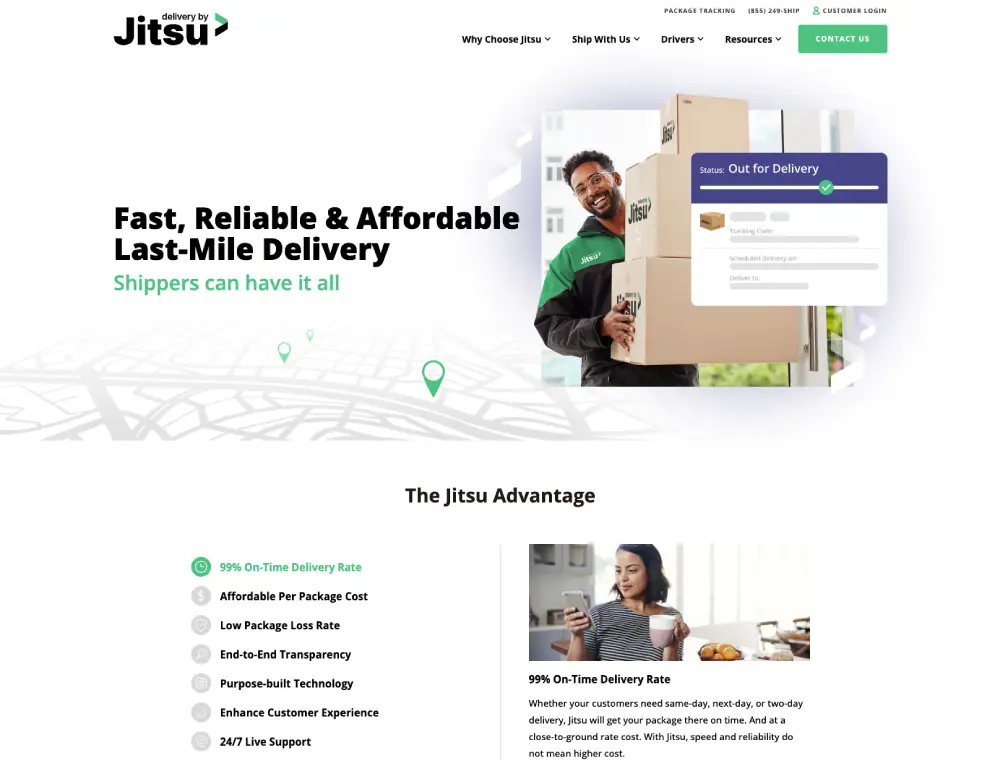
Traditional tracking often consists of vague updates like “Out for Delivery” followed by hours of silence. Jitsu utilizes GPS-enabled geo-fencing technology to provide hyper-accurate windows. When a driver enters a specific radius of the delivery address, the system can trigger automated SMS or email notifications. This tech-enabled transparency reduces the anxiety of the “delivery gap” and ensures that consumers are prepared to receive their packages, which in turn reduces the rate of failed delivery attempts.
Digital Proof of Delivery (vPOD)
The security of a delivery is bolstered by Jitsu’s digital Proof of Delivery (vPOD) systems. Drivers use a dedicated mobile application to capture photos of the package at the doorstep, along with GPS coordinates and time stamps. This data is instantly uploaded to the cloud and made available to both the retailer and the customer. By creating a digital paper trail, Jitsu uses software to solve the age-old problem of “porch piracy” and disputed deliveries, providing a layer of digital security that builds trust in the e-commerce ecosystem.
The Role of Geospatial Data and Urban Mapping
Navigating dense urban environments requires more than just a standard map. Jitsu utilizes advanced geospatial data to solve the “final 50 feet” problem. While a standard GPS might lead a driver to the front of an apartment complex, it rarely provides information on where the specific delivery entrance or package locker is located.
Building a Proprietary Knowledge Base
Jitsu’s platform collects and synthesizes data from thousands of successful deliveries to build a more nuanced map of urban delivery points. This includes notes on gate codes, specific loading zones, and building-specific delivery protocols. By turning every delivery into a data-learning opportunity, the software becomes smarter over time. New drivers are equipped with the collective intelligence of the entire network, significantly reducing the “learning curve” associated with complex urban routes.
The Gig Economy and App-Based Labor Management
The hardware side of Jitsu’s tech is often the smartphone in the driver’s hand. Jitsu leverages an app-based model to manage a flexible workforce. This mobile application serves as the primary interface for drivers, providing them with optimized turn-by-turn navigation, package scanning capabilities, and direct communication channels with dispatchers. The software manages everything from driver onboarding and background checks to real-time earnings tracking, creating a seamless digital experience for the workforce that translates to better service for the end user.
Future Horizons: Automation and Sustainability in Logistics Tech
As Jitsu continues to evolve, its technological roadmap points toward two major trends: increased automation and environmental sustainability. The data collected by the platform today is laying the groundwork for the autonomous delivery solutions of tomorrow.
Preparing for Autonomous Last-Mile Delivery
The routing algorithms and geospatial data Jitsu is currently perfecting are the exact datasets required to train autonomous delivery vehicles and drones. By mastering the complexity of human-led delivery in dense cities, Jitsu is positioning its software as the “brain” that could eventually pilot robotic delivery units. The transition from human-driven to autonomous will not be a sudden jump but a gradual integration, where software manages a hybrid fleet of traditional vans, electric bikes, and autonomous pods.
Green Logistics Through Optimization
From a sustainability perspective, technology is the most effective tool for reducing the carbon footprint of e-commerce. Jitsu’s focus on route optimization directly translates to fewer miles driven and lower CO2 emissions. Furthermore, the platform’s ability to coordinate “batched” deliveries—ensuring that one vehicle makes multiple stops in a single localized area—is a far more sustainable model than the fragmented, unoptimized delivery schedules of the past. As more cities implement “green zones” and restrictions on large combustion-engine vehicles, Jitsu’s agile, tech-first approach allows for easier integration of electric vehicle (EV) fleets and alternative delivery methods.
Conclusion: The Impact of Software on Physical Logistics
Jitsu represents a broader shift in the global economy: the “softwarization” of physical services. By treating delivery as a data problem rather than just a labor problem, Jitsu provides a level of precision and scalability that traditional carriers struggle to match. Through the integration of AI-driven routing, cloud-native infrastructure, and seamless API connectivity, Jitsu has transformed the last mile from a logistical bottleneck into a strategic advantage for modern brands.
In the current digital age, the package at the door is the only physical touchpoint many consumers have with a brand. Therefore, the technology that facilitates that delivery is just as important as the product inside the box. As Jitsu continues to refine its stack, it serves as a blueprint for how technology can bridge the gap between the digital storefront and the physical home, making the world of commerce faster, more transparent, and significantly more efficient.
aViewFromTheCave is a participant in the Amazon Services LLC Associates Program, an affiliate advertising program designed to provide a means for sites to earn advertising fees by advertising and linking to Amazon.com. Amazon, the Amazon logo, AmazonSupply, and the AmazonSupply logo are trademarks of Amazon.com, Inc. or its affiliates. As an Amazon Associate we earn affiliate commissions from qualifying purchases.