
In the modern landscape of global commerce and high-stakes finance, the term “imperial bureaucracy” has migrated from the annals of ancient history into the boardrooms of the world’s most powerful corporations. While traditionally used to describe the administrative machinery of sprawling empires like those of Rome or the Han Dynasty, in a contemporary business and financial context, imperial bureaucracy refers to the complex, multi-layered administrative systems that govern massive corporate entities. As a business scales into the billions, it often evolves into a “corporate empire,” necessitating a governance structure that is both rigid enough to maintain control and expansive enough to cover global operations. Understanding this structure is essential for anyone involved in business finance, as it represents both the backbone of global stability and a significant drain on operational efficiency.
The Financial Architecture of the Corporate Empire
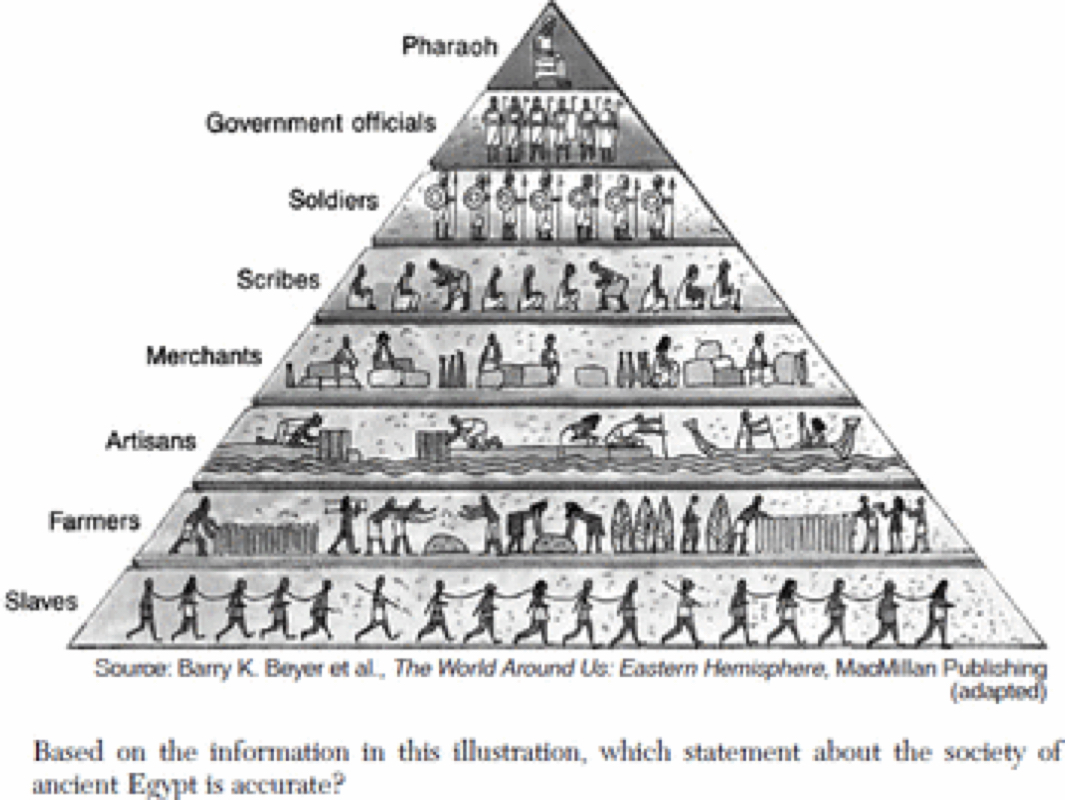
At its core, imperial bureaucracy in the financial world is defined by extreme centralization and a strictly hierarchical chain of command. In a small or medium enterprise (SME), decision-making is often agile, with leadership directly connected to the execution of strategy. However, as an organization reaches “imperial” scale, the distance between the source of capital and its ultimate deployment grows exponentially. This gap is filled by a vast administrative class.
The Rise of the Managed Economy within Firms
Modern corporate empires operate as internal managed economies. They do not just participate in the market; they create internal markets for resources, talent, and capital. The bureaucracy serves as the arbiter of these internal markets. From a business finance perspective, this means that a significant portion of a company’s budget is diverted from revenue-generating activities to internal maintenance. This “maintenance” includes multi-level auditing, compliance departments, human resource protocols, and complex legal frameworks designed to protect the “crown” (the central headquarters and its shareholders) from liability and risk.
Why Scaling Necessitates Structure
Despite the negative connotations often associated with the word “bureaucracy,” it is a structural necessity for large-scale financial management. Without a rigorous, standardized system, a multinational corporation would face catastrophic failures in reporting, tax compliance, and cross-border operations. The imperial model provides a universal language of protocols that ensures a subsidiary in Singapore operates under the same fiscal expectations and reporting standards as its parent company in New York. It is the price paid for global consistency and the mitigation of systemic risk.
The Economic Cost of Administrative Complexity
While the structure provides stability, it introduces a “bureaucracy tax” that can stifle long-term growth and eat into profit margins. For investors and financial officers, identifying the point where a bureaucracy stops being an asset and starts being a liability is the key to sustainable wealth creation.
Measuring the “Bureaucracy Tax”
In business finance, the inefficiency of an imperial bureaucracy is often measured through the lens of General and Administrative (G&A) expenses. When G&A grows faster than revenue for an extended period, the organization is likely suffering from bureaucratic bloat. This “tax” manifests in several ways:
- Decision Paralysis: The requirement for multiple levels of approval can delay project launches, causing a company to miss market windows.
- Redundancy: Overlapping roles between regional and global offices often result in double the expenditure for the same output.
- Communication Silos: Large bureaucracies often lead to information hoarding, where departments compete for budget allocations rather than collaborating on enterprise-wide goals.
The Opportunity Cost of Centralization
Beyond direct expenses, there is the massive opportunity cost of misallocated human capital. When a company’s most talented financial minds are spent navigating internal politics or managing complex reporting requirements rather than identifying new investment opportunities, the company loses its competitive edge. This is why many “incumbent” corporate empires are frequently disrupted by lean startups that lack the “imperial” weight and can therefore pivot with greater speed and lower cost.
Strategies for Managing the “Imperial” Budget

To survive in an era of rapid technological change, modern corporate empires must find ways to streamline their bureaucratic machines without losing the control that maintains their market position. This requires a shift in how business finance is conducted at the enterprise level.
Transitioning to Decentralized Profit Centers
One of the most effective ways to manage imperial bureaucracy is to break the “empire” into autonomous or semi-autonomous profit centers. By giving local managers the authority to manage their own P&L (Profit and Loss) statements, a company can regain the agility of a smaller firm. In this model, the central bureaucracy shifts from being a “commander” to being a “service provider” or “governance body,” setting broad goals while allowing local units to determine the best financial path to achieve them.
Implementing Lean Management in Finance
Lean principles, once reserved for manufacturing, are now being applied to corporate finance. This involves a rigorous audit of the “paper trail”—identifying every step in a financial process that does not add direct value to the customer or the shareholder. By eliminating unnecessary reporting layers and consolidating administrative functions into shared services, companies can significantly reduce their overhead while maintaining high levels of oversight.
Technology as the Catalyst for Bureaucratic Reform
The digital revolution is the most powerful weapon against the inefficiencies of imperial bureaucracy. New financial tools and software are allowing companies to automate the “clerical” aspects of the administrative state, freeing up capital for more productive uses.
The Role of ERP Systems and Real-Time Data
Enterprise Resource Planning (ERP) systems have become the “nervous system” of the modern corporate empire. By centralizing data into a single source of truth, these systems eliminate the need for dozens of middle-management roles whose primary job was previously the manual aggregation and reconciliation of data. Real-time financial visibility allows the C-suite to monitor global operations without needing an army of analysts to provide monthly reports. This shifts the bureaucracy from a reactive model to a proactive, data-driven one.
Artificial Intelligence and the Future of Auditing
Artificial Intelligence (AI) is set to further dismantle the traditional imperial bureaucracy. Compliance and auditing—two of the most labor-intensive parts of a large organization—can now be handled by algorithms that can scan millions of transactions in seconds. This not only reduces the risk of human error and fraud but also allows for a “thinner” administrative layer. As AI takes over the routine tasks of the bureaucracy, the financial focus of the firm can shift toward strategic planning and high-level capital allocation.
Scaling Without the Sunk Costs of Traditional Governance
For the modern entrepreneur or executive, the goal is no longer to build an empire for the sake of size, but to build a scalable entity that retains the efficiency of its early days. This requires a new philosophy of “lean imperialism.”
Agility as a Financial Asset
In today’s market, agility is a quantifiable financial asset. A company that can reallocate capital in weeks rather than months has a higher valuation because it can respond to volatility more effectively. To maintain this agility, leaders must be willing to periodically “prune” their bureaucracy. This involves sunsetting departments that no longer serve a clear financial purpose and resisting the urge to add new layers of management for every new challenge.

The Hybrid Model of Modern Business
The most successful organizations of the 21st century are those that employ a hybrid model: the scale and resources of an imperial power, with the operational speed of a tech firm. By leveraging financial tools, embracing decentralization, and maintaining a relentless focus on the ROI of every administrative role, companies can enjoy the benefits of “empire” without falling victim to the stagnation inherent in traditional bureaucracy.
In conclusion, while imperial bureaucracy is an inevitable byproduct of massive growth, it does not have to be the downfall of a large organization. By understanding the financial mechanics at play and utilizing modern tools to streamline governance, businesses can transform their administrative structures into engines of growth rather than barriers to it. The future belongs to those who can manage the “imperial” scale with a “startup” mindset, ensuring that every dollar spent on administration is a dollar invested in the longevity and stability of the corporate empire.
aViewFromTheCave is a participant in the Amazon Services LLC Associates Program, an affiliate advertising program designed to provide a means for sites to earn advertising fees by advertising and linking to Amazon.com. Amazon, the Amazon logo, AmazonSupply, and the AmazonSupply logo are trademarks of Amazon.com, Inc. or its affiliates. As an Amazon Associate we earn affiliate commissions from qualifying purchases.