
In the realm of global brand management and corporate identity, few organizations possess the longevity and consistency of the Catholic Church. At the heart of its organizational durability is the Sacrament of Holy Orders. While frequently discussed in theological terms, Holy Orders functions as the ultimate framework for institutional leadership, personal branding, and the preservation of a 2,000-year-old corporate identity. It is the mechanism through which the Church recruits, trains, and “rebrands” individuals to act as the official representatives of its global mission.

Understanding Holy Orders through the lens of brand strategy reveals a sophisticated system of vertical integration, standardized messaging, and a unique value proposition that has allowed the institution to navigate millennia of market shifts. It is not merely a religious rite; it is the definitive process of creating a brand ambassador whose very identity is legally and spiritually fused with the organization.
The Three-Tiered Hierarchy: Organizational Structure and Brand Scalability
The Catholic Church utilizes a highly structured, three-tiered management system within Holy Orders to ensure operational efficiency and brand consistency across diverse global markets. This structure—comprising deacons, priests, and bishops—creates a clear ladder of authority and a specialized division of labor that supports the brand’s long-term objectives.
The Diaconate: Service-Oriented Brand Extension
The first grade of Holy Orders is the diaconate. In the context of brand architecture, deacons represent the “service and outreach” wing of the organization. They are tasked with the practical application of the brand’s mission—charity, community engagement, and administrative support. By maintaining a distinct role that can be either transitional (on the way to the priesthood) or permanent, the Church ensures a layer of leadership that remains deeply embedded in the “consumer” base (the laity), facilitating better market feedback and community trust.
The Priesthood: The Face of the Local Franchise
The second grade, the presbyterate or priesthood, represents the most visible layer of the brand. Priests are essentially the “franchise managers” of local parishes. They are the primary touchpoint for the brand’s “customers.” Every interaction a member of the public has with the Church is mediated through the priest. Consequently, the Church invests heavily in the “branding” of the priest, requiring years of specialized training (seminary) to ensure that the individual’s personal brand is entirely aligned with the corporate identity. The priest’s role is to deliver the brand’s core products—the sacraments—with a level of uniformity that ensures a Catholic experience in Rome is fundamentally identical to one in Manila or New York.
The Episcopate: Executive Oversight and Brand Guardianship
The third and highest grade is the episcopate (bishops). Bishops serve as the executive leadership or “regional directors.” They hold the “fullness of the sacrament,” meaning they possess the highest level of authority within their jurisdiction (the diocese). From a brand strategy perspective, bishops are the guardians of brand purity. They are responsible for ensuring that local franchises do not deviate from the core message and that the organizational culture remains cohesive. This level of oversight is what allows a massive, decentralized global entity to maintain a singular, recognizable identity.
Visual Identity and Semiotics: The Power of Clerical Branding
In the world of marketing, visual identity is everything. The Catholic Church mastered the art of “brand signaling” through Holy Orders long before modern design agencies existed. The “uniform” of the ordained—the clerical collar, the cassock, and the specific liturgical vestments—serves as a high-visibility logo that communicates authority, availability, and specific service offerings.
When a man receives Holy Orders, his personal wardrobe is replaced by a professional identity that is instantly recognizable across borders and languages. The clerical collar is perhaps one of the most successful “minimalist logos” in history. It signals a “certified professional” status, immediately establishing a level of trust and expectation. This visual consistency reduces “brand friction,” allowing the ordained individual to enter a room and immediately be recognized for his role, responsibilities, and the institution he represents.
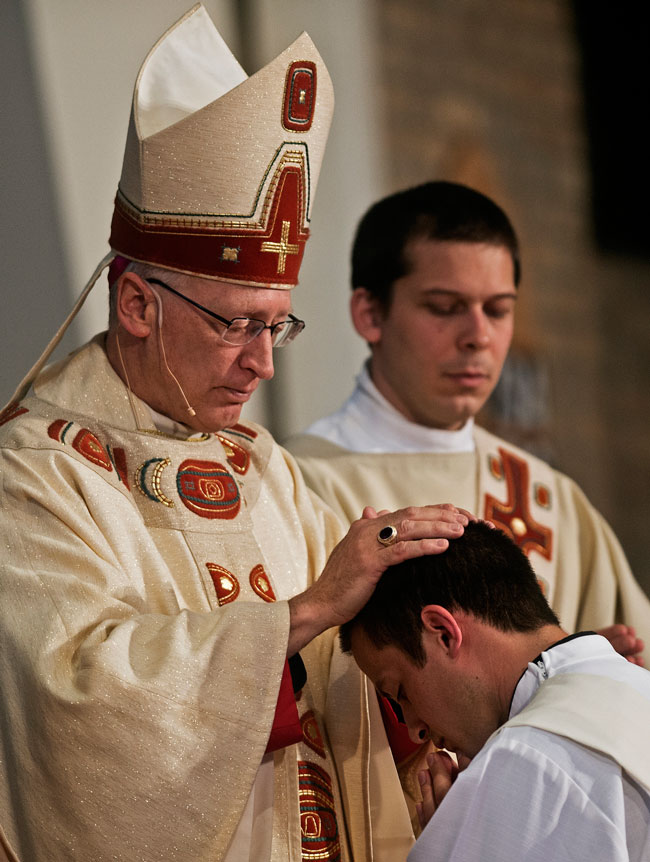
Furthermore, the “visual language” of the various ranks—the miter and crosier of the bishop, for instance—serves to reinforce the organizational hierarchy. These are not merely decorative elements; they are strategic tools used to communicate power dynamics and institutional heritage to the audience.

Apostolic Succession: The Ultimate Chain of Authenticity and Brand Heritage
For any brand to survive in a competitive market, it must establish authenticity. In the “marketplace of ideas,” the Catholic Church uses the concept of Apostolic Succession—intrinsic to Holy Orders—as its primary “certificate of authenticity.”
Apostolic Succession is the claim that every bishop can trace a direct, unbroken line of “laying on of hands” back to the original founders (the Apostles). In brand terms, this is the ultimate “Chain of Custody.” It is a heritage play that differentiates the Catholic brand from newer competitors who may lack the same historical depth.
This lineage serves as a powerful “trust signal.” It tells the consumer that the “product” being delivered today is the exact same, high-quality “original recipe” developed at the company’s inception. By framing Holy Orders as a continuous link to the past, the Church creates a sense of stability and reliability that is highly attractive in a volatile, changing world. This is “legacy branding” at its most potent level.
Personal Branding and the Indelible Mark: A Lifetime Commitment to Professional Identity
One of the most unique aspects of Holy Orders is the concept of the “indelible mark.” Theology teaches that the sacrament effects a permanent change in the soul of the recipient. From a personal branding perspective, this is the ultimate “merger and acquisition.” The individual does not just “work” for the Church; they become the Church.
Most corporate branding focuses on what an employee does between 9:00 AM and 5:00 PM. Holy Orders, however, demands a 24/7 alignment between the personal brand and the corporate brand. There is no “off-duty” for a priest. This level of commitment creates an incredibly high barrier to entry, which in turn increases the “brand equity” of those who successfully complete the process.
The “character” or “mark” imparted by the sacrament means that even if a priest leaves active ministry, the institution maintains that he is “a priest forever.” This is a fascinating case of “permanent brand association.” The Church effectively “owns” the identity of the ordained individual for life, ensuring that the brand’s influence is never truly extinguished from that person’s public persona. This total immersion is why the selection process (discernment) is so rigorous; the institution cannot afford to “brand” an individual who will later misrepresent the corporate values.
Navigating the Modern Market: Brand Rehabilitation and Strategic Communication
In recent decades, the “clerical brand” has faced significant challenges. Scandals and shifts in global sentiment have necessitated a rigorous approach to brand rehabilitation. The institution has had to double down on the “quality control” aspect of Holy Orders, implementing stricter vetting processes and more transparent professional standards.
Modern brand strategy for Holy Orders now involves a focus on “authenticity” and “transparency.” The contemporary priest is often encouraged to leverage digital tools—social media, podcasts, and blogs—to humanize the brand while still maintaining its core values. This is a delicate balancing act of personal branding within a corporate framework. The goal is to make the “product” (the faith) more accessible to a younger, more tech-savvy demographic without “diluting the brand” or losing the sense of sacred mystery that provides its unique market positioning.
Furthermore, the Church is increasingly focusing on the “soft skills” of its ordained leaders. Emotional intelligence, management capabilities, and communication prowess are being integrated into the “training and development” (seminary) phase. This ensures that the ambassadors of the brand are not just “theologically sound” but are also “market-ready” for the complexities of the 21st-century social landscape.
By viewing Holy Orders as a sophisticated system of brand management and institutional identity, it becomes clear why the Catholic Church has remained a dominant force for two millennia. It is a system that masterfully blends historical “legacy” with a rigid “corporate structure,” all while demanding a level of “personal brand alignment” from its leaders that is unparalleled in the secular world. Holy Orders is the ultimate assurance that no matter how the world changes, the “brand” will continue to be represented by a highly trained, visually distinct, and deeply committed core of ambassadors.
aViewFromTheCave is a participant in the Amazon Services LLC Associates Program, an affiliate advertising program designed to provide a means for sites to earn advertising fees by advertising and linking to Amazon.com. Amazon, the Amazon logo, AmazonSupply, and the AmazonSupply logo are trademarks of Amazon.com, Inc. or its affiliates. As an Amazon Associate we earn affiliate commissions from qualifying purchases.