
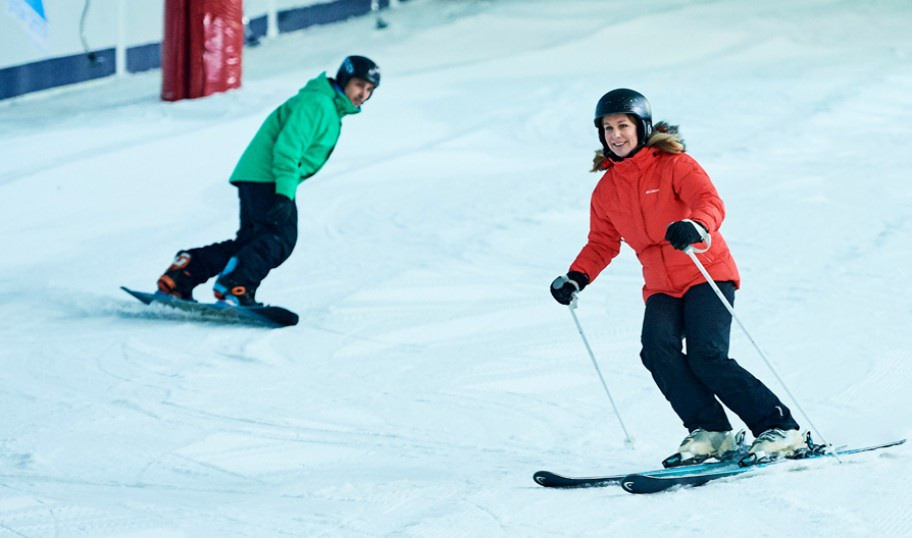
When winter sports enthusiasts debate whether snowboarding or skiing is “harder,” the conversation typically revolves around physical mechanics: the difficulty of balancing on one edge versus two, or the steep learning curve of a toe-side turn compared to the “pizza” wedge. However, for the modern consumer, the question of which discipline is harder often translates to a more pragmatic concern: which one is harder on the personal balance sheet?
The true difficulty of a sport is not merely measured in bruised knees or technical precision, but in the capital investment required to reach a level of proficiency where the “return on enjoyment” justifies the expenditure. From initial hardware acquisition to the long-term operational costs of lift tickets and maintenance, the financial trajectory of a skier and a snowboarder differs significantly. To determine which is harder, one must analyze the initial capital outlay, the cost of the learning curve, and the long-term depreciation of the assets involved.

The Initial Capital Expenditure: Comparing Hardware and Apparel
For a beginner entering the world of winter sports, the first financial hurdle is the acquisition of gear. This is the stage where the economic profiles of skiing and snowboarding begin to diverge. Historically, skiing has carried a reputation for being a “prestige” sport with higher price points, while snowboarding emerged from a more grassroots, skate-influenced culture. Today, while the gap has narrowed, the hardware requirements still create distinct financial barriers.
Hardware: Skis vs. Boards
When evaluating the cost of entry-level equipment, skiing is objectively more expensive. A standard ski setup requires four primary components: two skis and two poles. Furthermore, the engineering involved in creating modern “all-mountain” skis—incorporating carbon stringers, titanal layers, and complex sidecut geometries—often results in a higher retail price than a comparable snowboard.
Snowboarding, by contrast, involves a single board. While high-end snowboards utilize advanced polymer tech and specialized wood cores, the manufacturing process is generally more streamlined than that of a pair of high-performance skis. For a consumer looking at entry-level “package” deals, a snowboard, bindings, and boots package often scales lower than a ski, binding, boot, and pole combination. In the context of initial investment, the financial barrier to entry is higher for skiing.
Boots and Bindings: The Performance Premium
The financial difficulty of skiing is further compounded by the complexity of the footwear. Ski boots are sophisticated pieces of mechanical engineering designed to transfer minute movements of the foot directly to the ski edge. Because of the rigidity and specialized molding required, high-quality ski boots are a significant investment, often rivaling the cost of the skis themselves.
Snowboard boots are generally soft-shell or hybrid designs that lean closer to traditional athletic footwear. Because they do not require the same level of rigid plastic casing and complex buckling systems as ski boots, they are typically more affordable and have a longer “comfort lifespan.” For the budget-conscious athlete, snowboarding offers a more accessible path to comfortable, high-performing footwear without the need for expensive professional “boot-fitting” services that are almost mandatory for serious skiers.
The Cost of Acquisition: Analyzing the Learning Curve ROI
In personal finance, the “cost of acquisition” refers to the total spend required to gain a functioning asset—in this case, the skill of the rider. This is where the debate over “what is harder” takes a sharp turn. The common adage in the industry is that skiing is “easy to learn but hard to master,” whereas snowboarding is “hard to learn but easy to master.” This has direct implications for the Return on Investment (ROI) of professional lessons.
The Skiing Paradox: Low Initial Barrier, High Mastery Cost
For a skier, the “initial acquisition” of the skill is relatively inexpensive. Most beginners can achieve basic mobility and “link turns” within a single day of instruction. This means the immediate financial gratification is high; the participant can utilize a lift ticket effectively on day one.
However, the “difficulty” in skiing lies in the plateau between intermediate and expert levels. Transitioning from a snowplow to parallel turns, and eventually to carving or mogul skiing, requires a substantial investment in multi-day clinics and advanced coaching. Because the technical ceiling of skiing is so high, many participants find themselves spending thousands of dollars over several seasons on specialized instruction to reach a level of true mastery.
Snowboarding: High Initial Attrition and Coaching Costs
Snowboarding presents a different financial risk: the high cost of the “first three days.” For a beginner snowboarder, the learning curve is notoriously punishing. The first 48 to 72 hours are often characterized by frequent falls and a lack of mobility. From a financial perspective, this represents a low initial ROI. A beginner might pay $200 for a lift ticket and $150 for a lesson, only to spend the day on their backside on the “bunny hill.”
This “barrier to entry” creates a high attrition rate. Many prospective snowboarders abandon the sport after one or two expensive weekend trips because the physical and financial cost of the learning curve feels disproportionate to the fun achieved. However, once a snowboarder crosses that initial threshold, the path to mastery is much faster and cheaper. Once the mechanics of the edge-to-edge transition are understood, most riders can self-teach their way to an advanced level without the constant need for expensive professional coaching. In the long run, snowboarding is often “cheaper to master,” even if it is “harder to start.”

Long-Term Operational Costs and Asset Maintenance
Beyond the initial purchase and the cost of lessons, one must consider the ongoing operational expenses. Just as a vehicle requires oil changes and tires, winter sports equipment requires regular maintenance to retain its value and performance.
The Depreciation Schedule of Winter Sports Gear
All sporting equipment is a depreciating asset, but the rate of depreciation varies between the two disciplines. Skis are subject to “core shots” and edge compression that can be difficult to repair to factory standards. Furthermore, the ski industry is heavily driven by annual technological iterations. Last year’s “revolutionary” rocker profile is quickly eclipsed by this year’s “refined” geometry, leading to a steep drop in resale value on the secondary market.
Snowboards tend to hold their value slightly better for the average user, primarily due to the culture of the sport. The aesthetic design and “graphic” of a board often play a larger role in its marketability than incremental changes in carbon fiber placement. A well-maintained board from three seasons ago can often be sold for a higher percentage of its original retail price than a comparable pair of skis. For the savvy investor in gear, snowboarding offers a more stable secondary market.
Consumables and Tuning Services
The “hidden” costs of these sports include waxing, edge sharpening, and base repairs. Because skiers have twice as many edges and bases to maintain, their “per-use” maintenance cost is essentially doubled. A full tune-up at a professional shop for a pair of skis typically costs more than a tune-up for a single snowboard.
Additionally, skiers face the cost of “consumables” that snowboarders do not: poles. It is common for skiers to bend or break poles throughout a season, necessitating replacement. While a minor expense in isolation, these recurring costs add up over a decade of participation. When assessing which sport is harder on the wallet over a ten-year horizon, skiing consistently demands a higher maintenance budget.
The Macroeconomics of the Resort Experience
Finally, we must look at the broader economic environment in which these sports take place. The rise of the “Mega-Pass”—such as the Epic and Ikon passes—has transformed the way consumers budget for winter sports. In this arena, the “difficulty” is equal, as these passes offer access to both skiers and snowboarders at a flat rate.
Access Fees and the Rise of Subscription Models
The shift toward subscription-based resort access has lowered the “per-day” cost for frequent riders, but it has increased the “upfront” financial commitment. Whether you choose to ski or snowboard, you are likely looking at a $700 to $1,000 commitment before the first snowflake hits the ground.
The financial “hardness” of the sport now depends on “utilization rates.” If a snowboarder finds it easier to reach an intermediate level quickly, they are more likely to utilize their pass 20+ days a season, driving their “cost-per-day” down significantly. If a skier struggles to move past the beginner stage due to the technical difficulty of the sport, they may only use their pass five times, resulting in a poor financial outcome.
Travel and Lodging: The Indirect Costs of the Sport
It is also worth noting the demographic and lifestyle marketing that surrounds both sports. Skiing has historically been marketed alongside high-end real estate and luxury hospitality. This often leads to “lifestyle creep,” where the participant feels pressured to spend more on slopeside lodging and “après-ski” dining. Snowboarding, while certainly integrated into the same resorts, still retains a more utilitarian, budget-friendly “van life” subculture in some regions. While this is a generalization, the social expectations surrounding the “skiing lifestyle” can often lead to higher indirect costs than those associated with snowboarding.
Conclusion: Which is Financially Harder?
When we analyze “what is harder” through the lens of financial commitment and ROI, a clear picture emerges.
Skiing is harder on the long-term budget. It requires a higher initial investment in hardware, involves a longer and more expensive path to technical mastery, and carries higher recurring maintenance costs. The “per-edge” cost of skiing makes it a more capital-intensive pursuit over the lifetime of the athlete.
Snowboarding is harder on the short-term investment. The high risk of “early-stage abandonment” means that a beginner may spend a significant amount of money and receive very little “fun” in return during the first few days. However, for those who survive the initial learning curve, snowboarding offers a more efficient path to mastery and a lower overall cost of ownership.
Ultimately, both sports are significant financial undertakings. The choice between them should be viewed not just as a physical preference, but as a strategic allocation of time and capital. If you seek immediate (though shallow) proficiency and have a larger long-term budget, skiing is the logical choice. If you are willing to endure a difficult, low-ROI start in exchange for a more cost-effective path to expert-level performance, snowboarding is the superior investment.
aViewFromTheCave is a participant in the Amazon Services LLC Associates Program, an affiliate advertising program designed to provide a means for sites to earn advertising fees by advertising and linking to Amazon.com. Amazon, the Amazon logo, AmazonSupply, and the AmazonSupply logo are trademarks of Amazon.com, Inc. or its affiliates. As an Amazon Associate we earn affiliate commissions from qualifying purchases.