
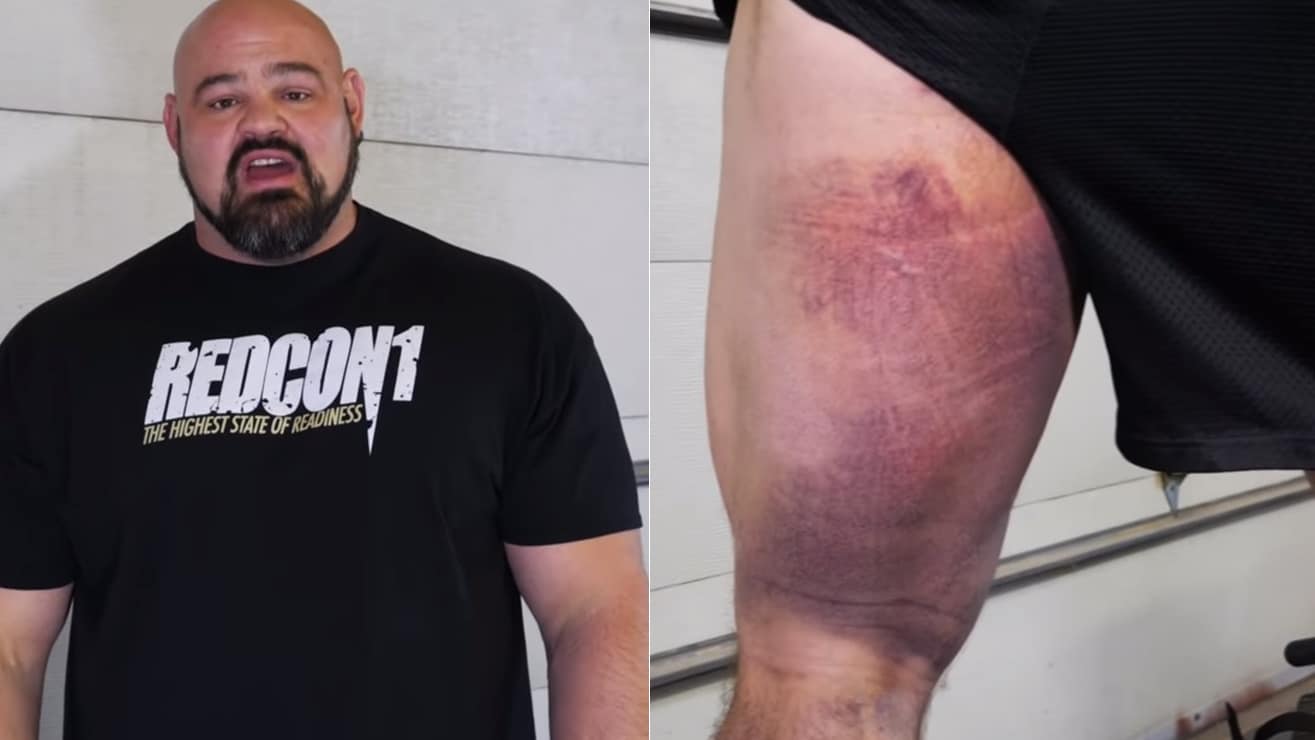
In the world of high-performance athletics, the physical body is more than just a vessel for sport; it is the core asset of a global personal brand. For Brian Shaw, a four-time World’s Strongest Man (WSM) winner and a titan in the strength community, his physical presence is the foundation of a multi-million dollar business empire. However, in the lead-up to his final competitive season in 2023, the “Evolution” of the Shaw brand faced its greatest existential threat—not from a rival competitor or a heavy deadlift, but from a severe, limb-threatening infection in his leg.

The story of what happened to Brian Shaw’s leg is not merely a medical anecdote; it is a masterclass in how a professional brand manages a crisis, maintains transparency with its audience, and pivots during a period of extreme vulnerability. For entrepreneurs and brand strategists, the way Shaw handled this setback provides vital insights into brand longevity and the importance of humanizing a “superhuman” public persona.
The Physicality of the Strongman Brand
To understand the weight of Shaw’s leg injury, one must first understand the Brian Shaw brand. Unlike traditional corporate brands, a personal brand in the fitness and strength space is built on the pillars of consistency, invincibility, and physical dominance. Shaw spent nearly two decades cultivating an image of a methodical, stoic, and unbreakable athlete.
The Vulnerability of the “Strongman” Archetype
The Strongman archetype relies on the perception of extreme durability. When an athlete like Shaw, who stands 6’8” and weighs over 400 pounds, suffers a physical setback, it creates a “brand shock.” His audience views him as a modern-day Hercules; thus, a medical emergency involving a leg infection (cellulitis) that nearly led to amputation creates a narrative dissonance.
In personal branding, the “Product” is the “Person.” If the person is compromised, the product—videos, merchandise, seminar tickets, and sponsorships—is perceived as being at risk. Shaw’s challenge was to prevent this physical vulnerability from becoming a permanent brand liability.
When the Product is the Athlete
For Shaw, the injury occurred at the worst possible time: during his preparation for his final appearance at the World’s Strongest Man and the Shaw Classic. His brand was built on the “Final Journey” narrative. An injury that prevented him from competing would not only be a personal disappointment but a significant blow to the commercial viability of his “Evolution” clothing line and the pay-per-view success of his own events.
Transparency as a Brand Strategy
When the injury first surfaced, Shaw faced a choice common to many public figures: hide the struggle until it passes or integrate the struggle into the brand story. He chose the latter, leveraging his massive YouTube presence to provide raw, unfiltered access to his recovery process.
Controlling the Narrative Through Digital Media
What happened to Brian Shaw’s leg was a severe case of cellulitis that rapidly progressed into a dangerous infection. Rather than releasing a sanitized PR statement, Shaw filmed the reality of his hospital stay. By doing this, he controlled the narrative. He didn’t allow rumors to circulate on forums or social media; he became the primary source of information.
From a brand strategy perspective, this is “proactive transparency.” It builds an immense amount of trust with the consumer. When a brand admits to a flaw or a setback in real-time, it creates an emotional bond with the audience that polished marketing can never achieve.
Authenticity and the “Behind the Scenes” Hook
The footage of Shaw in a hospital bed, looking visibly diminished compared to his usual self, was a departure from his usual high-octane training content. However, this “humanizing” of the brand served to strengthen his community. His audience transitioned from being mere spectators of his strength to being participants in his recovery. This shift in the brand-audience relationship is what transforms a “follower” into a “lifelong fan.”
Crisis Management: Turning a Potential Career Ender into Content Gold
In professional branding, a crisis is often viewed as a cost. For Shaw, the injury was a massive potential cost in terms of lost training time and medical bills. However, through a disciplined content strategy, he turned the crisis into a pivot point for his brand’s future.
The Pivot from Athlete to Mentor
The leg injury forced Shaw to slow down, which allowed his brand to lean more heavily into the “wisdom” and “mentorship” aspect of his personality. As he documented his physical therapy and his fight to get back to the platform, he reinforced the brand value of “Resilience.” This is a pivot from a performance-based brand (what I can lift) to a values-based brand (how I overcome).
Values-based brands are significantly more durable than performance-based ones. A performance-based brand dies when the athlete can no longer perform; a values-based brand can live forever because the “how” and “why” remain relevant regardless of physical state.
Diversifying Revenue Streams Beyond Physical Performance
The period of Shaw’s recovery highlighted the importance of a diversified business model. Because Shaw had already established the Shaw Classic (his own strength competition) and his supplement and apparel lines, his brand was not solely dependent on him winning another trophy.
The injury served as a “stress test” for his business ecosystem. Even while he was incapacitated, his brand continued to generate revenue. This is a critical lesson for personal brands: the goal is to build an entity that can survive the “founder’s absence.”
The Psychological Impact: The “Why” Behind the Brand
Every successful brand has a core “Why.” For Brian Shaw, that “Why” has always been to see what the human body is capable of. The infection in his leg provided a new lens through which to explore this.
Community Building through Shared Adversity
When Shaw eventually made it to the 2023 World’s Strongest Man competition, despite the infection nearly costing him his leg months prior, the brand story reached a crescendo. He didn’t need to win the contest to win the “brand war.” The fact that he was standing there, competing at the highest level after such a harrowing experience, solidified his legacy.
This narrative arc—the hero faces a death-defying challenge, recovers, and returns for one last battle—is the oldest and most powerful story in human history. By being open about his leg injury, Shaw allowed his brand to inhabit this “Hero’s Journey” archetype, which resonated deeply with his global audience.
The Transition to the Shaw Classic and Legacy Branding
The aftermath of the leg injury accelerated Shaw’s transition into his “Legacy Phase.” Post-2023, the brand is no longer about Brian Shaw the competitor; it is about Brian Shaw the mogul. The Shaw Classic has become one of the premier events in the sport, and his brand now serves as the platform for the next generation of athletes.
This is the ultimate goal of personal branding: to transition from being the “talent” to being the “platform.” Shaw’s handling of his leg injury was the bridge that allowed him to cross from one phase of his career to the other without losing momentum.

Strategic Takeaways for Modern Brands
The saga of Brian Shaw’s leg offers several professional lessons for anyone building a brand in the digital age:
- Vulnerability is a Strength: In a world of filtered perfection, showing the “bruised” parts of a brand creates a deeper, more authentic connection with the audience.
- Narrative Ownership: In a crisis, the first person to speak defines the story. Shaw’s immediate and transparent communication prevented misinformation from damaging his brand.
- The Pivot is Essential: Every brand will face a “leg injury” moment—a market shift, a product failure, or a personal setback. Success is determined by the ability to pivot the narrative from the “setback” to the “comeback.”
- Equity in Legacy: By building a brand based on values (Greatness, Resilience, Discipline) rather than just feats of strength, Shaw ensured his brand’s survival long after his competitive years ended.
In conclusion, what happened to Brian Shaw’s leg was a medical crisis that could have ended his career in obscurity. Instead, through strategic transparency, disciplined content creation, and a focus on legacy, Shaw transformed a life-threatening infection into a defining chapter of his personal brand. He proved that while muscles can fail, a well-built brand is truly unbreakable.
aViewFromTheCave is a participant in the Amazon Services LLC Associates Program, an affiliate advertising program designed to provide a means for sites to earn advertising fees by advertising and linking to Amazon.com. Amazon, the Amazon logo, AmazonSupply, and the AmazonSupply logo are trademarks of Amazon.com, Inc. or its affiliates. As an Amazon Associate we earn affiliate commissions from qualifying purchases.