
On June 25, 2009, the world stood still. While the sudden passing of Michael Jackson was a global cultural tragedy, it simultaneously served as the most significant stress test the modern internet had ever faced. For engineers, developers, and technology enthusiasts, June 25 represents the moment “breaking the internet” transitioned from a metaphorical expression into a literal, technical reality. It was a day when the sheer volume of human curiosity outpaced the processing power of the world’s most advanced servers, fundamentally altering how we design digital infrastructure and deliver real-time information.

Before the viral trends of the 2020s or the massive cloud-based systems we rely on today, the internet of 2009 was in a state of adolescence. Social media was growing, but it was not yet the primary news delivery system for the planet. That changed in an afternoon. As millions of people simultaneously reached for their keyboards to verify the news, the digital world buckled under the weight of a singular event, exposing the fragility of the era’s hardware and software architectures.
A Digital Tsunami: When Global Search and Social Media Collapsed
The technical fallout began within minutes of the initial reports surfacing on TMZ. As the news spread via email and instant messaging, the global demand for information spiked at a rate that algorithms of the time were simply not programmed to understand. The resulting “digital tsunami” affected nearly every pillar of the web, from search engines to microblogging platforms.
Google’s Confusion: The Search Engine That Thought It Was Under Attack
For the engineers at Google, the afternoon of June 25 was not initially flagged as a news event, but as a potential cybersecurity crisis. As millions of users typed “Michael Jackson” into the search bar at the exact same moment, Google’s automated systems interpreted the massive, synchronized spike in traffic as a Distributed Denial of Service (DDoS) attack.
The surge was so unprecedented that Google News users were greeted with a “503 Service Unavailable” error page. For approximately 25 minutes, the world’s most powerful search engine struggled to differentiate between legitimate human interest and a malicious botnet. This event highlighted a critical flaw in 2009-era algorithmic defense: the inability to distinguish between a “viral moment” and a coordinated digital assault. It forced a rethink of how search engines handle sudden velocity in query volume, leading to the development of more sophisticated real-time indexing and traffic-shaping protocols.
The Twitter Tipping Point: From Niche Microblogging to Global News Wire
In 2009, Twitter was still finding its footing as a mainstream platform. However, June 25 became the day the platform proved its potential as the world’s “global nervous system.” At the height of the news cycle, Twitter saw its message volume double. Users were posting at a rate of 5,000 tweets per minute—a figure that seems modest by today’s standards but was catastrophic for the infrastructure of the time.
This led to the frequent appearance of the “Fail Whale,” the infamous graphic shown when Twitter’s servers were over capacity. The service became almost entirely unusable for hours. This failure was a turning point for the company, forcing an architectural shift away from a monolithic Ruby on Rails application toward a more scalable microservices architecture. It was the moment Twitter realized it could no longer be a “best effort” service; it had to become a resilient utility.
Scaling for the Unthinkable: Lessons in Infrastructure and Reliability
The events of June 25, 2009, provided a live autopsy of the internet’s bottlenecks. It wasn’t just search engines and social media that struggled; the entire ecosystem, including content delivery networks (CDNs) and collaborative platforms, faced an existential threat to their uptime.
The Wikipedia Surge: Collaborative Editing at the Speed of Grief
Wikipedia is often the first place people go to confirm a person’s life dates or legacy. On that day, the Michael Jackson biography page saw a level of activity that nearly crashed the site’s database. Over 500 edits were made to the page in a matter of hours as editors worldwide scrambled to update the entry while simultaneously battling vandalism and conflicting reports.
Technically, this was a nightmare for Wikipedia’s caching layers. The platform relies heavily on delivering cached versions of pages to save on database queries. However, with thousands of users refreshing the page every second and editors constantly pushing updates, the cache became effectively useless. This forced Wikipedia to refine its “pending changes” and “protected pages” features, ensuring that during high-traffic events, the site could maintain both accuracy and technical stability without melting its servers.
Why Modern Systems Don’t Break Like They Used To
The chaos of 2009 was a catalyst for the “cloud revolution.” In 2009, most companies were still operating on physical servers or limited virtualized environments. When traffic spiked, they couldn’t just “spin up” more capacity; they were limited by the physical hardware in their data centers.
Today, the architecture of the web is built on elastic scalability. Services like Amazon Web Services (AWS), Google Cloud, and Microsoft Azure allow platforms to automatically scale their compute resources in response to traffic. If an event of the same magnitude happened today, modern load balancers and auto-scaling groups would detect the surge and deploy thousands of additional virtual servers within seconds. The “Fail Whale” died so that the modern, elastic internet could live.
The Dawn of the Real-Time News Era
Beyond the hardware and server configurations, June 25, 2009, changed how digital information is consumed and verified. It marked the definitive shift from the “24-hour news cycle” to the “nanosecond news cycle.”
TMZ vs. Legacy Media: The Digital Scoop That Changed Journalism
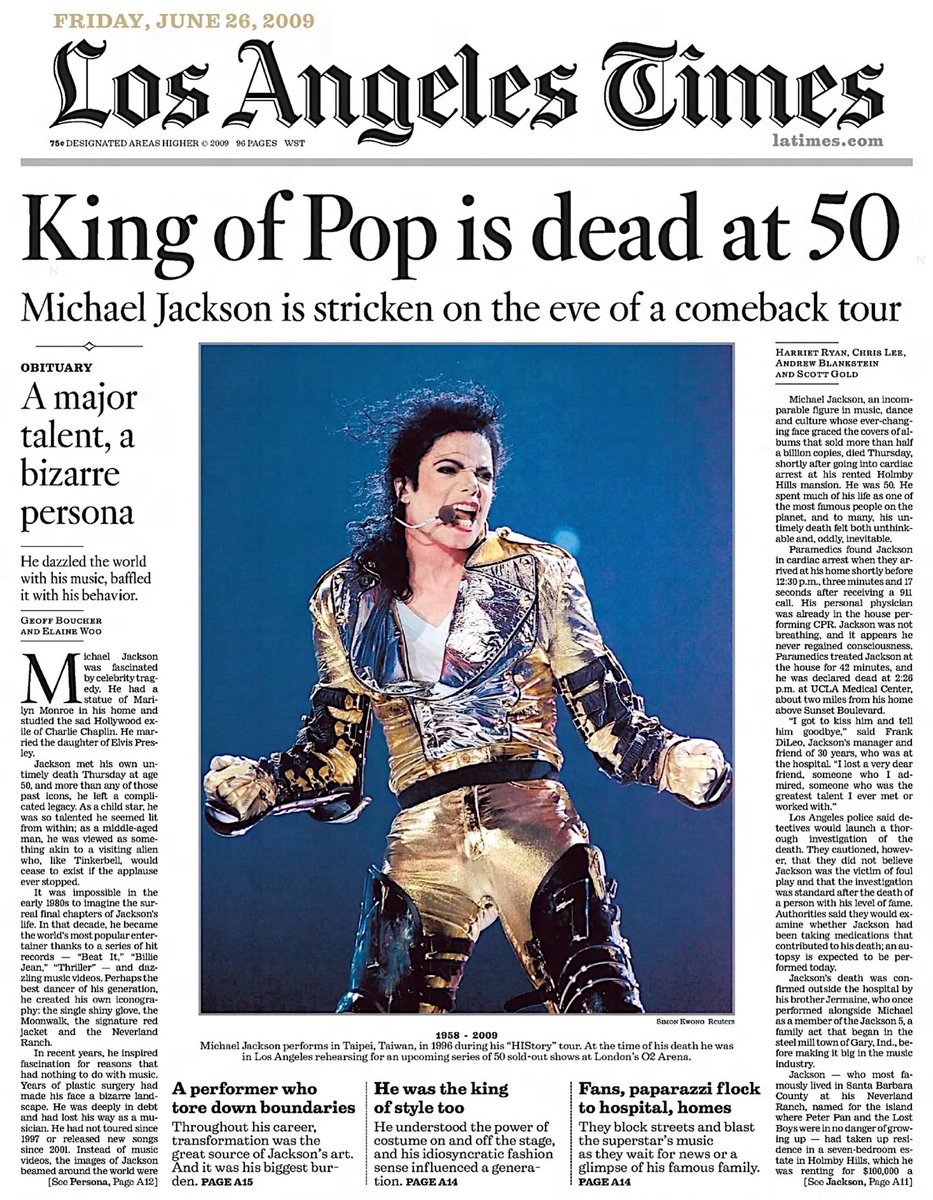
The tech world was captivated not just by the traffic, but by where it was going. TMZ, a digital-first tabloid, broke the news hours before traditional outlets like the Los Angeles Times or CNN could verify it. This created a technical and editorial vacuum. Legacy media outlets, bound by traditional verification protocols, saw their traffic plummet as users flocked to the sites that were updating in real-time.
From a digital strategy perspective, this forced every major news organization to invest heavily in “Live Blog” technology and real-time CMS (Content Management System) capabilities. No longer could a news site wait for a story to be “finished” to publish it. They needed a technical framework that allowed for incremental updates, live video integration, and massive concurrent user support.
The Impact on Content Delivery Networks (CDNs)
A significant portion of the internet’s resilience depends on CDNs like Akamai and (now) Cloudflare. On June 25, these networks saw a 20% increase in global internet traffic. This was a “stress test” for the edges of the internet—the servers located closest to the users.
Engineers realized that centralizing data was a recipe for failure. The lessons learned that day led to the massive expansion of edge computing. By moving the “intelligence” of the web closer to the end-user, tech companies could ensure that even if a central database was struggling, the “edge” could still serve content, video, and images without a total blackout.

Legacy and Longevity: The Tech That Emerged from the Chaos
While June 25, 2009, is remembered by many as a day of mourning, its technical legacy is one of resilience and innovation. The failures of that day became the blueprints for the robust systems we use today for everything from streaming the Super Bowl to handling global product launches.
The event accelerated the adoption of several key technologies:
- NoSQL Databases: As traditional relational databases struggled with the rapid-fire updates of social media, developers moved toward NoSQL solutions (like Cassandra or MongoDB) that could handle massive write-loads and distributed data more efficiently.
- WebSockets and Real-Time Push: The need for users to manually refresh their browsers to see updates was a major drain on resources. This led to a faster adoption of technologies that “push” data to the user, reducing unnecessary server requests.
- Enhanced Cybersecurity Filtration: Google and other providers developed better ways to analyze traffic patterns, ensuring that cultural phenomena wouldn’t be mistaken for cyberattacks in the future.
In the end, June 25, 2009, was the day the internet grew up. It was the moment we realized that our digital world was no longer a secondary layer of communication, but the primary infrastructure of human connection. The crashes, errors, and “Fail Whales” of that day were the growing pains of a technology that was finally becoming as big as the world it sought to connect. As we navigate the seamless, high-speed internet of today, we owe a great deal to the lessons learned during those chaotic hours when the world’s collective curiosity nearly brought the digital age to a standstill.
aViewFromTheCave is a participant in the Amazon Services LLC Associates Program, an affiliate advertising program designed to provide a means for sites to earn advertising fees by advertising and linking to Amazon.com. Amazon, the Amazon logo, AmazonSupply, and the AmazonSupply logo are trademarks of Amazon.com, Inc. or its affiliates. As an Amazon Associate we earn affiliate commissions from qualifying purchases.