
The Anatomy of National Branding: Ireland’s Global Equity
In the realm of global brand strategy, nations are no longer just geographical entities; they are complex, multi-layered brands with distinct value propositions, emotional resonances, and reputational capital. Ireland, often referred to as the “Emerald Isle,” has spent decades cultivating a brand identity rooted in resilience, literary brilliance, and a unique brand of “soft power” that punches far above its weight. However, when a national brand engages in geopolitical stances that provoke intense friction—such as the recurring accusations of systemic bias or specific political hostilities—it raises a fundamental question in brand management: what gives a national brand the “right” or the “permission” to deviate from the expectations of its global stakeholders?
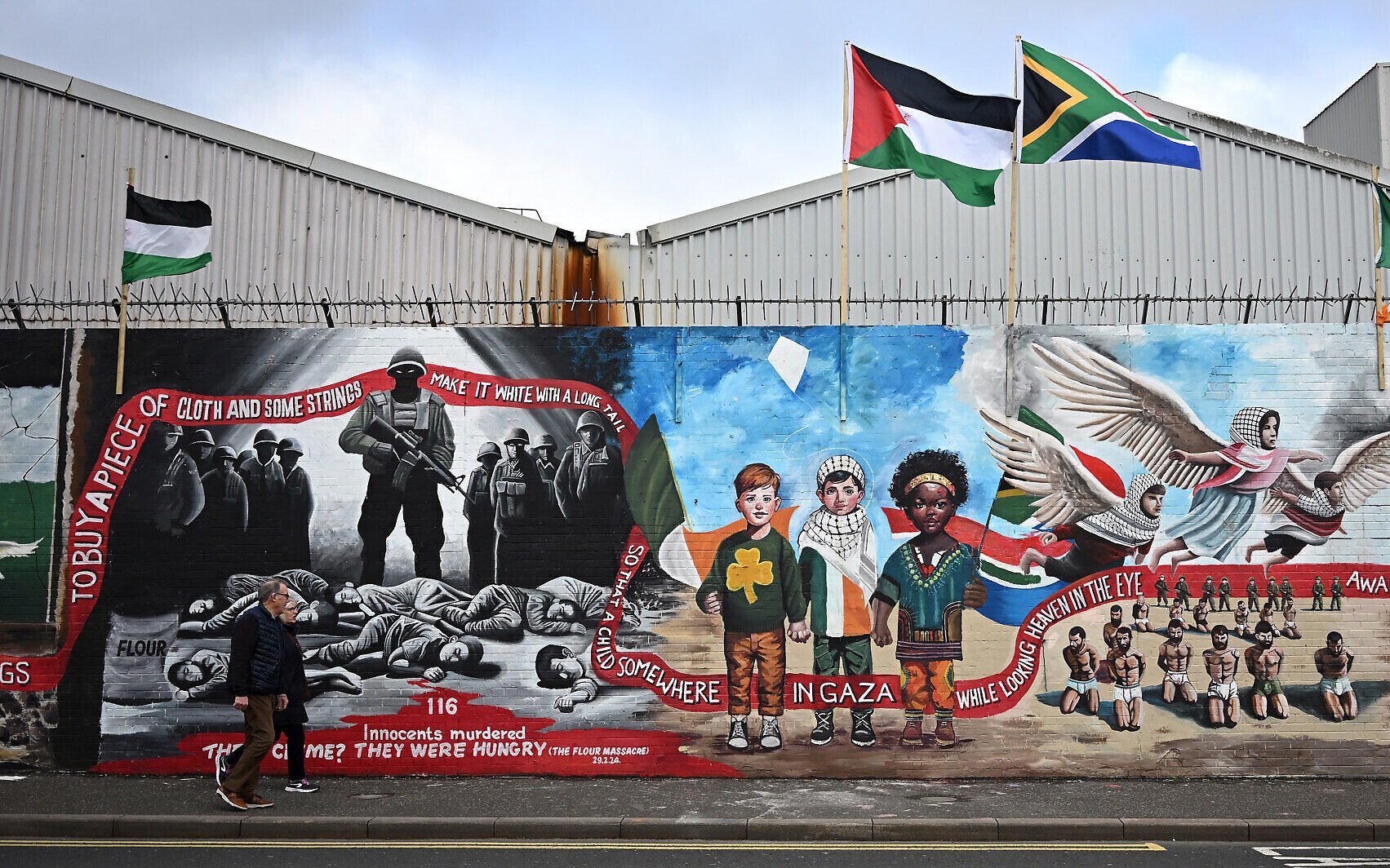
National brand equity is built on the foundation of consistency and perceived values. For Ireland, the brand has traditionally been associated with the “underdog” narrative—a history of colonial struggle that informs its modern identity. In brand strategy, this is known as a “Heritage Positioning.” This heritage provides the Irish brand with a specific type of moral authority in the eyes of some, while creating significant reputational risk in the eyes of others. When critics use provocative framing—asking what gives a nation the “right” to hold a certain stance—they are essentially questioning the “Brand Permission” of that nation. In marketing terms, brand permission is the limit to which a brand can stretch its identity before it loses credibility or faces a backlash from its core audience.
The Role of Soft Power in Brand Protection
Soft power is the currency of national branding. It is the ability to influence others through attraction rather than coercion. Ireland’s soft power—driven by its diaspora, its cultural exports like U2 or Sally Rooney, and its status as a European tech hub—acts as a protective “halo effect” for the brand. This halo effect often allows the national brand to weather controversies that might bankrupt the reputational capital of less “likable” nations. From a strategic perspective, the Irish brand utilizes its history of perceived marginalization to justify its current geopolitical assertions. This creates a brand narrative of “principled consistency,” even when those principles lead to accusations of bias or antisemitism from international observers.
Understanding Brand Permission and Narrative Autonomy
Brand permission is not granted by the brand itself, but by the stakeholders who consume its identity. For Ireland, these stakeholders include foreign investors, international political bodies, and the global public. When the Irish brand takes a stance that is perceived as hostile or biased, it is testing the elasticity of its brand identity. The “right” to be controversial—or the right to a unique moral voice—is a strategic asset that must be managed with precision. If the brand stretches too far into territory that contradicts its perceived values of inclusivity and peace, it risks “brand dilution” or, worse, a “reputational pivot” where the brand is redefined by its critics rather than its creators.
Reputational Friction: Navigating Geopolitical Contradictions
In brand strategy, “reputational friction” occurs when there is a disconnect between how a brand views itself and how it is perceived by a specific, influential segment of the global market. The title’s provocative inquiry into the “right” of the Irish to hold specific, often criticized views on Middle Eastern geopolitics is a classic example of this friction. To analyze this within the Brand niche, we must look at how Ireland manages the “cognitive dissonance” of being a welcoming, high-tech, modern economy while simultaneously being labeled with heavy descriptors like “antisemitic” by certain international critics and advocacy groups.
Crisis Management and the Labeling Effect
Once a brand is labeled—whether the label is “innovative,” “luxury,” or in this case, “hostile”—the label begins to dictate the brand’s market value. In reputation management, the “Labeling Effect” is a powerful force. For Ireland, the accusation of systemic bias serves as a counter-narrative to its primary brand identity. Strategic brand managers would argue that the “right” to a controversial stance is maintained through “Narrative Seeding.” By framing their political positions as an extension of their historical struggle for civil rights, the Irish brand attempts to neutralize the “antisemitic” label, reframing it instead as “pro-humanitarian.”
The Multi-Stakeholder Conflict
A nation-brand serves many masters. In Ireland’s case, there is a tension between domestic brand alignment (what the Irish public believes) and global brand alignment (what international partners expect).
- The Domestic Audience: Expects the brand to remain “authentic” to its historical roots of resisting perceived oppression.
- The Global Corporate Audience: Expects a stable, predictable, and “neutral” brand environment conducive to business.
- The Geopolitical Critics: View the brand’s “authenticity” as a mask for deep-seated prejudice.
Navigating this three-way conflict is the ultimate challenge in corporate and national branding. The “right” to a stance is often a function of how well the brand can convince its most powerful stakeholders (like the US or the EU) that its local “authenticity” does not threaten the global “stability” of the brand.
The Economic Consequences of Reputational Branding

In the “Money” and “Brand” overlap, reputation is a direct driver of valuation. Ireland’s status as a tax-friendly haven for multinational corporations (MNCs) is a cornerstone of its “Corporate Brand.” However, corporate brands are increasingly sensitive to the social and political reputations of the jurisdictions in which they operate. If the “Irish Brand” becomes synonymous with controversy or specific forms of political bias, it could potentially impact the country’s Foreign Direct Investment (FDI) profile.
Brand Risk and Investor Sentiment
Investors prize stability and “Brand Safety.” If a country’s national brand becomes “radioactive” due to perceived radicalism or systemic prejudice, it creates a “reputational liability” for the companies headquartered there. For example, a US-based tech giant might find it increasingly difficult to justify its massive footprint in a nation whose brand is being publicly interrogated for bias. The “right” to a controversial political stance is therefore a luxury that carries a hidden “reputation tax.” This tax is paid in the form of increased scrutiny, potential boycotts, and a cooling of investor sentiment.
The Value of a Principled Brand Identity
Conversely, some brand strategists argue that a “principled” brand identity—even one that attracts severe criticism—can actually increase brand loyalty among certain demographics. By refusing to conform to the expectations of global critics, the Irish brand strengthens its “Authenticity Equity.” In a world of sanitized, corporate-friendly national identities, a brand that takes a hard, controversial stand can become a “Lighthouse Brand.” For Ireland, the “right” to be perceived as contrarian is a strategic choice to prioritize long-term identity over short-term reputational comfort.
Strategic Authenticity: Balancing Local Values with Global Expectations
What gives any brand the right to be provocative? In modern branding, the answer is “Strategic Authenticity.” This is the practice of aligning a brand’s public actions with its core, historical values, even when those actions are unpopular. Ireland’s brand strategy is heavily invested in the idea that its “right” to speak out on global issues—regardless of the labels applied to it—is derived from its own historical trauma and subsequent moral evolution.
The Aaker Model Applied to the Irish Identity
Using David Aaker’s Brand Identity Model, we can break down the Irish brand into:
- The Core Identity: Resilience, wit, struggle, and neutrality.
- The Extended Identity: Tech-savviness, European integration, and humanitarian activism.
When the extended identity (activism) is perceived by outsiders as bias (antisemitism), the core identity acts as the anchor. The Irish brand relies on its “Core” to justify its “Extended” actions. To the strategist, the question is not about the “right” to a stance, but about the “Cohesion” of the brand. As long as the Irish public sees their actions as cohesive with their history, the brand remains strong internally, even as it faces external “Brand Erosion.”
Reclaiming the Narrative through Public Relations
To counter the high-friction labels mentioned in the title, Ireland utilizes sophisticated public relations and cultural diplomacy. This involves:
- Highlighting Multi-Dimensionality: Moving the conversation from a single political friction point to the broader contributions of the Irish brand (science, literature, tech).
- Stakeholder Engagement: Using diplomatic channels to “re-educate” global partners on the nuances of the Irish position, thereby reducing the “bias” narrative.
- Moral Reframing: Arguing that the “right” to critique is a fundamental component of a democratic brand identity.
Future-Proofing the National Brand in an Age of Polarization
As the world becomes more polarized, national brands like Ireland will find it increasingly difficult to maintain a “Universal Appeal.” The luxury of being “everyone’s favorite underdog” is fading. Moving forward, the Irish brand must decide whether to lean into its controversial positioning or to engage in a “Reputational Pivot” to appease international critics.
The Risk of Brand Isolation
The ultimate danger for any brand—corporate or national—is “Brand Isolation.” If the Irish brand becomes too closely associated with a single, highly contentious geopolitical narrative, it risks losing its “Multi-Category Appeal.” In brand strategy, a brand that is “siloed” into a specific political niche loses its ability to influence broader markets. The “right” to a stance is only valuable if it doesn’t lead to the “Right to be Ignored.”
Conclusion: The Ethics and Strategy of National Identity
The question of “what gives the Irish the right” is, at its heart, a question about the sovereignty of a brand. In the high-stakes world of global brand strategy, sovereignty is the ultimate goal. A sovereign brand is one that defines itself, rather than being defined by its critics. For Ireland, the path forward involves a delicate balancing act: maintaining the “Authentic Friction” that gives the brand its character, while managing the “Reputational Risk” that comes with being a provocative voice on the world stage. Whether this strategy results in a stronger, more resilient brand or a diluted, controversial one will depend entirely on how Ireland manages its most precious resource: its global reputation.
aViewFromTheCave is a participant in the Amazon Services LLC Associates Program, an affiliate advertising program designed to provide a means for sites to earn advertising fees by advertising and linking to Amazon.com. Amazon, the Amazon logo, AmazonSupply, and the AmazonSupply logo are trademarks of Amazon.com, Inc. or its affiliates. As an Amazon Associate we earn affiliate commissions from qualifying purchases.