
The term “ward of the court” often evokes images of Dickensian legal battles or dramatic courtroom custody disputes. However, in the modern financial and legal landscape, becoming a ward of the court carries profound implications for personal finance, asset management, and estate planning. At its core, being a ward of the court means that a legal entity—usually a minor or an incapacitated adult—has been placed under the protection and oversight of a judicial body. From a financial perspective, this designation triggers a complex series of fiduciary responsibilities, oversight mechanisms, and management strategies designed to preserve the ward’s wealth and ensure their physical and economic well-being.

Understanding the mechanics of this status is crucial for families, professional fiduciaries, and individuals looking to safeguard their legacies. When the court steps in, it assumes the ultimate authority over an individual’s life and, perhaps most significantly, their balance sheet.
The Financial Implications of Legal Guardianship
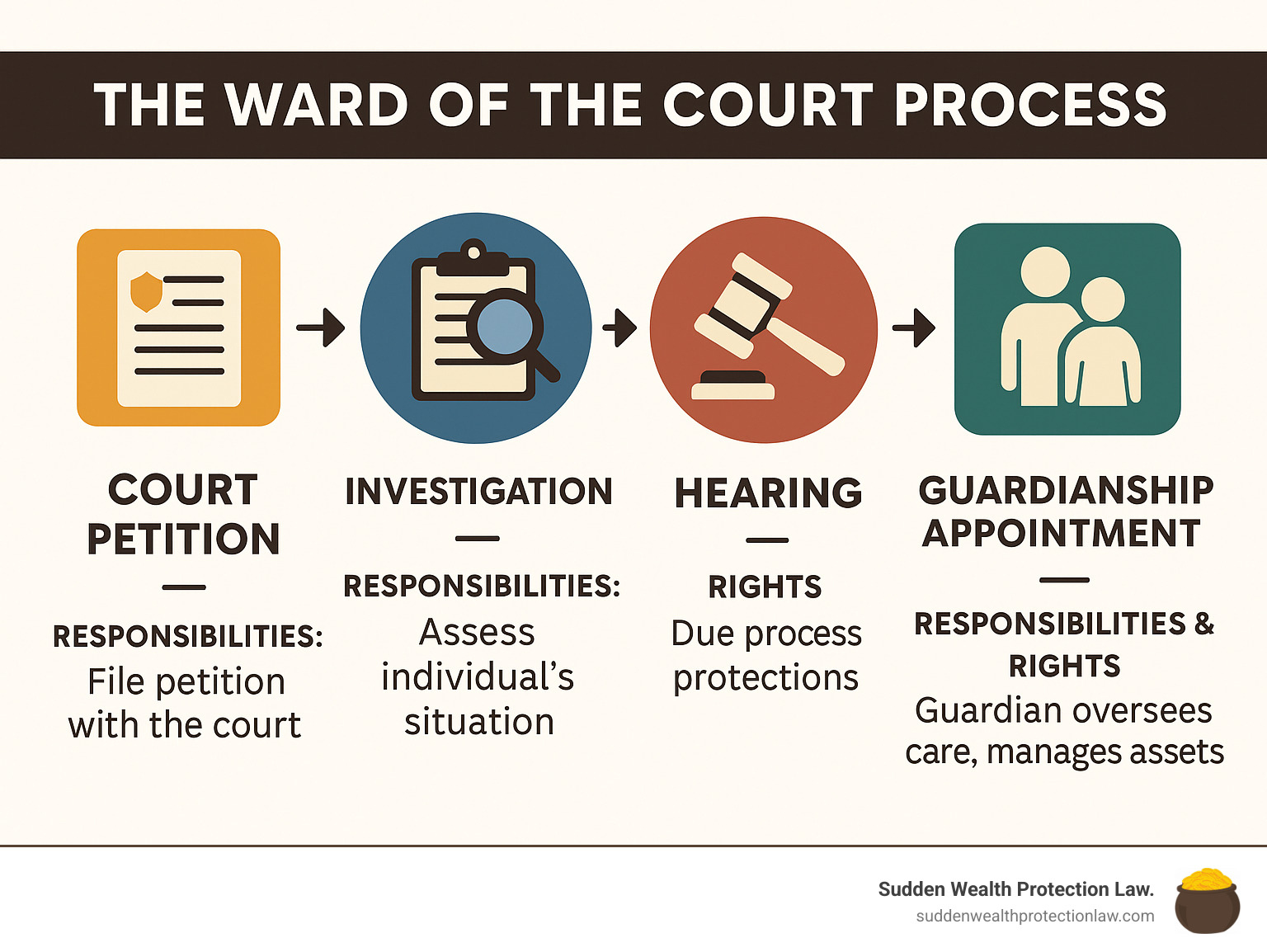
When an individual is declared a ward of the court, the legal system effectively suspends their autonomy over their financial affairs. This typically occurs because the individual is either a minor without a legal guardian or an adult who has been deemed legally incompetent due to illness, disability, or cognitive decline. In either case, the court appoints a guardian or a conservator to manage the individual’s estate.
The Transition of Financial Control
The moment an individual becomes a ward, their access to bank accounts, investment portfolios, and real estate titles is legally restricted. The appointed guardian—who might be a family member or a professional fiduciary—takes over the management of these assets. This transition is not merely administrative; it is a rigorous legal shift. The guardian must inventory all assets, from liquid cash and stock options to physical property and intellectual rights. This inventory is filed with the court, creating a baseline for all future financial activity.
For high-net-worth individuals, this process can be incredibly complex. It involves the valuation of diversified interests, including business ownership, offshore accounts, and specialized investment vehicles. The court’s primary goal is “preservation of the estate,” a conservative financial philosophy that prioritizes the ward’s current and future needs over aggressive growth or speculative ventures.
Protecting the Estate from Exploitation
One of the primary financial drivers behind making someone a ward of the court is the prevention of financial elder abuse or the mismanagement of a minor’s inheritance. By placing assets under the court’s jurisdiction, the legal system creates a “locked-box” scenario. Every dollar spent from the ward’s estate must generally be accounted for and, in many jurisdictions, approved by a judge. This oversight acts as a safeguard against predatory family members, fraudulent investment schemes, or the poor judgment of the ward themselves if they are suffering from diminished capacity.
Fiduciary Responsibility and Asset Management
The individual or entity appointed to manage a ward’s money is held to the highest legal standard: the fiduciary duty. In the context of a ward of the court, this means the manager must act solely in the best interest of the ward, putting aside any personal gain or external influence.
The Prudent Investor Rule
Most jurisdictions require guardians to follow what is known as the “Prudent Investor Rule.” This rule dictates that a fiduciary must manage the ward’s portfolio with the same care, skill, and caution that a “prudent” person would exercise in managing their own affairs. In practice, this leads to a focus on diversification and risk mitigation.
A ward’s investment strategy is rarely aggressive. Because the court prioritizes the ward’s ability to pay for medical care, housing, and daily expenses, the portfolio is often skewed toward fixed-income securities, high-grade bonds, and blue-chip equities. If a guardian wishes to invest a ward’s money in high-risk startups or volatile assets like cryptocurrency, they usually face an uphill battle to gain court approval, as such moves are often seen as a violation of the duty to preserve capital.
Budgeting and Mandatory Court Audits
Financial transparency is the hallmark of being a ward of the court. On an annual or semi-annual basis, the guardian must file a detailed “accounting” with the court. This report lists every cent of income—such as Social Security benefits, dividends, or rental income—and every expense, including grocery bills, medical co-pays, and property taxes.
The court reviews these audits to ensure the ward’s money is being spent appropriately. If a guardian cannot produce a receipt or a logical explanation for an expenditure, they can be held personally liable for the missing funds. This level of scrutiny ensures that the ward’s financial health remains stable, but it also introduces a layer of bureaucracy that can be both time-consuming and expensive.
The Cost of Being a Ward: Fees, Filings, and Professional Fiduciaries
While being a ward of the court provides protection, that protection comes at a literal price. The legal and administrative costs of maintaining a wardship can erode the very estate the court is trying to protect, particularly for smaller estates where fixed costs represent a larger percentage of the total value.
Professional Fiduciary and Legal Fees
In many cases, the court appoints a professional fiduciary—such as a bank’s trust department or a licensed private fiduciary—to manage the ward’s money. These professionals charge fees for their services, which are paid directly out of the ward’s assets. Similarly, the attorneys involved in filing the initial petition and managing the ongoing court interactions also bill the estate.
For a ward with significant assets, these fees are a standard cost of business. However, for an individual with modest savings, the cumulative effect of legal fees, filing fees, and professional management fees can be substantial. This “leakage” from the estate is one of the primary reasons financial planners emphasize the importance of avoiding court intervention through proactive estate planning.
Bonding and Insurance Requirements
To further protect the ward, courts often require the guardian to be “bonded.” A fiduciary bond is a type of insurance policy that protects the ward’s estate against theft or mismanagement by the guardian. The cost of the bond premium is also paid out of the ward’s funds. While this provides an extra layer of financial security, it adds to the overhead of the legal arrangement. The amount of the bond is typically set to match the total value of the liquid assets in the estate, ensuring that if the guardian were to disappear with the money, the ward would be made whole by the bonding company.
Estate Planning to Avoid Court Intervention
Given the costs and the loss of autonomy associated with becoming a ward of the court, many individuals use financial tools to ensure that if they become incapacitated, their affairs are handled privately without the need for judicial oversight. This is a critical component of modern wealth management.
The Role of the Living Trust
A Revocable Living Trust is perhaps the most effective financial tool for avoiding wardship. When assets are held in a trust, they are managed by a trustee. If the grantor (the person who created the trust) becomes incapacitated, a “successor trustee” steps in automatically to manage the assets according to the instructions laid out in the trust document. Because the trust is a private contract, the court does not need to intervene, there are no mandatory public accountings, and the administrative costs are significantly lower.
Durable Power of Attorney
Complementing the trust is the Durable Power of Attorney (DPOA). This legal document allows an individual to designate someone to handle their financial affairs (paying bills, filing taxes, managing bank accounts) if they are unable to do so. Unlike a standard power of attorney, a “durable” power stays in effect even if the person becomes mentally incompetent. By having a DPOA in place, a family can usually avoid the “ward of the court” designation entirely, as there is already a designated person with the legal authority to manage the individual’s money.
Long-Term Financial Planning for Wards
For those who are already wards, long-term financial planning becomes a specialized exercise in balancing private wealth with government benefits. This is particularly relevant for minor wards who have received large personal injury settlements or inheritances.
Special Needs Trusts and Government Benefits
If a ward of the court is disabled, a sudden influx of money (from an inheritance or legal settlement) could disqualify them from essential government programs like Supplemental Security Income (SSI) or Medicaid, which often have strict asset limits. To prevent this, courts often authorize the creation of a “Special Needs Trust” (also known as a Supplemental Needs Trust).
The ward’s assets are placed into this trust, which is managed by a trustee for the ward’s benefit. Because the ward does not have direct access to the funds, the assets are not counted toward government limit thresholds. This allows the ward to maintain their medical benefits while using their private wealth to pay for “quality of life” enhancements that the government does not cover, such as specialized therapy, travel, or advanced technology.

Management of Minority Wards
When a minor is a ward of the court, the financial focus is often on the “blocked account.” These are bank accounts where funds are deposited and cannot be withdrawn until the minor turns 18 or 21, except by specific court order for the child’s support. This ensures that the minor enters adulthood with their financial legacy intact, rather than having it depleted by guardians before they reach maturity.
In conclusion, while being a “ward of the court” is a legal status, its reality is a complex financial ecosystem. It represents a total shift in how money is managed, invested, and protected. For the ward, it offers a shield against exploitation and mismanagement, but it does so at the cost of privacy, autonomy, and administrative expense. For the astute financial planner, the goal is often to build a framework—through trusts and powers of attorney—that provides the same protections as a court wardship without the heavy hand of judicial intervention.
aViewFromTheCave is a participant in the Amazon Services LLC Associates Program, an affiliate advertising program designed to provide a means for sites to earn advertising fees by advertising and linking to Amazon.com. Amazon, the Amazon logo, AmazonSupply, and the AmazonSupply logo are trademarks of Amazon.com, Inc. or its affiliates. As an Amazon Associate we earn affiliate commissions from qualifying purchases.