
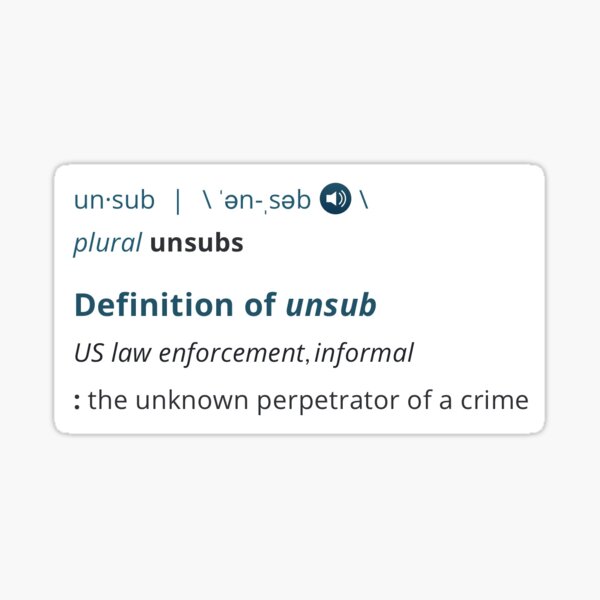
In the lexicon of modern procedural dramas, few terms carry as much weight as “Unsub.” For fans of the long-running series Criminal Minds, the word is synonymous with the shadowy figure at the heart of every investigation—the Unknown Subject. While the show uses the term to define the unidentified offender whose profile the Behavioral Analysis Unit (BAU) must build, the concept of the Unsub has transcended television to become a foundational element in the world of digital forensics, cybersecurity, and predictive technology.
In the real world, identifying an “Unsub” is no longer just the work of psychological intuition and whiteboards. It is a high-stakes technological race involving massive data sets, machine learning algorithms, and sophisticated digital tracking. To understand what “Unsub” truly means in a contemporary context, we must look beyond the script and examine the advanced technologies that allow investigators to unmask anonymous threats in an increasingly digital landscape.
From Script to System: The Digital Evolution of Behavioral Profiling
On Criminal Minds, the BAU focuses on behavioral markers to narrow down a list of suspects. In the tech sector, this has evolved into Behavioral Analytics—a branch of data science that uses software to identify patterns of behavior that indicate intent. When an “Unsub” operates in the digital realm, they leave behind “digital signatures” that are analyzed using high-speed processing tools.
The Role of Machine Learning in Identifying Patterns
Modern investigative tech utilizes machine learning (ML) to process thousands of variables that a human mind could never correlate. While a fictional profiler might notice a specific type of knot used at a crime scene, a real-world cybersecurity system notices “bursty” data transfers or specific coding styles used in malware. These are the modern “signatures” of a digital Unsub. By training models on known threat actor behaviors, security software can identify an Unknown Subject’s origin, even if they are using advanced obfuscation techniques like VPNs or Tor browsers.
OSINT: The Real-World “Garcia” Effect
The character Penelope Garcia represents the apex of technical support in the show, pulling data from disparate databases in seconds. In reality, this is known as Open Source Intelligence (OSINT). Tech tools like Maltego or SpiderFoot allow investigators to aggregate data from the surface, deep, and dark web to de-anonymize an Unsub. By correlating social media footprints, leaked credentials, and domain registration history, tech-driven investigations can turn a shadowy figure into a concrete identity faster than ever before.
Digital Fingerprints: How Cybersecurity Unmasks the Anonymous
In the physical world, an Unsub is identified through DNA and fingerprints. In the tech world, the “fingerprint” is far more complex. Every interaction with a digital system generates metadata—data about data. This metadata is the primary tool used by digital forensic specialists to track an Unsub across the internet.
Network Forensics and IP Attribution
When an Unsub initiates a cyberattack or a digital crime, they must communicate with a network. Every packet of data sent contains headers that, when reconstructed, tell a story. Network forensics involves the capture, recording, and analysis of network events to discover the source of security attacks. Advanced Intrusion Detection Systems (IDS) act as the “first responders,” flagging anomalous traffic that matches the profile of a known Unsub “modus operandi.”
Browser and Device Fingerprinting
Even when an Unsub clears their cookies or uses incognito mode, they are often still identifiable through device fingerprinting. This technology collects technical specifics about a user’s hardware: screen resolution, battery level, installed fonts, and even the specific way their browser renders graphics. Because the combination of these variables is often unique to a single machine, tech platforms can track an Unsub’s movements across the web with startling accuracy, effectively “profiling” the hardware used by the Unknown Subject.
Predictive Policing: Using AI to Forecast the Next Move

One of the most compelling aspects of Criminal Minds is the BAU’s ability to predict where an Unsub will strike next. In the technology industry, this is mirrored by predictive policing software and threat intelligence platforms. These tools use historical data to forecast future incidents, shifting the investigative focus from reactive to proactive.
Geographic Information Systems (GIS) and Heat Mapping
The “geographic profile” is a staple of the show. In the tech world, this is handled by GIS technology. By layering crime data over geographical maps, AI-driven software can identify “hot spots” and predict the most likely base of operations for an Unsub. This process, known as “Distance Decay” modeling, assumes that most offenders operate within a specific radius of their home or workplace. Modern GIS tools automate this, allowing law enforcement to deploy resources to specific city blocks based on algorithmic probability.
Natural Language Processing (NLP) in Threat Assessment
Often, an Unsub communicates their intent through manifestos, emails, or social media posts. Natural Language Processing (NLP) is a branch of AI that helps investigators analyze the “voice” of the Unsub. By examining syntax, vocabulary, and sentiment, NLP tools can determine the psychological state of a subject and even match their writing style to existing records. This “linguistic profiling” is a critical component of modern counter-terrorism and corporate security, providing a technical bridge between raw data and psychological insight.
The Ethical Frontier: The Privacy Costs of Unmasking the Unsub
While the technology to identify an Unsub is more powerful than ever, it brings significant ethical challenges. The same tools used to catch criminals can also be used for mass surveillance, raising questions about where the “profile” ends and the individual’s right to privacy begins.
Facial Recognition and Biometric Overreach
Facial recognition is perhaps the most controversial tool in the quest to identify the Unknown Subject. While it can identify a suspect in a crowd of thousands, its use in public spaces has led to concerns regarding civil liberties. Tech companies and governments are currently debating the “false positive” rates of these systems, especially regarding their accuracy across different demographics. The “Unsub” might be identified, but at the cost of the anonymity of every other person in the frame.
The Problem of Algorithmic Bias
If an AI is trained on biased historical data, the “profile” it generates for an Unsub will be inherently flawed. In the tech community, there is a growing movement toward “Explainable AI” (XAI), which ensures that the reasoning behind an identification is transparent and auditable. Without this, the quest to unmask an Unsub risks replicating the human prejudices that the BAU, and real-world investigators, strive to overcome.
The Future of Investigative Tech: Beyond the Procedural
As we move further into the decade, the concept of the Unsub will continue to evolve alongside the technology used to track them. We are entering an era of “Deepfake” forensics, where investigators must determine if a subject even exists or if they are a synthetic creation designed to mislead.
Blockchain and Immutable Evidence
The future of identifying the digital Unsub may lie in blockchain technology. Because blockchain creates an immutable, timestamped record of transactions, it is becoming an invaluable tool for tracking financial crimes and ransomware payments. For the Unsub who thinks they are hidden behind cryptocurrency, the transparency of the public ledger often proves to be their downfall.

Quantum Computing and Cryptography
The “Unsub” of the future may use quantum-resistant encryption to hide their identity. In response, the tech industry is developing post-quantum cryptography to ensure that law enforcement and security agencies maintain the ability to decrypt communications when authorized. This ongoing arms race between anonymity and identification ensures that the term “Unsub” will remain a central fixture in both our entertainment and our technological infrastructure.
In conclusion, while Criminal Minds popularized the term “Unsub” as a narrative device, the tech industry has transformed it into a complex field of study. From AI-driven behavioral analytics to the forensic examination of metadata, identifying the Unknown Subject is now a masterpiece of engineering. As technology continues to advance, the shadow of the Unsub grows shorter, caught in the high-resolution glare of the modern digital age.
aViewFromTheCave is a participant in the Amazon Services LLC Associates Program, an affiliate advertising program designed to provide a means for sites to earn advertising fees by advertising and linking to Amazon.com. Amazon, the Amazon logo, AmazonSupply, and the AmazonSupply logo are trademarks of Amazon.com, Inc. or its affiliates. As an Amazon Associate we earn affiliate commissions from qualifying purchases.