
When examining the biblical narrative regarding multiple wives, modern readers often approach the subject through a theological or moral lens. However, in the ancient Near Eastern context, marriage was as much a financial arrangement and a legal contract as it was a social union. To understand what the Bible says about multiple wives, one must analyze the economic architecture of the ancient household, the complexities of inheritance law, and the financial liabilities associated with managing a multi-branched family estate.
In the agrarian and nomadic economies of the biblical era, the household (the bet ab) was the primary economic unit. Wealth was measured not in liquid currency as we know it today, but in livestock, land, labor, and lineage. Within this framework, the presence of multiple wives represented a significant shift in a patriarch’s financial portfolio—offering both the potential for massive expansion and the risk of catastrophic legal and distributive conflict.

The Economic Architecture of the Ancient Household
The biblical era operated on a system where household expansion was synonymous with wealth generation. In this context, having multiple wives was a practice often reserved for those with the capital to sustain them. From an economic standpoint, a marriage was an acquisition of labor and a strategy for diversifying a family’s future human capital.
Bridewealth and the Initial Capital Outlay
In the Bible, marriage often began with a “mohar,” commonly translated as a bride price or bridewealth. This was a significant capital outlay paid by the groom or his father to the bride’s family. For example, when Jacob sought to marry the daughters of Laban, he lacked the liquid assets or livestock to pay the mohar, resulting in a labor contract spanning fourteen years.
From a financial perspective, the mohar served two purposes. First, it compensated the bride’s family for the loss of her labor and her contribution to their household economy. Second, it acted as a form of “vested interest,” ensuring the groom had the financial stability to support a new branch of the family. When a man took multiple wives, he was essentially doubling or tripling his initial investment costs. Only the “high-net-worth individuals” of the ancient world—patriarchs, tribal leaders, and royalty—could afford the recurring capital requirements of multiple marriage contracts.
Labor, Productivity, and the Household Economy
While the initial cost was high, the potential return on investment (ROI) was found in the growth of the workforce. In an age before mechanized farming or industrial tools, the primary driver of economic growth was human labor. Multiple wives typically meant more children, which translated into a larger workforce to manage flocks, cultivate land, and defend the family’s assets.
The biblical “Proverbs 31 woman” provides a blueprint for the economic expectations of a wife in a wealthy household: she manages real estate transactions, oversees manufacturing (spinning and weaving), and handles international trade. When a household expanded to include multiple wives, it functioned like a small corporation with different departments. However, this increased productivity came with a massive increase in “overhead”—the cost of food, clothing, and housing for every member of the expanded family.
Inheritance Laws and Asset Protection
One of the most complex financial challenges addressed in the Bible regarding multiple wives is the distribution of the estate. Without clear legal frameworks, the death of a patriarch with multiple wives could lead to the total dissolution of the family’s wealth through infighting and litigation.
Primogeniture and the Rights of the Firstborn
The Bible contains specific legal “compliance” codes to prevent financial favoritism. A primary example is found in Deuteronomy 21:15-17. The law addresses a scenario where a man has two wives, one whom he loves and one he dislikes. If the firstborn son belongs to the “unloved” wife, the father is legally prohibited from giving the double-portion inheritance to the son of the preferred wife.
This is a sophisticated piece of ancient estate law. It prioritizes “contractual seniority” over emotional preference. By protecting the firstborn’s right to a double portion (the bekhorah), the law ensured that the primary bulk of the estate remained intact, preventing the “fragmentation of capital.” In financial terms, this prevented the family business from being split into so many small pieces that it became non-viable.
Dividing the Estate: Mitigating Conflict
The biblical record is replete with the “cost of conflict” within multi-wife households. The stories of Sarah and Hagar, or Leah and Rachel, illustrate the internal competition for resources and legacy. From a wealth management perspective, these conflicts represented a “liquidity risk.” If the wives and their respective sons could not agree on the management of the flocks or the land, the resulting split often weakened the tribe’s overall market position.
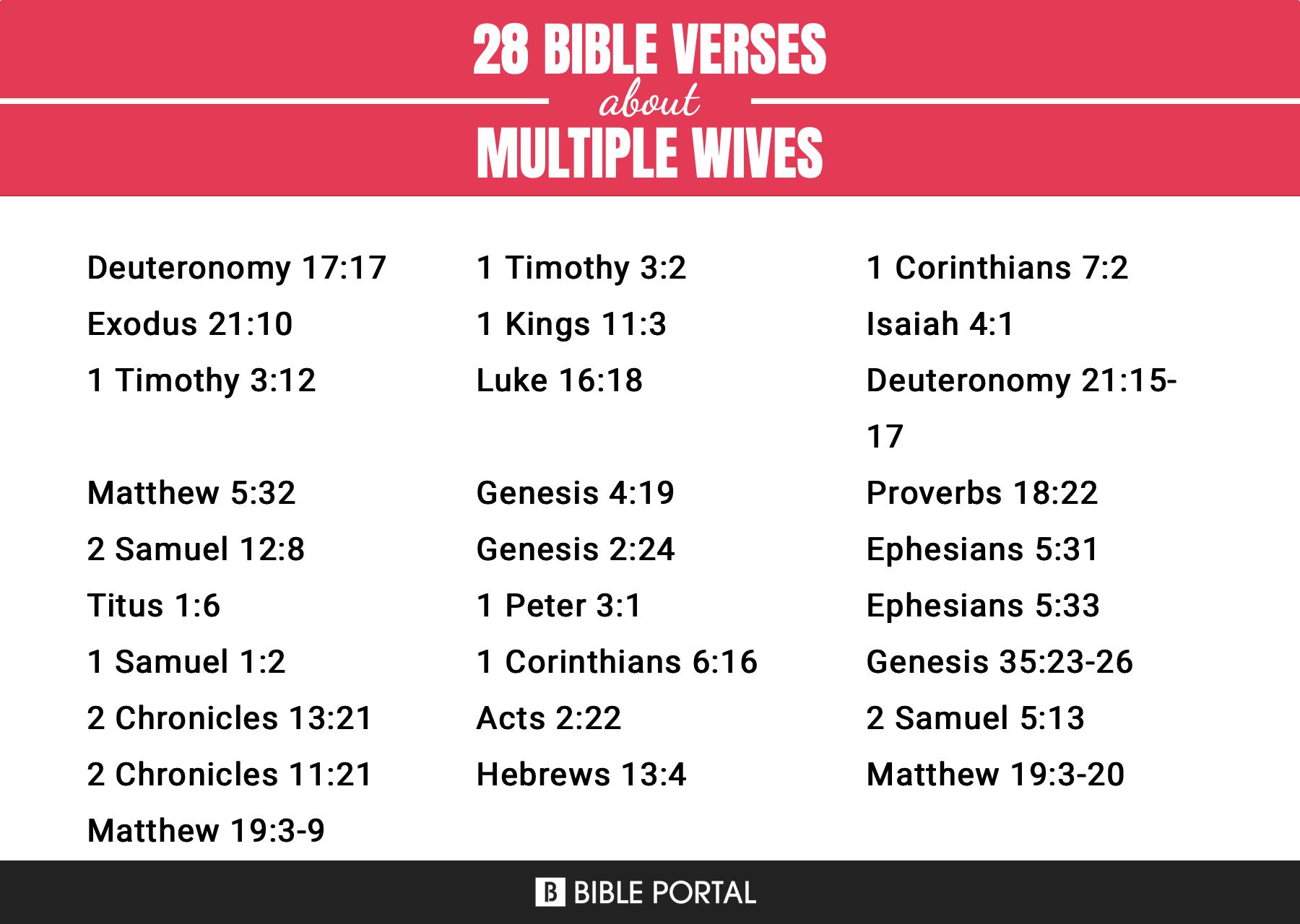
To mitigate this, biblical law and custom established clear boundaries for how assets were to be distributed. While the firstborn received the double portion to maintain the “corporate headquarters,” the other sons were typically given enough “seed capital” to start their own nomadic branches. What the Bible says about multiple wives, therefore, is heavily weighted toward the legal necessity of preventing financial ruin through domestic dispute.
The Cost of Complexity: Financial Risks of Polygamy
While multiple wives could signal wealth, the Bible also highlights the immense financial and personal liabilities inherent in such a complex structure. As any modern business owner knows, rapid expansion without sustainable infrastructure leads to collapse.
Maintenance and Resource Allocation
Exodus 21:10 provides a fundamental “fair labor and maintenance” law for a multi-wife household. It states that if a man takes another wife, he must not diminish the first wife’s food, clothing, or marital rights. This is effectively a “maintenance of effort” clause.
From a financial planning perspective, this meant that a man’s “debt-to-income ratio” had to be strictly managed. He could not legally expand his family (acquire new “assets”) if it meant he would default on his obligations to his existing household. The Bible sets a high bar for “solvency” in marriage; if you cannot afford to maintain the standard of living for the first, you have no legal right to the second.
The Case of Solomon: A Study in Hyper-Expansion
King Solomon serves as the ultimate case study in the financial risks of multiple wives. The biblical text records that he had 700 wives and 300 concubines. While these were often “strategic alliances” (international trade deals and peace treaties), the economic burden on the state was staggering.
To support this massive royal household, Solomon had to implement heavy taxation and forced labor across the twelve tribes of Israel. The “burn rate” of his administration became unsustainable. Following his death, the taxpayers revolted under his son Rehoboam, leading to a “corporate split”—the division of the kingdom into Israel and Judah. Solomon’s example shows that even with record-breaking revenue, the overhead of a thousand-wife household can lead to a total loss of the “national brand” and bankruptcy of the state’s social contract.
Modern Financial Takeaways from Ancient Structures
While the social structure of multiple wives is not the standard in modern Western finance, the biblical handling of these complex households offers enduring lessons in asset management, succession planning, and contract law.
Succession Planning and Clear Contracts
The biblical emphasis on the rights of the firstborn and the prohibition against diminishing a wife’s maintenance underscores the importance of “clear titling” and “ironclad contracts.” In modern personal finance, the equivalent is found in well-drafted wills, trusts, and prenuptial agreements. The biblical text suggests that emotional decisions should not override legal obligations—a principle that remains the bedrock of estate planning today. When assets are shared among multiple stakeholders (whether they are business partners or family members), the rules of distribution must be established before the patriarch or “CEO” exits the scene.
Diversification vs. Consolidation
The move from the polygamous households of the patriarchs to the more frequent monogamous descriptions in later wisdom literature (like the New Testament) reflects an economic shift. As the economy moved from nomadic expansion to urban stability, the “cost-benefit analysis” of multiple wives changed.
In a stable, landed economy, consolidation of resources often outperforms aggressive expansion. Managing one household with high efficiency is frequently more profitable than managing several branches with high conflict and high overhead. For the modern investor, this mirrors the choice between “diworsification”—spreading resources too thin across too many complex ventures—and focused growth.

Conclusion
What the Bible says about multiple wives is inextricably linked to the economic realities of the ancient world. It portrays a system where multiplicity was a sign of significant wealth but also a source of immense legal and financial risk. Through laws governing inheritance, maintenance, and the protection of the less favored, the biblical text provides a framework for managing the “complexities of the estate.”
Ultimately, the biblical narrative suggests that while a man might have the capital to support multiple wives, the “hidden costs”—ranging from the fragmentation of the inheritance to the destabilization of the household’s core focus—often outweighed the productive benefits. For the modern student of finance and branding, the takeaway is clear: sustainable growth requires more than just the acquisition of assets; it requires a rigorous legal and ethical framework to ensure those assets do not become liabilities.
aViewFromTheCave is a participant in the Amazon Services LLC Associates Program, an affiliate advertising program designed to provide a means for sites to earn advertising fees by advertising and linking to Amazon.com. Amazon, the Amazon logo, AmazonSupply, and the AmazonSupply logo are trademarks of Amazon.com, Inc. or its affiliates. As an Amazon Associate we earn affiliate commissions from qualifying purchases.