
In the world of global marketing, few brands possess the immediate recognizability and perceived reliability of the blue and yellow can with the red top. Found in almost every garage, workshop, and kitchen junk drawer across the globe, WD-40 has transcended its status as a mere chemical lubricant to become a cultural icon. However, behind its ubiquity lies a brand name that is deceptively simple and rooted in a narrative of industrial perseverance.
When consumers ask, “What does the 40 stand for in WD-40?” they aren’t just asking for a technical definition; they are uncovering the foundation of one of the most successful brand identities in modern history. The answer—Water Displacement, 40th Formula—is more than a chemical milestone; it is a masterclass in how transparency and storytelling can build an impenetrable brand moat.
Decoding the Name: Science Meets Brand Narrative
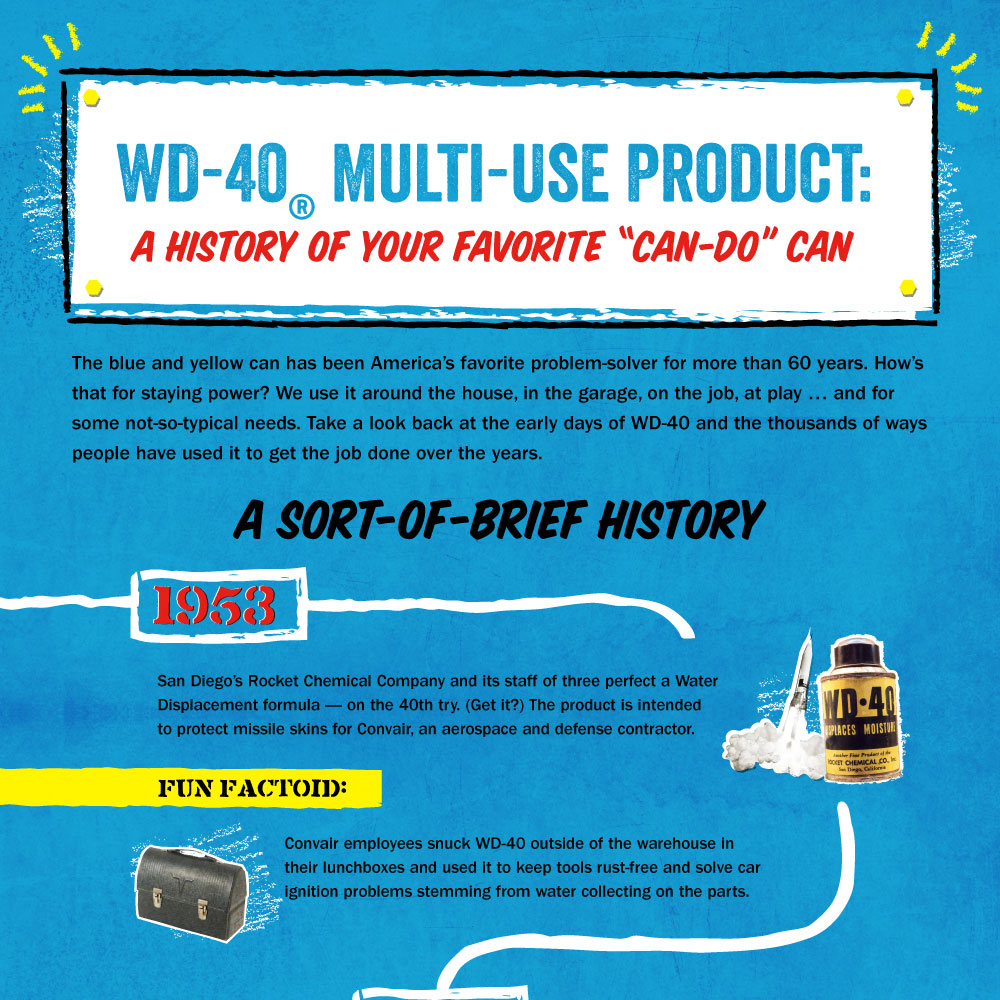
The origin of the WD-40 name is not the result of a high-priced Manhattan naming agency or a series of focus groups. Instead, it was born from the lab notes of the Rocket Chemical Company in 1953. At the time, the three-person team was attempting to create a line of rust-prevention solvents and degreasers for use in the aerospace industry. Specifically, they were looking for a solution that would protect the skin of the Atlas Missile from corrosion and rust.
The 40th Attempt at Perfection
The “WD” stands for Water Displacement, the primary functional goal of the product. The “40” represents the 40th attempt at the formula. From a brand strategy perspective, this number is significant because it highlights the concept of persistence. Most brands seek to project an image of effortless perfection. WD-40, however, leaned into its history of trial and error.
By keeping “40” in the name, the company subtly communicates to the consumer that the product wasn’t an accidental discovery. It was the result of 39 failures and a final, successful iteration. This creates an immediate psychological association with quality and rigor. In an era where “new and improved” is often used as a marketing gimmick, the WD-40 name stands as a testament to a formula that was perfected over 70 years ago and has required little change since.
Functional Naming as a Competitive Advantage
In modern brand strategy, we often see two extremes: abstract names like “Nike” or “Apple,” and highly descriptive names like “General Electric.” WD-40 occupies a unique middle ground. It is a functional acronym that has achieved the status of a proper noun. Because the name is rooted in the product’s specific utility—displacing water—it serves as a constant reminder of its core value proposition. Every time a consumer sees the logo, they are reminded exactly what the product does, which reduces cognitive friction at the point of purchase.
The Branding of Reliability: Why the Story Matters
A brand is more than a product; it is the sum of the stories told about it. The “40th formula” narrative has become a cornerstone of the company’s corporate identity. It humanizes the brand, transforming a chemical company into a group of dedicated scientists who refused to give up until they solved a specific problem for their clients.
Transparency as a Trust Builder
In the 1950s and 60s, industrial branding was often opaque. Companies hid their processes behind corporate jargon. WD-40 took the opposite approach. By essentially naming the product after their lab logbook entry, they practiced a form of radical transparency. This honesty resonates with the brand’s primary demographic: DIYers, mechanics, and engineers. These are individuals who value functionality over fluff. The name WD-40 suggests that the company is more concerned with the efficacy of the fluid inside the can than with a flashy marketing veneer.
The Legend of the Secret Formula
Part of WD-40’s brand equity is built on the mystery of its ingredients. Much like the Coca-Cola formula or the KFC original recipe, the exact composition of WD-40 is a closely guarded secret. It is not patented, as a patent would eventually expire and force the company to reveal its “ingredients for success.” Instead, it is protected as a trade secret.
From a marketing standpoint, this “secret formula” adds a layer of intrigue to the brand. It elevates the product from a commodity to a proprietary solution. When a consumer uses the 40th formula to stop a squeak or loosen a rusted bolt, they feel as though they are using a specialized tool that cannot be replicated by generic competitors. The name reinforces this—it isn’t just “lubricant #40”; it is the 40th formula.
Masterclass in Minimalism: Visual Identity and Packaging
While the name provides the narrative, the visual identity of WD-40 provides the recognition. The brand has maintained a remarkably consistent aesthetic for decades, a strategy that has solidified its place in the global market.

The Blue and Yellow Shield
The color palette of WD-40—bright blue, vibrant yellow, and a splash of red—is high-contrast and high-visibility. In a crowded hardware store aisle, these colors stand out. More importantly, they have become synonymous with the “quick fix.”
The shield logo reinforces the concept of protection. Since the original goal was to protect missiles from the elements, the shield is a literal representation of the brand’s promise. In the psychology of branding, blue often represents trust and dependability, while yellow evokes energy and optimism. Together, they tell the consumer: “This product will work, and it will make your life easier.”
The Power of the Red Straw
Even the physical design of the product has become a part of the brand’s identity. For years, the red straw taped to the side of the can was a hallmark of the WD-40 experience. When the company realized that losing the straw was a common pain point for users, they didn’t just ignore it; they innovated while keeping the brand intact.
The introduction of the “Smart Straw”—a built-in nozzle that flips up for precision and down for spray—was a strategic masterstroke. It solved a functional problem without changing the visual markers of the brand. The red straw remained, but it was integrated into the “40th formula” delivery system. This demonstrates how a brand can evolve its design to meet modern needs without losing its heritage.
Content Marketing Before the Internet: The 2,000 Uses List
One of the most impressive feats of the WD-40 brand strategy is its ability to foster a community of advocates. Long before social media influencers, WD-40 was utilizing user-generated content to expand its market reach.
Community-Driven Growth
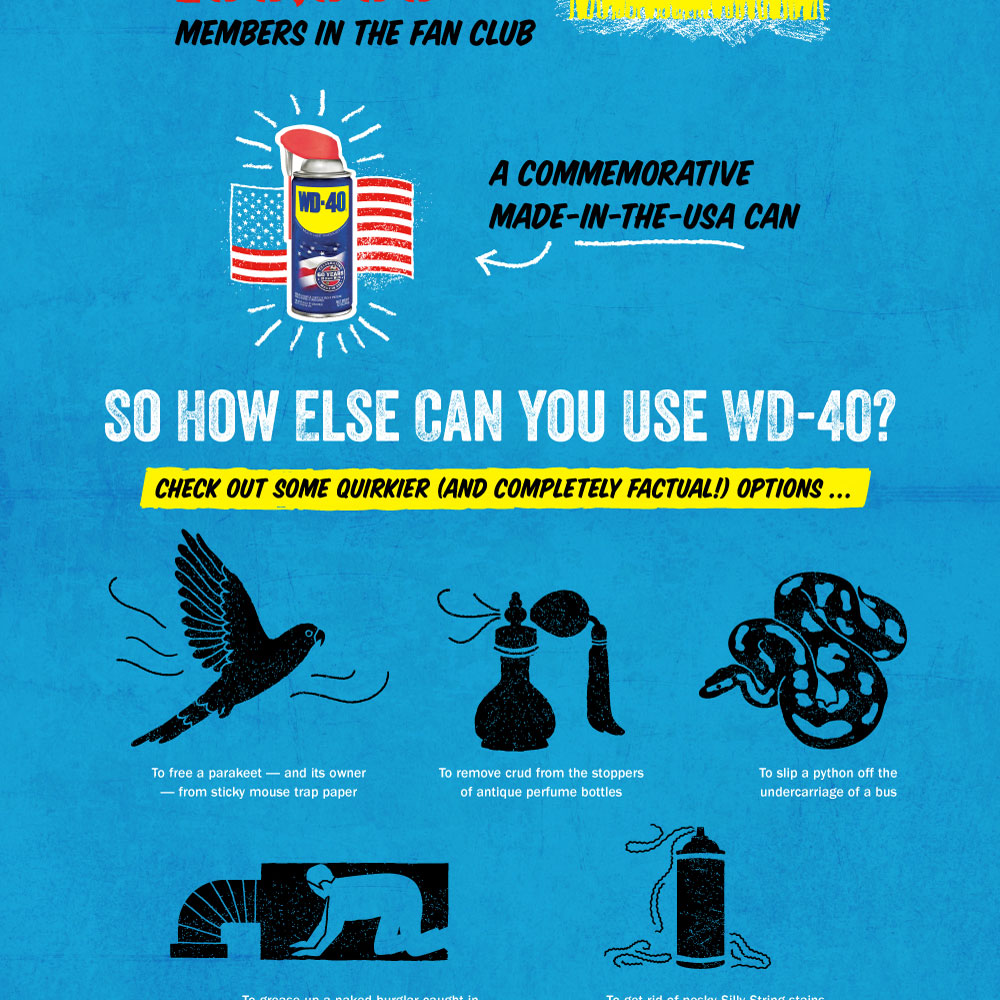
The company actively encouraged fans to share their own “uses” for the product. This led to the famous “2,000 Uses for WD-40” list, which includes everything from cleaning crayon marks off walls to protecting bird feeders from squirrels. This wasn’t just a marketing gimmick; it was a strategy to move the brand from a single-use industrial product to a multi-purpose household essential.
By positioning WD-40 as a “Swiss Army Knife in a can,” the brand expanded its target audience from aerospace engineers to suburban homeowners. This versatility is baked into the brand’s DNA. The “40” in the name represents a specific formula, but the marketing message suggests that this one formula is the answer to a thousand different problems.
Emotional Connection to a Utility Tool
It is rare for a utility product to evoke emotional loyalty, yet WD-40 has achieved this through consistent storytelling. It is a brand that people feel a sense of “ownership” over. Many consumers remember their father or grandfather using WD-40, passing down the knowledge of the “40th formula” like a piece of family lore. This multi-generational trust is the holy grail of brand strategy. It ensures that the product is a staple in the home, regardless of changing trends or new technologies.
Strategic Longevity: Lessons for Modern Brand Managers
The success of WD-40 offers several vital lessons for modern brand managers and entrepreneurs. In an age of rapid disruption, the “40th formula” reminds us that some principles of brand building are timeless.
Protecting the Core
WD-40 has been incredibly disciplined about not diluting its brand. While they have introduced a “Specialist” line for heavy-duty industrial needs, the core WD-40 Multi-Use Product remains the face of the company. They haven’t tried to become a general hardware company or a tool manufacturer. They do one thing—displace water and lubricate—better than anyone else. This focus allows them to maintain a dominant market share and a clear brand identity.
Intentional Innovation
Innovation at WD-40 is never for the sake of novelty; it is always for the sake of the user. Whether it is the Smart Straw or the EZ-Reach flexible nozzle, every update to the brand’s offerings is rooted in solving a specific friction point for the customer. This reinforces the “persistence” narrative of the 40th formula. The company is still “displacing water” and “solving problems,” just with better delivery systems.
The Value of a Name
Finally, the WD-40 story teaches us that a name doesn’t have to be poetic to be powerful. It needs to be authentic. The “40” in WD-40 works because it is true. It is a piece of history that the company invites the consumer to be a part of. In a world of manufactured brand personas, there is a profound power in a name that simply tells the story of how a team worked through 39 failures to get to one great success.
The 40 in WD-40 is more than a number. It is a symbol of the grit, determination, and consistency required to build a brand that lasts for generations. It reminds us that behind every household icon is a story of persistence—and usually, a few dozen attempts that didn’t quite make the cut.
aViewFromTheCave is a participant in the Amazon Services LLC Associates Program, an affiliate advertising program designed to provide a means for sites to earn advertising fees by advertising and linking to Amazon.com. Amazon, the Amazon logo, AmazonSupply, and the AmazonSupply logo are trademarks of Amazon.com, Inc. or its affiliates. As an Amazon Associate we earn affiliate commissions from qualifying purchases.