
In the rapidly evolving landscape of enterprise technology, the term “SOA” frequently surfaces as a cornerstone of modern software design. SOA stands for Service-Oriented Architecture, a design pattern that has fundamentally transformed how organizations build, deploy, and integrate their digital ecosystems. While it gained significant prominence in the early 2000s, its principles remain deeply relevant today, serving as the conceptual precursor to the microservices revolution and the backbone of many legacy-to-cloud transitions.
To understand what SOA means in a practical sense, one must look beyond the acronym and examine it as a strategic methodology. At its core, SOA is an architectural style where software components are designed to be reusable, interoperable, and distributed. These components, known as “services,” communicate with one another over a network to perform specific business tasks or processes.
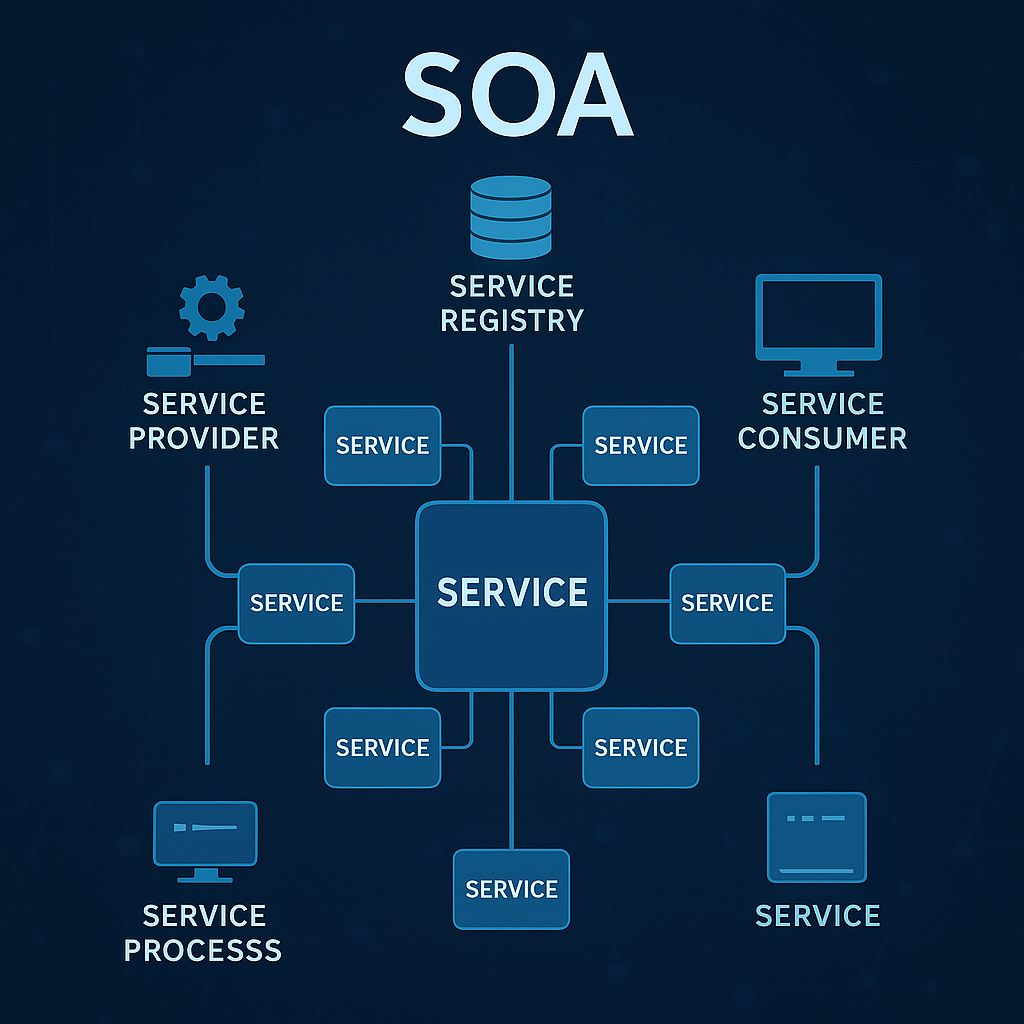
The Fundamentals of Service-Oriented Architecture
Service-Oriented Architecture is defined by the way it deconstructs complex applications into smaller, discrete units of functionality. Before the widespread adoption of SOA, most enterprise software was built using a “monolithic” approach. In a monolith, all functions—such as user authentication, database management, and payment processing—are tightly coupled within a single program. If one part of the system needs an update, the entire application often has to be taken offline, recompiled, and redeployed.
SOA breaks this cycle by treating every function as a standalone service. A “service” in this context is a self-contained functional unit, such as “Check Credit Score” or “Update Inventory.” These services are unassociated with specific products or applications; instead, they are available to any system that needs them.
The Core Components of an SOA Environment
For an SOA to function effectively, several key components must interact seamlessly:
- Service Provider: This is the entity that creates and maintains the service. It defines the service’s capabilities and makes them available to others.
- Service Consumer (or Requester): This is the application or another service that needs to use a specific function. It sends a request to the provider to execute a task.
- Service Registry: Often compared to a “Yellow Pages” for software, the registry is a central directory where providers list their services. Consumers use this registry to find the services they need.
- Service Contract: This is a crucial element of SOA. It defines the rules of engagement—what data the service requires, what it will return, and the protocols used for communication.
Loose Coupling: The Golden Rule
One of the most important characteristics of SOA is “loose coupling.” This means that the service consumer and the service provider have little to no knowledge of each other’s internal workings. As long as the service contract remains consistent, the provider can change its internal code, switch databases, or move to a different server without affecting the consumer. This independence is what gives SOA its legendary flexibility.
How SOA Works: Protocols and Communication
For different services to talk to each other, they need a common language. In the world of SOA, this communication is typically handled through standardized protocols that ensure interoperability across different platforms, operating systems, and programming languages.
SOAP and REST
Historically, the Simple Object Access Protocol (SOAP) was the primary protocol associated with SOA. SOAP is a highly structured messaging protocol that uses XML (Extensible Markup Language) to encode information. It is known for its rigorous standards and built-in error handling, making it a favorite for high-security environments like banking and healthcare.
In more recent years, Representational State Transfer (REST) has also been utilized within SOA frameworks. REST is generally lighter and faster than SOAP, using JSON (JavaScript Object Notation) instead of XML. While REST is more commonly associated with modern web APIs and microservices, it is frequently used in SOA to facilitate communication between services that require high performance and low latency.
The Role of the Enterprise Service Bus (ESB)
A central feature of many SOA implementations is the Enterprise Service Bus (ESB). Think of the ESB as a sophisticated postal system for data. Instead of every service having to build a direct connection to every other service (which would create a “spaghetti” of connections), they all connect to the ESB.
The ESB handles the heavy lifting of routing messages, transforming data formats (e.g., converting XML to JSON), and managing security. It allows an old mainframe system to communicate with a brand-new mobile app by acting as a universal translator. This centralized management simplifies the complexity of large-scale enterprise environments.
The Strategic Benefits of SOA for Modern Enterprises
Why do organizations invest heavily in SOA? The answer lies in the long-term agility and efficiency it provides to the business.
1. Enhanced Reusability
The primary financial and technical driver for SOA is reusability. Once a service is built—for example, a “Calculate Tax” service—it can be used by the mobile app, the web portal, the internal accounting software, and third-party partners. Developers no longer need to write the same code multiple times, which drastically reduces development costs and time-to-market for new products.

2. Improved Interoperability
In many large corporations, the IT landscape is a patchwork of different technologies. Some departments might use Java, while others use .NET or Python. Because SOA relies on standard communication protocols, these disparate systems can finally “talk” to each other. SOA acts as a bridge that integrates legacy systems with modern cloud-based tools, extending the life and value of older investments.
3. Scalability and Maintenance
In a monolithic system, scaling a single feature requires scaling the whole application. With SOA, if the “Payment Processing” service is experiencing high traffic, an organization can allocate more resources specifically to that service without touching the rest of the infrastructure. Furthermore, because services are modular, debugging and updating become much simpler. A developer can update the “Shipping Rates” service without fear of accidentally breaking the “Customer Login” module.
4. Business-IT Alignment
SOA allows business leaders to think of their company in terms of “business services” rather than technical code. This alignment makes it easier for IT departments to respond to business needs. If the marketing department wants to launch a loyalty program, IT can quickly assemble the necessary functionality by “orchestrating” existing services into a new workflow.
SOA vs. Microservices: Navigating the Evolution
In any discussion about SOA, the topic of microservices inevitably arises. Many people wonder: is SOA dead? Has it been replaced by microservices? The reality is more nuanced. Microservices are essentially an evolution of SOA—a more refined and granular approach to the same core philosophy.
Differences in Scope
SOA is typically an enterprise-wide initiative. It aims to integrate different applications across the entire organization. Microservices, on the other hand, are usually focused on a single application. While SOA seeks to make services available to the whole company, microservices break a single application down into its smallest possible parts.
Communication Style
SOA often relies on a central coordinator like the ESB to manage communication and data transformation. Microservices tend to avoid centralized controllers, preferring “dumb pipes” and “smart endpoints.” In a microservices architecture, services usually communicate directly with one another using lightweight APIs, which can offer better performance but requires more complex management at the application level.
Data Management
In an SOA, multiple services might share a single, large database. In a true microservices architecture, each service ideally has its own private database to ensure total independence. This makes microservices more resilient but also introduces significant challenges regarding data consistency.
Ultimately, SOA is about integration, while microservices are about decoupling. Most modern enterprises use a hybrid approach, applying SOA principles to link major business systems while using microservices to build the high-performance applications that sit on top of them.
Best Practices for Implementing an SOA Strategy
Implementing an SOA is not merely a technical task; it is a cultural and organizational shift. Success requires more than just installing an ESB; it requires a commitment to “Service Thinking.”
Establishing Governance
Without proper governance, an SOA can quickly turn into a chaotic mess of redundant services. Organizations must establish a governance body to oversee which services are created, ensure they meet quality standards, and manage their lifecycle. This includes versioning—ensuring that when a service is updated, the older applications relying on the previous version don’t break.
Focusing on Security
Because SOA opens up services to be accessed across a network, security is paramount. This involves more than just passwords; it requires robust identity management, encryption of data in transit, and “least privilege” access controls. Standardized security protocols like WS-Security are often used in SOA environments to ensure that only authorized consumers can trigger sensitive services.
Prioritizing Service Granularity
One of the biggest challenges in SOA design is determining how “big” a service should be. If a service is too “coarse-grained” (too large), it loses its reusability. If it is too “fine-grained” (too small), the system becomes bogged down by excessive network communication. Finding the “Goldilocks” zone of granularity is an art form that requires deep understanding of both business processes and technical constraints.
The Future of SOA in a Cloud-First World
As businesses move toward cloud-native environments and serverless computing, the principles of SOA are finding new life. The rise of “Everything as a Service” (XaaS) is a direct extension of the service-oriented mindset.
Today, SOA is the foundation upon which hybrid cloud strategies are built. It allows organizations to keep sensitive data in on-premise “services” while utilizing the massive computing power of the public cloud for other “services.” By maintaining a service-oriented approach, companies can remain tech-agnostic, ready to pivot to whichever new platform or tool emerges next.
In conclusion, “what SOA means” is more than just a definition of software architecture. It represents a shift toward a more modular, flexible, and integrated way of doing business. By treating technology as a collection of reusable services, organizations can break down silos, reduce waste, and build a digital infrastructure that is as dynamic as the market itself. Whether through traditional SOAP-based integrations or modern API-driven ecosystems, the spirit of SOA remains the guiding light for enterprise technology strategy.
aViewFromTheCave is a participant in the Amazon Services LLC Associates Program, an affiliate advertising program designed to provide a means for sites to earn advertising fees by advertising and linking to Amazon.com. Amazon, the Amazon logo, AmazonSupply, and the AmazonSupply logo are trademarks of Amazon.com, Inc. or its affiliates. As an Amazon Associate we earn affiliate commissions from qualifying purchases.