
In the fast-paced world of global commerce, the most enduring brands are rarely those that reinvent themselves entirely every few years. Instead, the brands that dominate their sectors for decades—or even centuries—utilize a strategy that mirrors a fundamental biological process: semiconservative replication. While the term originates in the field of molecular biology to describe the way DNA molecules are copied, its application in brand strategy provides a profound framework for understanding how a corporate identity can evolve without losing its soul.
Semiconservative replication in branding is the process of maintaining the “original strand” of a brand’s core identity while weaving in a “new strand” of contemporary relevance. This dual-natured approach ensures that the brand remains recognizable to its loyal base while simultaneously adapting to the shifting demands of new generations and emerging technologies. To understand why this is the gold standard for brand longevity, we must look at how this mechanism operates across various layers of corporate identity and market positioning.

The Core Mechanism: Balancing Heritage with Modernity
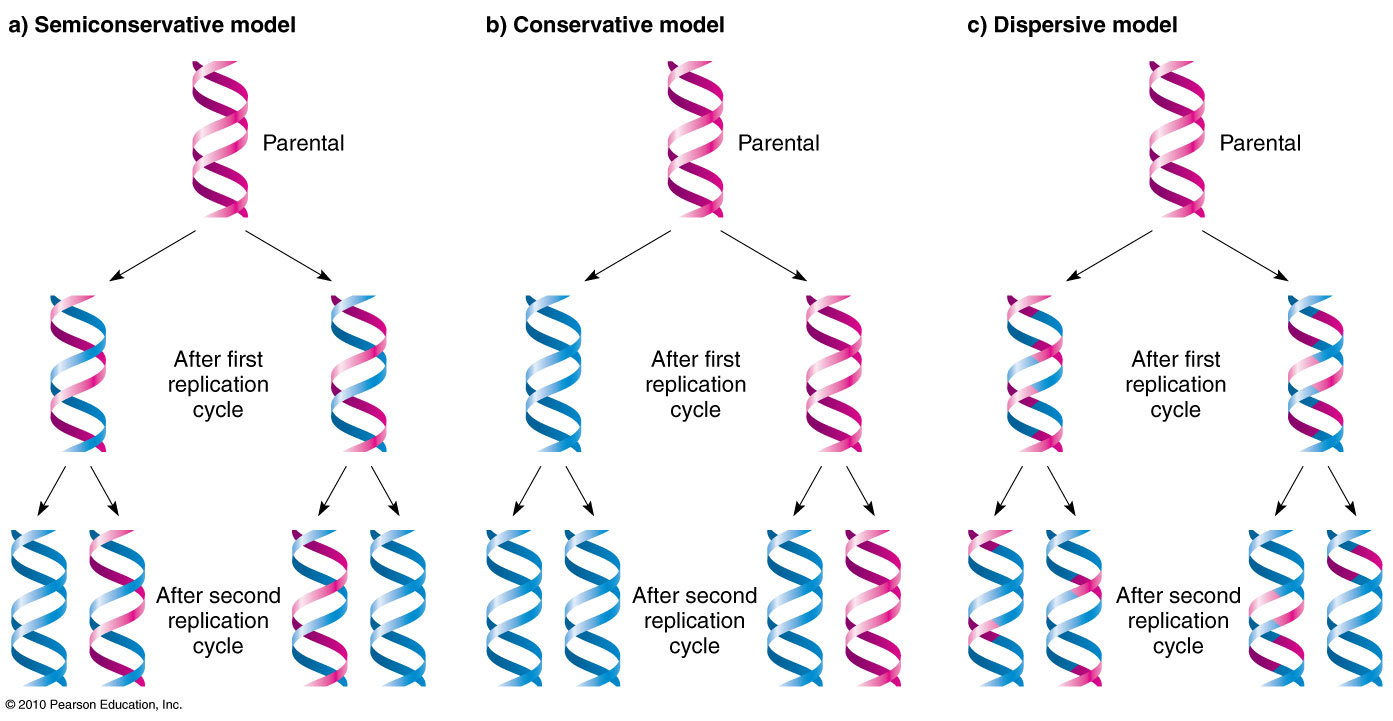
In biology, when a DNA molecule replicates, the two resulting double-stranded molecules each contain one original strand and one newly synthesized strand. This ensures that the genetic information is passed on accurately while allowing for the creation of new cells. When we apply this to brand strategy, the “original strand” represents the brand’s heritage, its founding values, and its iconic visual markers. The “new strand” represents innovation, modern aesthetics, and updated messaging.
The Anchor of the Original Strand
The original strand is the brand’s anchor. It is the reason customers trust the product before they even see the latest iteration. For a brand like Tiffany & Co., the “Tiffany Blue” box is an original strand. For Porsche, it is the distinctive silhouette of the 911. These elements are non-negotiable; they are the genetic code that defines what the brand is. Without this conservative element, a brand undergoes “mutational drift,” where it becomes unrecognizable to its audience, leading to a loss of brand equity and consumer trust.
In a semiconservative model, the strategist must identify which elements of the brand are immutable. This requires a deep dive into the brand’s history to find the “essential truth” of the business. Is it the commitment to quality? A specific design philosophy? A unique voice? Once identified, these elements are preserved at all costs, providing the stability necessary for growth.
The Innovation of the New Strand
A brand that only conserves its past eventually becomes a museum piece—admired but irrelevant. This is where the “new strand” of replication comes in. This strand represents the brand’s ability to respond to the present moment. It involves integrating modern technology, adopting current design trends, and participating in contemporary cultural conversations.
The beauty of the semiconservative approach is that the new strand is built directly onto the old one. It isn’t a separate entity; it is intertwined. When Apple releases a new iPhone, the “new strand” is the cutting-edge silicon and the titanium frame, but the “original strand” is the minimalist interface and the focus on user experience that has defined the company since the 1980s. By replicating in this manner, the brand stays at the cutting edge without alienating the people who made it successful in the first place.
Strategic Implementation: How Iconic Brands Replicate Success
Implementing a semiconservative replication strategy requires a surgical precision that separates a simple “update” from a “evolutionary leap.” Leading brands do not change for the sake of change; they change to survive and thrive within a new environment while keeping their core structure intact.
Case Study: The Automotive Evolution
The automotive industry provides some of the clearest examples of semiconservative replication. Consider the evolution of the Jeep Wrangler. If you place a 1940s Willys MB next to a 2024 Wrangler, the lineage is undeniable. The round headlights (mostly), the seven-slot grille, and the boxy silhouette are the original strands. However, the 2024 model features hybrid powertrains, advanced infotainment systems, and modern safety features—the new strands.
Jeep understands that if they changed the shape of the Wrangler to be more aerodynamic and “modern” in a conventional sense, they would destroy the brand’s DNA. By practicing semiconservative replication, they satisfy the “purists” who value heritage while attracting new buyers who demand modern convenience.
The Digital Pivot of Legacy Media
Legacy media brands have had to master this form of replication to survive the transition from print to digital. The New York Times is a prime example. The “original strand” is their rigorous editorial standard and their iconic masthead font. The “new strand” is their highly successful transition into a digital-first, subscription-based model that includes podcasts, interactive data visualizations, and gaming (Wordle).
By keeping the “Grey Lady” reputation for serious journalism intact while building an entirely new digital ecosystem around it, they replicated their brand’s influence in a medium that didn’t exist when they were founded. They didn’t try to become a “buzz” site; they remained the Times, but in a digital skin.

Avoiding the Mutation: The Risks of Over-Evolution
In biological replication, a mutation can lead to evolution, but it can also lead to disease. In branding, an uncontrolled “mutation”—a change that goes too far or deviates too sharply from the core DNA—is often referred to as brand dilution or, in extreme cases, a failed rebrand.
The Gap and the Danger of the Clean Slate
One of the most famous examples of a replication failure was the 2010 rebrand of The Gap. The company attempted to replace its classic blue box logo with a modern sans-serif font and a small gradient square. This was not semiconservative replication; it was an attempt at total replacement. The “original strand” was discarded in favor of a “new strand” that had no connection to the brand’s heritage.
The backlash was immediate and fierce. Customers felt a visceral disconnection from the brand. Because the new identity didn’t carry the “genetic information” of the old one, it felt hollow. The Gap reverted to its old logo within a week. This serves as a cautionary tale: if you break the strand of continuity, you lose the trust that was built over decades.
When Consistency Becomes Stagnation
On the flip side, “conservative-only” replication—where no new information is added—leads to brand stagnation. If a brand refuses to innovate, it becomes a commodity. We see this in industries where “old-school” brands are disrupted by startups. The incumbent brands focus so much on conserving their old ways of doing business (the old strand) that they fail to weave in the new strand of consumer expectation (such as ease of use, mobile access, or sustainability). Semiconservative replication requires both parts to function; without the new strand, the brand cannot reproduce its success in a new market cycle.
Scaling Through Replication: Maintaining Identity in Global Markets
As brands scale globally, the concept of semiconservative replication becomes even more vital. How does a brand maintain its identity while adapting to different cultures and languages? The answer lies in the “conserved” elements.
The Franchise Model as Biological Replication
In a franchise model, such as McDonald’s or Starbucks, the brand DNA is replicated thousands of times. The “original strand” is the core product offering and the visual identity (the Golden Arches, the Siren). This ensures that a customer in Tokyo has a similar emotional and sensory experience to a customer in New York.
However, to succeed locally, these brands must allow for a “new strand” of localized adaptation. This might mean offering a Teriyaki Burger in Japan or a Matcha Latte in certain regions. The brand replicates its core “conserved” values while allowing for “new” variations that make it fit for the local environment. This is semiconservative replication on a global scale: consistency where it matters, and adaptation where it counts.
Brand Architecture and Sub-Branding
Large corporations often use semiconservative replication when launching sub-brands. They want the new entity to have its own life (the new strand) but they want it to benefit from the parent company’s reputation (the original strand).
For example, when Toyota launched Lexus, they were careful to replicate the parent company’s reputation for reliability (the conserved trait) while creating an entirely new strand of luxury and dealer experience. This allowed Lexus to “replicate” the success of Toyota in a new market segment without being weighed down by the “economy car” associations of the parent brand.
The Future of Brand DNA: AI and Personalized Replication
As we move further into the digital age, the way brands replicate is becoming even more complex. We are entering an era of “hyper-personalization,” where a brand might need to replicate its identity slightly differently for every individual consumer.
Algorithmic Identity
With the help of AI, brands can now maintain their “original strand” while dynamically generating “new strands” for different audience segments. A brand’s core message remains the same, but the visual delivery, the tone of voice, and the product recommendations are tailored in real-time. This is the ultimate form of semiconservative replication: the brand DNA remains constant, but the expression of that DNA is infinitely adaptable.
Longevity in the Age of Disruption
The brands that will survive the next century are those that understand they are living organisms. They cannot remain static, but they cannot forget where they came from. By embracing the principles of semiconservative replication, brand strategists can ensure that their organizations possess the stability to withstand market volatility and the flexibility to seize new opportunities.
In conclusion, “semiconservative replication” is more than just a biological term; it is a blueprint for sustainable brand growth. It reminds us that true innovation is not about destroying the past, but about building upon it. By keeping one strand of the old and weaving in one strand of the new, a brand ensures that its story never truly ends—it simply evolves.
aViewFromTheCave is a participant in the Amazon Services LLC Associates Program, an affiliate advertising program designed to provide a means for sites to earn advertising fees by advertising and linking to Amazon.com. Amazon, the Amazon logo, AmazonSupply, and the AmazonSupply logo are trademarks of Amazon.com, Inc. or its affiliates. As an Amazon Associate we earn affiliate commissions from qualifying purchases.