
In the contemporary landscape of technological advancement, the act of “seeing a shooting star” has evolved far beyond a moment of quiet reflection or folklore. In the digital age, catching a streak of light across the night sky represents a convergence of sophisticated orbital mechanics, high-speed data processing, and the democratization of astronomical observation through mobile software. To a technologist or a space enthusiast, seeing a shooting star means more than a visual spectacle; it represents a data point in a vast, interconnected network of space situational awareness (SSA) and citizen science.

As we look upward, we are no longer limited by the naked eye. We are augmented by a suite of digital tools that allow us to identify, track, and categorize every luminous event in our atmosphere. In this context, understanding what a shooting star “means” involves diving deep into the software that predicts meteor showers, the AI that distinguishes meteors from satellite flares, and the hardware that protects our planet from larger near-earth objects.
The Digital Renaissance of Amateur Astronomy
The traditional image of the astronomer huddled over a glass lens in a cold observatory has been replaced by the “connected observer.” For the modern user, seeing a shooting star is an invitation to engage with a massive ecosystem of specialized software and hardware designed to map the cosmos in real-time.
Augmented Reality and Real-Time Tracking Apps
Mobile technology has fundamentally changed how we interpret celestial events. Apps like SkyView, Stellarium, and Star Walk utilize a smartphone’s gyroscope, accelerometer, and GPS to overlay a digital map of the universe onto the user’s live camera feed. When a shooting star is sighted, these apps allow users to instantly verify if what they saw was a natural meteoroid or a human-made object.
The underlying technology of these apps relies on extensive databases, such as the Hipparcos catalog, which contains data on over 100,000 stars. By processing this information through high-performance mobile GPUs, the software provides a seamless transition between the physical world and the digital information layer. This “meaning” is rooted in accessibility; the technology empowers anyone with a smartphone to become an amateur scientist, turning a fleeting moment into an educational opportunity.
Integration of Satellite Databases and TLEs
Often, what a casual observer identifies as a “shooting star” is actually a satellite reflecting sunlight—a phenomenon known as a satellite flare. Sophisticated tracking software uses Two-Line Element sets (TLEs), which are data formats used by North American Aerospace Defense Command (NORAD) to describe the orbit of Earth-orbiting objects. By integrating TLE data, stargazing apps can tell a user exactly which satellite passed overhead at a specific millisecond. This technological capability shifts the meaning of the sighting from the mystical to the mechanical, highlighting the increasing density of our low-Earth orbit (LEO).
AI and the Automation of Meteor Detection
While human eyes are limited by biological refresh rates and the need for sleep, modern technology never stops watching. The true scientific meaning of seeing a shooting star is captured through global networks of automated cameras that utilize artificial intelligence to monitor the sky 24/7.
From Video to Data: The All-Sky Camera Networks
Projects like the Global Meteor Network (GMN) and NASA’s All-Sky Fireball Network utilize high-sensitivity CMOS sensors and wide-angle lenses to capture every meteor that enters the atmosphere. However, the sheer volume of video data generated by these cameras is impossible for humans to audit manually. This is where machine learning and computer vision come into play.
AI algorithms are trained to distinguish between the specific light curves of a meteor and the blinking lights of an aircraft, the steady drift of a satellite, or the erratic movement of a bird. These algorithms analyze the velocity, deceleration, and fragmentation patterns of the light streak. When a “shooting star” is detected, the software automatically calculates its trajectory, potentially identifying the specific asteroid or comet it originated from. In this technical framework, seeing a shooting star means feeding a global database that helps scientists understand the composition of our solar system.
Predictive Analytics in Meteor Showers
Data science has also improved our ability to predict when and where shooting stars will appear. By modeling the debris trails of comets—such as 109P/Swift-Tuttle, which creates the Perseids—supercomputers can run simulations to predict the density of meteoroid streams as they intersect with Earth’s orbit. For the tech-savvy observer, seeing a shooting star is the successful output of a predictive model, proving the accuracy of our current understanding of orbital dynamics.
Distinguishing the Natural from the Artificial
In the era of “New Space,” the meaning of a light in the sky has become increasingly complex. The rise of mega-constellations and the growing problem of orbital debris have created a “noisy” environment for both professional and amateur observers.
The Impact of Mega-Constellations
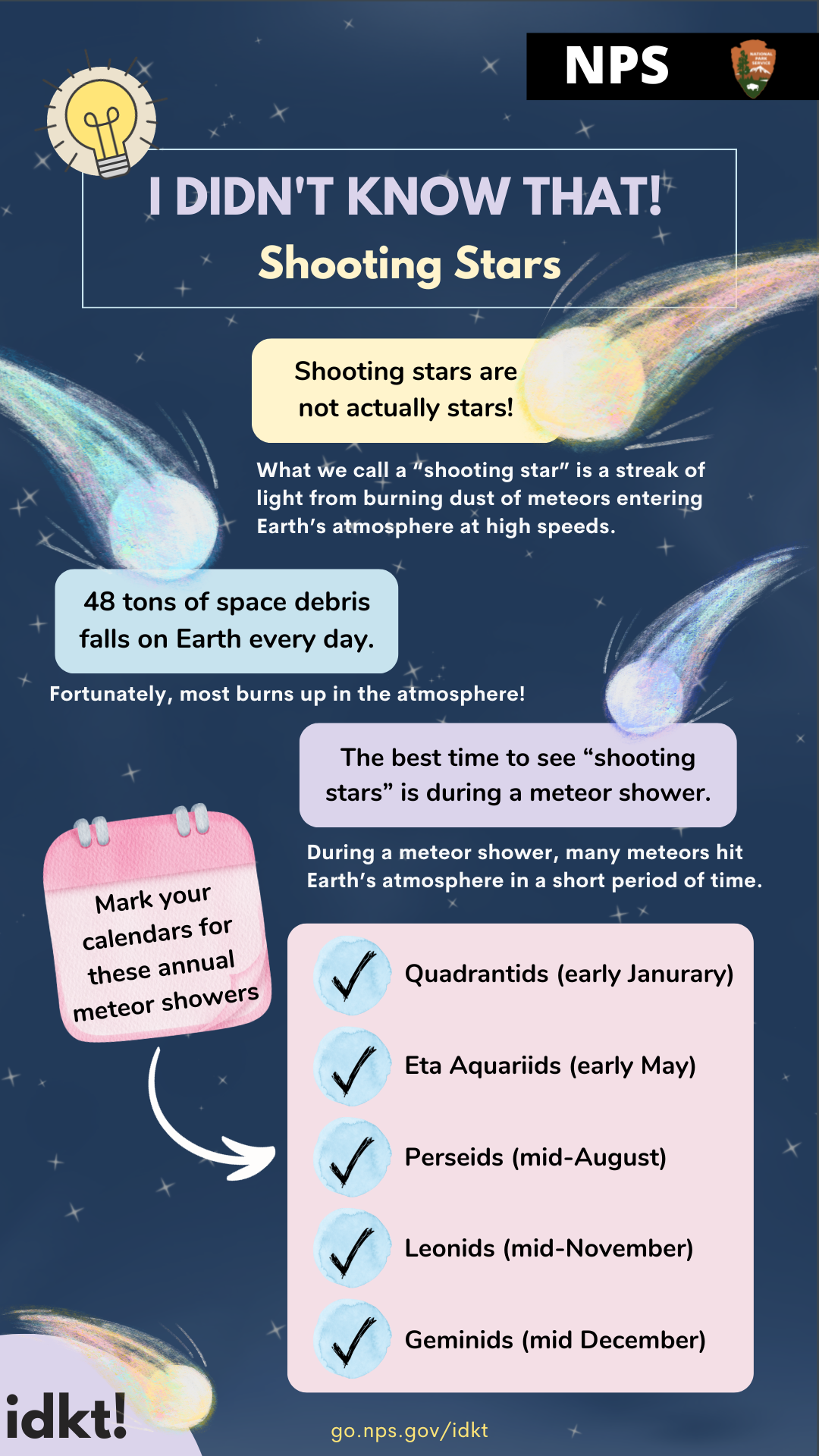
With the deployment of thousands of small satellites by companies like SpaceX (Starlink) and Amazon (Project Kuiper), the night sky is busier than ever. Shortly after a launch, these satellites appear as a “train” of bright lights that can easily be mistaken for a slow-moving meteor shower.
For the technology community, these sightings are a reminder of the trade-off between global connectivity and astronomical clarity. Software developers in the astronomy space are currently working on “masking” algorithms that can digitally remove satellite streaks from long-exposure astrophotography. To see a “shooting star” today often means navigating through a layer of human-made infrastructure, sparking debates about the digital “right to the sky.”
Tracking Space Debris with Precision Tools
Sometimes, a shooting star is actually the fiery re-entry of space junk—decommissioned satellites or spent rocket stages. This is a critical area of digital security and safety. Organizations like the 18th Space Defense Squadron use phased-array radar and high-resolution optical sensors to track over 27,000 pieces of orbital debris.
When a large piece of debris re-enters the atmosphere, it produces a spectacular, slow-burning streak. To the technologist, seeing this type of shooting star is a signal of the urgent need for better “Space Traffic Management” (STM) software. It is a visual manifestation of a data entry being deleted from a master catalog of orbital objects.
Citizen Science and the Democratization of Space Data
The most profound technological shift in our understanding of shooting stars is the rise of citizen science platforms. Seeing a shooting star is no longer a solitary experience; it is a collaborative contribution to a global data set.
Mobile Platforms as Research Tools
Platforms like the American Meteor Society (AMS) and the International Meteor Organization (IMO) provide mobile-optimized web tools that allow witnesses to report sightings immediately. By inputting the direction, duration, and brightness of a shooting star, users contribute to a multi-point triangulation.
When hundreds of people report the same event through their devices, software can instantly calculate the precise “ground track” of the meteor. This can even lead to the recovery of meteorites on the ground. In this context, seeing a shooting star means participating in a decentralized, real-time research project, leveraging the power of crowdsourced data to solve physical mysteries.
The Role of High-Performance Computing
The data gathered from these reports is processed using high-performance computing (HPC) clusters to refine our models of the Earth’s upper atmosphere. By studying how meteors burn up and ionize the air around them, scientists can gather data on atmospheric density and wind speeds at altitudes that are too high for weather balloons and too low for satellites. Thus, the “meaning” of a shooting star extends into the realm of meteorological and aerospace engineering.
The Infrastructure of Planetary Defense
Finally, at its most serious level, seeing a shooting star is a reminder of the technological shield we are building around our planet. While most meteors are the size of a grain of sand, the technology used to track them is the same technology used to protect Earth from catastrophic impacts.
Near-Earth Object (NEO) Surveillance Systems
Sophisticated software systems like the Sentry-II at NASA’s Jet Propulsion Laboratory (JPL) constantly scan the horizon for potential threats. These systems use automated telescopes like Pan-STARRS and the Vera C. Rubin Observatory (currently under construction) to catalog millions of objects.
Every time a small “shooting star” is logged, it helps refine the algorithms that calculate impact probabilities for larger asteroids. The technology involved—ranging from infrared sensors that detect the heat of dark asteroids to the orbital modeling software that projects their paths decades into the future—is a testament to human ingenuity.

The Future of Planetary Defense Tech
The success of missions like DART (Double Asteroid Redirection Test) shows that we are moving from passive observation to active intervention. Seeing a shooting star today is a visual cue of our place in a dynamic and sometimes hazardous solar system, but it also highlights the robust technological framework we have built to navigate it. From the AI that detects a flicker of light to the propulsion systems that could one day deflect an asteroid, the meaning of a shooting star is now inextricably linked to our survival and our technological prowess.
In conclusion, “seeing a shooting star” in the modern era is a multifaceted experience. It is a moment where the physical reality of the universe intersects with our digital capabilities. Whether viewed through the lens of an AR app, logged by an AI-driven camera network, or tracked as a piece of orbital debris, these celestial events serve as milestones for our technological progress. They remind us that while the wonder of the night sky is ancient, our tools for understanding it are at the absolute cutting edge of innovation.
aViewFromTheCave is a participant in the Amazon Services LLC Associates Program, an affiliate advertising program designed to provide a means for sites to earn advertising fees by advertising and linking to Amazon.com. Amazon, the Amazon logo, AmazonSupply, and the AmazonSupply logo are trademarks of Amazon.com, Inc. or its affiliates. As an Amazon Associate we earn affiliate commissions from qualifying purchases.