
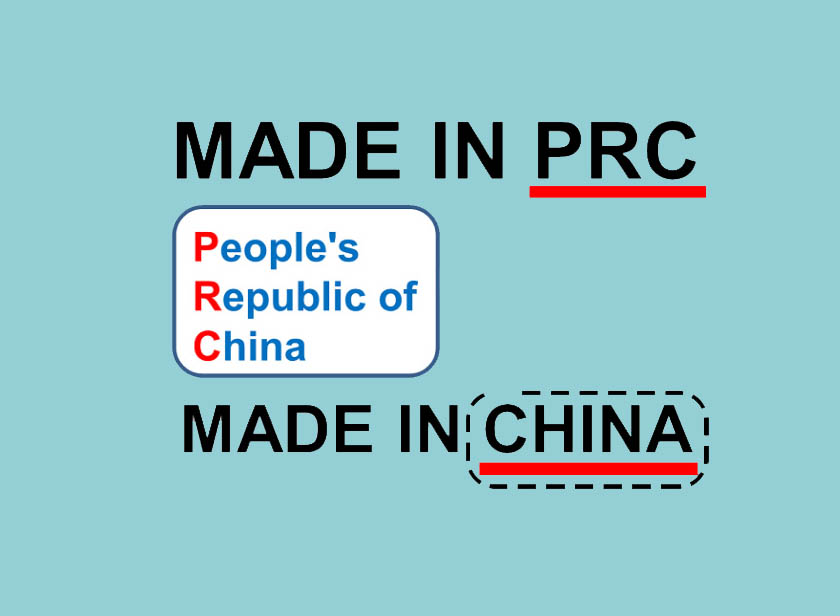
In the modern landscape of international commerce and business finance, labels carry more weight than just a description of origin. For entrepreneurs, e-commerce sellers, and financial analysts, the acronyms stamped on the bottom of a product can influence marketability, consumer trust, and ultimately, the bottom line. One such label that has become increasingly prevalent is “Made in PRC.” While many consumers are familiar with the “Made in China” tag, the transition to “Made in PRC”—which stands for the People’s Republic of China—is a calculated strategic move with significant implications for global trade, brand valuation, and sourcing logistics.
The Strategic Rebranding: Why Manufacturers Use the PRC Label
The shift from “Made in China” to “Made in PRC” is rarely an accidental choice by a manufacturer. In the world of business finance and marketing, perception is a form of currency. For decades, the “Made in China” label was unfairly—or in some historical cases, fairly—associated with low-quality, mass-produced goods. As China evolved into a global manufacturing powerhouse capable of producing everything from high-end electronics to luxury fashion, the need to detach from legacy stigmas became a financial imperative.
Shifting Consumer Perception and Market Sentiment
Consumer sentiment is a primary driver of sales velocity. In many Western markets, the “Made in China” label triggered a “country-of-origin” bias that could lead to lower price elasticity. By utilizing the “Made in PRC” acronym, manufacturers and international brands can bypass immediate, subconscious prejudices. This is not necessarily an attempt to deceive, but rather a strategic effort to allow the product to be judged on its individual merits and specifications rather than its geography. From a business finance perspective, this rebranding helps maintain higher profit margins by preventing the “commodity trap” where products are undervalued simply because of their origin.
The Psychological Impact on Brand Equity
Brand equity is the premium a company can charge over the functional value of a product. For businesses sourcing white-label goods for Amazon FBA or direct-to-consumer (DTC) stores, the label matters for unboxing experiences and long-term brand loyalty. “Made in PRC” often feels more professional and less “generic” to the average consumer who may not immediately recognize the acronym. This subtlety allows premium brands to manufacture in China’s high-tech industrial hubs—like Shenzhen or Guangzhou—while maintaining a sophisticated brand identity that resonates with a middle-to-upper-tier target audience.
Financial Advantages and Risks of Sourcing from the PRC
For an entrepreneur or a business finance manager, sourcing from the PRC remains one of the most effective ways to optimize a supply chain. However, the financial landscape of manufacturing in this region has changed. It is no longer just about the lowest possible labor cost; it is about infrastructure, ecosystem density, and the speed to market.
Optimizing the Cost of Goods Sold (COGS)
The primary reason businesses continue to manufacture in the PRC, regardless of the label used, is the unparalleled optimization of the Cost of Goods Sold (COGS). The PRC has developed specialized industrial clusters. If you are manufacturing high-end headphones, you are not just hiring a factory; you are entering a region where the battery suppliers, plastic molders, and circuit board printers are all within a 20-mile radius. This proximity reduces logistical overhead and “hidden” financial leakages that occur in fragmented supply chains. For a business owner, this translates to a lower unit cost and a more competitive position in the marketplace.
Navigating Tariffs and International Trade Taxes

From a financial planning perspective, the “Made in PRC” label brings with it a complex set of tax and tariff obligations. In recent years, trade tensions between the PRC and major economies like the United States have led to fluctuating tariff rates under Section 301. Business finance professionals must conduct rigorous “landed cost” analyses. A landed cost includes the original price of the product, all transportation fees, customs duties, taxes, and insurance. When you see “Made in PRC,” you are looking at a product that may be subject to specific duty rates that vary significantly from goods produced in Vietnam, India, or Mexico. Successful e-commerce businesses often use specialized financial software to track these variables in real-time to ensure that a sudden shift in trade policy doesn’t wipe out their net margins.
Due Diligence and Quality Control: Protecting Your Business Investment
Investing capital into a manufacturing run in the PRC requires a high level of due diligence. The financial risk of a “bad batch” can be catastrophic for small businesses and side hustles. Understanding what “Made in PRC” means in the context of modern quality standards is essential for protecting your investment.
The Transition from Low-Cost to High-Value Manufacturing
The economic engine of the PRC has moved up the value chain. While it remains a hub for inexpensive trinkets, it is now also the world leader in telecommunications hardware, electric vehicle components, and advanced robotics. When a business sees “Made in PRC,” they should realize they are dealing with a manufacturing sector that has invested billions in automation and ISO-standard certifications. Financially, this means that while the initial quote might be higher than a decade ago, the “cost of quality”—the money lost to returns, defects, and warranty claims—has plummeted for those who source from reputable, vetted facilities.
Verification Tools and Financial Escrow for International Trade
To mitigate the risks of international sourcing, savvy business owners utilize a variety of financial tools and services. Platforms like Alibaba and Global Sources have popularized “Trade Assurance” or escrow-style payments. When dealing with a “Made in PRC” supplier, you rarely pay the full amount upfront. The standard financial structure is often a 30/70 split: 30% deposit to initiate production and the remaining 70% upon successful third-party inspection before the goods leave the port. Utilizing these financial guardrails ensures that your capital is protected and that the “Made in PRC” label on your inventory represents a standard of quality that meets your brand’s requirements.
The Future of Global Supply Chains and the PRC Identity
As we look toward the future of global business finance, the “Made in PRC” label is becoming part of a broader conversation regarding supply chain diversification, often referred to as the “China Plus One” strategy. Businesses are increasingly balancing their PRC-based manufacturing with secondary hubs to minimize geopolitical and financial risk.
Geopolitical Diversification and Financial Stability
For a business to be financially resilient, it cannot rely on a single point of failure. While the PRC offers the best infrastructure and scaling capabilities, fluctuations in currency exchange rates (USD/CNY) and geopolitical shifts can impact profitability. Investors and venture capitalists now look closely at how a company manages its “PRC exposure.” Companies that can leverage the efficiency of “Made in PRC” manufacturing while maintaining an agile supply chain that can pivot if necessary are the ones that command higher valuations in the market.
Digital Finance and the Modern Sourcing Landscape
The way businesses pay for “Made in PRC” goods is also undergoing a digital revolution. Traditional Wire Transfers (T/T) are being supplemented by digital fintech solutions that offer better exchange rates and faster settlement times. Blockchain technology is beginning to be used for Letters of Credit, reducing the paperwork and the time-lag in international trade finance. For the modern entrepreneur, “Made in PRC” is no longer just about a physical location; it represents a node in a hyper-efficient, digitally-enabled global financial network.
In conclusion, “Made in PRC” is more than a simple geographical identifier. It is a symbol of a maturing economy that has mastered the art of high-volume, high-efficiency production. For the business owner or finance professional, understanding the nuances of this label—from the psychological branding benefits to the complex tariff structures and quality control requirements—is vital for navigating the competitive world of international trade. Whether you are launching a side hustle or managing a corporate supply chain, the PRC remains a central pillar of global commerce, offering a blend of cost-efficiency and technical sophistication that continues to define the modern economic landscape.
aViewFromTheCave is a participant in the Amazon Services LLC Associates Program, an affiliate advertising program designed to provide a means for sites to earn advertising fees by advertising and linking to Amazon.com. Amazon, the Amazon logo, AmazonSupply, and the AmazonSupply logo are trademarks of Amazon.com, Inc. or its affiliates. As an Amazon Associate we earn affiliate commissions from qualifying purchases.