
As automotive engineering shifts from purely mechanical systems to sophisticated software-defined platforms, the terminology used to describe modern vehicles has grown increasingly complex. One of the most prevalent acronyms appearing in contemporary vehicle specifications is LKAS, which stands for Lane Keeping Assist System. Far more than a simple convenience feature, LKAS represents a critical bridge between traditional human-operated vehicles and the burgeoning world of autonomous driving.
In the tech landscape, LKAS is categorized under Advanced Driver Assistance Systems (ADAS). It utilizes a combination of hardware sensors, real-time image processing, and electronic control units (ECUs) to actively help a driver keep the vehicle centered within its lane. Understanding how this system operates requires a deep dive into the sensors, algorithms, and cybersecurity protocols that make modern road safety possible.
The Technical Anatomy of Lane Keeping Assist Systems
To understand what LKAS means in a car, one must first look at the hardware that serves as the “eyes” and “limbs” of the vehicle. Unlike older safety features that relied on mechanical triggers, LKAS is a digital-first solution.
Sensors and Vision Hardware
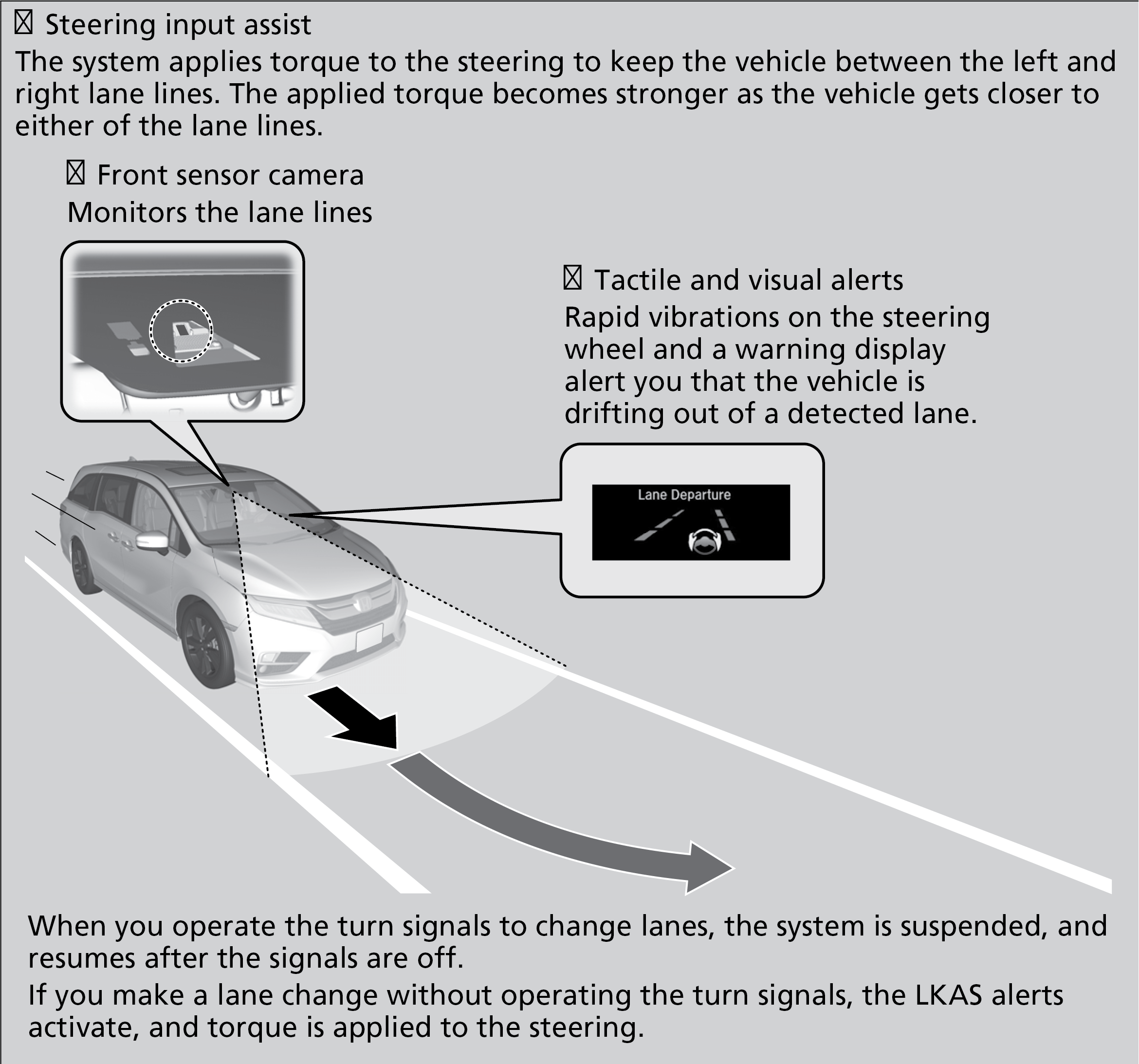
The primary hardware component for most LKAS setups is a high-resolution forward-facing camera, typically mounted behind the rearview mirror against the windshield. This camera is designed specifically to identify contrast—specifically the contrast between the dark asphalt of the road and the light-colored paint used for lane markings (solid lines, dashed lines, and reflectors).
While some premium manufacturers supplement this with Lidar or Radar, the “heavy lifting” of lane detection is done through computer vision. These cameras capture frames at high frequencies, often 30 to 60 frames per second, providing a constant stream of data to the vehicle’s onboard computer.
The Role of the Electronic Power Steering (EPS)
If the camera acts as the eyes, the Electronic Power Steering (EPS) system acts as the muscles. In cars equipped with LKAS, the steering column is no longer just a mechanical link to the wheels; it is an electronically controlled actuator. When the LKAS software determines that the vehicle is drifting toward a lane boundary, it sends a digital command to the EPS motor. This motor applies a specific amount of torque to the steering rack to guide the car back toward the center. This is a “steer-by-wire” influence, where software overrides or assists physical human input.
Passive vs. Active Systems: LDW vs. LKAS
It is important to distinguish LKAS from its predecessor, Lane Departure Warning (LDW). LDW is a passive technology; it uses the same camera sensors to detect a drift but only provides an alert—such as a beep, a vibrating seat, or a flashing light. LKAS is an active technology. It does not just warn the driver; it intervenes. If the driver fails to respond to a drift, the system’s logic takes over to physically correct the vehicle’s path.
Digital Logic: How Software Processes the Road
The “intelligence” of LKAS lies in the software stack and the algorithms that interpret visual data. This is where the tech niche truly intersects with automotive engineering, as developers must account for thousands of variables in real-time.
Image Recognition and Edge Detection
The LKAS software employs edge-detection algorithms to isolate lane markers. This is technically challenging because road conditions are rarely perfect. Faded paint, shadows from trees, glare from the sun, and heavy rain can obscure lane markings. Modern LKAS uses machine learning models trained on millions of miles of road data to “guess” where the lane is even when the markings are partially obscured. By recognizing patterns—such as the trajectory of the vehicle ahead or the contrast of the road shoulder—the AI can maintain lane positioning in sub-optimal conditions.
Predictive Path Modeling
LKAS does not just react to a line being crossed; it predicts it. Using the vehicle’s current speed (from the CAN bus) and steering angle, the system calculates a “predicted path.” If the predicted path intersects with the detected lane boundary within a certain time threshold (usually 1.5 to 2 seconds), the system begins to apply corrective torque. This predictive nature makes the steering feel smooth rather than jerky, mimicking the way a human driver subtly adjusts the wheel.
Sensor Fusion and Data Correlation
To ensure accuracy, LKAS often utilizes “sensor fusion.” This is the process of combining data from the camera with data from other sources, such as wheel speed sensors and gyroscopes. If the camera sees a sharp turn but the gyroscope doesn’t detect any lateral G-force, the system may conclude that the camera is misinterpreting a mark on the road (like a construction tar line) and will withhold intervention. This reduces “false positives,” which are a major hurdle in ADAS development.

The Human-Machine Interface (HMI) and User Experience
A significant portion of LKAS technology is dedicated to how the system interacts with the human driver. Because we are currently in Level 2 of the autonomous driving scale, the driver must remain engaged.
Haptic and Visual Feedback
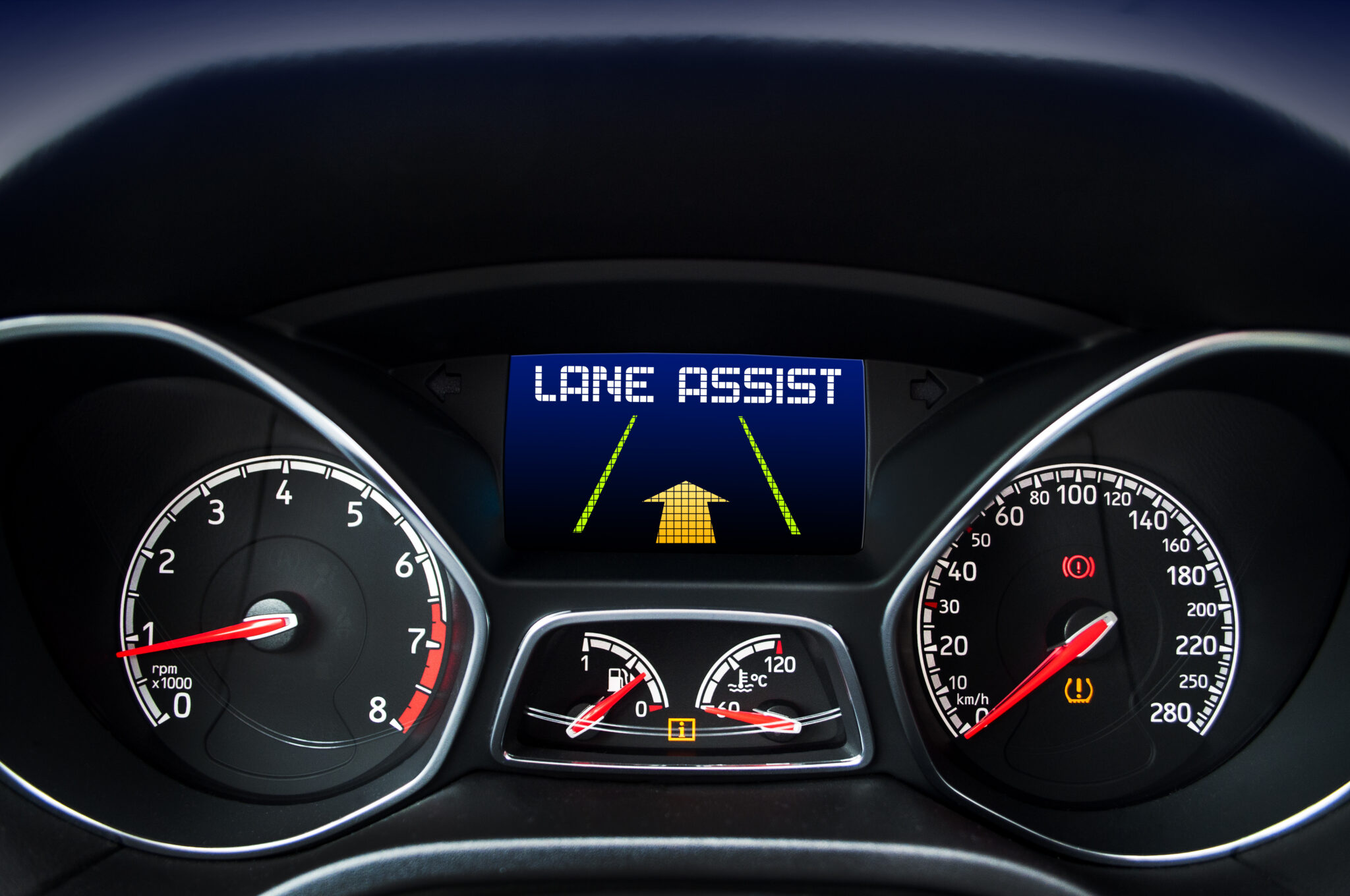
When LKAS engages, it provides feedback through the Human-Machine Interface. This often includes a green icon on the digital instrument cluster indicating that the system has “locked” onto the lanes. If the system loses track of the lines due to poor visibility, the icon may turn gray or amber. Many systems also use haptic feedback—a subtle vibration in the steering wheel—to notify the driver that the software is currently taking corrective action.
Hands-On Detection (HoD)
One of the most critical safety sub-systems within LKAS is Hands-On Detection. For legal and safety reasons, LKAS is not a “self-driving” system. Tech engineers implement sensors in the steering wheel rim (either capacitive sensors that detect skin contact or torque sensors that detect the resistance of a human hand) to ensure the driver is still holding the wheel. If the system detects no hands for a set period (usually 10 to 15 seconds), it will issue a series of escalating alerts before eventually disengaging or even slowing the vehicle to a stop.
Customization and Sensitivity Levels
Advanced software suites allow users to customize the “assertiveness” of the LKAS. Through the vehicle’s infotainment system, drivers can often choose between “High,” “Normal,” or “Low” sensitivity. A high-sensitivity setting will keep the car dead-center in the lane, while a lower setting allows for more natural movement within the lane boundaries before the software intervenes.
Cybersecurity and the Digital Security of ADAS
As cars become increasingly reliant on software like LKAS, they become susceptible to the same vulnerabilities as any other connected device. The digital security of these systems is a paramount concern for automotive tech developers.
CAN Bus Security
LKAS communicates with the steering and braking systems via the Controller Area Network (CAN bus). Historically, the CAN bus was an unencrypted environment. However, with the rise of ADAS, manufacturers have had to implement encrypted “Automotive Ethernet” and secure gateways to prevent unauthorized access. If a malicious actor were to gain access to the LKAS software, they could theoretically send “phantom” steering commands to the vehicle.
Over-the-Air (OTA) Updates
One of the most significant trends in automotive tech is the ability to update LKAS via Over-the-Air updates. Companies like Tesla, Ford, and Rivian can push new versions of their lane-keeping algorithms to vehicles overnight. This allows for continuous improvement of the software—fixing bugs in the vision processing or refining how the car handles curves—without the owner ever visiting a dealership. This move toward “Software-Defined Vehicles” means that the LKAS in your car today might be significantly more capable two years from now.
Adversarial Machine Learning
A niche but growing field of security concerns “adversarial attacks” on computer vision. Researchers have shown that placing specific patterns of tape on a road can “trick” an LKAS into thinking a lane is turning when it is actually straight. As a result, tech developers are building more robust AI models that look at the broader context of the environment rather than relying solely on high-contrast line detection.
The Future: From Assist to Autonomy
LKAS is the foundational technology for Level 3 and Level 4 autonomous driving. As we look toward the future of automotive technology, the “meaning” of LKAS will evolve from a safety net to a standard operating procedure.
V2X Integration
The next evolution of LKAS involves Vehicle-to-Everything (V2X) communication. In this scenario, the car doesn’t just rely on its own cameras to find the lane. Instead, the road infrastructure (smart roads) broadcasts lane coordinates directly to the vehicle’s computer via 5G or Dedicated Short-Range Communications (DSRC). This would allow LKAS to function perfectly even in total white-out snow conditions where cameras are blinded.
High-Definition (HD) Mapping
Modern LKAS is increasingly being paired with HD Maps. These are centimeter-accurate digital representations of the world. When a car has an HD map, the LKAS “knows” a curve is coming 500 meters before the camera can see it. This allows the software to adjust the vehicle’s speed and steering angle proactively, creating a much smoother and safer driving experience.
In conclusion, LKAS is far more than a simple acronym on a window sticker. It is a sophisticated integration of high-speed computer vision, predictive algorithms, and electronic actuation. As software continues to eat the automotive world, systems like LKAS represent the cutting edge of how we use technology to mitigate human error and pave the way for a fully autonomous future. For the tech-savvy consumer, understanding LKAS is essential to understanding the computer on wheels that the modern car has become.
aViewFromTheCave is a participant in the Amazon Services LLC Associates Program, an affiliate advertising program designed to provide a means for sites to earn advertising fees by advertising and linking to Amazon.com. Amazon, the Amazon logo, AmazonSupply, and the AmazonSupply logo are trademarks of Amazon.com, Inc. or its affiliates. As an Amazon Associate we earn affiliate commissions from qualifying purchases.