
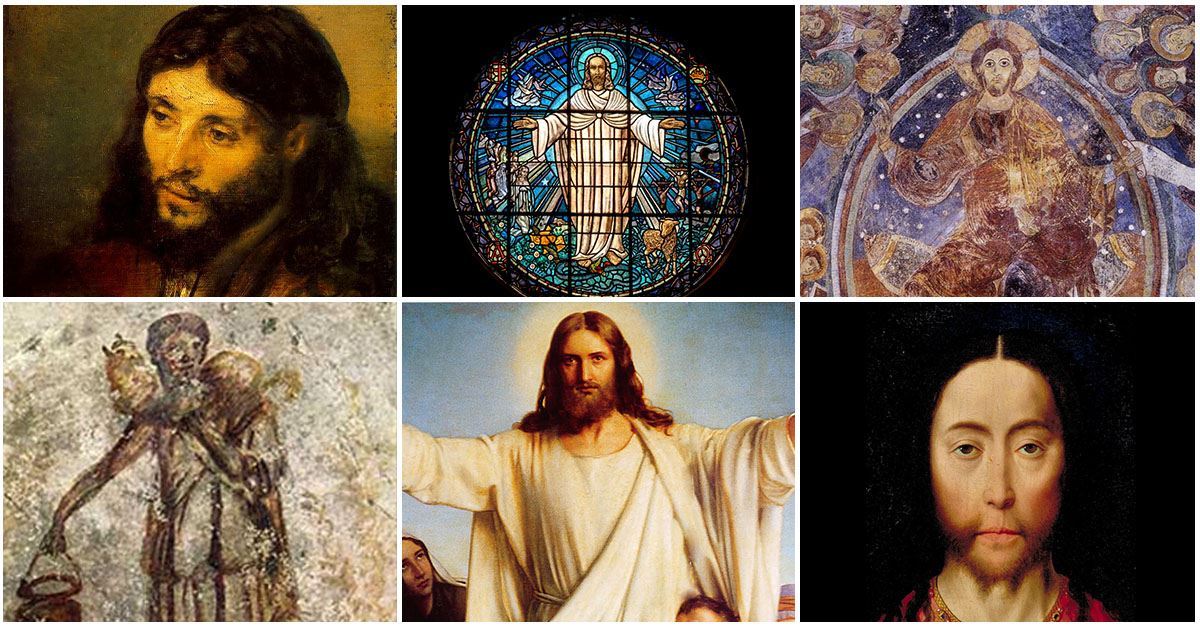
The intersection of ancient scripture and modern technology has sparked a revolutionary shift in how we perceive historical figures. For centuries, the question of what Jesus looked like in the Bible was answered through the lens of classical art—canvases painted with the subjective biases of European masters. However, the 21st century has introduced a suite of technological tools, from generative AI to forensic anthropology software, that allow us to move past artistic tradition and toward data-driven visualization. By analyzing the limited textual descriptions in the Bible and cross-referencing them with ethnographic data sets and algorithmic reconstructions, technology is providing a new, high-definition window into the past.
The Digital Archeology of Biblical Descriptions
When we approach the question of visual appearance through a technical lens, the first hurdle is the “data gap.” The Bible is surprisingly sparse on physical descriptions. To a machine learning model, the “input” for a physical reconstruction is nearly non-existent in the New Testament. However, digital archeology allows us to synthesize what is missing by processing the environmental and historical metadata available in the text.
Parsing the Textual Data
In the world of Natural Language Processing (NLP), we look for specific descriptors. The Bible offers very few. Isaiah 53:2 provides a prophetic description, stating he had “no beauty or majesty to attract us to him, nothing in his appearance that we should desire him.” From a data processing perspective, this suggests a “default” or “average” phenotype for the region and era. Tech-driven reconstructions use this as a baseline parameter to avoid the “heroic” biases found in classical art.
Modern software tools can ingest these textual fragments and cross-reference them with 1st-century Levantine data. By using “average” as a technical constraint, researchers can filter out the outlier features—such as the long, flowing hair of the Renaissance—that do not align with the historical data of the period.
Limitations of the Source Material
The challenge for any AI tool is the lack of “ground truth” data. In machine learning, ground truth refers to information provided by direct observation as opposed to information provided by inference. Since there are no contemporary sketches or physical remains, developers must rely on “proxy data.” This involves digitizing skeletal remains from the Jerusalem area from the 1st century. By scanning these craniums into 3D modeling software, technologists can create a “statistical average” of the facial structure, which serves as the skeletal mesh for any digital rendering of a biblical figure.
AI and Forensic Reconstruction: Beyond Artistic Impression
The move from “artist’s rendering” to “forensic reconstruction” represents a massive leap in technical accuracy. Forensic anthropology software, often used in modern criminal investigations, has been repurposed to answer historical questions. This process involves more than just “guessing” features; it utilizes complex algorithms that determine skin thickness, muscle placement, and tissue depth based on bone structure.
Algorithmic Forensic Anthropology
One of the most famous technological interventions in this field was led by forensic facial reconstruction expert Richard Neave. While his initial work preceded the current AI boom, his methodology laid the groundwork for today’s digital workflows. Today, we use software like FACE (Forensic Automated Casting Equipment) and specialized CAD tools to automate the process.
The process begins with a computerized tomography (CT) scan of a representative skull. The software then applies a “tissue-depth” algorithm. This algorithm calculates the most probable appearance of facial muscles and skin based on the geographical and ethnic markers of the 1st-century Semitic population. The result is a high-resolution 3D model that prioritizes biological probability over theological tradition.
Machine Learning and Ethnographic Data
Generative Adversarial Networks (GANs) have taken this a step further. By training a model on thousands of photographs and skeletal reconstructions of people from the Middle East, AI can generate hyper-realistic textures. These include skin tone, sun exposure patterns, and hair texture. When we ask a modern AI “what did Jesus look like,” the machine doesn’t look at paintings; it looks at the probability distribution of genetic traits in the Levant. This tech-driven approach suggests a man with olive-toned skin, dark eyes, and short, curly hair—a stark contrast to the low-resolution, culturally biased images of the past.
The Role of Generative AI in Reshaping Religious Iconography

Generative AI platforms like Midjourney, DALL-E 3, and Stable Diffusion have democratized the visualization of biblical history. These tools use a “diffusion model” to create images from text prompts, but their accuracy depends heavily on the “training set” and the “prompt engineering” utilized by the user.
Text-to-Image Prompts and Historical Accuracy
For a technologist, the challenge of visualizing a biblical figure lies in the prompt. A simple prompt like “Jesus” will often trigger the AI to pull from its training data of Western art. However, by using “weighted prompts”—where the user emphasizes terms like “1st-century Judean,” “manual laborer,” and “Levantine phenotype”—the AI can bypass its internal biases.
Developers are now creating specialized LoRAs (Low-Rank Adaptation) for Stable Diffusion. These are small, specialized sub-models trained on specific historical and archaeological datasets. By applying a “historical accuracy” LoRA to a standard model, users can generate visualizations that are grounded in the physical reality of the 1st-century Roman Empire rather than the aesthetics of the 17th-century Catholic Church.
Neural Networks and 3D Modeling
The next frontier is the transition from 2D images to 3D volumetric renders. Using Neural Radiance Fields (NeRFs), tech teams can take 2D historical data and “extrapolate” it into a 3D environment. This allows for the creation of digital twins—hyper-realistic avatars that can be used in educational software or virtual reality. These models are not just static images; they are rigged with “blend shapes” that allow for realistic facial expressions, providing a level of immersion that was previously impossible.
Digital Security and Ethical Considerations in Historical Rendering
As technology makes it easier to “resurrect” historical figures digitally, we face new challenges in digital security and ethics. The ability to create “deepfake” versions of religious figures raises significant questions about authenticity and misinformation.
Deepfakes and Misinformation
The same tech used to visualize a historical Jesus can be used to create misleading content. Synthetic media—videos where a digitally rendered Jesus appears to speak or act—can be weaponized. From a digital security perspective, this necessitates the development of “content provenance” tools. Technologies like the C2PA (Coalition for Content Provenance and Authenticity) standard are being implemented to add metadata to AI-generated images. This metadata tells the viewer exactly how the image was made, what data it was based on, and whether it is a “forensic reconstruction” or an “artistic generation.”
Preserving Cultural Integrity through Tech
There is also the technical challenge of “algorithmic bias.” If the underlying dataset of an AI is skewed toward a specific demographic, the output will be inherently flawed. Tech companies are now working on “de-biasing” their models by including more diverse ethnographic data. For historical visualizations, this means ensuring that the “training data” for 1st-century figures includes a wide array of genetic markers from the correct geographical region, preventing the “digital whitewashing” that has dominated the visual history of the Bible.
The Future of Virtual Immersion and Biblical Studies
The ultimate goal of this technological evolution is not just a single image, but a fully immersive historical experience. We are moving toward a “Digital Humanities” ecosystem where the Bible’s descriptions are just one layer of a complex, tech-driven simulation.

VR and AR Applications
In the near future, Augmented Reality (AR) will allow users to overlay historical reconstructions onto modern landscapes. Imagine standing in Jerusalem and, through an AR headset, seeing a forensically accurate digital avatar of a 1st-century figure walking through the streets. This requires massive computational power and high-speed data transfer (5G/6G) to render high-fidelity models in real-time.
Furthermore, Virtual Reality (VR) “time-travel” apps are already using the Unity and Unreal Engine 5 platforms to build 1:1 scale models of biblical sites. Within these engines, the “NPCs” (non-player characters) are populated using the forensic and AI-driven methodologies mentioned earlier. This creates a “living history” where the visual appearance of biblical figures is determined by the most current archeological and technological data available.
By leveraging AI, forensic software, and 3D rendering engines, we are finally moving closer to an objective answer to what Jesus might have looked like. The transition from “faith-based art” to “data-based visualization” represents a significant milestone in the digital age, proving that technology has the power to illuminate the past in ways we are only beginning to understand.
aViewFromTheCave is a participant in the Amazon Services LLC Associates Program, an affiliate advertising program designed to provide a means for sites to earn advertising fees by advertising and linking to Amazon.com. Amazon, the Amazon logo, AmazonSupply, and the AmazonSupply logo are trademarks of Amazon.com, Inc. or its affiliates. As an Amazon Associate we earn affiliate commissions from qualifying purchases.