
For decades, the motorcycle community has relied on a silent, non-verbal language to communicate across the roar of engines and the rush of wind. Among these gestures, the top-of-the-helmet tap stands as one of the most vital: a warning that law enforcement is ahead, signaling riders to check their speed and exercise caution. However, as we move deeper into the era of the Internet of Things (IoT) and connected mobility, this analog “protocol” is undergoing a massive digital transformation.
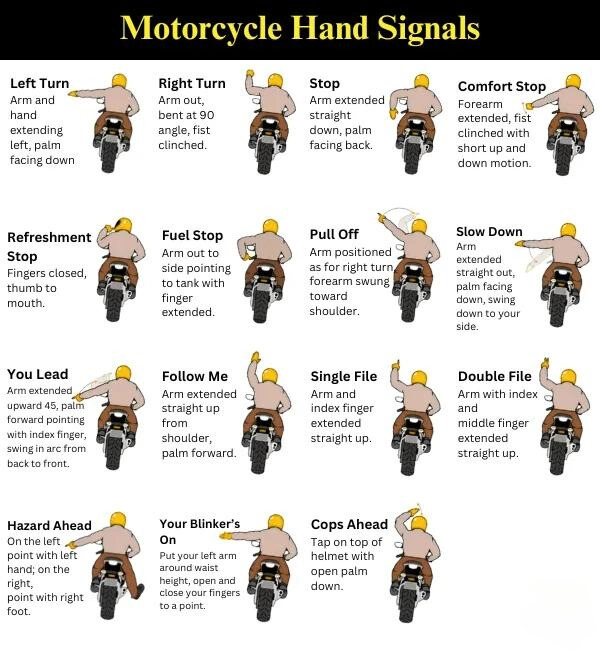
What was once a simple hand gesture is being replaced and augmented by high-bandwidth communication arrays, artificial intelligence, and sophisticated sensor suites. To understand what it means when a biker taps his helmet today, we must look beyond the physical motion and examine the technological infrastructure currently redefining road safety and rider connectivity.
The Analog Protocol and the Rise of Rider-Centric Gadgetry
The helmet tap is fundamentally a data transmission. In its simplest form, it is a low-bandwidth, high-latency signal intended to prevent a negative outcome—typically a traffic citation or a high-speed encounter with a hazard. While effective, this manual method has significant limitations: it requires line-of-sight, takes the rider’s hand off the handlebars, and is prone to human error or oversight.
The technology sector has recognized these gaps, leading to a surge in specialized hardware designed to digitize the “warning” system. The evolution began with basic Bluetooth headsets but has rapidly accelerated into sophisticated “smart” ecosystems.
The Transition to Bluetooth and Mesh Intercoms
The first major leap in digitizing the helmet tap came with the adoption of Bluetooth communication systems. Brands like Sena and Cardo pioneered the integration of ultra-low-profile speakers and microphones into helmet shells. However, early Bluetooth technology struggled with “daisy-chain” limitations; if one rider in a group moved out of range, the entire network collapsed.
Modern solutions have pivoted to Mesh Intercom technology. Unlike linear Bluetooth connections, Mesh networks are self-healing and dynamic. They allow hundreds of riders to connect simultaneously, creating a web of data where information—including hazard warnings—can be shared instantaneously via voice. In this context, the physical helmet tap is being superseded by voice-activated prompts and automated alerts that don’t require the rider to break their aerodynamic posture.
Integration with Mobile Ecosystems
Today’s rider communication gadgets are no longer standalone units; they are nodes in a larger mobile ecosystem. Through dedicated apps, riders can sync their helmets with GPS data and real-time traffic platforms like Waze. When a “helmet tap” situation occurs (such as a speed trap or road debris), the software can push an audible notification directly to the rider’s ears based on geolocation data, often before any human rider is even visible on the horizon.
Smart Helmets and Augmented Reality: The New Visual Interface
As we move toward 2025, the concept of a “helmet” is shifting from passive protective gear to a sophisticated wearable computer. The gesture of tapping the helmet is increasingly becoming a metaphor for interacting with a Head-Up Display (HUD) or an onboard AI assistant.
Augmented Reality (AR) and Heads-Up Displays
AR technology is the next frontier in rider safety. Companies are developing transparent displays that project critical information onto the helmet visor. Instead of looking for a fellow rider to tap their head, a motorcyclist sees a digital overlay highlighting hazards, speed limits, and navigation prompts.
These HUDs utilize waveguide optics and micro-LED technology to ensure visibility in high-glare environments. By integrating thermal imaging and rear-view camera feeds, these systems provide a 360-degree digital “awareness bubble.” When a sensor detects a patrol car or an erratic driver, the visor flashes a peripheral warning, effectively digitizing the manual helmet tap and delivering it with pinpoint accuracy.
Sensor Fusion and Intelligent Impact Detection
Beyond communication, the “smart” helmet uses sensor fusion—combining data from accelerometers, gyroscopes, and pressure sensors—to monitor the rider’s environment. Some high-end models now feature integrated dash-cam systems that use computer vision to identify road signs and police vehicles. If the AI identifies a potential risk, it can trigger an haptic alert (a vibration within the helmet) or an audio cue.
Furthermore, these sensors provide a critical safety net. In the event of an accident, the software can detect a high-G impact and automatically initiate an SOS protocol, sending the rider’s GPS coordinates to emergency services and pre-selected contacts. This moves the helmet tap from a “warning” gesture to an active “emergency response” tool.

V2X Technology: The Internet of Moving Things
While individual gadgets are impressive, the true revolution lies in V2X (Vehicle-to-Everything) communication. This technology represents the ultimate evolution of the biker’s helmet tap, moving the responsibility of communication from the human to the machine.
V2V and V2I Communication Protocols
Vehicle-to-Vehicle (V2V) and Vehicle-to-Infrastructure (V2I) protocols allow motorcycles to “talk” to cars, trucks, and even traffic lights. Using Dedicated Short-Range Communications (DSRC) or C-V2X (Cellular V2X) over 5G networks, a motorcycle can broadcast its position, speed, and heading several times per second.
In a V2X-enabled world, if a biker encounters a hazard, they don’t need to tap their helmet. Their motorcycle’s onboard computer automatically broadcasts a “Hazardous Location” packet to every other connected vehicle in the vicinity. This creates a collective intelligence network where every vehicle benefits from the data gathered by others, dramatically reducing the “human factor” in road safety.
The Role of Edge Computing and AI
Processing this massive influx of data requires significant computational power. Edge computing allows for data to be processed locally on the motorcycle or at nearby 5G towers rather than in a distant cloud server. This reduces latency to milliseconds—faster than the human reflex required to perform a helmet tap.
AI algorithms analyze these data streams to predict accidents before they happen. For example, if a car three vehicles ahead slams on its brakes, the motorcycle’s AI can alert the rider via the helmet interface before the brake lights are even visible. This “digital foresight” is the logical conclusion of the biker’s traditional signaling system.
Digital Security and the Privacy of the Connected Rider
As the helmet tap becomes digitized, it enters the realm of cybersecurity. When a gesture is replaced by a data packet, that packet must be secured. The transition from manual signals to tech-driven communication brings new challenges in digital security and data privacy.
Securing the Mesh: Encryption in Rider Networks
One of the primary concerns in modern rider tech is the vulnerability of Mesh and Bluetooth networks. Unsecured communication channels could potentially be intercepted or spoofed, leading to “digital griefing” or even targeted attacks where false hazard warnings are sent to riders.
To combat this, hardware manufacturers are implementing advanced encryption standards (AES) and secure pairing protocols. This ensures that the “digital helmet tap” is authentic and comes from a trusted source within the riding group or the verified V2X infrastructure.
Data Privacy and Anonymization
There is also the question of who owns the data generated by a smart helmet or a V2X-equipped motorcycle. While a manual helmet tap is anonymous and fleeting, a digital log of your location, speed, and communications is permanent.
Privacy-centric tech developments focus on anonymizing V2X broadcasts. The goal is to transmit safety-critical information without revealing the rider’s identity or creating a “breadcrumb trail” that could be exploited by third parties. Software updates are increasingly focused on “Privacy by Design,” ensuring that as we move toward a more connected riding experience, the rider’s right to an untracked journey remains intact.

Conclusion: The Enduring Legacy of the Signal
The helmet tap will likely never disappear entirely. It is a cultural touchstone, a symbol of the camaraderie and shared responsibility that defines the motorcycling community. However, its functional role is being rapidly absorbed into the broader world of technology.
From the software that powers Mesh intercoms to the AR visors and V2X protocols that provide a 360-degree view of the road, the “helmet tap” is becoming a sophisticated, automated, and life-saving data exchange. As gadgets continue to shrink in size and grow in processing power, the biker of the future won’t just be tapping their helmet to warn of a speed trap; they will be wearing a high-performance node in a global, intelligent safety network.
The meaning remains the same—”Watch out, brother”—but the medium has moved from the hand to the silicon chip, ensuring that the message is heard louder, faster, and more clearly than ever before.
aViewFromTheCave is a participant in the Amazon Services LLC Associates Program, an affiliate advertising program designed to provide a means for sites to earn advertising fees by advertising and linking to Amazon.com. Amazon, the Amazon logo, AmazonSupply, and the AmazonSupply logo are trademarks of Amazon.com, Inc. or its affiliates. As an Amazon Associate we earn affiliate commissions from qualifying purchases.