
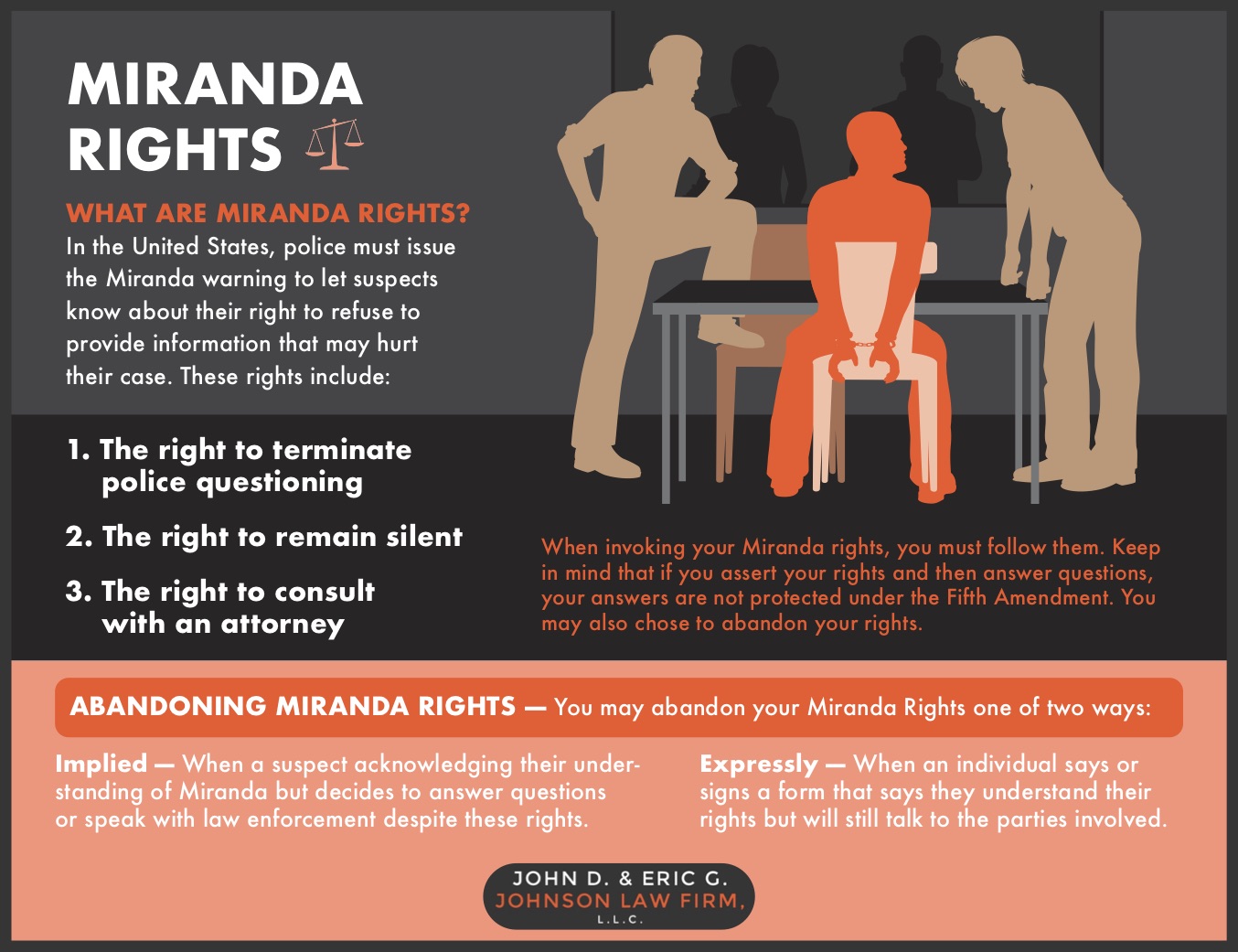
For decades, the phrase “I invoke the Fifth” has been a staple of legal dramas and courtroom proceedings, serving as a verbal shield against self-incrimination. Rooted in the Fifth Amendment of the United States Constitution, this right ensures that no person “shall be compelled in any criminal case to be a witness against himself.” Traditionally, this meant a defendant could refuse to answer questions on a witness stand. However, as our lives have migrated into the digital realm, the definition of what it means to “witness against oneself” has undergone a radical transformation.

In the contemporary tech landscape, invoking the Fifth Amendment is no longer just about silence in an interrogation room; it is increasingly about the right to withhold access to digital repositories. As we carry our entire histories—emails, location data, private messages, and financial records—in our pockets, the legal and technological intersection of the Fifth Amendment has become one of the most critical frontiers in digital security and privacy law.
The Digital Fifth Amendment: Passwords vs. Biometrics
The core of the Fifth Amendment protection lies in the distinction between “testimonial” evidence and “physical” evidence. Testimonial evidence refers to the contents of one’s mind—information you know. Physical evidence refers to tangible objects or characteristics, such as a DNA sample, a fingerprint, or the physical key to a safe. Historically, the government could compel you to provide physical evidence but could not force you to speak.
In the world of modern hardware and software, this distinction has created a significant divide between different types of device security.
The Legal Precedent of “Testimonial” Evidence
When a user sets an alphanumeric passcode on their smartphone, that code exists only in their mind. Courts have largely ruled that forcing a person to reveal a passcode is a violation of the Fifth Amendment because it compels them to share the contents of their mind to assist in their own prosecution. This is the “Digital Fifth” in its purest form. If a device is encrypted and the only way to access it is through a memorized string of characters, the act of “invoking the Fifth” effectively blocks the state from accessing that data, even with a warrant for the device itself.
Why Your Passcode is Protected but Your Face Might Not Be
The rise of biometric authentication—such as Apple’s FaceID or Android’s fingerprint sensors—has complicated the tech-legal landscape. Many jurisdictions have ruled that biometrics are more akin to physical evidence than testimonial evidence. Just as a police officer can legally take your fingerprints at a station, some courts have ruled that they can compel you to place your finger on a sensor or look at your phone to unlock it.
From a tech perspective, this means that the method of security you choose dictates the level of constitutional protection you receive. Security-conscious users often utilize “lockdown” features that temporarily disable biometrics and require a passcode, specifically to move their device’s security back into the “testimonial” category protected by the Fifth Amendment.
Technology Trends Reshaping Self-Incrimination
As technology evolves, the ways in which we store and protect data are challenging the traditional boundaries of the Fifth Amendment. We are moving toward an era where the data itself is becoming inaccessible even to the service providers, creating a “zero-knowledge” environment that serves as a technological reinforcement of the right to remain silent.
End-to-End Encryption (E2EE) and Privacy Sovereignty
The widespread adoption of End-to-End Encryption (E2EE) in apps like Signal, WhatsApp, and iMessage has fundamentally changed the power dynamic between the state and the individual. In the past, the government could bypass a user’s refusal to speak by subpoenaing the service provider for their records. However, with E2EE, the service provider does not possess the keys to decrypt the messages.
When a user invokes the Fifth in this context, the silence is absolute. There is no third-party workaround. This shift toward privacy sovereignty means that the individual is the sole gatekeeper of their digital life. The tech industry’s move toward “privacy by design” ensures that the Fifth Amendment remains relevant even when law enforcement has the technical capability to intercept data packets, but not the mathematical capability to read them.
Secure Enclaves and Hardware-Level Protection
Modern smartphones utilize a dedicated piece of hardware known as a Secure Enclave or a Trusted Execution Environment (TEE). This isolated processor handles sensitive data like cryptographic keys and biometric signatures. Crucially, the Secure Enclave is designed so that even the main operating system cannot access these keys directly.
This hardware-level security provides a physical manifestation of the Fifth Amendment. Even if a court were to order a tech company to build a “backdoor” into a specific device, the hardware architecture often makes this a mathematical impossibility without the user’s specific input. In this sense, the technology acts as an automated enforcer of the user’s right to withhold information, ensuring that “invoking the Fifth” is not just a legal statement, but a technical reality.
The “Foregone Conclusion” Doctrine: A Threat to Digital Silence
While the Fifth Amendment provides a strong shield, a legal loophole known as the “Foregone Conclusion Doctrine” is increasingly being used to pierce digital privacy. This doctrine suggests that if the government can prove with “reasonable particularity” that it already knows what is on a device, the act of unlocking it is no longer considered testimonial.
When Tech Knowledge Becomes Public
For example, if law enforcement can prove that a suspect has a specific file on their laptop because they saw the suspect using it, they may argue that the suspect isn’t “testifying” to the existence of the file by unlocking the computer; they are merely performing a physical act.
As AI and forensic tools become more sophisticated, the ability for the state to argue that the contents of a device are a “foregone conclusion” increases. High-speed brute-force tools and sophisticated metadata analysis can sometimes reveal so much about a device’s contents that the legal protection of the passcode begins to erode. This creates a “cat and mouse” game between forensic tech developers and privacy-focused engineers who seek to obfuscate metadata and strengthen encryption protocols.
The Role of Decentralized Storage
To counter the erosion of privacy, new trends in decentralized storage and Web3 technologies are emerging. By fragmenting data across a global network of nodes, users can ensure that no single entity—not even themselves—possesses the entire “key” in a way that could be easily surrendered. This technological shift aims to make the “foregone conclusion” harder to prove, as the data does not exist in a single, identifiable silo.
Best Practices for Digital Security and Data Rights
Given the evolving legal landscape, understanding how to “invoke the Fifth” technologically is as important as knowing the phrase legally. Digital security is now a prerequisite for exercising constitutional rights.
Using Lockdown Modes and Emergency Triggers
Mobile operating system developers have introduced features specifically designed to protect user rights during encounters with law enforcement. On an iPhone, for instance, rapidly pressing the side button five times or holding the side and volume buttons triggers an Emergency SOS screen that instantly disables FaceID and TouchID.
Once this is done, the device can only be unlocked with the passcode. By doing this, a user effectively switches their device from “physical evidence” mode to “testimonial evidence” mode. Tech-savvy individuals use these triggers to ensure that if they choose to invoke their Fifth Amendment rights, the device’s hardware is configured to respect that choice.
The Necessity of Complex Passcodes
While biometrics are convenient, the professional consensus in the tech security community remains that a complex, alphanumeric passcode is the gold standard for legal protection. From a security standpoint, a six-digit PIN is significantly weaker than an eleven-character passphrase. From a legal standpoint, both are testimonial, but the passphrase offers better protection against forensic brute-forcing if the device is ever legally seized.
The Future of Digital Privacy and Tech Innovation
The definition of “invoking the Fifth” will continue to shift as we move into the era of wearable tech, neural interfaces, and pervasive AI. If a device can read your sub-vocalizations or monitor your brainwaves, does the data it collects count as “thoughts” or “physical biological signals”?
AI and Predictive Self-Incrimination
As artificial intelligence becomes more integrated into our devices, it begins to “know” us better than we know ourselves. Predictive algorithms can anticipate our actions, locations, and even our communications. If a law enforcement agency uses AI to recreate a user’s digital persona, they may attempt to bypass the Fifth Amendment by claiming they are not asking the user for information, but rather asking an algorithm to “simulate” what the user would have said.
This presents a terrifying frontier for digital rights. The tech industry must lead the way in establishing “algorithmic privacy,” ensuring that the data used to train personal AI models is protected under the same framework as the thoughts in a human mind.
Conclusion: The Code as the Law
Ultimately, “invoking the Fifth” in the 21st century is a dual-layered process. It is a legal declaration made to authorities, but it is also a technical state achieved through encryption, hardware security, and intentional software design. As long as our devices remain extensions of our minds, the right to remain silent must include the right to remain encrypted. The future of our constitutional liberties depends on the continued innovation of security tools that prioritize the individual’s right to control their own information, ensuring that the Fifth Amendment remains a robust defense in an increasingly transparent world.
aViewFromTheCave is a participant in the Amazon Services LLC Associates Program, an affiliate advertising program designed to provide a means for sites to earn advertising fees by advertising and linking to Amazon.com. Amazon, the Amazon logo, AmazonSupply, and the AmazonSupply logo are trademarks of Amazon.com, Inc. or its affiliates. As an Amazon Associate we earn affiliate commissions from qualifying purchases.