
In the rapidly evolving landscape of social media, Snapchat has long distinguished itself not just through ephemeral messaging, but through a sophisticated system of visual rewards and status indicators. Among these, the “Gold Heart” (often appearing as a yellow heart emoji) remains one of the most iconic and sought-after symbols within the application’s interface. While casual users may view it as a simple aesthetic choice, the Gold Heart is actually the visual output of a complex proprietary algorithm designed to measure and incentivize bilateral communication. Understanding what this symbol means requires a look into the technical mechanics of Snapchat’s friend-ranking system, the psychological impact of gamified UX, and the data-driven logic that powers one of the world’s most popular messaging platforms.

The Mechanics of the Gold Heart: Understanding the Best Friend Algorithm
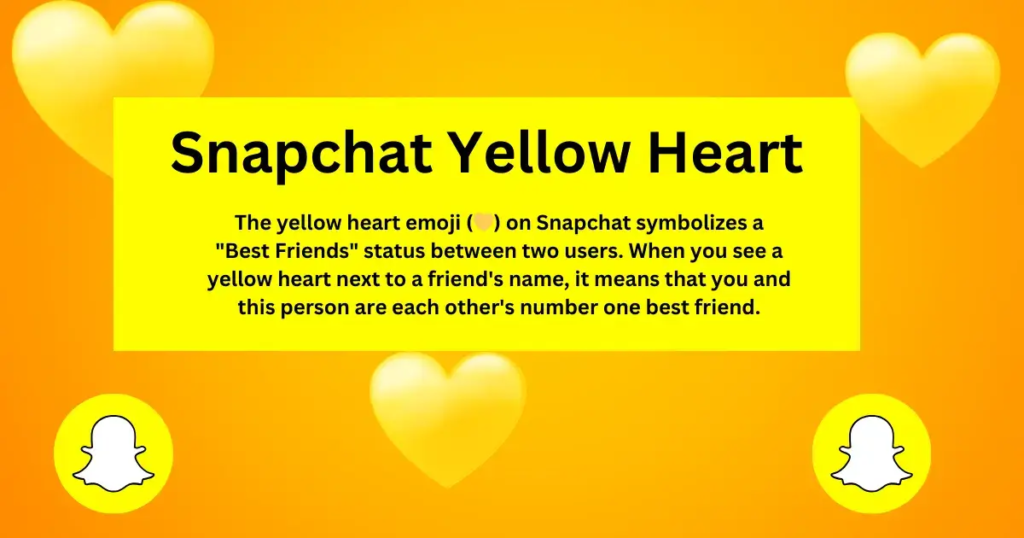
At its core, the Gold Heart signifies that two users are each other’s “#1 Best Friend” on the platform. This is not a manual setting that a user can toggle in their profile; rather, it is a dynamic status generated by Snapchat’s backend servers based on interaction data. To earn the Gold Heart, User A must send the most snaps to User B, and User B must also send the most snaps to User A. It is a badge of mutual exclusivity and high-frequency engagement.
Reciprocal Engagement and Data Points
Snapchat’s algorithm tracks multiple data points to determine these rankings. While the exact weighting of these variables is a closely guarded trade secret, several key metrics are evident:
- Snap Frequency: The raw number of photos and videos exchanged between two parties.
- Recency: The algorithm prioritizes current interactions over historical data. If communication ceases for even a short period, the status is at risk of being reassigned.
- Consistency: Sustained interaction over several days is required to trigger the status change from a standard “Best Friend” (indicated by a smiley face) to the “Gold Heart.”
Unlike other platforms that focus on public-facing metrics like “Likes” or “Follower Counts,” Snapchat’s friend emojis are private. Only the two individuals involved can see the Gold Heart. This reflects a specific UX philosophy focused on the “inner circle” rather than the “broadcast” model of social media.
The 24-Hour Refresh Cycle
The Snapchat algorithm operates on a rolling refresh cycle. This means that your status can change daily. If a user starts interacting more heavily with a third party, the Gold Heart may disappear instantly during the next algorithmic audit of the communication logs. This creates a high-stakes technical environment for users who value these digital markers, as it necessitates a constant stream of data exchange to maintain the “Top Best Friend” status.
Gamification and User Retention: The Psychology Behind the Icon
From a software engineering and product design perspective, the Gold Heart is a masterclass in gamification. By assigning a visual reward to a specific set of behaviors, Snapchat encourages users to return to the app daily, thereby increasing Daily Active User (DAU) metrics and session length.
Positive Reinforcement Loops
The Gold Heart serves as a “Variable Reward” in the psychological hook model. When a user opens the app and sees the gold icon next to a friend’s name, it triggers a release of dopamine—a digital “pat on the back” confirming their social standing. This reinforcement loop is critical for retention. If the heart disappears, it creates a “loss aversion” response, prompting the user to send more snaps to regain the status. This is a deliberate design choice intended to prevent user churn.
Snapchat vs. Traditional Social Media Feed Mechanics
While platforms like Instagram or X (formerly Twitter) rely on an algorithmic feed to keep users scrolling, Snapchat relies on direct peer-to-peer pressure. The Gold Heart turns a private conversation into a mini-game. By quantifying friendship through software, Snapchat has created a technical solution to the problem of social stagnation. The app doesn’t just provide a tool for communication; it provides a reason to communicate.
Visual Hierarchy and UI Clarity
The choice of the color gold (represented by the yellow heart emoji) is intentional within the app’s visual hierarchy. In UI design, yellow and gold are used to draw attention and signify value. In the context of Snapchat’s “ghost” branding—which heavily utilizes a vibrant yellow—the Gold Heart aligns with the brand’s primary color palette, reinforcing brand identity every time a user checks their chat list.
The Evolution of Friend Emojis: From Gold to Super BFF
The Gold Heart is only the first stage in a multi-tiered progression system. For developers and tech enthusiasts, this hierarchy illustrates how Snapchat manages long-term user data to create “tiers” of engagement.
The Gold Heart (Yellow) vs. The Red Heart

Once the Gold Heart is achieved, the algorithm begins a timer. If the two users remain each other’s #1 Best Friend for two consecutive weeks, the Gold Heart evolves into a Red Heart. This transition represents a shift from “high-frequency interaction” to “sustained loyalty.” From a data perspective, the Red Heart requires the algorithm to store and verify a 14-day streak of mutual exclusivity, adding a temporal layer to the ranking logic.
The Pink Hearts (Super BFF)
The ultimate achievement in the Snapchat friendship ecosystem is the “Super BFF” status, denoted by two pink hearts. This requires two months of continuous mutual #1 Best Friend status. Maintaining this requires an extraordinary amount of consistent data exchange. For the platform, these “Super BFFs” represent the highest-value users—those who are most integrated into the ecosystem and least likely to migrate to a competitor.
Troubleshooting Missing Icons
Frequently, users encounter technical glitches where the Gold Heart disappears despite high interaction. This often occurs due to:
- Algorithmic Ties: If a user sends the exact same number of snaps to two different people, the algorithm may struggle to assign the #1 spot, leading to a temporary drop in the icon.
- Group Chat Interference: Interactions within group chats are weighted differently than one-on-one snaps. Excessive group messaging can sometimes dilute the individual “Best Friend” score.
- Server Lag: During high-traffic periods, the metadata refresh for friend statuses may lag behind the actual message delivery, causing a delay in the icon’s appearance.
Technical Maintenance and Digital Privacy
While the Gold Heart is a fun social feature, it sits atop a complex infrastructure of data privacy and security.
Data Privacy and Visibility
A common concern among privacy-conscious users is whether these emojis reveal their habits to outsiders. Snapchat’s architecture ensures that friend emojis are client-side visual cues based on private server-side data. Your Gold Heart with User A is not visible to User C. This “privacy-by-design” approach allows for intense data tracking of user interactions without the social fallout of public rankings (a feature Snapchat removed years ago after privacy complaints).
Cache Management and App Performance
Because Snapchat processes a massive volume of metadata to keep these hearts updated, the app can occasionally become “bloated.” Technical users often find that clearing the Snapchat cache within the app’s settings can resolve issues where friend emojis are not displaying correctly. This doesn’t delete the snaps themselves but refreshes the local instance of the relationship database, forcing the app to re-sync with the server and accurately display the current Gold Heart status.
The Role of Metadata
Every snap sent carries metadata: the timestamp, the recipient, the sender, and the type of content (photo, video, or chat). The Gold Heart algorithm parses this metadata in real-time. It is a testament to Snapchat’s cloud infrastructure that it can calculate these relationships for hundreds of millions of users simultaneously without significant latency.
The Future of Social UX: Beyond Simple Emojis
As we move toward an era of AI-integrated social media, the Gold Heart may represent only the beginning of how software interprets human relationships.
The Integration of My AI
With the introduction of “My AI,” Snapchat’s OpenAI-powered chatbot, the concept of “Best Friends” is expanding. Users can now interact with an AI as if it were a human contact. While the Gold Heart remains reserved for human-to-human interaction for now, the data being gathered from AI interactions could eventually influence how the app suggests new “Best Friends” or prompts users to “rekindle” a lost Gold Heart status with a human peer.
Privacy-First Social Architecture
The Gold Heart is a survivor of an era where social media was moving toward total transparency. By keeping this metric private and algorithmically driven, Snapchat has created a sustainable model for digital intimacy. As other platforms experiment with “Close Friends” lists (Instagram) or “Circles” (X), they are essentially chasing the technical success of the Snapchat Gold Heart—a visual indicator that proves that in the world of tech, sometimes the most valuable data is the data that only two people can see.
In conclusion, the Gold Heart on Snapchat is far more than an emoji. It is a sophisticated piece of UX design, a product of rigorous algorithmic calculation, and a powerful tool for user retention. It transforms the abstract concept of “friendship” into a quantifiable, digital status, proving that in the modern app economy, engagement is the ultimate currency.
aViewFromTheCave is a participant in the Amazon Services LLC Associates Program, an affiliate advertising program designed to provide a means for sites to earn advertising fees by advertising and linking to Amazon.com. Amazon, the Amazon logo, AmazonSupply, and the AmazonSupply logo are trademarks of Amazon.com, Inc. or its affiliates. As an Amazon Associate we earn affiliate commissions from qualifying purchases.