
In the modern financial landscape, the concept of stealing has evolved far beyond the primitive act of physical theft. While the traditional image of a thief might involve a masked figure in the night, the contemporary reality of “dishonest gain” often manifests in boardroom decisions, digital transactions, and subtle breaches of fiduciary duty. When we examine the intersection of spiritual principles and personal finance, the command against stealing serves as a foundational pillar for a stable, thriving economy. From an ethical and financial perspective, the prohibition of theft is not merely a moralistic constraint; it is a blueprint for sustainable wealth creation, trust-based markets, and long-term economic prosperity.

The Economic Foundation of Financial Integrity
To understand the prohibition of stealing within a financial context, one must first recognize the principle of stewardship. In many theological frameworks, money is not viewed as something we “own” in an absolute sense, but rather as a resource we manage. When we look at what spiritual wisdom suggests about theft, it centers on the idea that property rights are a mechanism for social order and personal responsibility. Stealing, therefore, is a direct violation of the social contract that allows markets to function.
The Scarcity Mindset vs. The Abundance Principle
At the heart of the urge to steal—whether it is through underreporting income, inflating expense reports, or literal theft—is a scarcity mindset. This psychological state suggests that there is a limited “pie” and that the only way to increase one’s share is to take from another. Financial experts and spiritual guides alike argue that this mindset is the antithesis of wealth building.
True financial growth is rooted in the abundance principle: the belief that value can be created where it did not exist before. When an individual chooses to steal, they are essentially signaling to themselves and the market that they are incapable of creating value. This erodes self-efficacy and shifts focus away from innovation, which is the true driver of income. By adhering to a strict code of honesty, an investor or entrepreneur aligns themselves with the mechanics of value creation rather than value extraction.
The Law of Just Weights and Measures
A recurring theme in ethical finance is the concept of “just weights and measures.” In ancient commerce, this referred to the scales used to trade grain or gold. To “steal” was often to use a rigged scale to provide less value than promised. In today’s terms, this translates to transparency in financial products, honesty in marketing, and the delivery of promised results in a side hustle or business venture.
When a business uses “unjust scales”—such as hidden fees or deceptive subscription models—they are engaging in a form of theft. While this might lead to a short-term spike in revenue, it destroys the “Trust Equity” required for a brand to survive multiple market cycles. God’s perspective on stealing, in a financial sense, emphasizes that wealth gained through deception is “vanishing vapor,” whereas wealth gathered little by little through integrity remains.
Redefining Theft in the Modern Digital Economy
As we transition into an increasingly digital and decentralized financial world, the definition of stealing has become more complex. Understanding what constitutes theft today requires a sophisticated look at intellectual property, digital assets, and the “theft of time.”
Intellectual Property and Creative Capital
In the Information Age, the most valuable assets are often intangible. Intellectual property (IP) theft—such as using unlicensed software for a business, infringing on trademarks, or “borrowing” a competitor’s proprietary process—is a major hurdle in the tech and brand sectors. From a financial ethics standpoint, stealing an idea is no different than stealing a physical wallet. It deprives the creator of their rightful return on investment (ROI).
For those building personal brands or side hustles, the temptation to shortcut the creative process by plagiarizing content or mimicking a brand identity is high. However, the spiritual and financial cost of this “theft” is the loss of authenticity. A brand built on stolen foundations has no unique value proposition (UVP), making it impossible to command premium pricing or build a loyal customer base.
The Ethical Implications of the “Theft of Time”
In the corporate world and the gig economy, “time theft” has become a significant financial drain. This occurs when an employee or contractor bills for hours not worked or spends the majority of their paid time on personal distractions. While often dismissed as a minor infraction, time theft is a breach of contract—a form of stealing from the organization’s resources.
Conversely, “wage theft” by employers—withholding overtime pay or misclassifying workers to avoid benefits—is an equally egregious form of stealing. Ethical finance dictates that for a market to be healthy, the exchange of labor for capital must be honest and equitable. When this balance is disrupted by theft from either side, it leads to high turnover, low productivity, and eventual litigation, all of which are detrimental to the bottom line.

The High Cost of Dishonest Wealth
There is a common misconception that “the ends justify the means” in wealth accumulation. However, a deep dive into the ROI of integrity reveals that dishonest gains carry a “hidden tax” that eventually bankrupts the offender, either legally, socially, or psychologically.
The Compound Interest of Reputation
In finance, your reputation is a form of collateral. It allows you to secure loans, attract partners, and close deals. When an individual engages in theft or unethical financial behavior, they are liquidating their reputation for a one-time gain. This is a poor trade.
Consider the compound interest of a clean reputation: a trustworthy person receives better terms on investments, more referrals for their business, and a higher degree of leverage in negotiations. Stealing provides a linear, one-off gain, while honesty provides an exponential, long-term return. The “price” of stealing is the loss of all future opportunities that would have been available to a person of integrity.
Legal and Regulatory Repercussions
We must also consider the tangible costs of theft in the form of legal risk. In an era of advanced digital forensics and strict financial regulations (such as AML and KYC protocols), the likelihood of getting caught for financial crimes is higher than ever. The cost of legal defense, fines, and the permanent loss of licenses far outweighs the temporary benefits of the stolen assets.
Furthermore, “soft” theft, such as tax evasion, can lead to catastrophic financial audits. Ethical financial planning teaches the difference between tax avoidance (using legal means to minimize liability) and tax evasion (stealing from the public by illegally hiding income). The former is smart money management; the latter is a high-risk gamble that rarely pays off in the long run.
Building a “Theft-Proof” Personal Brand and Portfolio
If we are to follow the directive to avoid stealing, we must also be proactive in protecting our own assets from theft. This involves a two-pronged approach: internal integrity and external security.
Internal Controls and Personal Governance
The best way to ensure you are not “stealing” from your own future is to implement rigorous personal governance. This means maintaining clear records, avoiding debt that you cannot repay (which is a form of stealing from your future self and your creditors), and being honest about your financial standing.
For business owners, this extends to internal controls. Embezzlement and internal fraud are among the leading causes of small business failure. By setting up systems of accountability, you are not just protecting your money; you are creating an environment where honesty is the default, which boosts morale and efficiency.
Safeguarding Your Wealth from External Threats
In the context of “what God says about stealing,” there is also an implicit call to be a wise steward. A wise steward does not leave their resources unprotected. In the modern world, this means:
- Cybersecurity: Protecting your digital wallets and banking information with robust encryption and multi-factor authentication.
- Diversification: Ensuring that a single point of failure (or a single act of theft) cannot wipe out your entire portfolio.
- Insurance: Using risk-transfer mechanisms to protect against the inevitable presence of theft in a fallen world.
By taking these steps, you are honoring the value of your labor and ensuring that the resources at your disposal can continue to grow and be used for positive impact.
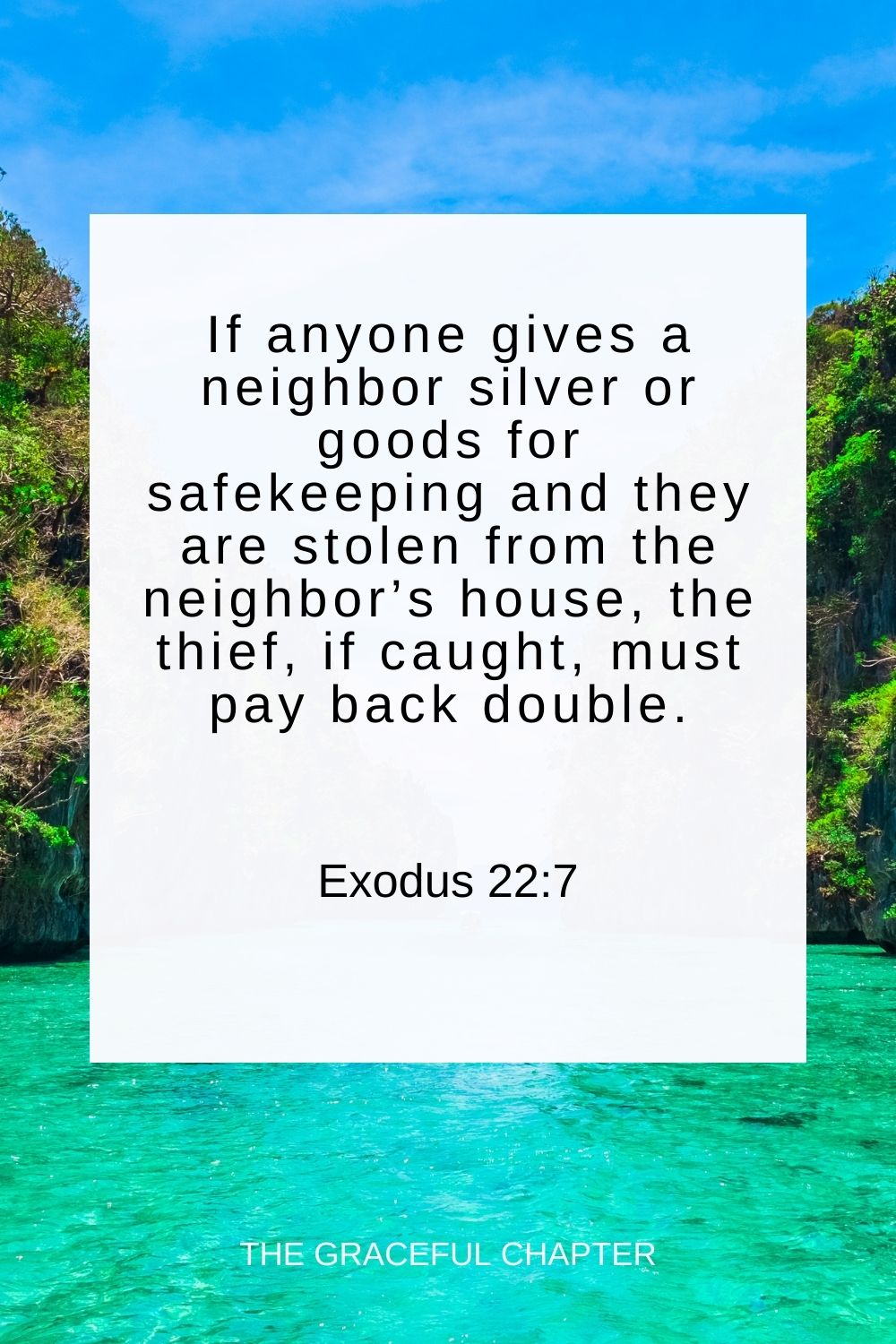
The ROI of Radical Honesty
Ultimately, the prohibition of stealing is a directive toward a more efficient and productive life. When we remove the option of “taking” from our strategy, we are forced to embrace the path of “making.” This shift is where true wealth is found.
Radical honesty in finance leads to a clearer head, more stable relationships, and a business model that can withstand scrutiny. It allows an investor to sleep soundly, knowing that their portfolio is not built on a house of cards. In the final analysis, what spiritual wisdom says about stealing aligns perfectly with the principles of sound money: integrity is the most valuable asset you can own, and it is the only one that cannot be taken from you. By rejecting the shortcut of theft, you open the door to the enduring wealth that comes from honest labor, wise investing, and the pursuit of value.
aViewFromTheCave is a participant in the Amazon Services LLC Associates Program, an affiliate advertising program designed to provide a means for sites to earn advertising fees by advertising and linking to Amazon.com. Amazon, the Amazon logo, AmazonSupply, and the AmazonSupply logo are trademarks of Amazon.com, Inc. or its affiliates. As an Amazon Associate we earn affiliate commissions from qualifying purchases.