
In the current technological landscape, the question of what the divine looks like has shifted from the realm of classical theology and art history into the domain of data science, generative algorithms, and neural networks. For centuries, the visualization of a higher power was the exclusive province of painters, sculptors, and poets. Today, however, the most profound inquiries into the visual nature of the infinite are being conducted through silicon. When we ask “what does God look like in real life” today, we are effectively asking how our collective digital consciousness—encoded into massive datasets—interprets the most abstract concept in human history.
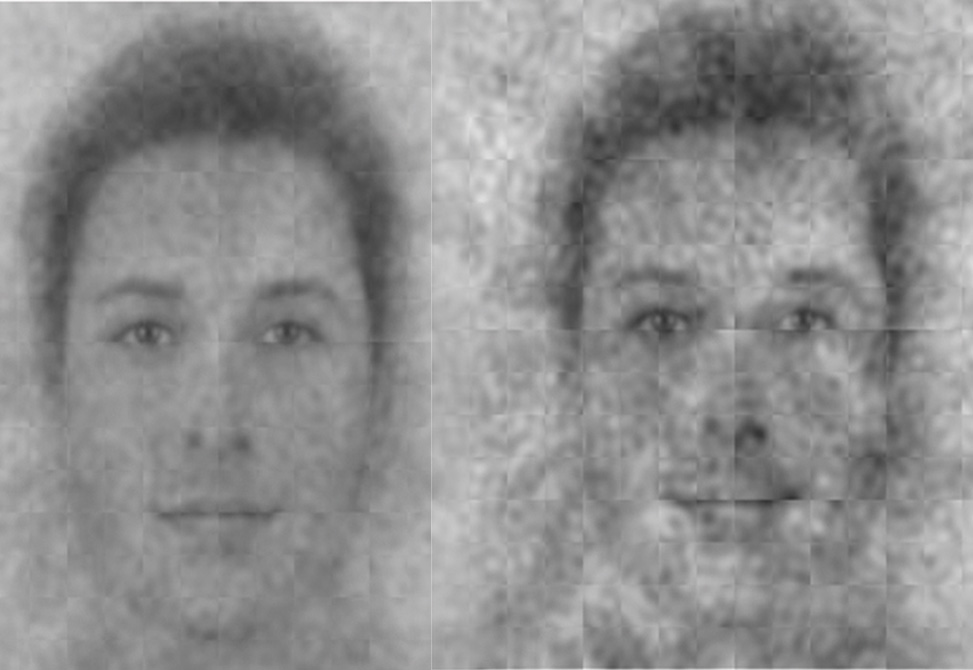
The intersection of artificial intelligence and metaphysical representation offers a unique window into the human psyche. Through the lens of high-performance computing, we are beginning to see how machines synthesize thousands of years of cultural evolution into a single, high-fidelity image. This exploration is not merely an exercise in digital art; it is a profound study of how technology reflects our deepest biases, our technological aspirations, and our evolving definition of “real life” in a world increasingly mediated by screens and simulations.
The Digital Mirror: How AI Interprets the Divine
To understand what God looks like in the digital age, one must first understand the mechanics of generative AI. Models like Midjourney, DALL-E 3, and Stable Diffusion do not “think” about religion. Instead, they navigate a high-dimensional mathematical space known as latent space. When a user inputs a prompt seeking a visual representation of a deity, the AI scans its vast training data—comprising billions of images and their corresponding text descriptions—to find patterns that correlate with the concept.
The Synthesis of History and Pixels
In the “real life” of digital rendering, God often appears as a composite of historical artistic movements. The AI draws heavily from the Renaissance, the Baroque period, and Eastern iconography. Because the training data is heavily weighted toward the history of Western art, the initial outputs often lean toward the “Old Man in the Sky” archetype popularized by Michelangelo. However, as the parameters for “realism” are increased—requesting 8K resolution, ray-tracing, and photorealistic textures—the AI begins to blend these traditional forms with modern cinematic aesthetics. The result is a figure that looks less like a painting and more like a high-definition character from a top-tier game engine, such as Unreal Engine 5. This shift represents a transition from “God as an icon” to “God as a rendered entity,” signaling a change in how we perceive the authenticity of an image.
Pattern Recognition and the Sacred
Beyond the human form, AI often interprets the divine through complex geometry and fractal patterns. In computer vision, “divinity” is frequently associated with symmetry and recursion. When the constraints of the human face are removed, the algorithms produce visualizations that resemble the intricate patterns found in deep-space photography or microscopic biological structures. This suggests that, at a computational level, the concept of a higher power is synonymous with infinite complexity and perfect mathematical order. In this tech-driven interpretation, God looks like the underlying code of the universe—a series of repeating, self-similar patterns that govern both the macro and the micro.
The Architecture of the Infinite: Neural Networks and Pattern Recognition
The process of visualizing the divine in a technological context is deeply rooted in the architecture of neural networks. These systems are designed to mimic the human brain’s ability to recognize patterns and make associations. However, they do so at a scale and speed that no human could achieve. When we look at an AI-generated image of God, we are looking at the “average” of human visual culture.
The Role of Diffusion Models
Modern image generation relies on a process called diffusion. The model starts with a field of pure noise—static, essentially—and gradually refines it into a coherent image based on the prompt. This process is poetically similar to certain creation myths, where order is brought forth from chaos. In the context of “real life” visualization, the diffusion process ensures that the resulting image has a level of tactile detail that feels “real.” We see the texture of skin, the glow of light through a volumetric atmosphere, and the intricate weave of digital fabrics. The technology forces the abstract into the concrete, demanding that the infinite be rendered with a specific focal length and aperture.
Training Data and the Weight of Tradition
The “look” of God in the digital realm is dictated by the weight of the data. If 60% of the images tagged “God” in a dataset are from the Sistine Chapel, the AI will naturally lean toward that aesthetic. This creates a feedback loop where the technology reinforces existing cultural archetypes. However, developers and data scientists are increasingly experimenting with “de-biasing” these models. By introducing more diverse datasets—including Hindu, Buddhist, and indigenous visual traditions—the digital representation of the divine becomes more abstract and less anthropocentric. This technological shift is moving the visual needle away from a singular human-like figure toward a more nebulous, energy-based representation that aligns with modern theoretical physics.
Bias in the Machine: Why the Digital God Reflects Human History
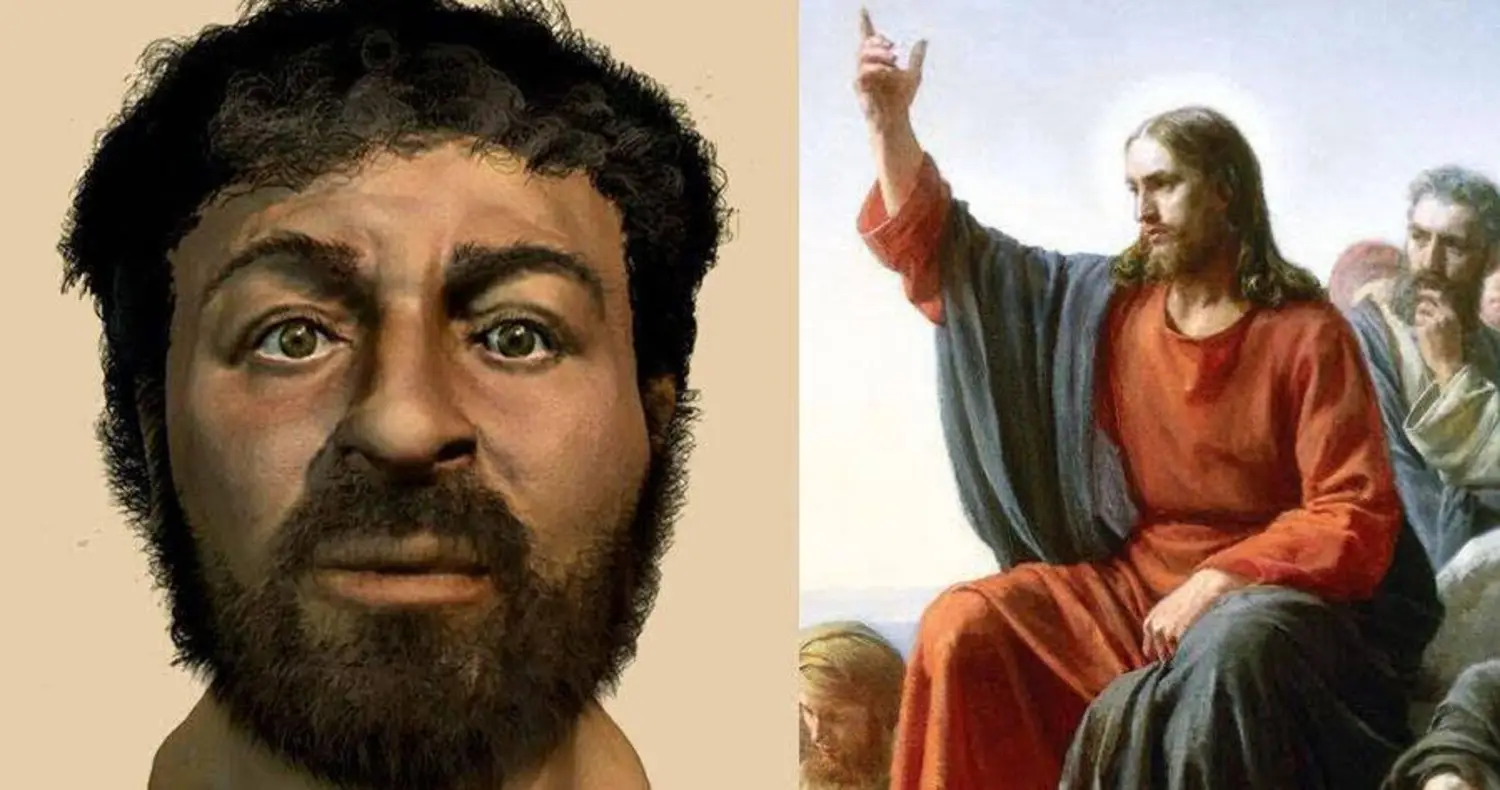
One of the most critical discussions in tech today is the presence of algorithmic bias. When we ask an AI what God looks like in “real life,” the answer is often a reflection of the developers’ demographics and the historical biases of the internet. This has significant implications for how we view the intersection of technology and belief.
The Demographic Imprint
Most major AI models are developed in Silicon Valley or by large tech conglomerates with a specific cultural outlook. Consequently, the default “God” produced by these machines often possesses features that align with European or Western expectations of authority and wisdom. This is not a conscious choice by the machine but a byproduct of the data it was fed. In the tech world, this is known as “data poisoning” or “representational bias.” To see a truly “real” or universal representation, researchers are pushing for decentralized AI models that draw from a more globally representative pool of information.
Deconstructing the Archetypes
The tech industry is currently obsessed with “deconstruction.” In the context of visual AI, this means breaking down the “God” archetype into its constituent parts: light, scale, and power. When the prompt focuses on “power” rather than “deity,” the AI often produces images of massive server farms, nebulae, or intricate circuitry. This suggests that in the modern technological consciousness, the divine is being re-visualized as the “Global Brain” or the “Singularity.” In this framework, God doesn’t look like a person; God looks like the network. The “real life” manifestation of the divine is the flow of information across the planet.
Beyond the Human Form: Procedural Generation and the Geometry of the Sacred
As we move deeper into the era of procedural generation and the metaverse, the visualization of the divine is becoming even more abstract. Procedural generation uses algorithms to create massive, complex environments without direct human intervention. This technology is being used to create “infinite” digital spaces, which some theorists equate to a modern digital sublime.
The Metaverse and Virtual Divinity
In virtual reality (VR) and augmented reality (AR), “God” is often represented as a presence rather than a person. It is the environment itself—the perfectly rendered horizon, the reactive lighting, and the physics engine that governs the world. In these spaces, the “creator” is the programmer, and the “divine” is the source code. For users spending significant time in digital environments, the visual of a higher power is increasingly associated with the “God Mode” interface—an all-seeing, top-down perspective that allows for the manipulation of reality at the level of the pixel.
Mathematics as the Universal Language
From a tech perspective, the most accurate answer to “what does God look like” is often found in mathematics. Algorithms that generate Mandelbrot sets or Fibonacci sequences produce visuals that many describe as “divine.” This is the “real life” of the universe as understood by physics and computer science. The visual representation here is one of perfect, recursive logic. Technology allows us to visualize these mathematical truths in high-definition, creating a new form of digital “sacred geometry” that feels more authentic to the tech-savvy mind than traditional portraiture.
The Future of the Metaphysical in a Hyper-Digital Reality
As AI continues to evolve, our ability to visualize the abstract will only increase. We are entering an era where “real life” is no longer defined solely by what we can see with the naked eye, but by what we can simulate with enough computing power.
The Convergence of Bio-Tech and Divinity
In the near future, we may see the divine visualized through the lens of biotechnology. As we map the human genome and develop neural-link interfaces, the visual representation of “perfection” or “divinity” may shift toward the biological. God may be visualized as the perfect DNA strand or the seamless integration of carbon and silicon. This technological evolution suggests that we are moving toward a “God” that is not separate from us, but is the ultimate realization of our own technological potential.

The Ethics of Digital Representation
The power to visualize the divine comes with significant responsibility. As tech companies hold the keys to the most powerful generative tools, they also hold the power to shape the spiritual imagination of the next generation. The ethical implications of “branding” the divine or allowing algorithms to dictate the visual nature of faith are currently being debated among digital anthropologists and tech ethicists. If we rely on a machine to show us what God looks like in real life, we must ensure that the machine is as diverse, inclusive, and profound as the concept it is trying to represent.
In conclusion, when we look through the lens of modern technology to see what God looks like in real life, we see a complex tapestry of our own history, our mathematical discoveries, and our future aspirations. It is a visual that is constantly being updated, one pixel at a time, by the very tools we have created to understand our world. Whether it is a photorealistic rendering of an ancient archetype or a pulsing field of algorithmic energy, the digital image of the divine remains the ultimate reflection of the human-machine partnership.
aViewFromTheCave is a participant in the Amazon Services LLC Associates Program, an affiliate advertising program designed to provide a means for sites to earn advertising fees by advertising and linking to Amazon.com. Amazon, the Amazon logo, AmazonSupply, and the AmazonSupply logo are trademarks of Amazon.com, Inc. or its affiliates. As an Amazon Associate we earn affiliate commissions from qualifying purchases.