
In the landscape of residential and commercial climate control, forced air heating stands as the most prevalent technological framework in North America. While the term is often used colloquially to describe any system that blows warm air through a vent, its technical definition involves a complex interplay of mechanical engineering, thermodynamics, and increasingly sophisticated digital control systems. At its core, forced air heating is a decentralized method of thermal distribution that utilizes air as the medium for energy transfer, propelled by powerful motorized blowers through a network of specialized conduits.

To understand what forced air heating means in a modern context, one must look beyond the simple furnace. It represents a complete technological ecosystem designed to regulate temperature, humidity, and air quality within a sealed environment. As building science evolves and smart home integration becomes the standard, the technology driving forced air systems has shifted from rudimentary mechanical combustion to high-precision, software-driven climate management.
Understanding the Mechanics: How Forced Air Technology Works
The fundamental principle of forced air heating is the “forced” movement of air across a heat source. Unlike radiant heating, which relies on the natural movement of heat through liquid-filled pipes or electric coils, forced air systems use mechanical energy to circulate thermal energy. This process begins with the return air system, which pulls cooler air from the living space into the central unit.
The Combustion and Heat Exchange Process
In a gas-fired forced air system, the process starts in the combustion chamber. Modern systems utilize electronic ignition—replacing the inefficient standing pilot lights of previous decades—to ignite burners. The resulting flames heat a component known as the heat exchanger. This is a critical piece of engineering; it is a series of metal tubes or chambers that must transfer heat to the surrounding air while keeping toxic combustion byproducts, such as carbon monoxide, completely sealed inside.
Technological advancements in metallurgy have allowed for the development of secondary heat exchangers in high-efficiency furnaces. These secondary exchangers capture latent heat from exhaust gases that would otherwise be vented out of the building, significantly increasing the system’s thermal efficiency. Once the air passing over the exterior of these exchangers reaches the target temperature, the distribution phase begins.
Distribution via Ductwork and Blowers
The “forced” aspect of the system is facilitated by the blower motor. Traditionally, these were simple induction motors that operated at a single speed—either “on” or “off.” However, modern HVAC technology has moved toward Electronically Commutated Motors (ECM). These are brushless DC motors that use built-in electronics to vary their speed. This allows for a “soft start” and more precise control over the volume of air being moved, which reduces noise and increases energy efficiency.
The heated air is pushed into a supply plenum and then distributed through a network of ductwork. This infrastructure must be engineered with specific static pressure requirements in mind; if the ducts are too small or too restrictive, the technology fails to deliver heat effectively, leading to mechanical strain on the blower motor and uneven temperature distribution.
The Evolution of HVAC: From Simple Furnaces to Smart Ecosystems
The definition of forced air heating has expanded significantly with the advent of the Internet of Things (IoT). What was once a standalone mechanical appliance is now a node in a connected digital network. The integration of software into HVAC hardware has transformed how we interact with thermal comfort.
Variable-Speed Motors and Energy Optimization
The shift from single-stage to multi-stage and variable-speed heating represents a major technological leap. In a standard single-stage system, the furnace runs at 100% capacity regardless of whether it needs to raise the temperature by one degree or twenty. This leads to “short-cycling,” which is hard on the hardware and inefficient for the user.
Variable-capacity technology allows the system to communicate with the thermostat to determine the exact amount of heat required. A furnace might run at 40% capacity on a mild day, providing a steady, quiet stream of warmth that maintains a constant temperature. This level of granular control is made possible by sophisticated control boards that manage gas valves and motor speeds in real-time, reflecting a shift from mechanical logic to digital precision.
Integration with IoT and Smart Thermostats
Forced air systems are the primary beneficiaries of smart thermostat technology. Devices like Nest, Ecobee, and proprietary manufacturer controls (such as Carrier’s Infinity or Trane’s ComfortLink) use machine learning algorithms to map the thermal profile of a building. They take into account local weather forecasts, occupancy sensors, and historical data to “predict” when the forced air system should engage.
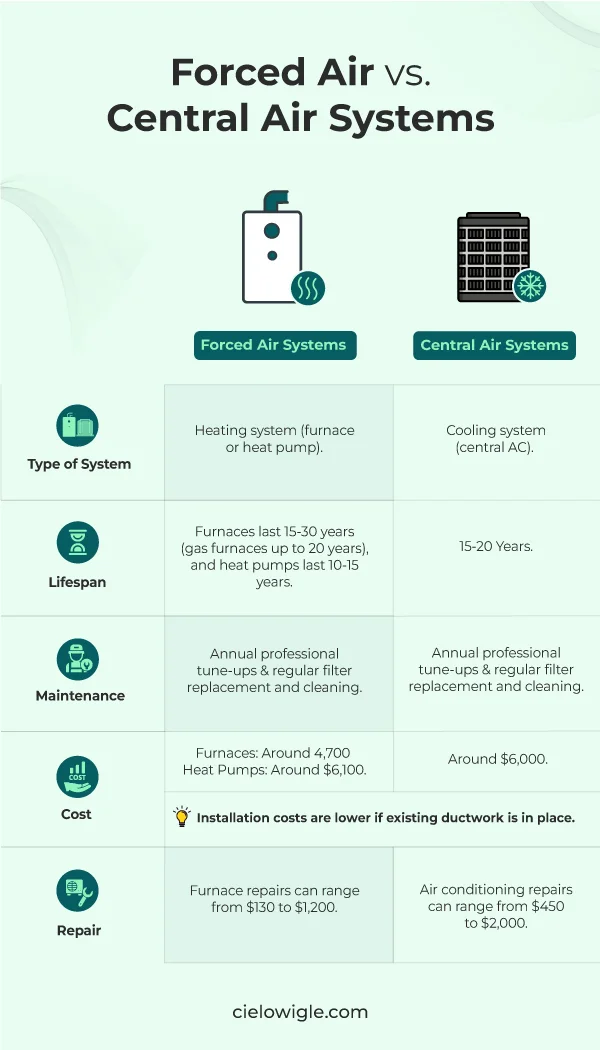
Furthermore, many modern forced air systems feature “communicating” technology. In a traditional setup, the thermostat sends simple 24V signals to tell the furnace to turn on. In a communicating system, the furnace, air conditioner, and thermostat are all connected via a data bus. They share diagnostic information, adjust performance based on internal sensor data, and can even alert a technician via the cloud if a component is nearing failure.
Efficiency Metrics and Technological Standards
When discussing what forced air heating means today, efficiency is the primary metric of technological prowess. The industry standard for measuring this is the Annual Fuel Utilization Efficiency (AFUE) rating.
Decoding AFUE Ratings
The AFUE rating represents the percentage of fuel that is converted into usable heat versus the amount lost through exhaust. A “mid-efficiency” system typically hovers around 80% AFUE, meaning 20 cents of every dollar spent on fuel is wasted. High-efficiency systems, however, utilize condensing technology to achieve ratings of 95% to 98.5%. This is achieved through the aforementioned secondary heat exchanger, which cools the exhaust gases to the point where water vapor condenses, releasing additional heat energy. This process requires specialized drainage systems for the acidic condensate, marking a clear technological distinction from older, non-condensing units.
The Role of Multi-Stage Heating Tech
Beyond fuel conversion, the technology of the burner assembly itself has evolved. Two-stage and modulating gas valves allow the system to adjust the flame size. This technological nuance ensures that the forced air system doesn’t “overshoot” the target temperature. By modulating the input, the system can stay in its most efficient operating range for longer periods, mirroring the “cruise control” function in high-end automotive technology.
Filtration and Air Quality Technology
One of the unique advantages of forced air heating is that it provides a centralized platform for air quality management. Because all the air in a building is periodically cycled through the furnace or air handler, technicians can integrate advanced filtration and purification hardware directly into the stream.
HEPA and UV-C Light Integration
Standard fiberglass filters are designed to protect the mechanical components of the furnace from large dust particles. However, the modern definition of forced air heating often includes High-Efficiency Particulate Air (HEPA) filtration or Media Filters with high MERV (Minimum Efficiency Reporting Value) ratings. These systems use dense physical barriers to trap microscopic allergens, mold spores, and bacteria.
For even more advanced protection, UV-C light technology is often installed within the ductwork or near the evaporator coil. These lamps emit short-wavelength ultraviolet light that disrupts the DNA of airborne pathogens, effectively “scrubbing” the air as the forced air system circulates it. This turns the heating system into a comprehensive environmental defense tool.
Smart Sensors and Humidity Control
Technological integration also extends to humidity. Forced air heating is inherently drying, as the combustion and heating process reduces the relative humidity of the air. Modern “whole-home” humidifiers can be integrated into the forced air plenum, controlled by the central thermostat. These systems use sensors to monitor outdoor temperatures and indoor humidity levels, automatically injecting water vapor into the warm air stream to prevent static electricity, respiratory discomfort, and damage to wood furniture.
The Future of Forced Air: Electrification and Hybrid Systems
As the global tech industry moves toward decarbonization, the definition of forced air heating is shifting toward electrification. The “furnace” is increasingly being replaced or augmented by the “heat pump.”
Heat Pump Integration
Forced air heat pumps represent a significant evolution in HVAC tech. Unlike furnaces that create heat through combustion, heat pumps use electricity to move heat from the outside air into the building using the refrigeration cycle. Even in sub-zero temperatures, there is thermal energy available in the atmosphere. Cold-climate heat pumps utilize variable-speed inverters and advanced refrigerants to provide forced air heating with incredibly high Coefficient of Performance (COP) ratings—often delivering three to four units of heat for every one unit of electricity consumed.

Predictive Maintenance and AI Diagnostics
The next frontier for forced air technology is the application of Artificial Intelligence to system longevity. We are seeing the emergence of sensors that can detect the specific vibration frequencies of a failing motor or the precise pressure drop that indicates a clogged filter. By analyzing this data in the cloud, manufacturers can move from reactive repairs to predictive maintenance. In this future, your forced air system will likely schedule its own tune-up before a human even notices a change in performance.
In conclusion, forced air heating is no longer just a mechanical necessity; it is a sophisticated technological interface that manages the very air we breathe. From the metallurgy of heat exchangers to the AI-driven algorithms of smart thermostats, it represents a pinnacle of residential engineering. Understanding what it means requires an appreciation for the silent, complex digital and mechanical choreography that maintains our modern standard of living.
aViewFromTheCave is a participant in the Amazon Services LLC Associates Program, an affiliate advertising program designed to provide a means for sites to earn advertising fees by advertising and linking to Amazon.com. Amazon, the Amazon logo, AmazonSupply, and the AmazonSupply logo are trademarks of Amazon.com, Inc. or its affiliates. As an Amazon Associate we earn affiliate commissions from qualifying purchases.