
In the rapidly evolving landscape of modern technology, acronyms often serve as the shorthand for complex innovations that reshape how we manufacture goods and transmit information. When asking “what does FDM stand for,” the answer typically leads to two distinct yet equally transformative fields: additive manufacturing and telecommunications. Most commonly, FDM stands for Fused Deposition Modeling, the cornerstone of the 3D printing revolution. In the context of networking and signal processing, however, it stands for Frequency Division Multiplexing.
Understanding these terms is essential for anyone navigating the tech sector, whether you are a hardware engineer, a digital strategist, or a hobbyist. This article explores both definitions, with a primary focus on the mechanical and material science behind Fused Deposition Modeling, while providing technical context for its role in data transmission.

FDM in 3D Printing: Fused Deposition Modeling
Fused Deposition Modeling (FDM) is an additive manufacturing technology that builds parts layer-by-layer by melting and extruding thermoplastic filament. Originally developed and trademarked by S. Scott Crump, the founder of Stratasys, in the late 1980s, the technology has since become the most widely used form of 3D printing globally. While the term “FDM” is a trademark of Stratasys, the open-source community often refers to the same process as Fused Filament Fabrication (FFF) to avoid legal entanglements, though the terms are functionally interchangeable in the tech industry.
The Extrusion Process
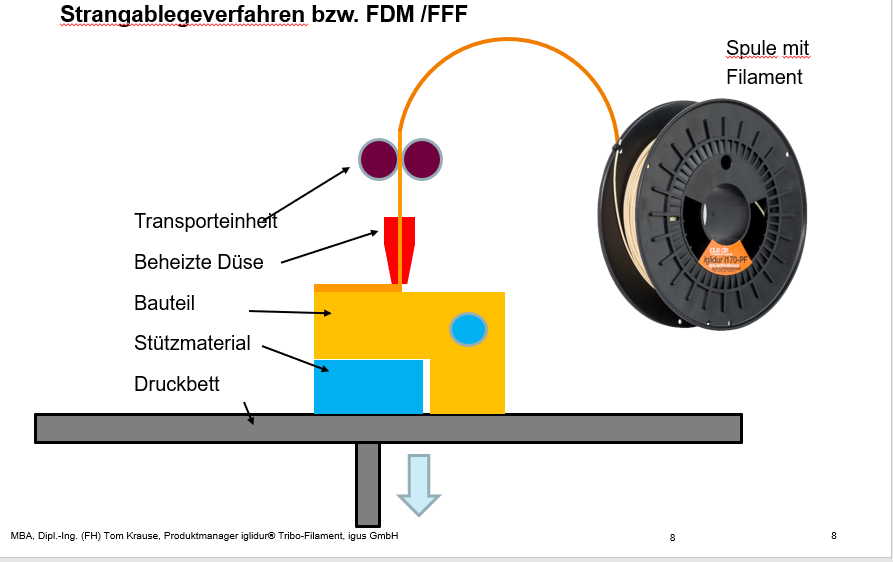
The core of FDM technology lies in the extrusion system. The process begins with a spool of thermoplastic filament, which is fed into a print head by a geared motor known as an extruder. Within the print head, the material passes through a “cold end” before entering a “hot end,” where a heater block raises the temperature of the plastic above its melting point.
Once liquefied, the plastic is forced through a precision nozzle—typically ranging from 0.2mm to 0.8mm in diameter. The printer’s motion system moves the print head along the X and Y axes, depositing a thin bead of molten plastic onto a build plate. As the material leaves the nozzle, it quickly cools and solidifies, bonding with the layer beneath it. Once a layer is complete, the build plate moves down (or the print head moves up) along the Z-axis, and the process repeats until the three-dimensional object is finished.
Precision and Slicing Software
FDM printing is governed by “slicing” software. Before a physical object can be created, a digital 3D model (usually in STL or OBJ format) must be processed by a slicer. This software breaks the model down into individual horizontal layers and generates G-code—the programming language that tells the printer where to move, how fast to extrude, and what temperatures to maintain. Key parameters such as layer height, infill density, and print speed are determined at this stage, directly impacting the final part’s strength, surface finish, and production time.
The Technical Architecture of FDM Printing
To appreciate the “Tech” niche of FDM, one must look at the sophisticated hardware that allows for high-precision manufacturing. The reliability of an FDM system depends on several critical components working in perfect synchronization.
Motion Systems: Cartesian vs. CoreXY
Most desktop FDM printers utilize a Cartesian motion system, where separate motors control the X, Y, and Z movements independently. However, more advanced high-speed printers often employ a CoreXY architecture. In a CoreXY system, two stationary motors work in tandem to move the print head across the XY plane using a complex belt arrangement. This reduces the moving mass of the gantry, allowing for significantly higher print speeds without the ghosting or ringing artifacts that plague slower machines.
The Role of the Build Plate
The build plate, or “bed,” is more than just a surface; it is a critical component for thermal management. Most professional FDM printers use heated beds to maintain a consistent temperature at the base of the part. This prevents “warping,” a common defect where the plastic contracts as it cools, causing the edges of the print to lift or peel away from the surface. Surface materials like PEI (Polyetherimide) or glass are frequently used to ensure the first layer adheres perfectly while allowing for easy removal once the part has cooled.
Sensors and Automation
Modern FDM machines have integrated a variety of AI-driven sensors to improve reliability. Filament run-out sensors detect when a spool is empty, pausing the print to prevent failure. Automatic Bed Leveling (ABL) systems use inductive or capacitive probes to map the microscopic irregularities of the build plate, adjusting the Z-axis height in real-time to ensure the nozzle remains at the perfect distance from the surface. More recently, LIDAR and camera-based AI systems have been introduced to scan the first layer for defects, automatically halting prints if “spaghetti” or adhesion issues are detected.
Material Science: The Lifeblood of FDM
The versatility of Fused Deposition Modeling is largely due to the vast array of thermoplastic filaments available. Unlike other 3D printing methods that rely on liquid resins or powders, FDM can utilize industrial-grade polymers that offer a wide range of mechanical properties.
Standard Thermoplastics: PLA and PETG
- PLA (Polylactic Acid): Derived from renewable resources like corn starch, PLA is the most popular FDM material. It is easy to print, requires no heated bed, and produces high-detail parts. However, its low heat resistance makes it unsuitable for functional mechanical parts in high-temperature environments.
- PETG (Polyethylene Terephthalate Glycol): Known for its balance of ease of use and durability, PETG is the “workhorse” of the FDM world. It offers excellent chemical resistance and higher thermal stability than PLA, making it ideal for functional prototypes and outdoor components.
Engineering-Grade Materials: ABS, ASA, and Nylon
- ABS (Acrylonitrile Butadiene Styrene): A classic industrial plastic known for its impact resistance. Printing with ABS requires an enclosed chamber to manage fumes and prevent warping.
- ASA (Acrylonitrile Styrene Acrylate): Similar to ABS but with high UV resistance, making it the go-to choice for automotive and outdoor applications.
- Nylon (Polyamide): Extremely tough and abrasion-resistant, Nylon is used for gears, bearings, and living hinges. It is hygroscopic, meaning it absorbs moisture from the air, requiring specialized drying equipment to ensure print quality.
High-Performance Polymers and Composites
For aerospace and medical applications, FDM printers can now process high-performance plastics like PEEK (Polyether ether ketone) and PEI (Ultem). These materials offer strength-to-weight ratios comparable to some metals and can withstand extreme temperatures. Additionally, “filled” filaments—thermoplastics infused with carbon fiber, glass fiber, or metal powders—allow for the creation of parts with enhanced rigidity or aesthetic properties.
FDM in Telecommunications: Frequency Division Multiplexing
While 3D printing dominates the modern search for “FDM,” the term has an older and equally vital definition in the world of digital security and networking: Frequency Division Multiplexing. This technology is a method of transmitting multiple signals simultaneously over a single medium, such as a copper wire, fiber optic cable, or radio wave.
How Signal Multiplexing Works
In FDM, the available bandwidth of a communication channel is divided into several non-overlapping frequency bands. Each band is then used to carry a separate signal. For example, in a traditional cable television system, multiple channels are transmitted through a single coaxial cable. Each channel is assigned a specific frequency range; the receiver (the TV or set-top box) then tunes into the specific frequency to isolate the desired signal.
Guards and Overlaps
To prevent “crosstalk” or interference between the different signals, FDM utilizes “guard bands”—narrow frequency ranges that remain unused. These act as buffers between the active channels. While this ensures high-quality signal transmission, it can be less efficient than modern alternatives like Time Division Multiplexing (TDM) or Orthogonal Frequency Division Multiplexing (OFDM), the latter of which is the backbone of 5G and Wi-Fi technology.
Modern Applications
Although it is a legacy technology, FDM principles are still found in DSL internet connections and satellite communications. In these systems, upstream and downstream data are often separated into different frequency bands to allow for simultaneous two-way communication without interference.
Choosing the Right FDM Strategy for Innovation
Whether you are looking at FDM through the lens of manufacturing or networking, the underlying theme is one of efficiency and accessibility. In the realm of technology trends, FDM (Fused Deposition Modeling) has democratized manufacturing. It has shifted the paradigm from “Design for Manufacturing” to “Distributed Manufacturing.”
Rapid Prototyping vs. End-Use Parts
The primary advantage of FDM in a tech environment is the speed of iteration. Engineers can design a component in CAD, print it overnight, and test its fit and function the next morning. This “fail fast” mentality accelerates the product development cycle significantly. While FDM was once relegated to rough prototypes, advancements in nozzle technology and material science now allow for the production of end-use parts, such as custom drone frames, medical device housings, and specialized tools for assembly lines.

The Future: AI and Sustainability
The future of FDM is being shaped by two major tech trends: artificial intelligence and sustainability. AI-driven slicers are becoming better at optimizing internal support structures, reducing material waste while maintaining structural integrity. Simultaneously, there is a massive push toward circular economies within the FDM ecosystem. Recycled filaments, made from post-industrial waste or recycled PET bottles, are becoming high-performance alternatives to virgin plastics.
In conclusion, “FDM” stands as a testament to the dual nature of modern technology—bridging the gap between the physical world of additive manufacturing and the invisible world of data transmission. Whether you are extruding high-performance polymers to build the next generation of aerospace components or managing bandwidth frequencies for global communications, understanding the mechanics of FDM is a prerequisite for technical mastery in the 21st century.
aViewFromTheCave is a participant in the Amazon Services LLC Associates Program, an affiliate advertising program designed to provide a means for sites to earn advertising fees by advertising and linking to Amazon.com. Amazon, the Amazon logo, AmazonSupply, and the AmazonSupply logo are trademarks of Amazon.com, Inc. or its affiliates. As an Amazon Associate we earn affiliate commissions from qualifying purchases.