
In the landscape of modern digital research, efficiency is the primary currency. Whether you are a software developer documenting a new API, a data scientist publishing a white paper on neural networks, or a student utilizing AI-powered research assistants, you have likely encountered the term “et al.” While it originates from classical Latin, its application today is deeply embedded in the algorithms of citation management software and digital publishing platforms. Understanding what “et al” means is not just a lesson in linguistics; it is a fundamental requirement for navigating the technical workflows of academic and professional documentation.

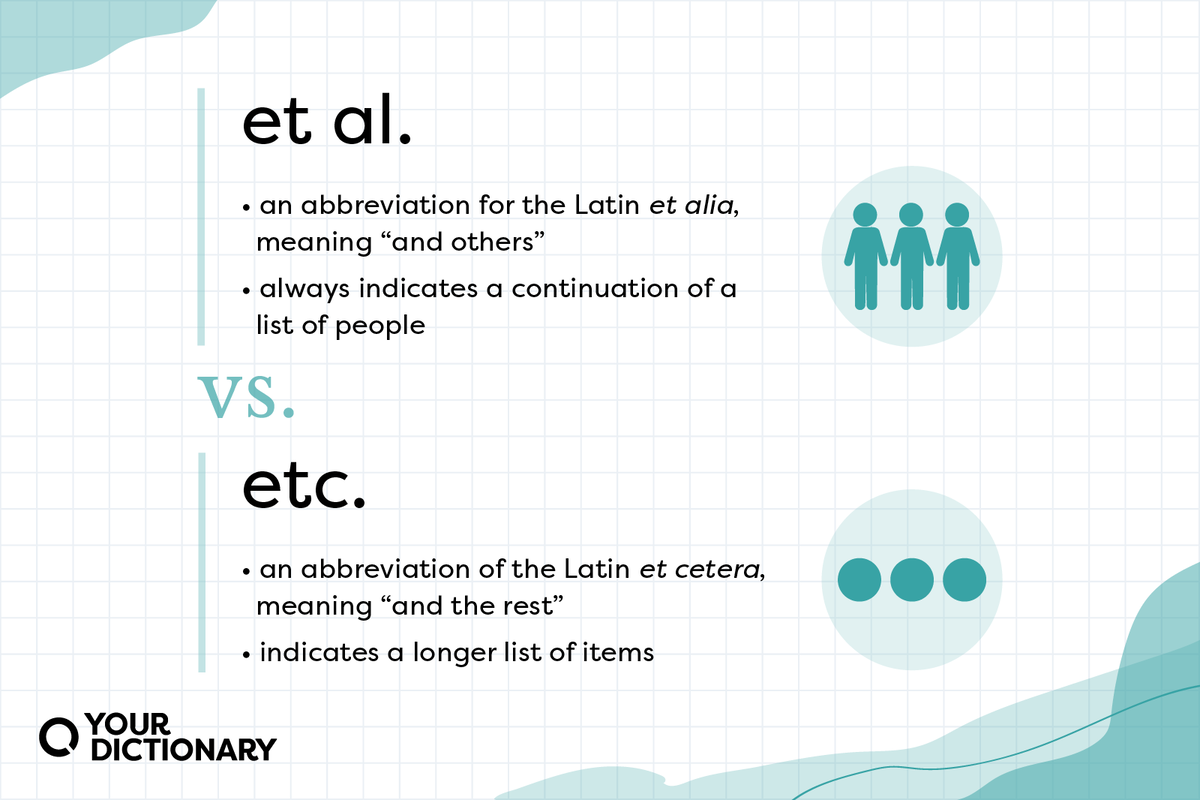
The term “et al” is an abbreviation of the Latin phrase et alii, which translates literally to “and others.” In the context of a citation, it serves as a technical shorthand used to simplify references to works created by multiple authors. As collaborative projects in technology and science grow in complexity—sometimes involving dozens or even hundreds of contributors—the “et al” convention ensures that citations remain functional, readable, and compatible with the limited real estate of digital interfaces.
The Mechanics of Et Al: How Digital Databases Parse Multiple Authors
The shift from physical libraries to digital repositories has transformed “et al” from a stylistic choice into a programmatic necessity. When a citation management tool like Zotero or Mendeley imports metadata from a digital object identifier (DOI), it must decide how to display that information in a way that balances attribution with clarity.
The Latin Roots and Technical Logic
“Et al” is unique because it is plural. In professional documentation, it is used only when a work has three or more authors (though this threshold varies by style guide). From a database perspective, the “et al” tag functions as a truncation command. Instead of a software system pulling twenty distinct strings of text representing twenty different names, the system pulls the first author’s name followed by the “et al” variable.
It is important to note the punctuation: “et” is a complete word, while “al.” is an abbreviation. Therefore, in any software-generated bibliography, the period must follow “al” to signal to the reader (and the parsing engine) that the list has been shortened. In the world of digital security and technical writing, precision in these small details reflects the overall integrity of the documentation.
Automation and Metadata Extraction
Modern research apps use web scrapers to identify “et al” triggers. When you use a browser extension to save a research paper on machine learning, the software looks for the “author” field in the website’s HTML metadata. If the array of authors exceeds the limit defined by your selected style (such as APA or IEEE), the software automatically generates the “et al” suffix. This automation prevents the “wall of text” phenomenon that occurs when large collaborative teams, such as those at CERN or OpenAI, publish findings.
Streamlining Scholarly Workflows: AI Tools and Citation Management
As AI tools become integrated into the writing process, the management of “et al” has moved from manual entry to automated logic. For tech-savvy professionals, using the right software to handle these citations is essential for maintaining a streamlined workflow.
AI-Powered Citation Assistants
Newer AI-driven platforms like Perplexity AI or Elicit.org analyze thousands of papers to provide synthesized answers to technical queries. When these tools provide a citation, they frequently use “et al” to cite the primary source. The underlying technology relies on Natural Language Processing (NLP) to identify the lead researcher. For a user, understanding that “et al” signifies a broader team of experts behind the lead name is crucial for verifying the credibility of the information provided by the AI.
Popular Software Solutions for “Et Al” Management
Several high-level software tools have become the industry standard for managing the “et al” convention:
- Zotero: An open-source tool that allows users to create libraries of sources. It uses “Citation Style Language” (CSL) files to determine exactly when to flip from listing all authors to using “et al.”
- Mendeley: Owned by Elsevier, this tool is excellent for managing PDF metadata. It automatically detects when a paper has multiple authors and applies the “et al” rule based on the specific requirements of the journal you are submitting to.
- EndNote: A robust choice for corporate and large-scale academic environments. EndNote allows for advanced customization of “et al” settings, which is vital for technical fields where the first six authors might need to be listed before the abbreviation is used.
By utilizing these apps, researchers can focus on the content of their work rather than the minutiae of formatting. The software handles the “if/then” logic: if author count > 2, then append “et al.”
Digital Style Guides and Algorithms: APA, MLA, and IEEE
The “et al” rule is not universal; it is governed by specific algorithms known as style guides. In the tech sector, different niches prefer different guides, and your software must be configured correctly to match.
The APA 7th Edition Revolution
The American Psychological Association (APA) style is frequently used in the social sciences and business technology. In its 7th edition, the APA simplified the “et al” rule significantly for digital users. Now, any work with three or more authors is cited as (First Author et al., Year) from the very first mention. Previously, software had to track whether a source had been mentioned before—a nightmare for version control in collaborative documents. The shift to a consistent “et al” rule has made it much easier for AI writing tools to generate accurate citations on the first pass.
IEEE and MLA for Technical Documentation
In engineering and computer science, the IEEE (Institute of Electrical and Electronics Engineers) style is the standard. IEEE uses a numeric system (e.g., [1]), but when the author’s name is mentioned in the text, the “et al” rule applies for three or more authors. Meanwhile, the MLA (Modern Language Association) style, often used in digital humanities, requires “et al” for any source with three or more authors as well.
The primary challenge for developers and researchers is ensuring that their citation software’s “plugin” is up to date. A common bug in older citation software is the failure to recognize the 7th edition APA rules, leading to “et al” being applied incorrectly. Keeping your digital tools updated is as important for your citations as it is for your operating system.
The Future of Attribution: Beyond “Et Al” in the Age of Big Data
As we move further into the era of big data and hyper-authorship, the traditional “et al” convention is facing new challenges. In some fields of high-energy physics or genomic mapping, papers can have over 1,000 authors.
The Rise of ORCID and Digital Identities
Because “et al” hides the names of many contributors, the tech community has pushed for better ways to track individual contributions. ORCID (Open Researcher and Contributor ID) provides a persistent digital identifier that distinguishes researchers. While a paper might use “et al” in the text for readability, the underlying XML metadata links every single author to their ORCID profile. This ensures that even if you are relegated to the “et al” in a printed citation, your digital footprint remains intact and searchable by search engines and academic crawlers.
Hyper-authorship and Software Limitations
We are seeing the emergence of “hyper-authorship,” where the number of authors is so large that traditional citation software struggles to process the bibliographic entry. Some journals are experimenting with “collaborative aliases” (e.g., The Apple Engineering Team et al.), but the “et al” remains the primary tool for keeping technical documentation concise.
In the future, we may see “smart citations” where hovering over an “et al” in a digital document reveals a full list of contributors, their specific roles in the project, and links to their GitHub repositories or LinkedIn profiles. This evolution would turn a static Latin abbreviation into a dynamic gateway to a network of professionals.

Conclusion: Why “Et Al” Matters in Your Digital Toolkit
In the fast-paced world of technology and digital research, “et al” is more than a grammatical quirk. It is a vital component of the metadata ecosystem that allows us to manage an ever-growing sea of information. By understanding how to use “et al” correctly—and more importantly, how to leverage software to manage it for you—you ensure that your technical writing is professional, your citations are accurate, and your workflow is optimized for the modern age.
Whether you are configuring a citation manager, fine-tuning an AI prompt for research, or proofreading a technical manual, remember that “et al” represents the collaborative spirit of the tech community. It acknowledges that while one name may lead the list, the work is the result of a collective effort, efficiently packaged for the digital reader.
aViewFromTheCave is a participant in the Amazon Services LLC Associates Program, an affiliate advertising program designed to provide a means for sites to earn advertising fees by advertising and linking to Amazon.com. Amazon, the Amazon logo, AmazonSupply, and the AmazonSupply logo are trademarks of Amazon.com, Inc. or its affiliates. As an Amazon Associate we earn affiliate commissions from qualifying purchases.