
When the term “open carry state” is discussed, the conversation usually gravitates toward constitutional law, personal rights, or public safety. However, for investors, business owners, and individuals living within these jurisdictions, the designation carries significant financial implications. In a purely economic sense, an open carry state is a region where the regulatory framework allows for the visible carrying of firearms in public, either with or without a permit. This environment creates a unique set of fiscal responsibilities, market opportunities, and risk management challenges that differ sharply from states with more restrictive concealed-only or “may-issue” policies.

To understand what an open carry state means from a financial perspective, one must look past the holster and examine the balance sheets of local businesses, the insurance premiums of private citizens, and the broader investment landscape of the firearms and security industries.
The Microeconomics of Self-Defense: Individual Financial Risks and Protections
For the individual resident of an open carry state, the decision to carry a firearm openly is not merely a lifestyle choice; it is a financial commitment. The immediate costs are obvious—the purchase of the firearm, ammunition, and gear—but the long-term financial architecture of being a gun owner in an open carry jurisdiction involves complex risk mitigation strategies.
Liability Insurance and Legal Defense Funds
In an open carry state, the visibility of a firearm can lead to a higher frequency of interactions with law enforcement or private citizens, which in turn increases the potential for legal complications. This has given rise to a robust market for self-defense liability insurance. For a monthly premium, companies provide legal defense funds that cover attorney fees, expert witness testimony, and civil damages.
From a personal finance standpoint, carrying in an open carry state without this specialized insurance is often viewed by financial advisors as a massive “unhedged risk.” A single legal encounter, even if the individual is completely exonerated, can cost tens of thousands of dollars in retainer fees. Consequently, the “open carry” status of a state directly fuels the growth of the insurance tech and legal service sectors, as residents seek to protect their assets from the high costs of the American legal system.
The Hidden Costs of Firearm Ownership and Maintenance
Beyond insurance, the open carry designation impacts the consumer economy through the demand for high-end retention gear and maintenance services. Because open carry requires specific types of holsters to prevent unauthorized access (Level II or Level III retention), the per-capita spending on firearm accessories tends to be higher in these states. This creates a localized “gear economy” that supports small businesses, specialized manufacturers, and training facilities. Training, in particular, becomes a significant recurring expense, as carriers invest in professional instruction to mitigate the financial risk of accidental discharge or tactical errors.
Business Liability and Operational Expenses in Open Carry Jurisdictions
For business owners, operating in an open carry state requires a sophisticated approach to risk management and brand positioning. The financial implications are twofold: the cost of physical security and the potential impact on commercial insurance premiums.
Navigating Commercial Insurance Premiums
Insurance underwriters are in the business of calculating risk, and the presence of firearms on a commercial property is a variable they scrutinize heavily. In open carry states, businesses must decide whether to permit or prohibit firearms on their premises. This decision is rarely just political; it is often fiscal.
If a business allows open carry, their general liability insurance provider may adjust premiums based on the perceived increase in “attractive nuisance” or the risk of workplace violence. Conversely, some insurers in these states have adapted to the local culture and offer specialized riders for businesses that respect carry rights. The financial department of any mid-to-large scale enterprise in an open carry state must conduct a cost-benefit analysis of these policies, weighing the risk of a lawsuit against the potential loss of a customer base that values carry rights.
Implementing Security Infrastructure and Signage
In many open carry states, the law requires specific signage for a business to legally prohibit firearms on its property. For a multi-state corporation, this creates a logistical and financial burden of compliance. They must ensure that every storefront in an open carry state has the correct legal verbiage and formatting to be enforceable. Failure to do so can lead to legal disputes that drain corporate resources.
Furthermore, businesses in these states often invest more in “de-escalation” training for their staff. From a management perspective, this is a human resources expense. Training employees on how to interact with an openly armed customer without escalating a situation is a necessary investment to prevent incidents that could lead to massive civil liability or brand damage.
Real Estate and Local Economic Impacts
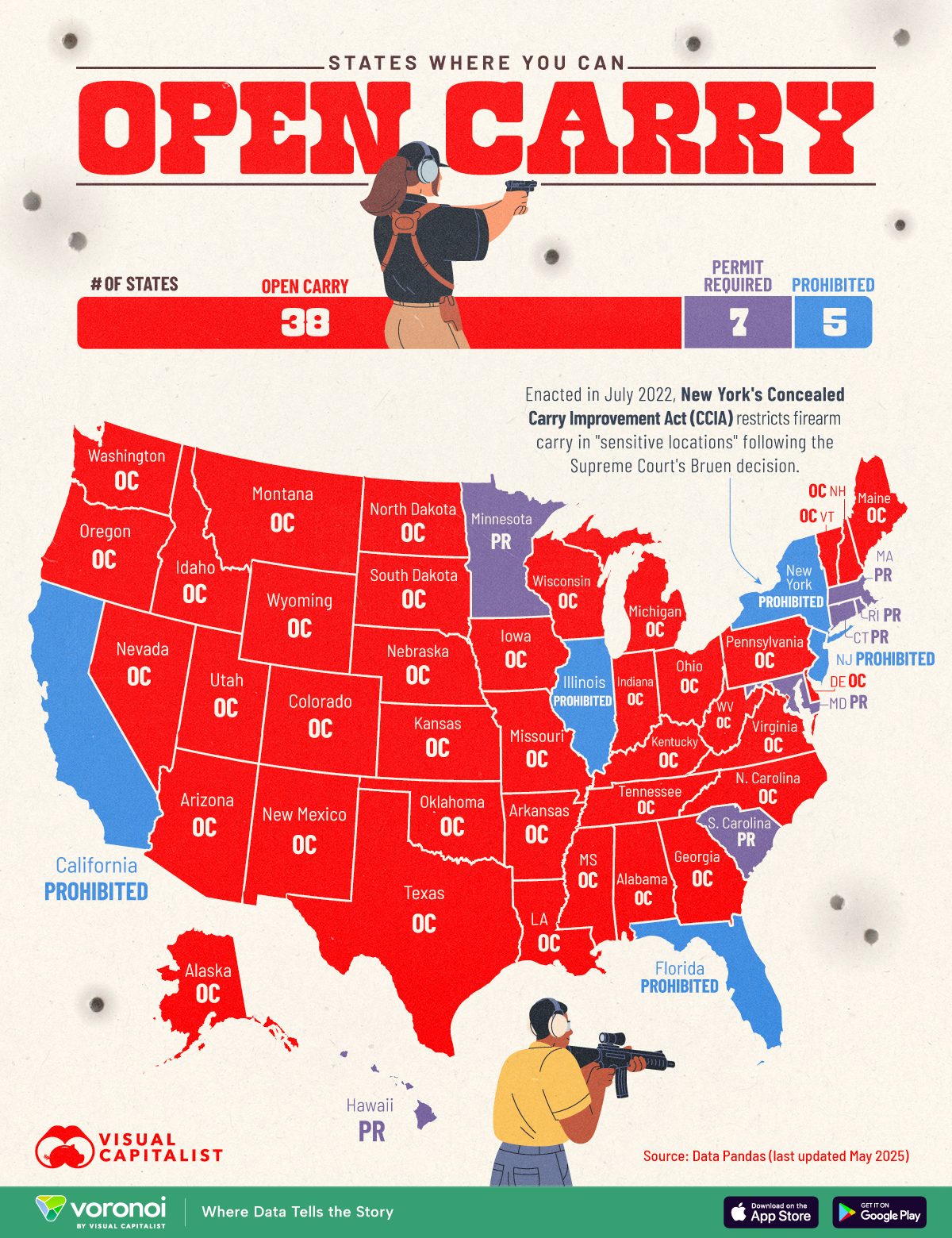
The legislative environment of a state, including its firearm laws, plays a subtle but measurable role in its broader economic health, impacting everything from property values to tourism revenue.
Property Values and Community Perception
There is an ongoing debate among economists regarding the correlation between “carry” laws and property values. In some markets, an open carry status is viewed as a hallmark of a “freedom-oriented” state, which can attract high-net-worth individuals and businesses looking for a deregulated environment. This influx of capital can drive up demand for residential and commercial real estate.
However, in high-density urban centers within open carry states, the visibility of firearms can sometimes be perceived as a deterrent to luxury retail development or high-end residential growth. Developers must navigate these perceptions when choosing where to break ground. The financial “meaning” of an open carry state in this context is found in the “perception premium”—how much more or less an investor is willing to pay for a property based on the perceived safety and social climate of the jurisdiction.
Tourism and Hospitality Revenue Shifts
The hospitality industry is particularly sensitive to carry laws. Convention centers and hotel chains often have to navigate the financial fallout of state laws that clash with the corporate policies of their clients. For instance, if a major tech company wants to host a conference in an open carry state but has a strict “no weapons” corporate policy, the hotel must provide enhanced private security to bridge that gap.
This creates a niche market for private security firms. In open carry states, the private security sector is often more robust, as businesses seek to provide a “managed environment” for visitors who may be uncomfortable with the state’s default carry laws. This represent a shift in capital from public law enforcement reliance to private security expenditures.
Investment Opportunities and Market Trends in the Firearms Industry
From an investment perspective, an open carry state represents a stable and predictable market for the firearms and ammunition industries. When a state moves toward more permissive carry laws, it typically triggers a “demand spike” that benefits shareholders of publicly traded manufacturers.
Publicly Traded Manufacturers and Supply Chain Resilience
Companies such as Smith & Wesson (SWBI) and Sturm, Ruger & Co. (RGR) see direct impacts from state-level legislation. An open carry state provides a favorable “macro” environment for these companies, as it reduces the legal barriers to product use. Investors often look at the “state-level map” of carry laws to determine the total addressable market (TAM) for new product lines, particularly for full-sized handguns that are more suitable for open carry than compact models designed for concealment.
Furthermore, the supply chain for ammunition and accessories is often more resilient in these states. Localized demand keeps inventory moving, and the lack of restrictive “sales permits” or high “ammunition taxes” found in other states ensures that the velocity of money within the firearms sector remains high.
The Growth of the Training and Compliance Sector
One of the most significant financial shifts in open carry states is the professionalization of the “civilian tactical” market. This is a multi-billion dollar industry comprising training academies, digital compliance tools, and legal apps. Apps that provide real-time updates on carry reciprocity and local ordinances are essential for the modern carrier.
For the venture capitalist or the retail investor, the “open carry state” is a signal of a mature market for these services. As more states adopt “Constitutional Carry” (which often includes open carry), the demand for high-quality, professional training increases because the “barrier to entry” for carrying has been lowered, leading to a surge of new, inexperienced owners who need to be educated to avoid financial and legal ruin.

Strategic Financial Planning for Life in an Open Carry State
Ultimately, what an open carry state means is a shift in the “burden of risk.” In more restrictive states, the state takes on more of the burden of “protection” through regulation, but also limits the individual’s options. In an open carry state, the individual and the business owner have more freedom, but they also inherit a greater share of the financial risk.
Strategic financial planning in this environment involves:
- Asset Protection: Utilizing trusts and liability insurance to shield personal wealth from potential civil litigation related to firearm use.
- Insurance Optimization: Reviewing homeowners and commercial policies to ensure coverage is not voided by the presence of firearms.
- Capital Allocation: For businesses, allocating funds toward training and signage to maintain a safe and profitable environment.
- Market Awareness: For investors, understanding how state-level carry laws act as a leading indicator for the performance of the defense and outdoor retail sectors.
An open carry state is more than just a place where guns are visible; it is an economic ecosystem defined by specialized insurance, unique business liabilities, and a specific set of market drivers that reward those who understand the financial gravity of the law.
aViewFromTheCave is a participant in the Amazon Services LLC Associates Program, an affiliate advertising program designed to provide a means for sites to earn advertising fees by advertising and linking to Amazon.com. Amazon, the Amazon logo, AmazonSupply, and the AmazonSupply logo are trademarks of Amazon.com, Inc. or its affiliates. As an Amazon Associate we earn affiliate commissions from qualifying purchases.