
In the landscape of modern media, SiriusXM stands as a unique titan, bridging the gap between traditional broadcast radio and modern digital streaming. Unlike terrestrial radio, which relies on local towers and frequency modulation (FM) or amplitude modulation (AM), SiriusXM is a sophisticated telecommunications platform that utilizes a network of satellites and high-bandwidth internet protocols to deliver audio content across North America. To understand what SiriusXM is today, one must look past the variety of its content and examine the robust technological infrastructure that powers its delivery, the hardware that decodes its signals, and the digital transformation it has undergone to remain relevant in a data-driven world.
The Evolution of Audio Transmission: From Orbital Satellites to IP-Based Streaming
At its core, SiriusXM is a broadcasting service that operates on a hybrid delivery model. While many consumers interact with it through a smartphone app, its technological foundation is rooted in space.
The Mechanics of Satellite Radio
The primary differentiator for SiriusXM is its use of S-band satellite spectrum (2.3 GHz). The company operates a constellation of satellites in geostationary orbit (GEO). These satellites transmit digital signals directly to proprietary receivers. The advantage of this tech stack is coverage: a single satellite can provide a footprint that covers the entire contiguous United States, parts of Canada, and coastal waters. This ensures a seamless audio experience for users traveling long distances, where terrestrial signals would typically fade or vanish.
To overcome “signal shadows”—areas where line-of-sight to the satellite is blocked by skyscrapers, tunnels, or mountains—SiriusXM employs a network of terrestrial repeaters. These ground-based stations receive the satellite signal and re-broadcast it at a higher power within urban environments, creating a resilient “mesh” of coverage that ensures high availability and minimal latency.
Transitioning to IP-Based Streaming
While satellite remains the backbone for automotive use, SiriusXM has aggressively transitioned into an Internet Protocol (IP) based service. This shift moved the platform from a “one-way” broadcast medium to a “two-way” interactive experience. The streaming architecture utilizes adaptive bitrate technology, similar to services like Netflix or Spotify. This allows the software to adjust audio quality in real-time based on the user’s bandwidth, ensuring that the stream does not buffer even in areas with fluctuating 4G or 5G signals.
Hybrid Solutions and the 360L Platform
The pinnacle of SiriusXM’s current tech evolution is the “360L” platform. This is a hybrid hardware-software solution integrated into modern vehicles. It combines the reliability of satellite delivery with the interactive features of cellular data. If a driver is in a tunnel, the system can seamlessly switch from satellite to data. Furthermore, 360L allows for “on-demand” content and personalized recommendations, features that were previously impossible with traditional satellite-only hardware.
Hardware Integration and the User Ecosystem
The hardware required to decode a SiriusXM signal is significantly more complex than a standard FM tuner. It involves specialized chipsets capable of decrypting proprietary data streams and managing digital rights management (DRM) protocols.
In-Dash Integration and OEM Partnerships
The most common way users interact with SiriusXM tech is through Original Equipment Manufacturer (OEM) integrations. SiriusXM works directly with automotive engineers to embed receivers into the vehicle’s head unit. These systems are optimized for the vehicle’s specific antenna array. Because the hardware is integrated into the vehicle’s Controller Area Network (CAN bus), the radio can display metadata such as album art, artist bios, and real-time traffic or weather overlays directly on the dashboard display.
Aftermarket Solutions and Portable Receivers
For older vehicles or specialized use cases (such as aviation or maritime), SiriusXM offers aftermarket hardware. These devices, like the Onyx or Tour series, are standalone receivers that plug into existing audio systems. The technology inside these units has shrunk significantly over the last decade. Early receivers were bulky and required external, magnetic-mount antennas; modern units feature high-resolution touchscreens and built-in Wi-Fi for software updates and additional content delivery.
The Mobile App Experience and UI/UX Design
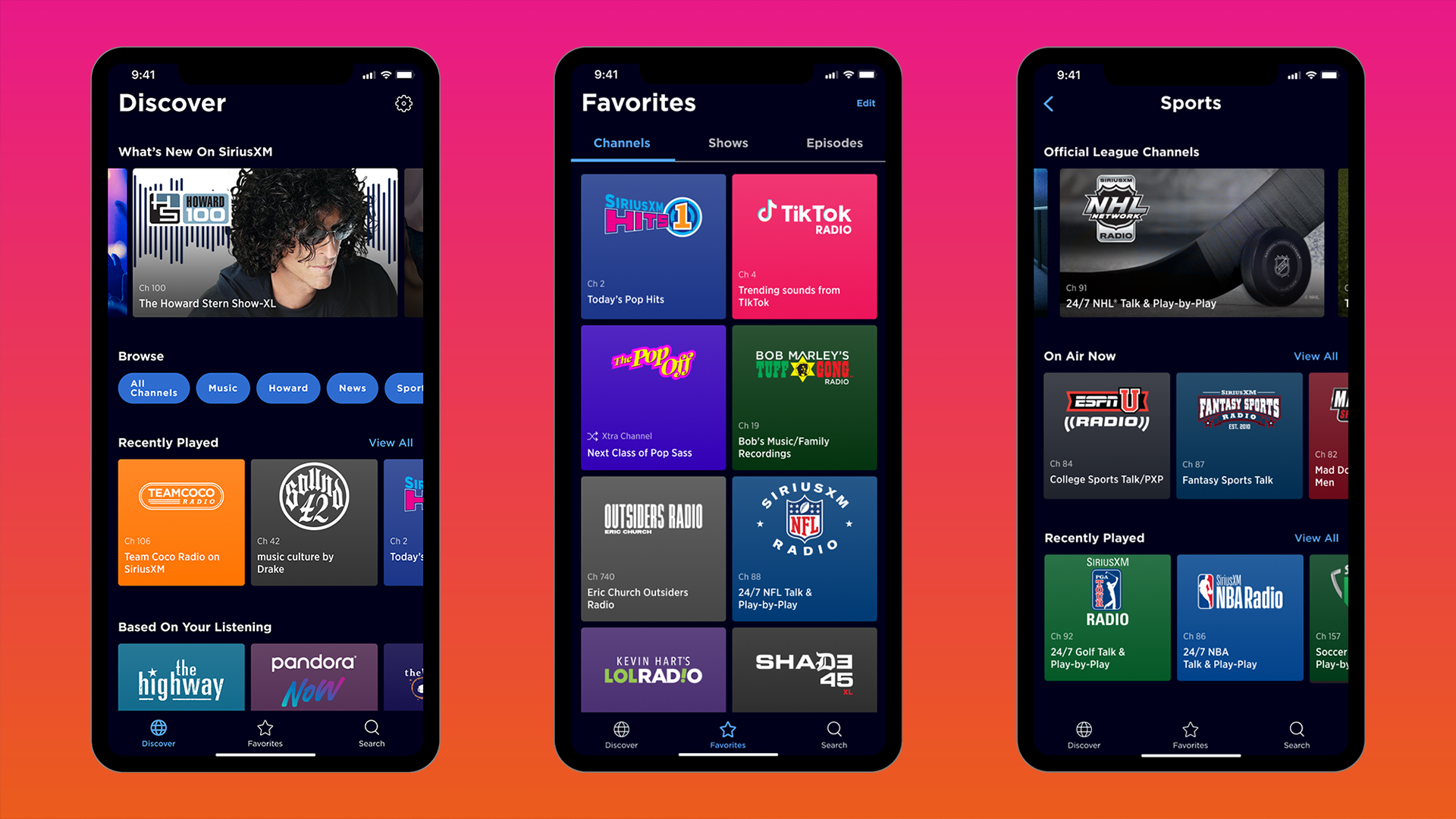
On the software side, the SiriusXM app serves as the digital gateway for millions of users. The app’s architecture is designed for cross-platform compatibility, running on iOS, Android, and web browsers. The user interface (UI) focuses on “discoverability,” using machine learning algorithms to suggest channels based on listening history. From a tech perspective, the app manages high-fidelity audio codecs (typically AAC+) to provide a rich sonic experience while minimizing data consumption.

The Tech Stack Behind Content Curation and Data Management
SiriusXM is not just a pipe for audio; it is a complex data management platform. The way it handles thousands of concurrent audio streams and millions of user data points requires a massive backend infrastructure.
Data Compression and Signal Reliability
Because satellite bandwidth is finite and expensive, SiriusXM utilizes advanced perceptual audio coding (PAC) and proprietary compression algorithms. This allows them to squeeze hundreds of audio channels, along with metadata and emergency alert systems, into a narrow slice of the S-band spectrum. This efficiency is a marvel of digital signal processing (DSP), ensuring that even at lower bitrates, the audio remains clear and free of the static associated with analog broadcasts.
Content Curation Algorithms vs. Human Programming
While SiriusXM prides itself on “human-curated” content, the technology supporting those curators is highly automated. The platform uses sophisticated scheduling software that prevents track repetition and ensures a balanced flow of genres. For its streaming-only “Xtra” channels, SiriusXM employs algorithmic curation similar to AI-driven playlists. These systems analyze acoustic features—such as tempo, key, and “mood”—to automate the selection of the next track, providing a personalized experience that scales across millions of listeners.
Personalized Features and Intelligent Alerts
One of the most valuable tech features for SiriusXM users is the “TuneStart” and “SmartFavorite” functionality. These features rely on a local buffer within the receiver or the app. When a user switches to a preset channel, the hardware has already been “listening” in the background, allowing the song to start from the beginning rather than in the middle. This requires efficient memory management within the device’s firmware to handle multiple simultaneous data streams without crashing or overheating.
Connectivity and Future-Proofing the Platform
As the “Internet of Things” (IoT) expands, SiriusXM is evolving from a car-centric service into a ubiquitous home and mobile utility. The technological roadmap for the company focuses on deep integration and security.
Integration with Smart Home Devices and AI Assistants
SiriusXM has developed robust APIs (Application Programming Interfaces) for integration with Amazon Alexa, Google Assistant, and Sonos ecosystems. This allows users to control their audio experience using voice commands. Behind the scenes, this involves complex natural language processing (NLP) handshakes. When a user says, “Play The Beatles Channel on SiriusXM,” the AI assistant must authenticate the user’s subscription credentials, ping the SiriusXM servers, and pull the correct stream URL, all within milliseconds.
Security and Subscriber Authentication Protocols
With millions of paying subscribers, digital security is paramount. SiriusXM uses a unique Radio ID (Electronic Serial Number) for every hardware device. The activation process involves an over-the-air (OTA) “hit” where the satellite sends a targeted command to a specific receiver to unlock the encrypted channels. For streaming users, the platform employs industry-standard OAuth 2.0 and encryption to protect user data and prevent unauthorized access to the stream.
The Roadmap for Next-Gen Audio Technology
The future of SiriusXM technology lies in the expansion of its satellite fleet and the refinement of its digital platforms. The company continues to launch newer, more powerful satellites (such as the SXM-8) which provide higher signal power and better resistance to interference. Concurrently, they are exploring the use of 5G edge computing to reduce latency in their streaming services.
As autonomous vehicles become more common, SiriusXM is positioning its tech to be more than just audio; it is evolving into a data delivery service that can provide real-time map updates, weather data for sensors, and infotainment for passengers who no longer need to focus on the road.

Conclusion
SiriusXM is far more than a “radio station.” It is a sophisticated technological ecosystem that leverages space-age hardware and cutting-edge software to deliver a seamless audio experience. By maintaining a dual-path delivery system—utilizing both high-orbit satellites and high-speed terrestrial data—it offers a level of reliability and reach that pure streaming services or traditional broadcasters cannot match. Whether it is the complex compression algorithms that fit hundreds of channels into a narrow frequency or the seamless UI of its mobile app, the technology behind SiriusXM remains at the forefront of the digital audio revolution. As we move further into a connected world, SiriusXM’s ability to innovate within its hardware and software frameworks will ensure its place as a cornerstone of modern media consumption.
aViewFromTheCave is a participant in the Amazon Services LLC Associates Program, an affiliate advertising program designed to provide a means for sites to earn advertising fees by advertising and linking to Amazon.com. Amazon, the Amazon logo, AmazonSupply, and the AmazonSupply logo are trademarks of Amazon.com, Inc. or its affiliates. As an Amazon Associate we earn affiliate commissions from qualifying purchases.