
In the lexicon of modern transportation, the yellow traffic light is often perceived as a simple cautionary signal. To a driver, it is a binary choice: speed up or slow down. However, from the perspective of software engineering, urban infrastructure technology, and autonomous vehicle (AV) development, the yellow light represents one of the most complex “edge cases” in computational logic. It is the physical manifestation of the “Dilemma Zone”—a precise spatial and temporal window where the decision-making capabilities of both humans and machines are tested to their limits.
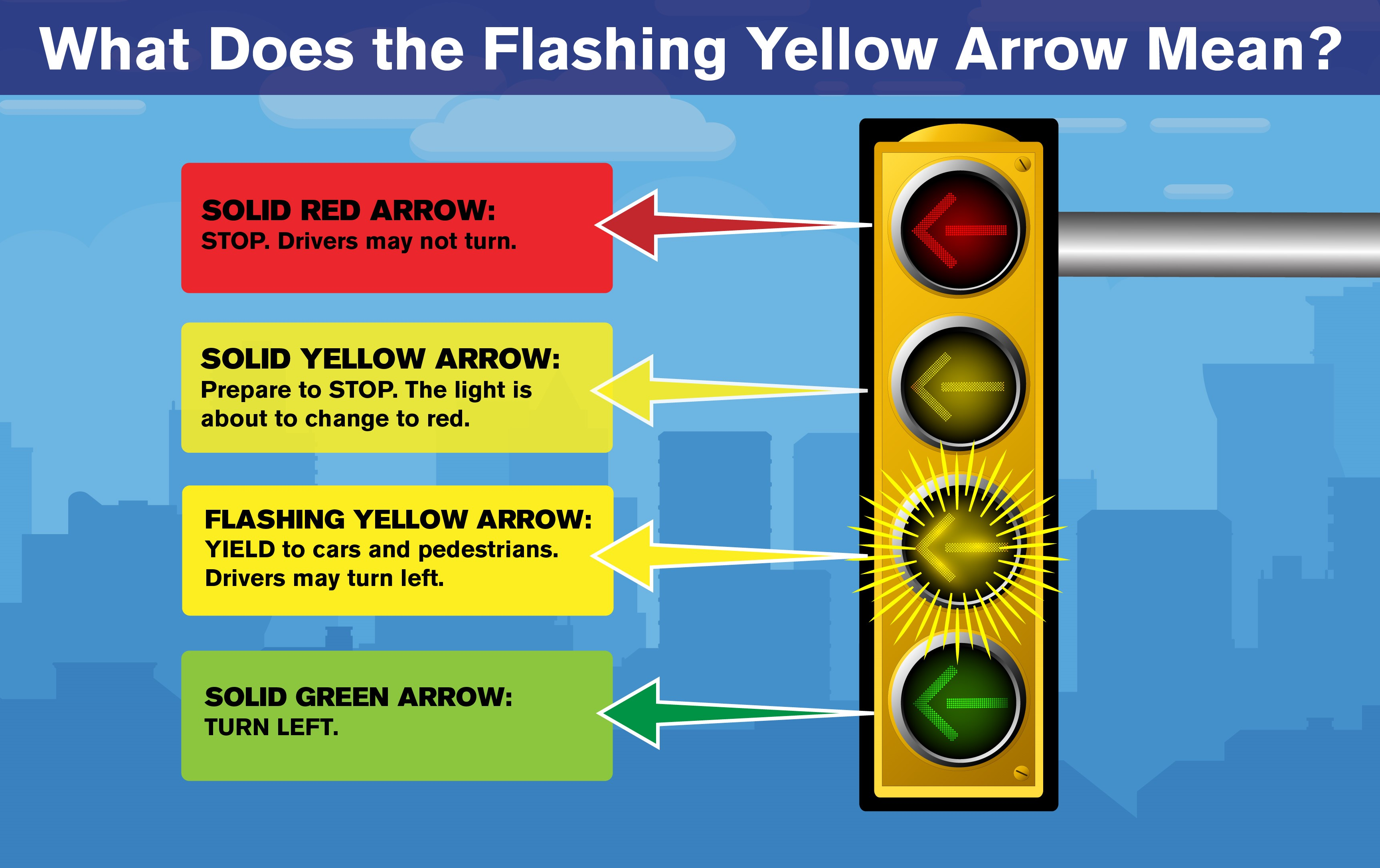
As we transition toward smart cities and fully autonomous ecosystems, the meaning of a yellow light has evolved. It is no longer just a timed electrical pulse; it is a data-rich event that involves sensor fusion, predictive modeling, and vehicle-to-infrastructure (V2I) communication.
The Engineering of the Dilemma Zone: Kinematics and Algorithms
The yellow light is fundamentally an engineering solution to a kinetic problem. In traffic engineering, the duration of a yellow light is not arbitrary; it is determined by the Kinematic Equation, specifically the Gazis-Herman-Maradudin (GHM) formula. This formula accounts for perception-reaction time, the speed of the vehicle, and the comfortable deceleration rate of the average car.
The Physics of Change Intervals
The primary goal of the yellow phase is to provide enough time for a driver to either stop safely before the intersection or clear the intersection if they are too close to stop. When the light turns yellow, a vehicle enters what engineers call the “Dilemma Zone.” This is the area where, based on the vehicle’s speed and distance from the stop line, the driver cannot comfortably stop nor can they clear the intersection before the light turns red.
To solve this, software designers for traffic controllers must program “Change Intervals” that adapt to the specific geometry and speed limits of a road. In high-tech corridors, these intervals are becoming dynamic. Instead of fixed timers, inductive loop sensors and radar units feed real-time speed data into the traffic controller, allowing the system to extend a yellow light by milliseconds to ensure a heavy truck, which has a longer braking distance, can pass safely.
Computational Challenges in Signal Timing
From a software perspective, managing a yellow light involves minimizing “lost time”—the period during which no traffic is moving through the intersection. Modern Traffic Management Systems (TMS) use sophisticated algorithms to balance safety with throughput. If a yellow light is too short, the frequency of rear-end collisions increases as drivers slam on their brakes. If it is too long, the efficiency of the entire grid degrades, leading to increased carbon emissions and congestion. Engineers use microsimulation software like VISSIM or Aimsun to model thousands of “yellow light scenarios” before a single line of code is deployed to a municipal controller.
Machine Vision: How Autonomous Vehicles Process Caution
For an autonomous vehicle, “seeing” a yellow light is only the first step. The real challenge lies in the interpretation and the subsequent decision-making matrix. Unlike humans, who may rely on intuition or risk-taking, an AV must use deterministic and probabilistic models to decide its course of action within milliseconds.
Sensor Fusion and Color Segmentation
Autonomous vehicles utilize a suite of sensors—LiDAR, high-resolution cameras, and radar—to monitor traffic signals. Computer vision systems use semantic segmentation to isolate the traffic light from a complex background of neon signs, sunlight, and weather interference.
The software must be trained to recognize the “yellow” state across varying luminosities. A yellow light at midnight looks very different to a CMOS sensor than one at high noon with heavy glare. Deep learning models, specifically Convolutional Neural Networks (CNNs), are trained on millions of labeled images to ensure the AV can distinguish between a flickering yellow caution light and a standard yellow transition light.
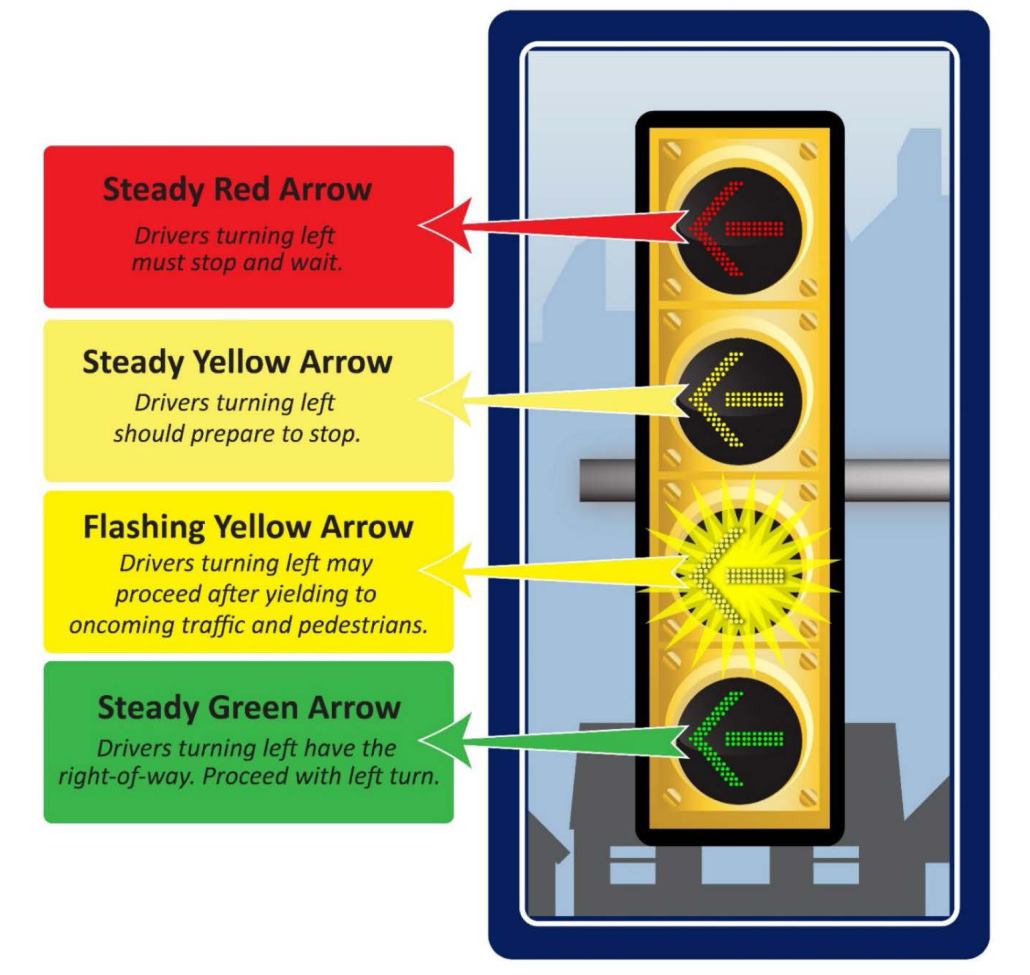
The “Go/No-Go” Decision Matrix
Once the light is identified as yellow, the vehicle’s onboard computer enters a high-frequency calculation loop. It evaluates its current velocity, the friction coefficient of the road surface (detected by the Electronic Stability Control system), and the proximity of following vehicles.
- The Stopping Distance Calculation: The AI calculates the “Required Braking Power.” If the G-force required to stop exceeds a comfort threshold (usually around 0.3g), the system may prioritize proceeding.
- Predictive Trajectory Mapping: The AV maps its trajectory to ensure it can clear the “conflict point” of the intersection before the cross-traffic light turns green.
- Risk Assessment: The system also considers the “following distance” of the car behind it. If a hard stop would likely result in being rear-ended by a human-driven car, the AI’s “ethics and safety” module may choose to proceed through the yellow, provided it can do so within the legal timeframe.
V2I Connectivity: When the Infrastructure Talks Back
The most significant tech shift in the meaning of a yellow light is the move from visual signals to digital data packets. This is the realm of Vehicle-to-Infrastructure (V2I) communication, powered by Dedicated Short-Range Communications (DSRC) or C-V2X (Cellular Vehicle-to-Everything) technology.
Signal Phase and Timing (SPaT) Data
In a smart city environment, the traffic light doesn’t just change color; it broadcasts its state. Using the SPaT protocol, the intersection sends out a digital message: “I will be yellow in 3.2 seconds, and then red in 7.4 seconds.”
For a connected vehicle, the yellow light is no longer a surprise. The vehicle receives this data hundreds of meters before reaching the intersection. This allows for “Green Light Optimized Speed Advisory” (GLOSA). The car’s dashboard or the AV’s drive system can adjust its speed so it arrives at the intersection exactly when the light is green, or it can begin a gentle deceleration long before the light even turns yellow. This tech effectively eliminates the “Dilemma Zone” by providing perfect information.
Edge Computing at the Intersection
The hardware at the intersection is also evolving. “Smart Intersections” are being equipped with edge computing units—small, high-performance servers that process data locally rather than sending it to the cloud. These units use computer vision to monitor the entire intersection. If a pedestrian steps into the crosswalk just as the light turns yellow, the edge controller can communicate directly with approaching autonomous vehicles to force a stop, or even hold the red light for cross-traffic to prevent a tragedy.
The Future of Urban Mobility: Beyond Three Colors
As we look toward the future of technology-integrated transport, the very concept of a yellow light may become obsolete. In a world of 100% autonomous and connected vehicles, physical traffic lights might disappear in favor of “Virtual Signals.”
Virtual Traffic Lights (VTL)
VTL technology uses peer-to-peer communication between vehicles to self-organize at intersections. Instead of a physical light, cars “handshake” and decide who goes first. In this scenario, a “yellow” state is simply a data buffer in an optimization algorithm, ensuring that vehicles cross paths with minimal distance and maximum speed without ever needing to see a colored bulb.

Cybersecurity and Signal Integrity
However, this increased reliance on technology introduces new risks. The “meaning” of a yellow light becomes a cybersecurity concern. If a malicious actor were to spoof a SPaT message, they could theoretically cause a mass-braking event or force vehicles into a busy intersection. Securing the “Digital Yellow” involves robust encryption, blockchain-based verification of signal states, and hardware-level security in the traffic controllers.
The yellow light is shifting from a simple visual cue to a high-stakes data point. It represents the intersection of classical physics and modern AI. Whether it is interpreted by a human eye or a neural network, it remains the ultimate test of a system’s ability to handle uncertainty. As our software becomes more sophisticated, the yellow light will continue to serve as the benchmark for how we balance the competing demands of speed, safety, and digital intelligence on the move.
aViewFromTheCave is a participant in the Amazon Services LLC Associates Program, an affiliate advertising program designed to provide a means for sites to earn advertising fees by advertising and linking to Amazon.com. Amazon, the Amazon logo, AmazonSupply, and the AmazonSupply logo are trademarks of Amazon.com, Inc. or its affiliates. As an Amazon Associate we earn affiliate commissions from qualifying purchases.