
In the landscape of modern software, few applications have maintained the longevity, cultural impact, and technical complexity of League of Legends (LoL). Developed by Riot Games and released in 2009, League of Legends is technically categorized as a Multiplayer Online Battle Arena (MOBA). However, to view it merely as a game is to overlook one of the most sophisticated pieces of live-service software in existence. It represents a massive intersection of high-speed networking, complex database management, and proprietary engine architecture that supports millions of concurrent users across a global infrastructure.
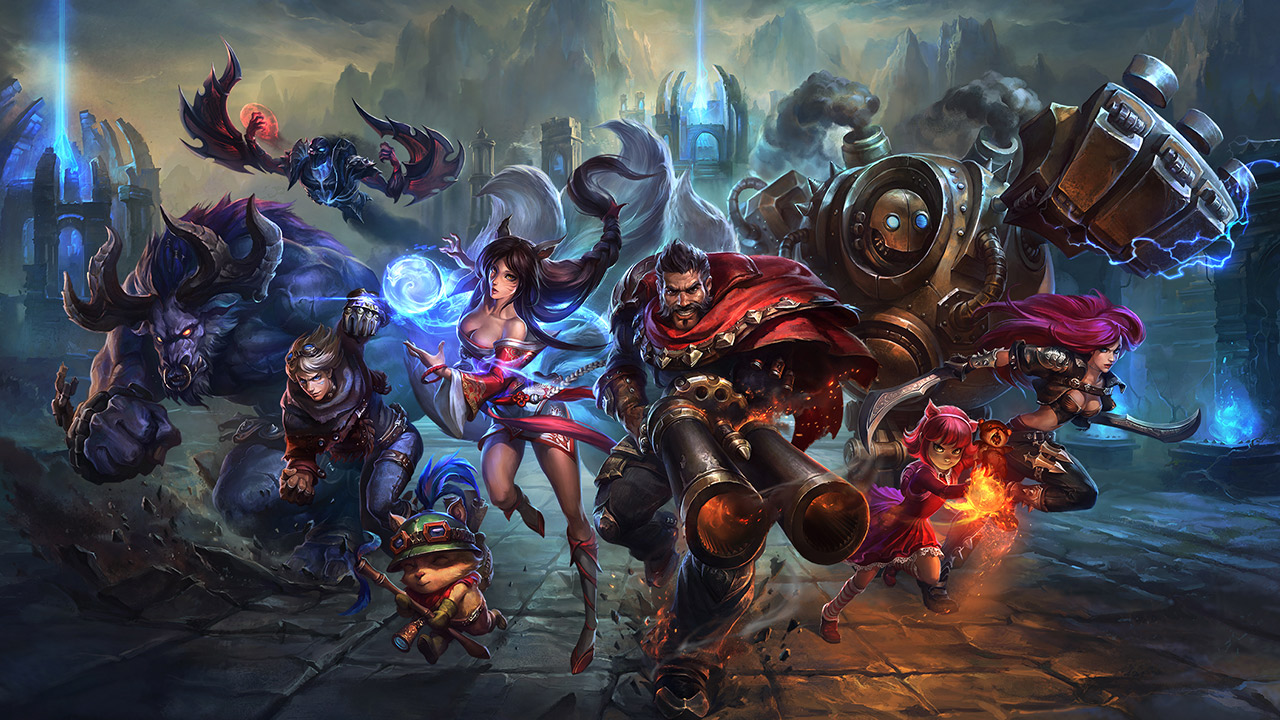
To understand what League of Legends is from a technical and software perspective, one must look beyond the screen and into the mechanics of its engine, the architecture of its client, and the massive digital ecosystem that keeps the platform operational 24/7.
The Architecture of a Modern MOBA: Client vs. Engine
At its core, League of Legends is split into two distinct software components: the Client and the Game Engine. This separation is a fundamental design choice that allows the platform to handle social features, marketplace transactions, and asset management independently of the high-performance requirements of active gameplay.
The League Client Update (LCU)
The “front end” that users interact with before entering a match is known as the League Client Update (LCU). This is a sophisticated application built largely on a foundation of Chromium and specialized web technologies. By utilizing a modified version of the Chromium Embedded Framework (CEF), Riot Games can iterate on the user interface with the flexibility of web development while maintaining the performance of a desktop application. The LCU manages the player’s profile, the digital storefront, friend lists, and the matchmaking queue. This modular approach allows Riot to push visual updates and new features without requiring a full re-architecture of the game’s core combat logic.
The C++ Game Engine
Once a match begins, the LCU hands over control to the Game Engine. Unlike the client, the engine is written primarily in C++ to maximize performance and minimize latency. This engine is responsible for rendering the 3D environment, calculating complex physics interactions, and processing the “logic” of over 160 unique “champions,” each with four or more distinct abilities. The challenge for the developers is maintaining “deterministic” gameplay—ensuring that every player sees the exact same interaction at the exact same millisecond, regardless of their hardware or internet speed.
Netcode and Predictive Logic
Perhaps the most impressive technical feat of League of Legends is its “netcode.” In a competitive environment, even 50 milliseconds of lag can be the difference between victory and defeat. The software employs sophisticated lag compensation and input prediction algorithms. These systems work to hide the inevitable delays of global data transmission by “predicting” player movement on the local machine while waiting for server verification. This ensures the experience feels responsive and fluid, a requirement for any high-stakes digital sport.
Understanding the Software Mechanics and Gameplay Loop
While the underlying tech is complex, the “product” itself is defined by a rigorous set of rules and logic gates that form the gameplay loop. League of Legends is a 5v5 team-based strategy game where the objective is to destroy the enemy “Nexus,” the heart of the opposing base.
The Map as a Grid of Logic
The primary battlefield, Summoner’s Rift, is more than just a 3D model; it is a dense grid of triggers and collision boxes. The software must constantly track the position of ten players, dozens of AI-controlled “minions,” and “jungling” monsters. Every ability cast by a player—whether it’s a fireball, a dash, or a healing spell—triggers a series of calculations involving hitbox detection and mathematical modifiers based on the player’s “stats” (Attack Damage, Ability Power, Armor, etc.).
Resource Management Systems
Behind the visual flair, the game is a real-time resource management simulator. The software tracks gold income, experience points (XP), and cooldown timers with surgical precision. As players perform actions, the game state updates in “ticks.” The tick rate of League of Legends is optimized to provide a balance between server load and player responsiveness. Each tick, the server recalculates the state of every entity on the map and broadcasts those changes to all ten connected clients.
Pathfinding and AI
The AI systems in League of Legends are designed for high-volume consistency. Minions use a deterministic pathfinding algorithm to navigate the “lanes” of the map, prioritizing targets based on a strict hierarchy of logic. If a player attacks an allied champion, the minion AI must instantly recalculate its path to protect its ally. This constant evaluation of the “game state” requires the server to handle thousands of logic checks per second across millions of active matches simultaneously.
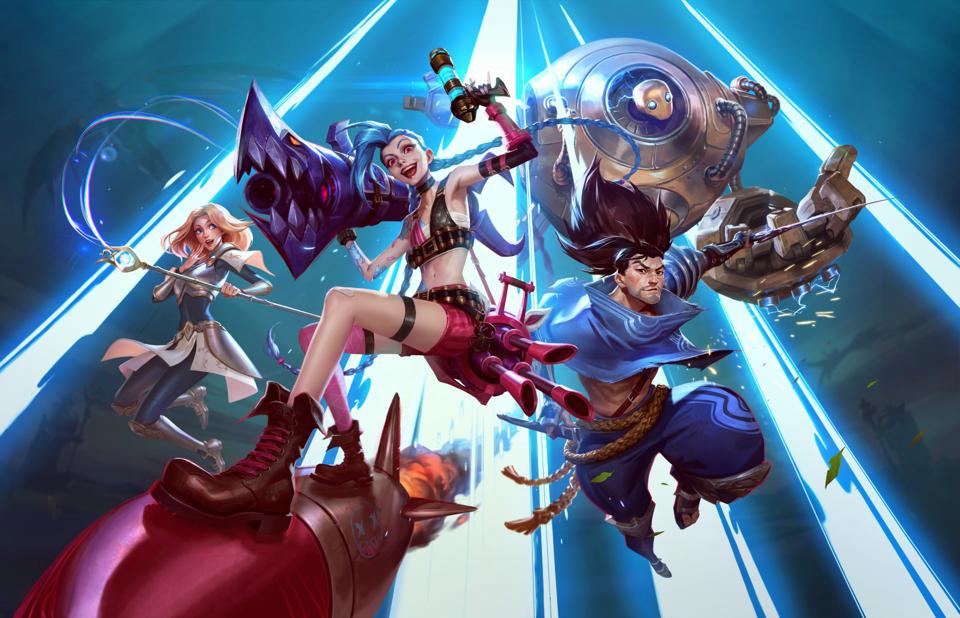
The Evolution of the Riot Games Tech Stack: Managing Technical Debt
Maintaining a piece of software for over 15 years is a monumental task in the tech world. Most applications undergo a total rewrite or are replaced within a decade. League of Legends, however, has survived by aggressively managing “technical debt”—the accumulated cost of shortcuts taken during early development.
From DirectX 9 to Modern Standards
In its early years, League of Legends was built to run on the most basic hardware available, ensuring accessibility in emerging markets. This meant the code was originally optimized for DirectX 9 and older hardware architectures. Over the last several years, Riot Games has executed a massive “under-the-hood” overhaul, transitioning the game to DirectX 11 and dropping support for legacy operating systems like Windows XP and Vista. This shift allowed for better multi-core CPU utilization and more efficient GPU rendering, paving the way for the high-fidelity visual updates seen in modern champion releases.
Scaling and Microservices
The backend of League of Legends has transitioned from a monolithic architecture to a microservices-based model. This means that different functions—such as the “Store,” “Matchmaking,” and “Chat”—operate as independent services. If the “Store” service experiences a spike in traffic or a crash, it does not necessarily bring down the game servers. This modularity is essential for a global platform that serves different regions (North America, Europe, Korea, China, etc.), each with its own data residency requirements and localized content.
Optimization for Low-End Hardware
One of the software’s greatest competitive advantages is its performance profile. Riot Games employs a dedicated “Performance Team” whose sole job is to ensure that new features do not degrade the experience for players on low-end laptops. This involves aggressive asset compression, shader optimization, and efficient memory management. The goal is a “locked” frame rate, ensuring that the software remains accessible to a global audience regardless of economic status.
The Digital Ecosystem: Competitive Integrity and Anti-Cheat Technology
As a competitive platform, the integrity of the software is paramount. If players can manipulate the code to gain an unfair advantage, the ecosystem collapses. This has led to the development of some of the most advanced security software in the consumer space.
Riot Vanguard
Recently, Riot Games integrated “Vanguard,” a kernel-level anti-cheat system, into League of Legends. This represents a significant shift in the software’s security posture. Vanguard operates at a deeper level of the Windows operating system than standard applications, allowing it to detect “scripts,” “bots,” and “map hacks” that attempt to hide in the system’s memory. While controversial from a privacy standpoint, from a technical perspective, it is a sophisticated solution to the problem of maintaining a fair “software-as-a-sport” environment.
Matchmaking Algorithms and Data Science
The software that determines who you play against is as complex as the game itself. The matchmaking system uses a modified Elo rating system, often referred to as MMR (Matchmaking Rating). It analyzes thousands of data points—win rates, performance metrics, and historical consistency—to pair ten players of near-equal skill. This requires massive data processing pipelines that analyze match results in real-time to adjust player rankings and ensure a balanced competitive ladder.
The API and Third-Party Integration
Riot Games maintains a robust Developer Portal, providing an API (Application Programming Interface) that allows third-party developers to access game data. This has birthed an entire industry of companion apps and analytical websites like OP.GG, U.GG, and Blitz.gg. These tools scrape millions of matches to provide statistical insights into “win rates” and “item builds,” effectively turning the community into a massive collaborative data science project.
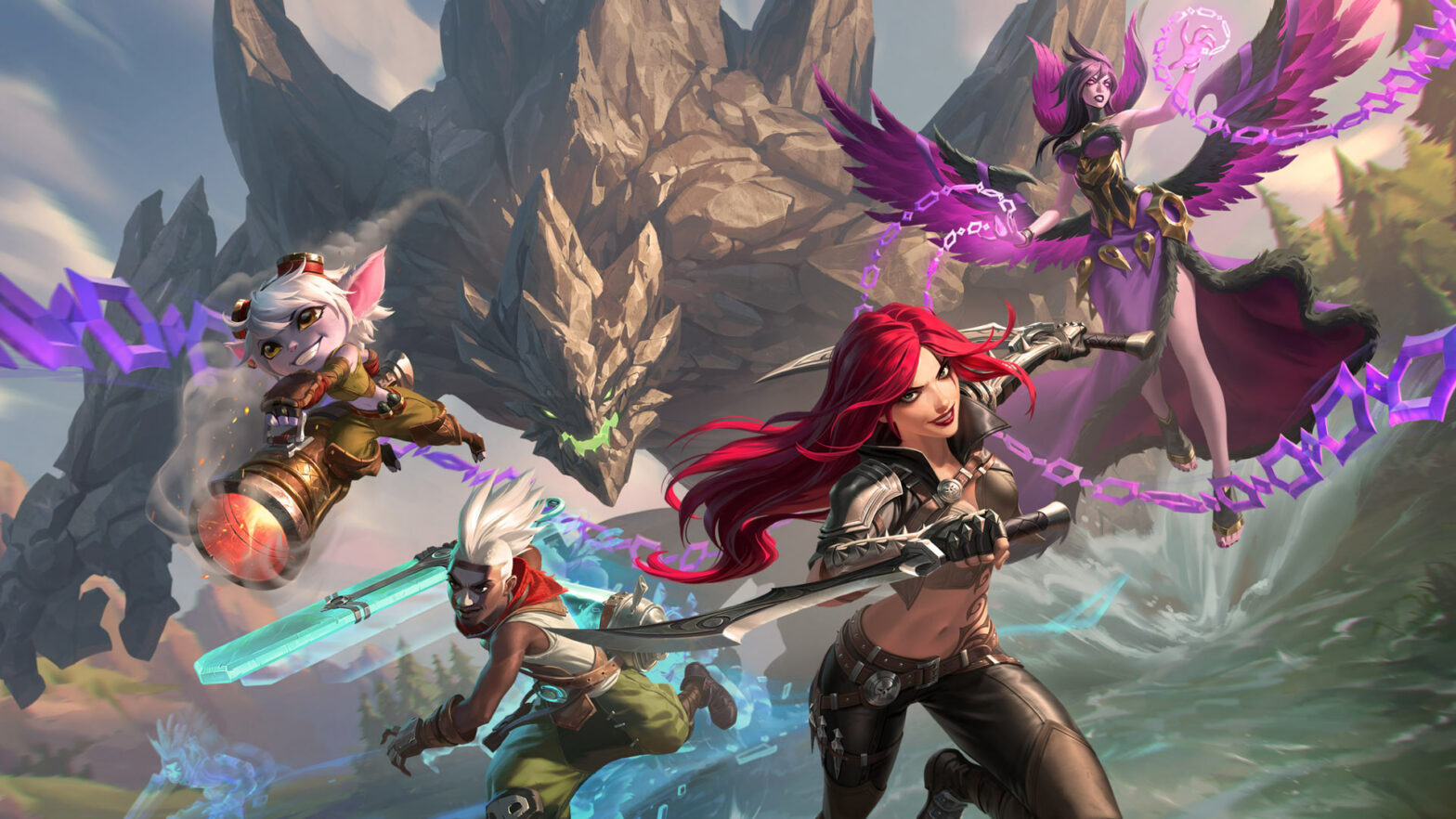
The Future of League of Legends as a Tech Platform
League of Legends is no longer just a standalone app; it is the foundation for an expanding tech ecosystem. Riot Games is increasingly utilizing AI and machine learning to improve player behavior systems, automatically detecting and penalizing toxic language or intentional game-ruining behavior in real-time.
Furthermore, the technology developed for League of Legends is being used to power other titles and media. The “Riot Direct” initiative, a global private network built specifically to carry game traffic and bypass the congestion of the public internet, serves as the backbone for Riot’s entire suite of software products. As cloud gaming and cross-platform play become the industry standard, the lessons learned from scaling League of Legends will continue to influence how massive, persistent digital worlds are built and maintained.
In summary, League of Legends is a masterclass in long-term software evolution. It is a product that balances the demands of high-performance real-time execution with the complexities of a global, multi-service backend. Whether viewed as a competitive sport or a technical marvel, it remains one of the most influential pieces of software in the digital age.
aViewFromTheCave is a participant in the Amazon Services LLC Associates Program, an affiliate advertising program designed to provide a means for sites to earn advertising fees by advertising and linking to Amazon.com. Amazon, the Amazon logo, AmazonSupply, and the AmazonSupply logo are trademarks of Amazon.com, Inc. or its affiliates. As an Amazon Associate we earn affiliate commissions from qualifying purchases.