
To understand the catalyst of the American Civil War, one must look beyond the surface-level political rhetoric of the 1860s and examine the underlying financial architecture of a nation divided by two incompatible economic systems. While social and moral ideologies provided the spark, the war was fundamentally fueled by a profound divergence in how the North and South generated wealth, managed capital, and envisioned the future of American industry. This was not merely a conflict of ideas, but a systemic breakdown of the national economy—a “Civil War” of competing financial models.
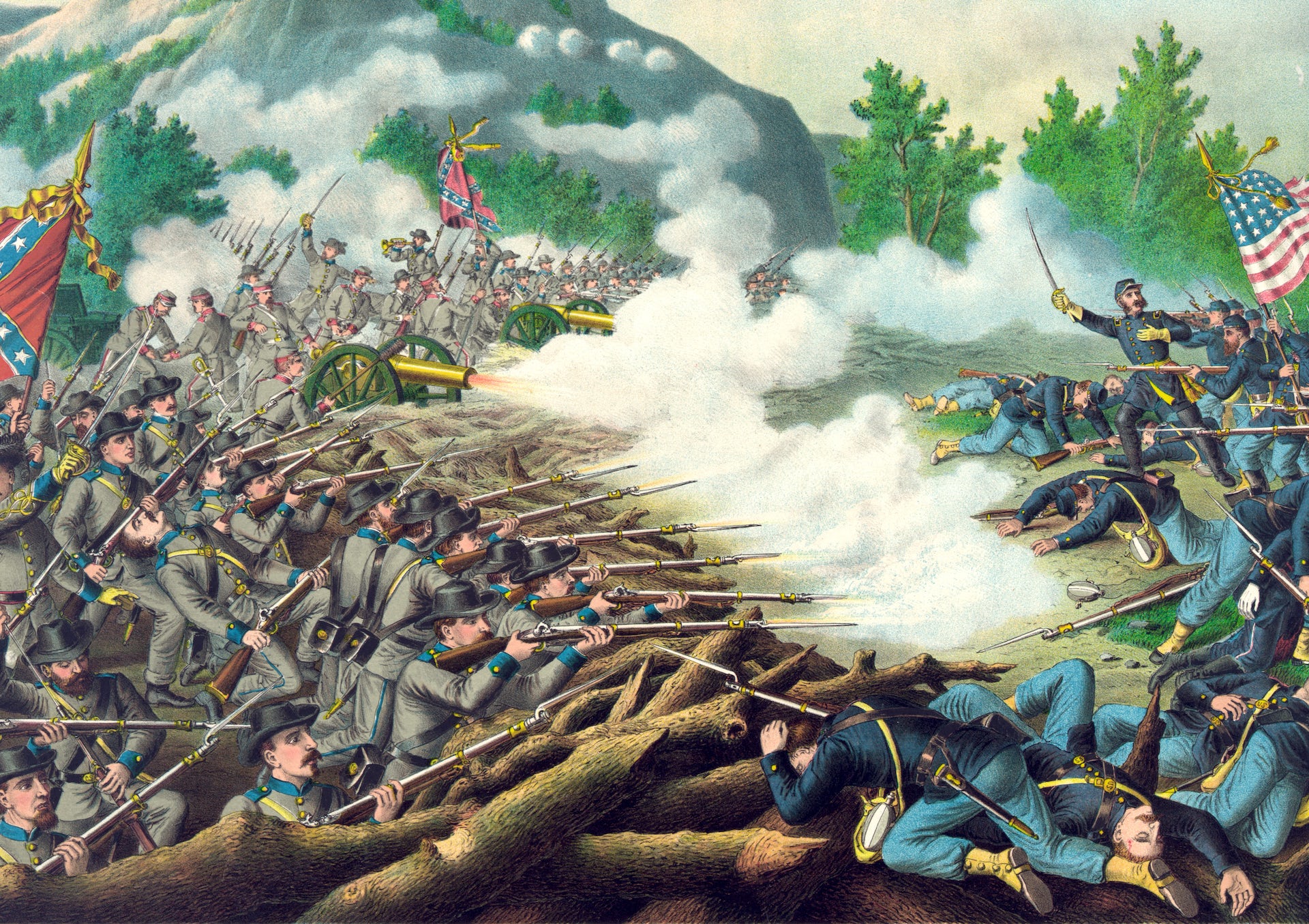
The Great Economic Divergence: Industrialization vs. Agrarian Capitalism
By the mid-19th century, the United States was effectively operating as two different countries under one flag. The North and the South had diverged into distinct economic ecosystems, each with its own “portfolio” of assets and investment strategies. This divergence created a friction that made a unified national fiscal policy nearly impossible.
The North’s Diversified Investment Portfolio
In the North, the economy was rapidly moving toward industrialization and modern corporate structures. Capital was being funneled into manufacturing, textile mills, and emerging technologies. This period saw the birth of the “American System,” an economic plan that championed high tariffs to protect nascent industries and federal subsidies for internal improvements.
For the Northern financier, wealth was liquid. It was found in stock certificates, bank deposits, and the equity of growing companies. This diversification allowed the North to weather localized economic downturns and fostered a culture of innovation and reinvestment. The North was betting on a future of “free labor”—a system where workers were also consumers, creating a circular flow of capital that drove urban growth and retail expansion.
The South’s Concentration in Single-Asset Wealth
In contrast, the Southern economy was a model of extreme asset concentration. The Southern “Money” niche was dominated by a single commodity: King Cotton. By 1860, cotton accounted for nearly 60% of all American exports. However, this wealth was not invested in machinery or infrastructure; it was locked in land and, most significantly, in human capital.
Financial historians often point out a staggering statistic: in 1860, the total value of enslaved people in the United States was approximately $3 billion—more than the combined value of all the nation’s railroads and factories at the time. The Southern elite were not just defending a social order; they were defending the most valuable asset class in the American economy. From a cold, financial perspective, abolition represented the single largest uncompensated “seizure” of private property in human history. The South’s inability to diversify its investment base meant that any threat to the institution of slavery was perceived as an existential threat to its entire banking and credit system.
Tariffs, Trade Wars, and Protectionist Policy
If the asset structure was the tension, the federal tariff was the trigger. Throughout the early 19th century, the “Money” interests of the North and South clashed over trade policy, leading to significant political instability, most notably the Nullification Crisis of 1832.
The Fight for Free Trade vs. Protectionism
The North, seeking to protect its emerging manufacturing sector from superior British imports, lobbied for high protective tariffs. These taxes made foreign goods more expensive, effectively forcing Southerners to buy Northern-made products at a premium.
For the South, this was a dual financial blow. First, the South was an export-driven economy that relied on selling cotton to British textile mills. High tariffs on British imports invited retaliatory tariffs from the UK, hurting the South’s primary revenue stream. Second, because the South had almost no manufacturing base of its own, it was forced to pay higher prices for the essential tools and machinery required to run its plantations. From the Southern perspective, the federal government was using trade policy to redistribute wealth from the agrarian South to the industrial North.
How Federal Tax Policy Fueled Sectional Disparity
The debate over the “Tariff of Abominations” highlighted a fundamental flaw in the American fiscal union: the government’s revenue model was stacked against the South. Since there was no federal income tax at the time, the vast majority of government revenue came from customs duties.
Southerners argued that they were footing the bill for a federal budget that primarily funded “Internal Improvements”—canals, roads, and railroads—located almost exclusively in the North and West. This created a cycle of “tax and spend” that benefited Northern industrial hubs while offering little ROI (Return on Investment) for the Southern states. This perceived “taxation without representation” (or at least without benefit) created the financial justification for secession.

The Financialization of Slavery and the Credit Crisis
One of the most overlooked causes of the Civil War was the complex web of debt and credit that tied the South to Northern banks. The Southern economy was heavily leveraged, and the “Money” of the South was inextricably linked to the financial centers of New York City and London.
The Value of Human Labor as a Financial Asset
In the 1850s, the price of enslaved labor skyrocketed. This led to a massive expansion of credit, as plantation owners borrowed against the “value” of their enslaved workforce to purchase more land and more labor. Enslaved people were used as collateral for loans, meaning that the entire Southern banking system was built on the valuation of human property.
This created a “bubble” that the South could not afford to burst. If the legal status of slavery were even marginally limited—such as by preventing its expansion into new territories—the market value of that collateral would stagnate or drop. A decrease in the “asset value” of the enslaved population would have triggered a massive credit crunch across the South, leading to widespread bankruptcies and the collapse of Southern financial institutions.
Banking and the New York Connection
Ironically, Northern banks were deeply complicit in this system. New York City was the financial hub of the cotton trade. Northern merchants earned commissions on every bale of cotton shipped, and Northern insurers protected the “cargo.”
However, as the 1860 election approached, the risk profile changed. Northern financiers began to fear that a Republican victory (and the subsequent threat to slavery) would lead to a Southern default on millions of dollars in debt owed to New York firms. This tension created a split within the Northern business community; while manufacturers favored the Republican platform of tariffs, the “Money” men in the banking sector feared the catastrophic financial fallout of a sectional split. The eventual war was, in many ways, the ultimate “default” on these massive inter-state financial obligations.
Infrastructure Investment and the Battle for National Development
The final pillar of the economic cause of the war was the competition over the “Internal Improvements” that would define the next century of American growth. The battle for the “Money” of the future was fought over where the railroads would go and who would control the gateways to the West.
The Transcontinental Railroad and the Flow of Capital
Throughout the 1850s, a fierce debate raged over the route of the proposed Transcontinental Railroad. A Northern route would funnel the wealth of the Pacific and the Midwest through Chicago and New York. A Southern route would direct that capital through New Orleans or Memphis.
The South recognized that whichever region controlled the flow of transcontinental trade would dominate the nation’s financial future. By 1860, the North had already secured a significant lead in rail density, which not only gave it a logistical advantage for the coming war but also meant that private investment was increasingly flowing toward Northern projects, leaving the South isolated.
The Economic Vision of the Republican Party
The rise of the Republican Party in 1860 represented a unified financial front against the Southern model. The Republican platform was a comprehensive economic manifesto: the Homestead Act (to create a middle class of free-labor landowners), the Pacific Railway Act (to fund infrastructure), and the Morrill Tariff (to protect industry).
To the South, this was not just a political platform; it was a blueprint for a centralized, industrial, Northern-dominated economy that would render the Southern agrarian model obsolete. The South realized it could no longer compete for federal dollars or dictate national economic policy. Secession was seen as a way to “divest” from a partnership that no longer served its financial interests, allowing the South to establish its own trade agreements and banking systems free from Northern protectionism.

A Legacy of Economic Conflict
What was the cause of the Civil War in America? While the moral debate over slavery provided the emotional and ethical framework for the conflict, the structural cause was a fundamental mismatch between two economic engines. One engine was powered by diversified capital, industrial innovation, and protectionist trade; the other was powered by concentrated asset wealth in land and labor, export-dependent “free trade,” and a precarious credit system.
When the political mechanisms for balancing these two “Money” niches failed, the nation turned to the battlefield to decide which financial model would prevail. The North’s eventual victory did more than end slavery; it codified the industrial, high-tariff, federally-funded economic model that would eventually turn the United States into a global financial superpower. The Civil War was the violent birth of modern American capitalism, proving that in the history of nations, the flow of capital is often as influential as the flow of ideas.
aViewFromTheCave is a participant in the Amazon Services LLC Associates Program, an affiliate advertising program designed to provide a means for sites to earn advertising fees by advertising and linking to Amazon.com. Amazon, the Amazon logo, AmazonSupply, and the AmazonSupply logo are trademarks of Amazon.com, Inc. or its affiliates. As an Amazon Associate we earn affiliate commissions from qualifying purchases.