
The daily search for the “4 digit lottery today” is a ritual for millions of individuals worldwide. Whether it is known as Pick 4, Play 4, or Cash 4, this specific game occupies a unique niche in the landscape of personal finance and gaming. For many, it represents a small daily hope; for others, it is a point of mathematical fascination or a cautionary tale in wealth management. To understand the 4-digit lottery is to look beyond the four numbers drawn on a screen and into the mechanics of probability, the psychology of risk, and the broader implications for one’s financial health.
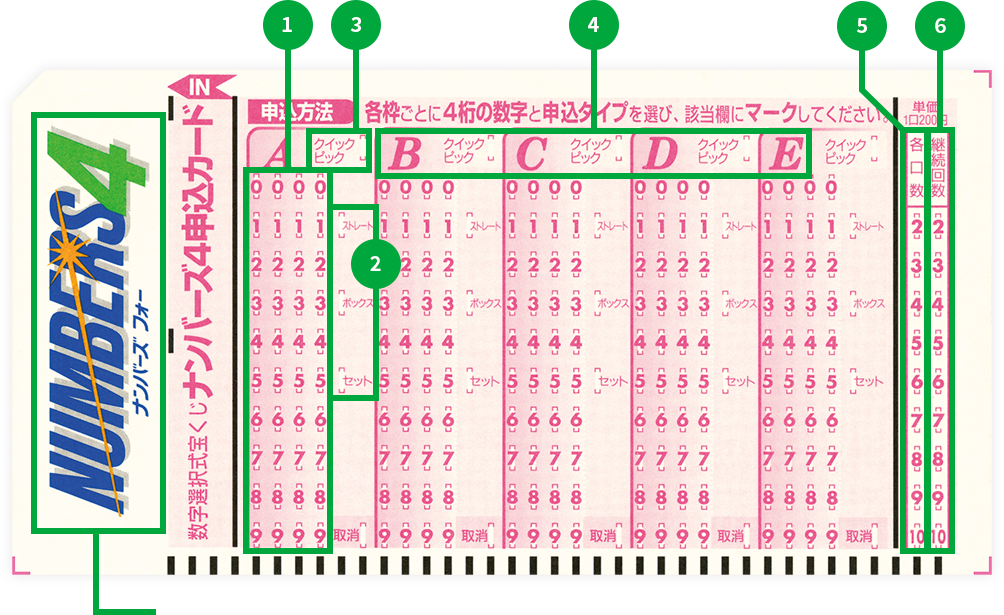
When we ask what the result was, we are looking for a sequence between 0000 and 9999. While the draw itself takes only seconds, the financial structures surrounding these four digits are complex. This article explores the 4-digit lottery through the lens of professional money management, evaluating why these games remain so popular and how they intersect with modern personal finance strategies.
The Mathematical Anatomy of the 4-Digit Lottery
To engage with any financial instrument—even one as speculative as a lottery—one must first understand the underlying numbers. The 4-digit lottery is a fixed-odds game that offers a clearer mathematical profile than massive multi-state jackpots like Powerball or Mega Millions. However, clarity does not necessarily equate to a favorable financial position.
Probability and the One-in-Ten-Thousand Chance
The 4-digit lottery is based on a simple permutation. Since each of the four positions can be filled by any digit from 0 to 9, there are exactly 10,000 possible combinations (10 x 10 x 10 x 10). This means that for any single “straight” bet—where the player must match the numbers in the exact order drawn—the odds of winning are exactly 1 in 10,000.
In the world of professional investing, an asset with a 0.01% chance of a high-yield return would typically be viewed with extreme skepticism. However, the low “entry price” (often $0.50 or $1.00) masks the severity of these odds. Because the cost of participation is so low, the human brain often fails to weigh the probability accurately, a phenomenon known in behavioral finance as the “possibility effect,” where highly unlikely outcomes are overweighted in decision-making.
Understanding Payout Ratios and the House Edge
In financial terms, the “Expected Value” (EV) of a transaction tells us what we can expect to receive in return for every dollar spent over the long term. Most state-run 4-digit lotteries offer a payout of approximately $5,000 for a $1 straight bet.
If we calculate the EV: (1/10,000 * $5,000) + (9,999/10,000 * $0) = $0.50.
This means that for every dollar invested in a 4-digit lottery, the player can expect an average return of 50 cents. In any other financial context—be it the stock market, real estate, or even high-interest savings accounts—a guaranteed 50% loss of principal would be considered a catastrophic investment. This “house edge” of 50% is significantly higher than that of casino games like Blackjack or Roulette, making the daily lottery one of the most expensive ways to manage discretionary capital.
The Economic Opportunity Cost of Daily Gaming
For the individual investor, the concern isn’t just the money lost; it is the “opportunity cost.” This is the value of the next best alternative that was foregone. When a person searches for the 4-digit lottery results today, they are participating in a cycle that consumes capital which could otherwise be working for them through compounding interest.
Compounding Returns vs. Daily Losses
Consider a common scenario: an individual plays $5 a day on the 4-digit lottery. Over the course of a month, this amounts to $150. Over a year, it is $1,825. If that same $1,825 were diverted into a low-cost S&P 500 index fund with an average annual return of 8% to 10%, the financial trajectory of that individual would change dramatically over time.
Over 30 years, a monthly contribution of $150 into an investment vehicle earning 8% annually grows to approximately $220,000. In contrast, the statistical probability of a daily lottery player winning enough “straight” 4-digit draws to match that amount is astronomically low. The daily draw provides a moment of excitement, but it simultaneously erodes the potential for long-term wealth accumulation.
The Psychological Trap of the “Near Miss”
The 4-digit lottery is particularly effective at creating the “near-miss” effect. If the winning number is 4567 and the player held 4568, the brain interprets this as being “close.” From a mathematical standpoint, however, 4568 is no closer to winning than 0000; it is still a losing ticket with a value of zero.

From a personal finance perspective, recognizing these psychological triggers is essential. The “near miss” encourages repeat behavior, leading to what is often called “chasing losses.” Professional money management requires an emotional decoupling from outcomes, focusing instead on the quality of the process. In the case of the lottery, the process is statistically flawed, regardless of how close the numbers may appear on a given day.
Integrating Lottery Play into a Professional Financial Plan
While the math suggests avoiding the lottery entirely, many people view it as a form of entertainment rather than an investment. If one chooses to participate, it must be handled with the same rigor applied to any other expense category within a budget.
Defining Discretionary Entertainment Budgets
The primary rule of personal finance when it comes to high-risk activities is that the money must come from a “discretionary” pool. This is the capital remaining after all necessities (housing, food, utilities), debt obligations, and—most importantly—savings goals have been met.
If a search for “what was the 4 digit lottery today” is part of a planned entertainment budget of $10 a week, it is no different than spending $10 on a streaming service or a premium coffee. The danger arises when “lottery capital” is drawn from funds intended for emergency savings or retirement. A professional approach involves setting a hard limit on these expenditures and never exceeding it, regardless of “jackpot fever” or perceived streaks.
Tools for Tracking and Auditing Gambling Expenses
In the digital age, financial tools allow us to audit our spending with high precision. For those who play the daily draw regularly, using an expense-tracking app to categorize lottery purchases can be an eye-opening exercise. By labeling these transactions under “Entertainment” or “Gaming,” an individual can see the cumulative impact on their monthly cash flow.
Furthermore, transparency is a key tenet of financial health. Using spreadsheets or specialized apps to track wins versus losses over a 12-month period usually illustrates the 50% house edge mentioned earlier. This data-driven approach often provides the necessary “jolt” to reallocate that capital toward more productive assets, such as a Roth IRA or a high-yield savings account (HYSA).
Building Wealth Beyond the Draw: Smarter Alternatives
The appeal of the 4-digit lottery is the potential for a “sudden” influx of cash. However, modern financial tools have made it easier than ever to build significant wealth without relying on a 1-in-10,000 chance.
Micro-Investing and Fractionated Shares
One of the greatest barriers to investing used to be the high cost of entry. Today, micro-investing apps allow individuals to buy “fractional shares” of major companies or ETFs with as little as $1. This directly competes with the lottery’s $1 entry point.
Instead of buying a 4-digit ticket, an individual can buy $1 worth of a diversified portfolio. The psychological satisfaction of “owning” a piece of a global corporation can be a powerful substitute for the thrill of the draw. More importantly, while the lottery ticket has a high probability of becoming worthless, the fractional share represents a real asset with the potential for dividends and capital appreciation.
High-Yield Savings as a Guaranteed Win
In a fluctuating economy, the certainty of a return is a valuable commodity. High-yield savings accounts currently offer interest rates that, while not providing “instant” wealth, provide a guaranteed positive return. For an individual who finds themselves checking the lottery results daily, automating a $1 daily transfer into an HYSA can create a “guaranteed win” scenario. At the end of the year, that individual will have $365 plus interest—a 100% success rate compared to the statistical volatility of the lottery.

Conclusion: The Shift from Luck to Logic
When someone asks “what was the 4 digit lottery today,” the answer is usually just a set of numbers. But the broader answer involves a choice between two different financial philosophies: the pursuit of luck versus the application of logic.
The 4-digit lottery occupies a space where hope meets mathematics. While there is nothing inherently wrong with the occasional $1 bet for entertainment, a professional approach to money dictates that we must recognize the game for what it is—a government-sanctioned entertainment expense with a high house edge. By understanding the odds, acknowledging the opportunity costs, and utilizing modern financial tools to redirect capital toward productive investments, individuals can move from a state of searching for winning numbers to a state of building a winning financial future.
In the end, the most reliable way to ensure your “numbers come up” is not through a daily draw, but through the disciplined, consistent, and informed management of your personal capital. Wealth is rarely the result of a single 4-digit sequence; it is the result of thousands of small, logical decisions made over a lifetime.
aViewFromTheCave is a participant in the Amazon Services LLC Associates Program, an affiliate advertising program designed to provide a means for sites to earn advertising fees by advertising and linking to Amazon.com. Amazon, the Amazon logo, AmazonSupply, and the AmazonSupply logo are trademarks of Amazon.com, Inc. or its affiliates. As an Amazon Associate we earn affiliate commissions from qualifying purchases.