
The ritual of checking the daily lottery numbers is a deeply ingrained habit for millions of individuals seeking a shortcut to financial flexibility. When people search for “what was Cash 3 numbers last night,” they are looking for more than just three digits; they are looking for the outcome of a micro-investment that carries the potential for a quick windfall. While daily numbers games like Cash 3 are often categorized as entertainment, they occupy a unique space in the landscape of personal finance. To understand the impact of these games, one must look past the immediate excitement of the draw and analyze the mechanics of probability, the psychology of small-stakes gaming, and the broader implications for long-term wealth management.
The Mechanics of Cash 3: Probability and Financial Expectations
Cash 3 is a staple of state lottery systems because of its simplicity and the high frequency of drawings. Typically held twice a day—midday and evening—the game requires players to select three numbers, each ranging from 0 to 9. The appeal lies in the low barrier to entry and the seemingly high probability of winning compared to massive multi-state jackpots like Powerball or Mega Millions.
How Daily Numbers Games Work
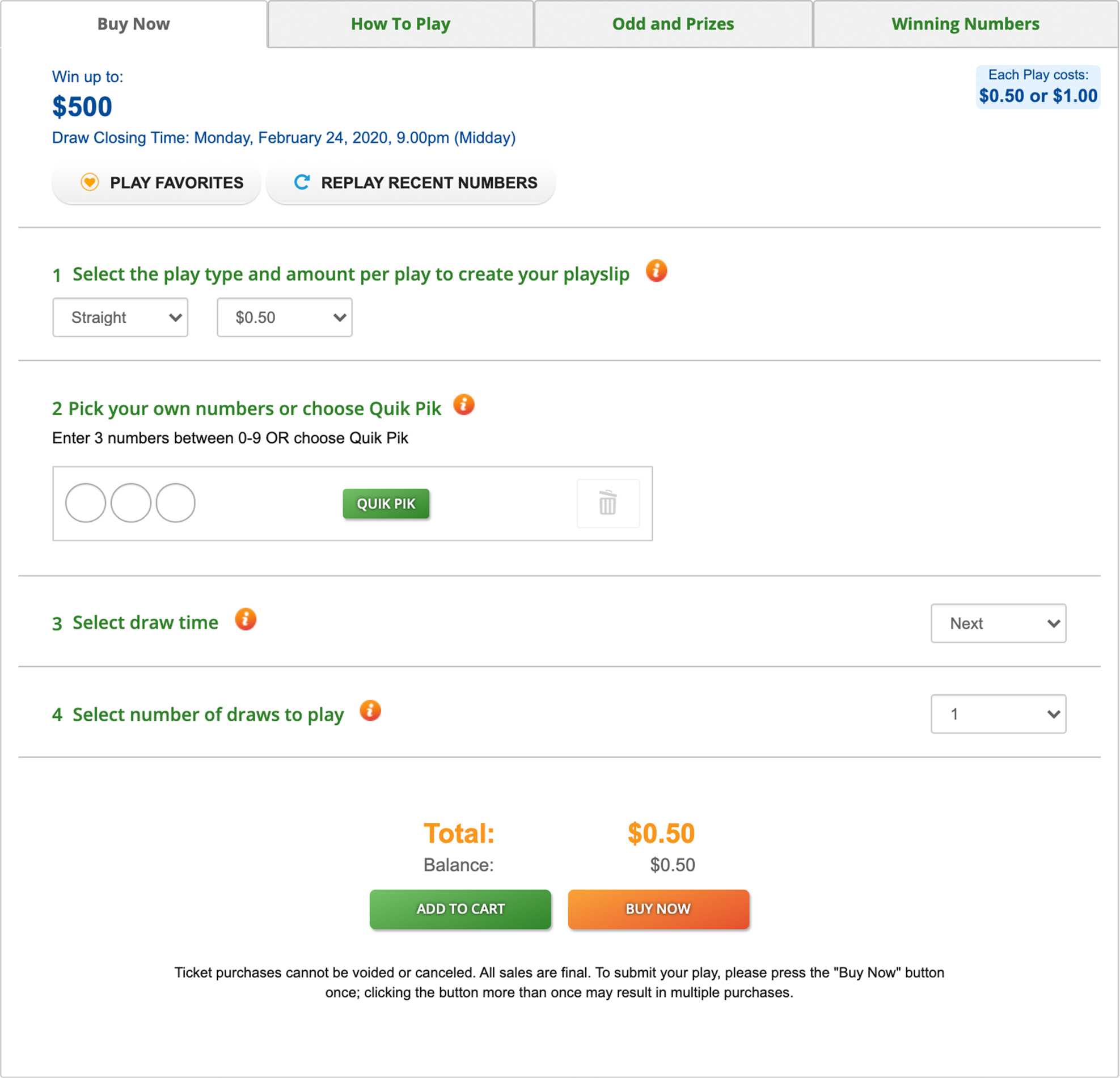
In a standard Cash 3 game, there are exactly 1,000 possible combinations (from 000 to 999). Players can choose different “play types” which dictate their payout and their odds. A “Straight” bet means the numbers must match exactly in the order drawn. A “Box” bet allows the numbers to match in any order. There are also “Pairs” bets, where only the first or last two digits must match.
From a financial perspective, the payout structure is where the “house edge” becomes apparent. In most jurisdictions, a $1 Straight bet yields a $500 prize. Since the odds of hitting a Straight are 1 in 1,000, the mathematical expected value of a $1 ticket is $0.50. This means that for every dollar spent, the player is effectively losing 50 cents in the long run. Understanding this ratio is the first step in moving from a casual participant to a financially literate observer.
The Odds vs. the Payout
In the world of investing, a 50% immediate loss would be considered catastrophic. However, the lottery operates on the principle of “asymmetric risk.” The player risks a negligible amount (usually $0.50 or $1.00) for the chance at a payout that, while small in absolute terms, represents a 500x return on investment. For someone living paycheck to paycheck, $500 can cover a car repair, a utility bill, or a grocery run, making the “investment” feel rational in the context of immediate need versus long-term growth.
Tracking Your Results: Managing Daily Drawings within a Budget
When you search for last night’s numbers, you are participating in the “tracking” phase of a financial habit. Consistency is a hallmark of many Cash 3 players, who often play the same sequences based on birthdays, anniversaries, or “hot” and “cold” number theories.
Digital Tools for Tracking Winning Numbers
In the digital age, finding “what was Cash 3 numbers last night” has become instantaneous. Most state lottery commissions offer dedicated mobile apps that provide real-time results, historical data, and even “check my ticket” scanning features. From a personal finance standpoint, using these tools is a double-edged sword. On one hand, they provide the transparency needed to verify wins; on the other, they use gamification techniques—such as push notifications and “near-miss” animations—to encourage repeated play.
Financial discipline requires that if you choose to participate in daily draws, you should utilize these tools to track your spending just as diligently as you track the winning numbers. A “lottery log” can reveal the true cost of the habit over a fiscal year, allowing an individual to see if the occasional $500 win actually offsets the daily $1 or $2 outlays.
Incorporating Gaming into Your Monthly Financial Plan
The most effective way to handle daily lottery participation is to categorize it strictly as “discretionary entertainment.” In a standard budget—such as the 50/30/20 rule (50% needs, 30% wants, 20% savings)—lottery tickets must fall into the 30% “wants” category.
If a player spends $2 a day on Cash 3, that amounts to approximately $60 a month or $730 a year. For many, this is a sustainable expense for the entertainment value provided. However, if this spending comes at the expense of an emergency fund or high-interest debt repayment, the financial “cost” of checking last night’s numbers is much higher than the price of the ticket.
The Psychology of the Small Win: Why We Play Cash 3
The search for last night’s numbers is often driven by the “dopamine loop.” The anticipation of the draw creates a neurological reward even before the numbers are revealed. Cash 3, with its frequent draws and relatively frequent winners (compared to larger games), provides just enough reinforcement to keep the habit alive.
The Dopamine Loop and Financial Discipline
Psychologically, humans are wired to notice patterns. This leads to the “gambler’s fallacy”—the belief that if a certain number hasn’t appeared in a while, it is “due” to be drawn. In reality, every draw is an independent event with the exact same 1 in 1,000 odds. From a financial tools perspective, understanding this psychological trap is essential. Wealth building is generally a slow, boring process of compounding interest. The lottery provides the opposite: a fast, exciting, but statistically unlikely path to capital.
Transforming a “Gaming” Habit into a “Savings” Habit
One of the most effective personal finance strategies for habitual lottery players is “prize-linked savings.” Some financial institutions and apps offer accounts where every deposit gives the user a chance to win a prize, mimicking the excitement of the lottery while preserving the principal investment. For someone who regularly checks Cash 3 results, transitioning that $1-a-day habit into a high-yield savings account or a fractional-share investment app can lead to a guaranteed “win” over time through the power of compounding.
Managing a Windfall: What to Do If Your Numbers Come Up
Suppose the search for “what was Cash 3 numbers last night” returns a match. You’ve won $500. While this isn’t “retire tomorrow” money, it is a significant “found” sum that requires a strategic approach to maximize its impact on your financial health.
Reinvesting Your Winnings
The temptation after a Cash 3 win is to “let it ride” or spend the winnings on luxury items. However, a professional approach to personal finance suggests a tiered strategy for windfalls:
- The 10% Rule: Spend 10% of the win on something fun to satisfy the psychological urge for a reward.
- Debt Reduction: Use a portion to pay down high-interest credit card debt.
- The Seed Money: Place the remainder into an investment vehicle. A $400 deposit into an S&P 500 index fund, while modest, can grow significantly over decades, turning a lucky night into a foundational financial asset.
Tax Implications of Lottery Gains
It is also important to remember that lottery winnings are considered taxable income. While many states do not withhold taxes on prizes as small as $500, you are still legally required to report these winnings on your federal tax return. Keeping a record of your losses is equally important, as you can deduct lottery losses up to the amount of your winnings, provided you itemize your deductions. This nuance of the tax code is often overlooked by casual players but is a critical component of professional money management.
Strategic Alternatives: Building Wealth Beyond the Drawing
While checking the Cash 3 numbers is a common daily activity, the pursuit of financial security requires a more robust strategy than relying on a 1 in 1,000 chance. The “Online Income” and “Side Hustle” sectors offer alternatives that provide a much higher return on time and effort.
In the time it takes to study “hot” numbers or drive to a convenience store, an individual could engage in micro-tasking, freelance consulting, or managing a small digital storefront. These activities offer a “payout” that is proportional to effort and skill, rather than being left entirely to chance.
Furthermore, utilizing financial tools like automated investment platforms (Robo-advisors) allows individuals to experience the same “set it and forget it” convenience of a daily lottery ticket but with a positive expected value. Instead of checking a website for last night’s numbers, a disciplined investor checks their portfolio’s quarterly growth, finding satisfaction in the steady accumulation of wealth.
Ultimately, the search for “what was Cash 3 numbers last night” is a reflection of the universal human desire for financial improvement. Whether those three digits bring a win or a loss, the true value lies in how that information is used within a broader financial framework. By treating the lottery as a small-scale entertainment expense rather than a retirement plan, and by pivoting the excitement of the “draw” toward the certainty of “growth,” any individual can master their personal finances and move toward a future of genuine economic stability.
aViewFromTheCave is a participant in the Amazon Services LLC Associates Program, an affiliate advertising program designed to provide a means for sites to earn advertising fees by advertising and linking to Amazon.com. Amazon, the Amazon logo, AmazonSupply, and the AmazonSupply logo are trademarks of Amazon.com, Inc. or its affiliates. As an Amazon Associate we earn affiliate commissions from qualifying purchases.