
Before the Super Bowl became a global cultural phenomenon, a multi-billion-dollar advertising vehicle, and the pinnacle of sports marketing, the professional football landscape was a fractured market defined by a bitter rivalry between two competing corporate identities. To understand what existed before the Super Bowl is to analyze one of the most significant brand mergers in history. It was a time when “The Big Game” didn’t exist, and the National Football League (NFL) faced a disruptive competitor that forced it to rethink its entire approach to engagement, broadcast rights, and market positioning.

The Duel of Identity: NFL Tradition vs. AFL Disruption
In the early 1960s, the professional football market was not a monopoly. The National Football League was the “blue-chip” brand—established, conservative, and steeped in tradition since its founding in 1920. However, the NFL’s refusal to expand into new markets created a vacuum, leading to the birth of the American Football League (AFL) in 1960.
The NFL’s Established Corporate Persona
The NFL’s brand strategy was built on the foundation of being the “exclusive club.” It positioned itself as the only legitimate home of professional football. Its branding was stoic, emphasizing defense, grit, and history. During this era, the “NFL Championship Game” was the season’s climax, but it lacked the universal, cross-demographic appeal of today’s Super Bowl. It was a sporting event for sports fans, not a lifestyle event for a global audience. The NFL’s leadership, spearheaded by Commissioner Pete Rozelle, focused on maintaining a premium, “big-city” image, primarily in established markets like New York, Chicago, and Green Bay.
The AFL’s Disruptive Market Entry
The AFL entered the market as a classic disruptor. Lacking the history of the NFL, the AFL had to build a brand identity based on innovation and excitement. If the NFL was the “Old Guard,” the AFL was the “New Wave.” Their strategy involved:
- Visual Identity: The AFL utilized brighter colors and more modern jersey designs to stand out on the burgeoning medium of color television.
- Product Differentiation: The league emphasized a high-flying, offensive-heavy style of play. While the NFL focused on the “ground and pound” strategy, the AFL took to the air, recognizing that high-scoring games were a better “product” for television viewers.
- Market Expansion: The AFL targeted “frontier” markets that the NFL had ignored, such as Dallas, Houston, and Denver, effectively building localized brand loyalty in untapped territories.
The Strategic Consolidation: Forging a Unified Brand
By the mid-1960s, the “Brand War” between the two leagues had reached an unsustainable level. Both organizations were hemorrhaging capital in a bidding war for collegiate talent. This financial pressure led to the 1966 merger agreement, a masterstroke of corporate strategy that sought to end competition and begin a period of market consolidation.
The Birth of the AFL-NFL World Championship Game
Before the “Super Bowl” name was codified, the first two iterations of the game (1967 and 1968) were officially titled the “AFL-NFL World Championship Game.” From a branding perspective, this was a disaster. The name was clunky, difficult to market, and lacked any emotional resonance. It felt like a legalistic title born out of a boardroom rather than a consumer-facing product.
During this transition period, the two leagues remained separate entities with separate schedules, only meeting for this singular championship. The brand challenge was immense: how do you convince the public that a game between two rival corporations is the “ultimate” championship when the two leagues hadn’t played each other all year?
The Importance of Television Branding
The pre-Super Bowl era was also defined by a unique broadcasting hurdle. Because the NFL was tied to CBS and the AFL was tied to NBC, the first championship game had to be simulcast on both networks. This created a fragmented viewing experience. Brands and advertisers had to choose sides, and the lack of a singular, unified broadcast platform prevented the game from achieving the “monumental event” status it holds today. It was only through the eventual unification of these broadcasting rights that the game could be packaged as a premier advertising vehicle.
The Naming Convention: From “Super Ball” to Global Icon
The transition from the “AFL-NFL World Championship” to the “Super Bowl” is one of the most famous anecdotes in the history of brand naming. It illustrates how a simple, relatable concept can transform a corporate product into a household name.
The Lamar Hunt Inspiration
Lamar Hunt, the founder of the AFL and owner of the Kansas City Chiefs, is credited with the accidental naming of the event. Watching his children play with a high-bounce toy called a “Super Ball,” the name “Super Bowl” popped into his head during a merger meeting. While “Bowl” was already common in college football (Rose Bowl, Orange Bowl), the prefix “Super” elevated the concept.
Initially, the name was dismissed by many as too colloquial and lacking the “dignity” of an NFL event. Pete Rozelle, a marketing visionary, originally disliked the term, preferring something more prestigious. However, the media and the public immediately latched onto “Super Bowl.” It was catchy, easy to remember, and perfectly encapsulated the “larger-than-life” nature of the contest.
Retroactive Branding
Interestingly, the first two games were only retroactively named “Super Bowl I” and “Super Bowl II.” It wasn’t until the third game—Super Bowl III—that the name was officially adopted for the tickets and the television broadcast. This highlights a key principle in branding: sometimes the market defines your brand name more effectively than the executive suite does. By listening to the public’s vernacular, the league was able to adopt a name that had organic “viral” potential before the digital age even existed.
Building the Commercial Juggernaut: The Shift to Event Marketing
The era before the Super Bowl was focused on the game; the era following its creation was focused on the event. This shift is what transformed a football game into a marketing holiday.
The Joe Namath Effect and Brand Credibility
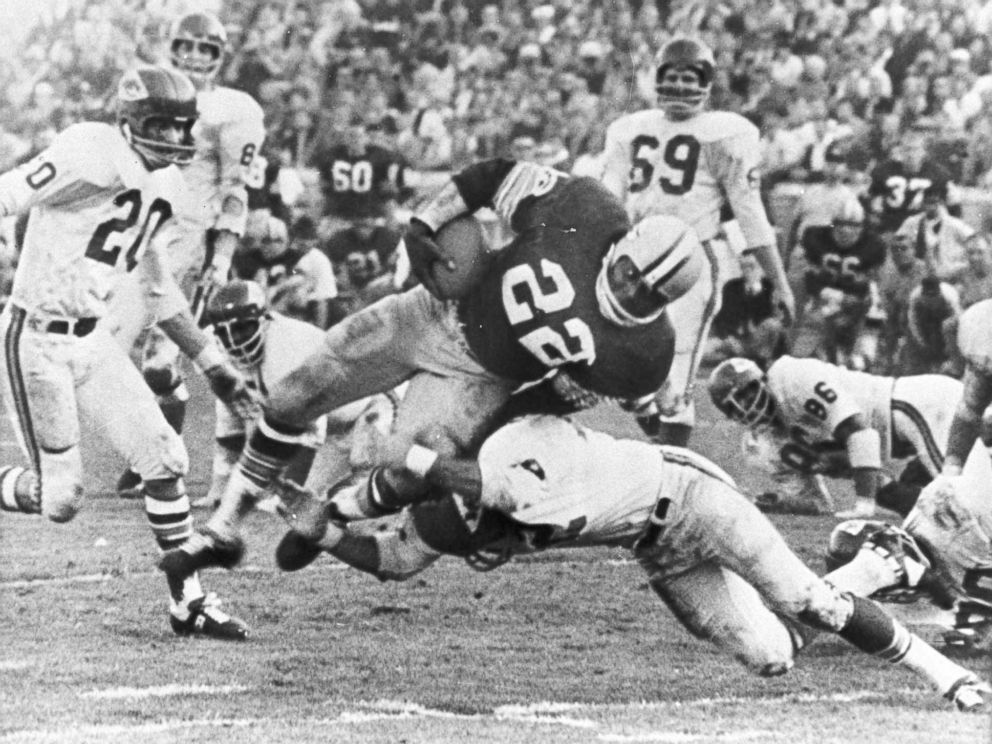
For the first two years, the NFL brand was considered vastly superior to the AFL brand. The NFL’s Green Bay Packers dominated both games, leading to a perception that the AFL was a “minor league” product. This created a brand credibility gap.
That gap was closed in Super Bowl III by Joe Namath and the New York Jets. Namath, a charismatic star with his own personal brand (“Broadway Joe”), famously guaranteed a victory over the heavily favored NFL Baltimore Colts. When the Jets won, it validated the AFL brand overnight. This was the turning point where the “Super Bowl” transitioned from a lopsided exhibition to a legitimate, high-stakes competition. From a marketing standpoint, this parity was essential; a brand cannot sustain premium pricing if the outcome is predictable.
The Halftime Show and Broadening the Demographic
In the years immediately preceding and following the merger, the halftime entertainment usually consisted of university marching bands. The branding was still very much “collegiate” and “traditional.” The realization that the Super Bowl could be a vehicle for mass-market entertainment beyond football fans didn’t fully materialize until later, but the seeds were sown in the late 60s. The goal was to create a “Big Tent” brand strategy—an event that even non-sports fans felt they had to watch to stay culturally relevant.
Lessons in Brand Evolution from the Pre-Super Bowl Era
The history of what came before the Super Bowl offers several critical insights for modern brand managers and corporate strategists.
1. Disruptors Force Innovation
The NFL was a stagnant brand until the AFL forced it to compete. Without the AFL’s high-scoring games and colorful presentation, the NFL might have remained a niche, regional product. Competition often forces a brand to find its “highest and best use,” which in this case was a unified, global championship.
2. The Power of Naming
A brand name must be evocative. “AFL-NFL World Championship Game” describes a transaction; “Super Bowl” describes an experience. Moving from functional naming to experiential naming is often the key to moving a brand from a commodity to an icon.
3. Consolidation as a Path to Dominance
The merger of the NFL and AFL is a textbook example of how two competitors can create more value by combining their brand equity than by fighting over market share. By merging, they eliminated the ruinous competition for talent and created a unified product that was far more attractive to television networks and advertisers.
4. Cultural Integration
What was before the Super Bowl was a game. What came after was a cultural institution. The transition was achieved by identifying that the “product” wasn’t just football—it was the spectacle, the advertising, the halftime show, and the social gathering.
In conclusion, the era before the Super Bowl was a period of intense brand warfare and identity formation. It was a time of fragmented audiences and clunky corporate titles. However, the strategic decisions made during this period—to merge, to rename, and to lean into the power of television—set the stage for the creation of the most powerful brand in the history of sports. The Super Bowl didn’t just happen; it was the result of a deliberate shift from a “sports league” mindset to an “entertainment empire” strategy.
aViewFromTheCave is a participant in the Amazon Services LLC Associates Program, an affiliate advertising program designed to provide a means for sites to earn advertising fees by advertising and linking to Amazon.com. Amazon, the Amazon logo, AmazonSupply, and the AmazonSupply logo are trademarks of Amazon.com, Inc. or its affiliates. As an Amazon Associate we earn affiliate commissions from qualifying purchases.