
Mega Millions stands as one of the most significant pillars of the American gaming landscape, not merely as a game of chance, but as a massive financial engine that drives billions of dollars in revenue across the United States. For those looking to participate, understanding the geographical availability and the underlying financial structures of the game is essential. Currently, Mega Millions is played in 45 states, plus the District of Columbia and the U.S. Virgin Islands. This vast network allows for the accumulation of astronomical jackpots that frequently capture national headlines and stimulate local economies through ticket sales and tax revenue.

The expansion of the lottery into nearly every corner of the country reflects a broader shift in state fiscal policies. As states seek non-tax revenue streams to fund essential services like education and infrastructure, the multi-state lottery model has become an indispensable tool. However, the footprint of the game is not universal, and the distinctions between participating and non-participating jurisdictions reveal much about the intersection of regional culture, politics, and economics.
The Mega Millions Map: Where the Game is Played
The reach of Mega Millions is extensive, covering the vast majority of the American population. The participating jurisdictions include:
Arizona, Arkansas, California, Colorado, Connecticut, Delaware, Florida, Georgia, Idaho, Illinois, Indiana, Iowa, Kansas, Kentucky, Louisiana, Maine, Maryland, Massachusetts, Michigan, Minnesota, Mississippi, Missouri, Montana, Nebraska, New Hampshire, New Jersey, New Mexico, New York, North Carolina, North Dakota, Ohio, Oklahoma, Oregon, Pennsylvania, Rhode Island, South Carolina, South Dakota, Tennessee, Texas, Vermont, Virginia, Washington, West Virginia, Wisconsin, and Wyoming. Additionally, the District of Columbia and the U.S. Virgin Islands are active participants.
The Outliers: States Without Mega Millions
Despite its near-national presence, five states do not offer Mega Millions: Alabama, Alaska, Hawaii, Nevada, and Utah. The reasons for these exclusions are varied and rooted in the unique socio-economic landscape of each region. In Utah and Alabama, religious and moral objections to gambling have historically blocked the establishment of a state lottery. In Hawaii and Alaska, the remote nature of the states combined with a conservative approach to new forms of gaming has kept the lottery at bay.
Perhaps the most surprising exclusion is Nevada. While Nevada is the global capital of gambling, it does not participate in the Mega Millions lottery. This is primarily a protectionist measure for the state’s massive casino industry. The casino lobby in Nevada has long argued that a state lottery would compete for the same discretionary dollars that visitors and residents would otherwise spend on slot machines and table games. Consequently, residents of Las Vegas and Reno frequently cross state lines into California or Arizona to purchase tickets when jackpots reach record highs, representing a significant “leakage” of potential revenue to neighboring states.
Cross-Border Participation and Economic Flow
The phenomenon of cross-border ticket purchasing is a significant economic factor. When a jackpot exceeds the $500 million mark, states bordering non-participating jurisdictions see a massive surge in sales. Gas stations and convenience stores on the border of Nevada and California, or near the borders of Alabama and Georgia, often report hundreds of percent increases in daily revenue during “lottery fever.” This highlights the “Money” aspect of the lottery—not just in terms of the prize, but in the micro-economies of the retail locations that facilitate the game.
The Financial Mechanics of a Multi-State Lottery
Mega Millions is more than a game; it is a complex financial collective managed by the Multi-State Lottery Association (MUSL) and the various state lottery commissions. The power of the game lies in its ability to pool resources from dozens of different economies to create a single, massive prize pool that no individual state could support on its own.
Revenue Distribution: Where the Money Goes
A common question among participants and taxpayers alike is: “Where does the money actually go?” While specific allocations vary by state, the general breakdown of a Mega Millions ticket purchase (usually $2.00) follows a consistent pattern:

- The Prize Pool (50%): Half of every dollar spent on a ticket goes directly into the prize fund. This includes the jackpot as well as the lower-tier prizes.
- Retailer Commissions (5-7%): Local businesses that sell the tickets receive a commission on every sale. Additionally, many states offer a “selling bonus” to retailers who sell a winning jackpot ticket, which can range from $10,000 to $1,000,000 depending on state law.
- Administrative Costs (3-5%): This covers the overhead of running the lottery, including marketing, security, and the technical infrastructure required to process millions of transactions per minute.
- State Beneficiary Funds (38-42%): This is the “net profit” for the state. This money is typically earmarked for specific public projects.
The Impact on State Budgets
For many states, lottery revenue is a critical component of the annual budget. In Georgia and Florida, lottery proceeds are famously used to fund educational scholarships (such as the HOPE Scholarship). In other states, the funds are diverted to the general fund, environmental conservation, or senior citizen programs. This “voluntary tax” allows states to fund public works without raising income or property taxes, though critics often argue that it disproportionately affects lower-income demographics who spend a higher percentage of their earnings on lottery tickets.
Navigating the Personal Finance of Large Jackpots
From a personal finance perspective, Mega Millions represents a high-risk, high-reward scenario with specific mathematical and tax implications. Understanding these factors is crucial for any responsible participant.
The Odds and Expected Value
The odds of winning the Mega Millions jackpot are approximately 1 in 302.5 million. To put this in financial perspective, one is statistically more likely to be struck by lightning or to become a billionaire through traditional business ventures. However, professional gamblers and mathematicians often look at the “expected value” (EV) of a ticket. When the jackpot reaches a certain threshold—usually around $700 million—the mathematical EV of a $2 ticket can technically become positive, assuming no other players win. However, the high probability of “splitting” the pot with other winners and the massive tax bite usually keep the real-world EV below the cost of the ticket.
Tax Implications: State and Federal Obligations
If a player is fortunate enough to win, the financial complexity shifts from probability to taxation. Lottery winnings are considered ordinary income by the IRS.
- Federal Tax: The federal government immediately withholds 24% of the prize. However, since the top federal tax bracket is 37%, winners should expect to owe an additional 13% when they file their annual returns.
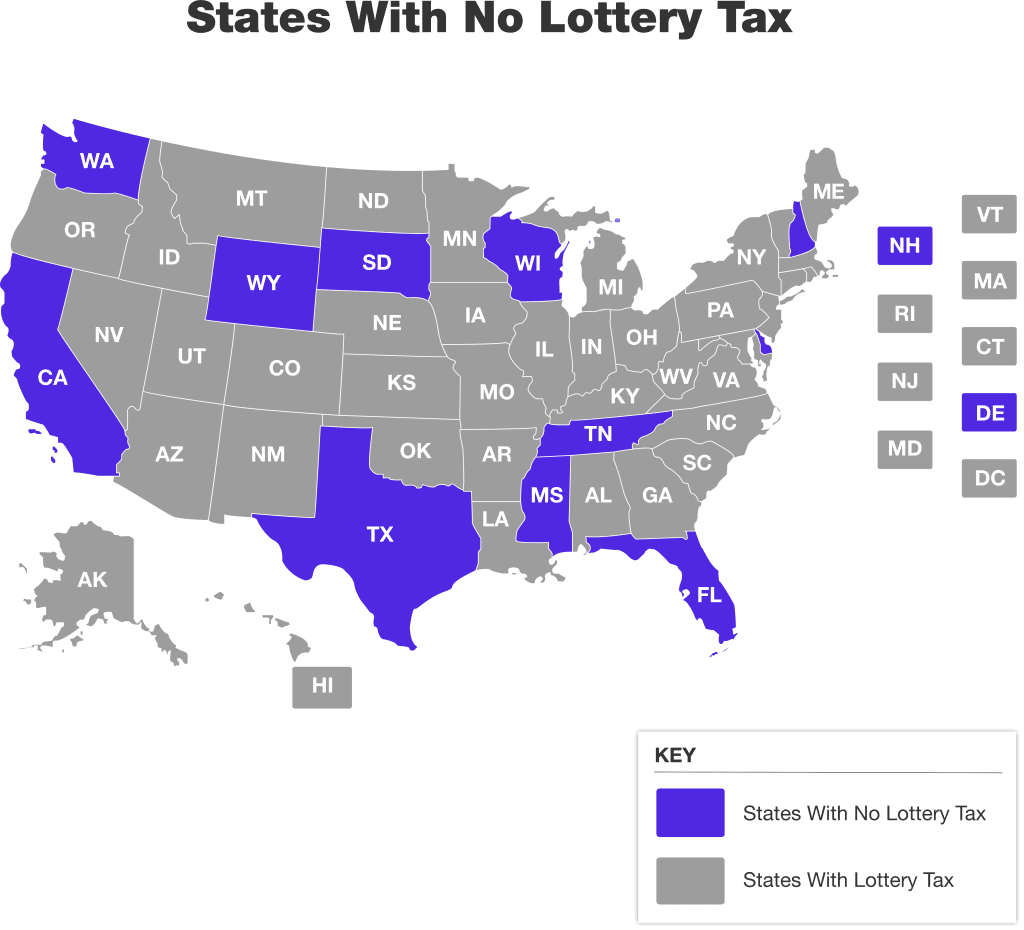
- State Tax: This varies significantly based on where the ticket was purchased. States like California and Delaware do not tax lottery winnings at the state level, providing a significant financial advantage to winners in those jurisdictions. Conversely, winners in New York or Maryland can face state and local tax rates exceeding 10%, which can take a massive bite out of the net payout.
Strategic Financial Planning for Lottery Winners
The moment a winning ticket is validated, the “game” ends and “wealth management” begins. The financial decisions made in the first 48 hours can determine whether the winner builds a multi-generational legacy or faces the “lottery curse” of bankruptcy.
Lump Sum vs. Annuity
Winners must choose between a one-time cash payment or an annuity spread over 30 years.
- The Cash Option: This provides immediate liquidity. From an investment standpoint, taking the lump sum allows the winner to invest the capital in a diversified portfolio (stocks, real estate, private equity), potentially outperforming the 5% annual increase provided by the annuity.
- The Annuity Option: This provides a guaranteed income stream and acts as a “safety net” against impulsive spending. For those without a background in finance, the annuity is often the safer choice to ensure long-term solvency.
Long-Term Asset Protection
Successful winners typically employ a “Team of Three”: a tax attorney, a certified public accountant (CPA), and a fee-only financial advisor. The priority is moving the funds into structures that protect against lawsuits and predatory solicitations. This often involves setting up blind trusts or family limited partnerships. In some states, winners can remain anonymous, which is a significant asset in terms of personal security and financial privacy.
Conclusion: The Macroeconomic Significance of Mega Millions
The presence of Mega Millions across 45 states and multiple territories is a testament to its role as a major financial institution in the United States. It functions as a unique hybrid of entertainment, public finance, and wealth redistribution. While the odds are slim, the economic impact is undeniable—providing billions in funding for public services and creating a massive secondary market for retail and professional financial services.
Whether viewed through the lens of a state budget director looking to fund a new school, or a participant dreaming of financial independence, Mega Millions remains one of the most influential “Money” topics in modern American life. Understanding where it is played, how it is taxed, and how it is managed is the first step in navigating this complex and high-stakes landscape.
aViewFromTheCave is a participant in the Amazon Services LLC Associates Program, an affiliate advertising program designed to provide a means for sites to earn advertising fees by advertising and linking to Amazon.com. Amazon, the Amazon logo, AmazonSupply, and the AmazonSupply logo are trademarks of Amazon.com, Inc. or its affiliates. As an Amazon Associate we earn affiliate commissions from qualifying purchases.